|
Dear readers,
Welcome to the Climate Weekly newsletter by the Centre for Science and Environment’s Climate Change programme and Down to Earth.
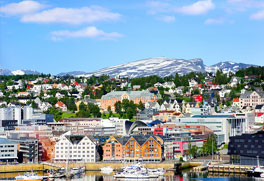
On the final day of the 62nd session of the Subsidiary Bodies (SB62) meeting under the United Nations Framework Convention on Climate Change (UNFCCC), Norway announced its new Nationally Determined Contributions (NDC). The country put forth an economy-wide GHG emissions reduction target of 70-75 per cent from 1990 levels by 2035. CSE Climate’s Rudrath Avinashi highlights how the NDC omits sector-specific targets while referring to the use of internationally transferred mitigation outcomes (ITMOs) under Article 6.2 of the Paris Agreement. This means the country plans to offset its emissions through carbon markets.
The NDC outlines key policy tools including taxation of GHG emissions, regulatory instruments and financial support for green technologies, among others. These instruments can improve emissions intensity, but may fall short of delivering the absolute emission reductions. Between 1990 and 2020, Norway had the second-highest per capita production of natural gas and the fourth-highest for oil. As of 2023, natural gas and crude oil accounted for 93 per cent of Norway’s domestic energy production. According to Oil Change International, the country has approved most oil and gas projects in the North Sea since signing the Paris Agreement.
Moving into the world of climate finance, a new report by Climate Policy Initiative (CPI) has found that global climate finance reached a record high of $1.9 trillion in 2023, a 15 per cent increase from 2022. However, the global financial system remains misaligned with the pace and scale of climate finance required, with the report estimating an annual need of $6.3 trillion from 2024 to 2030 to avoid the worst impacts of climate change.
The report underlines that mitigation continues to dominate global climate spending, with nearly 94 per cent of all tracked climate finance being allocated towards mitigation. Within this, 75 per cent went towards energy systems and transport. Adaptation finance remains a major concern, with only $65 billion going towards adaptation efforts. Further, private finance has surged in recent years, crossing the $1 trillion threshold for the first time. In contrast, public finance fell by 8 per cent between 2022 and 2023.
For those tracking carbon markets, CSE’s dashboard on voluntary carbon market projects in India continues to serve as a public resource, providing project details and claims across the country. It aims to improve transparency, helping stakeholders, journalists, and researchers access important data on the voluntary carbon market in India.
|
|
|
| |
|
|
| |
 |
|
| |
By - Upamanyu Das
Climate Change, CSE
|
| |
|
|
|
|
| |
|
|
| |
| EXTREME WEATHER TRACKER |
| |
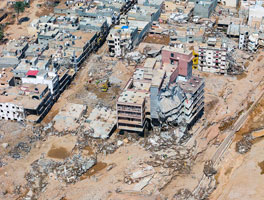
Africa's climate crisis: 2021-2025 marks the deadliest period in 15 years, 10 July 2025
|
|
 |
|
|
| |
|
|
| |
 |
|
Monsoon quandary: Excess rain in Rajasthan, dry conditions in Meghalaya, 04 July 2025
|
|
|
| |
|
|
| |
|
|
| |
|
|
| |
CLIMATE NEWS | SCIENCE| IMPACTS| POLITICS |
|
| |
|
|
| |
|
|
| |
|
|
| |
|
|
| |
|
|
| |
|
|
| |
|
|
| |
|
|
| |
|
|
| |
|
|
| |
|
|
| |
|
|
| |
|
|
| |
|
|
| |
|
|
| |
|
|
| |
|
|
| |
|
|
| |
|
|
| |
|
|
| |
|
|
| |
|
|
| |
|
|
| |
|
|
| |
|
|
| |
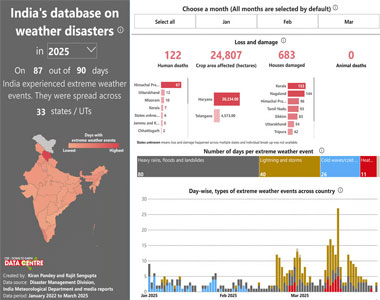
| India’s Atlas On Weather Disasters |
|
Online Training Course |
| |
|
|
|
|
|
|
|
|
| |
|
|
| |
|
|
| |
|
|