|
Dear readers,
Welcome to the Climate Weekly digest by the Centre for Science and Environment’s Climate Change programme and Down to Earth.
India’s energy challenge is immense. According to the Bureau of Energy Efficiency (BEE), the country’s energy consumption rose by 63 per cent between 2012-2022. Simultaneously, peak electricity demand continues to rise sharply, reaching 250 gigawatt (GW) in May 2024 and projected to reach 366 GW by 2031-32. In her new article, Down to Earth’s Rohini Krishnamurthy explores the role of energy efficiency of electrical appliances as a cost-effective way to enhance India’s energy security and reduce carbon emissions. In particular, raising the efficiency of air conditioners (ACs) and water pumps could support the country’s net zero ambition.
India is already the largest groundwater extractor in the world, running an estimated 32 million irrigation pumps for agriculture. Further, nearly one in every ten households own an AC, with the International Energy Agency (IEA) predicting that the country could have one billion ACs in operation by 2050. In this context, energy efficiency must become a cornerstone of climate action. While ACs have to follow mandatory efficiency standards to be sold in India, water pumps have remained out of the loop. The enforcement of efficiency standards for multiple household appliances (such as refrigerators and lighting) helped India avoid 58.24 million tonnes of carbon dioxide emissions in 2022-23 alone. Improving the efficiency of the two appliances that consume the most electricity—ACs and water pumps—could save India the equivalent of total electricity generation from 180 GW of solar PV plants.
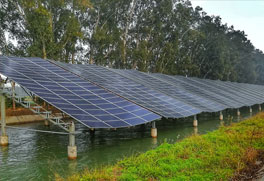
In renewable energy news, a new report states that solar energy, batteries and demand-side flexibility could help halve India’s total electricity cost by 2050. The solar-dominant system is projected to cost $27 per megawatt hour (MWh), which is considerably lower than current fossil fuel prices. Moreover, balancing technologies could play a crucial role in managing the supply and demand. These could include running dispatchable generation on a flexible basis to compensate for lower renewables generation, interconnecting regions and countries, storage technologies, and demand-side flexibility in residences and industries.
Finally, the third episode of our podcast, Carbon Politics, was released on July 28. In this episode, CSE Climate’s Rudrath Avinashi speaks to Advait Arun from the Center for Public Enterprise about the impact of the US dollar on the global energy transition and decarbonisation efforts in the Global South.
|
|
|
| |
|
|
| |
 |
|
| |
By - Upamanyu Das
Climate Change, CSE
|
| |
|
|
|
|
| |
|
|
| |
| EXTREME WEATHER TRACKER |
| |
Africa’s heat waves are getting worse due to human activities: Study, 30 July 2025
|
|
 |
|
|
| |
|
|
| |
 |
|
‘Abode of the clouds’ no more? Meghalaya has the highest rainfall deficit of 56% this monsoon, 29 July 2025
|
|
|
| |
|
|
| |
|
COMMENTARIES |
|
|
Game changers, 31 July 2025
|
|
|
Improving energy efficiency of everyday appliances is one of the quickest and most cost-effective ways to enhance energy security and avoid carbon emissions. In India, raising efficiency of air conditioners and water pumps alone could result in potential energy savings, and support the country's net-zero ambition
|
|
|
| |
|
|
| |
|
|
| |
|
|
| |
CLIMATE NEWS | SCIENCE| IMPACTS| POLITICS |
|
| |
|
|
| |
|
|
| |
|
|
| |
|
|
| |
|
|
| |
|
|
| |
|
|
| |
|
|
| |
|
|
| |
|
|
| |
|
|
| |
|
|
| |
|
|
| |
|
|
| |
|
|
| |
|
|
| |
|
|
| |
|
|
| |
|
|
| |
|
|
| |
|
|
| |
|
|
| |
|
|
| |
| Podcast |
|
Online Training Course |
| |
|
|
|
|
|
|
|
|
| |
|
|
| |
| Onsite Training Course |
|
Video |
| |
|
|
|
|
|
|
|
|
| |
|
|