|
Dear readers,
Welcome to the Climate Weekly digest by the Centre for Science and Environment’s Climate Change programme and Down to Earth.
As the United States imposed its latest round of punitive and arbitrary tariffs on its trade partners, President Lula of Brazil announced that he would raise the issue of the US regime dismantling multilateralism with fellow BRICS leaders—providing a rare glimpse of BRICS coming together to address common problems. In her latest piece, CSE Climate’s Programme Manager Avantika Goswami writes that such unity must be prioritised to foster Global South solidarity, enabling developing countries to tackle pressing challenges with their own agency, voice and needs at the forefront.
The Global South has a long history of ‘moments of unity’, writes Goswami, from the 1955 Bandung Conference that brought together developing world leaders to oppose colonialism, the 1992 Rio Earth Summit where they fought for the principle of common but differentiated responsibilities (CBDR), to COP27 where they established the Loss and Damage Fund for countries devastated by climate disasters. New imperatives for Global South unity must include their growing energy demand and a just energy transition, the unsustainable debt crisis, green industrialisation and value addition, and power imbalances in global governance. Emerging green partnerships among Global South countries can form a basis for sustained political coalitions—such technological and industrial foundations can be used to forge a new green development agenda for the developing world.
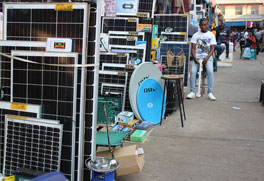
Moving on to clean energy, in April 2025, China imposed strategic export restrictions on seven critical rare earth elements in order to tighten its grip on clean technologies supply chains. The restrictions target elements essential for manufacturing wind turbines, solar panels and electric vehicle batteries. China has the world’s largest reserves of rare earth minerals and controls 76 percent of global refining capacity of such resources. The move provided China with unprecedented leverage in the global race to decarbonise, and is forcing countries to seek alternatives. Consequently, clean technologies deployment could become more expensive in the short term, making them less competitive than fossil fuels.
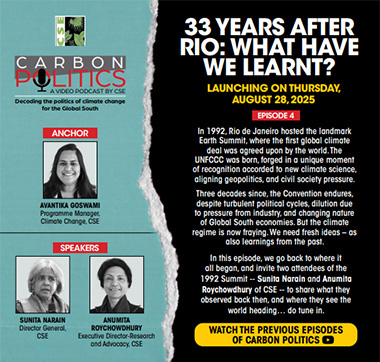
Lastly, the fourth episode of our new podcast Carbon Politics will be launched on August 28 featuring CSE’s Sunita Narain and Anumita Roychowdhury, where they will cover the landmark 1992 Rio Earth Summit and lessons to be drawn from the past three decades of global climate action. Watch past episodes here.
|
|
|
| |
|
|
| |
 |
|
| |
By - Upamanyu Das
Climate Change, CSE
|
| |
|
|
|
|
| |
|
|
| |
| EXTREME WEATHER TRACKER |
| |
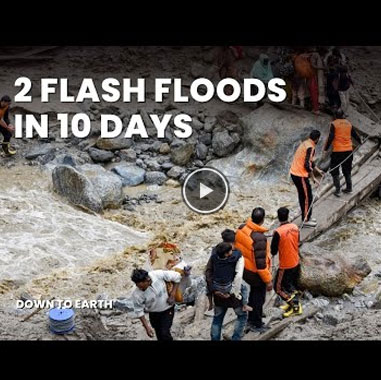
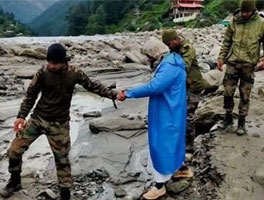
Monsoon 2025 anomaly: Surge in western disturbances intensifying Himalayan disasters, driven by warming, 21 August 2025
|
|
 |
|
|
| |
|
|
| |
 |
|
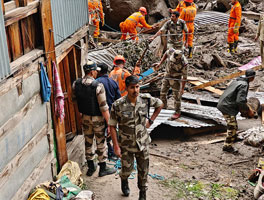
Are ‘cloudbursts’ causing devastation across the Western Himalayas? After Dharali, what exactly triggered tragedy in Kishtwar?, 17 August 2025
|
|
|
| |
|
|
| |
|
|
| |
|
|
| |
|
Beyond carbon and emission, 18 August 2025
|
|
|
In one stroke, ICJ has freed climate change discourse from the narrow confines of ‘carbon’ and ‘emission’ to the larger domain of ecosystem, including rights-based approach
|
|
|
| |
|
|
| |
|
|
| |
|
|
| |
CLIMATE NEWS | SCIENCE| IMPACTS| POLITICS |
|
| |
|
|
| |
|
|
| |
|
|
| |
|
|
| |
|
|
| |
|
|
| |
|
|
| |
|
|
| |
|
|
| |
 |
|
|
A statutory order, not an advisory, 18 August 2025
|
|
|
The International Court of Justice’s advisory opinion that countries driving climate change are committing a crime against humanity reiterates the principle of common but differentiated responsibility. It is likely to boost litigation related to climate reparations
|
|
|
|
|
| |
|
|
| |
|
|
| |
|
|
| |
|
|
| |
|
|
| |
|
|
| |
|
|
| |
|
|
| |
|
|
| |
|
|
| |
|
|
| |
|
|
| |
|
|
| |
| Carbon Politics Podcast |
|
Onsite Training Course |
| |
|
|
|
|
|
|
|
|
| |
|
|
| |
|
|
| |
|
|