Down to Earth
Sign up for weekly digest
Down to Earth Facebook Down to Earth Twitter Down to Earth Twitter
 
August 23 - August 28, 2025
 
     
A weekly digest on impacts, politics and science of the climate emergency; from the Global South perspective. Access our extensive coverage on climate. You can find this digest in the web here.
Dear readers,

Welcome to the Climate Weekly digest by the Centre for Science and Environment’s Climate Change programme and Down to Earth.

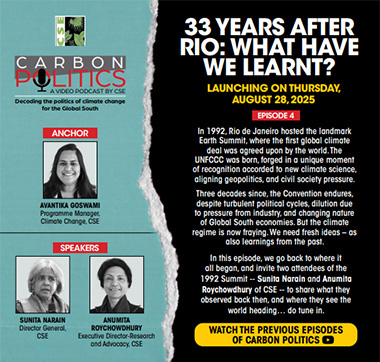
It has been three decades since the landmark Earth Summit in Rio de Janeiro, Brazil in 1992, where the world agreed on the first global climate deal and established the United Nations Framework Convention on Climate Change (UNFCCC). The Rio Summit established principles for climate cooperation and enshrined equity in climate governance. However, the decades since have witnessed shifting political priorities, dilution of principles due to industry pressure, and changes in Global South economies. As the world enters another phase of turbulent politics, there is a need for fresh ideas alongside learnings from the past.

In the latest episode of the Carbon Politics podcast, CSE’s Climate’s Avantika Goswami is joined by two attendees of Rio, Sunita Narain, CSE’s Director General, and Anumita Roychowdhury, CSE’s Executive Director. In this wide-ranging episode, the duo revisit Rio and highlight how Global South countries successfully pushed for an equitable climate regime based on Common but Differentiated Responsibilities (CBDR). They also discuss green growth in today’s changing political landscape, highlighting how Global South economies can build resilience by reinvesting in local economies, prioritising regional and bottom-up economic solutions, and forming new alliances around green technology to create markets pools in the developing world—potentially offsetting the global disruption caused by Global North economies.

Continuing with international climate diplomacy, debates on climate finance are set to continue at the 30th Conference of Parties (COP30) to the UNFCCC in Belem, Brazil this year. Climate finance negotiations at COP29 in Azerbaijan ended in disappointment as developed countries agreed to mobilise $300 billion annually by 2035, far short of the $1.3 trillion annually demanded by the Global South. Down to Earth’s Puja Das reports that while developed countries agreed to ‘take the lead’ in mobilising the $300 billion target, the goal is expected to dilute the obligations of Global North governments by including a combination of public and private finance.

India, with the support of like-minded developing countries (LMDCs), pushed the issue of Article 9.1—which refers to the obligation of developed countries to provide financial resources to assist developing countries—during the mid-year climate talks in Bonn, Germany. The issue is set to be brought up again in Belem this November, with developing countries expected to demand strong public finance commitments from the Global North.
   
 
Down To Earth
 
By - Upamanyu Das
Climate Change, CSE


EXTREME WEATHER TRACKER
 
Gangotri glacier has lost 10 per cent snow melt flow in four decades, 27 August 2025
Down To Earth


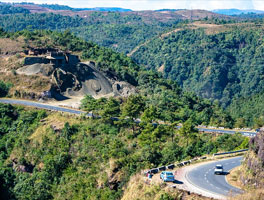
Down To Earth Cherrapunji on way to driest monsoon on record, Surlabbi, Tamhini wettest spots in India, 26 August 2025


COMMENTARIES
33 years after the Rio Earth Summit, what have we learnt?, 28 August 2025
On a new episode of the Carbon Politics podcast, CSE’s Sunita Narain and Anumita Roychowdhury join Avantika Goswami to discuss the Rio Earth Summit, equity, and the future of climate and development in a turbulent world


Climate finance faultline looms over COP30: Developed countries’ obligations to dominate Belém talks, 27 August 2025
India and allies to demand enforcement of Paris Agreement finance pledge as Brazil presidency urges reform of global banks


Odisha’s green energy ambitions: Path to $1.5 trillion economy or unrealistic dream?, 25 August 2025
A bold 2047 vision could make Odisha a clean energy leader, if rural inclusion keeps pace with industrial growth
 
   
  CLIMATE NEWS | SCIENCE| IMPACTS| POLITICS  
   
 
Down To Earth
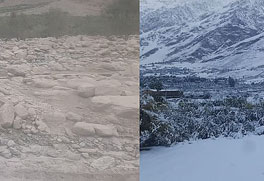
Kargil is battling climate change, 28 August 2025
The Suru Valley recorded flooding and unseasonal heavy snow in a span of 14 days this month


Down To Earth
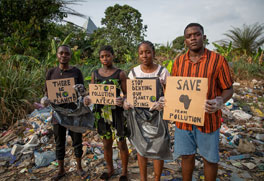
African debt and climate change: How the ICJ’s Vanuatu ruling could be used for broader justice, 28 August 2025
The court's advisory opinion may offer new opportunities to make debtor & creditor states, creditor institutions accept responsibility for environmental, social impacts of their actions


Down To Earth
India requires $50 billion new investment in storage by 2032: Report, 26 August 2025
By 2030, a total of 61 GW/218 GWh of energy storage is projected to be cost-effective to support 500 GW of clean power capacity. This requirement is expected to grow to 97 GW/362 GWh by 2032


Down To Earth
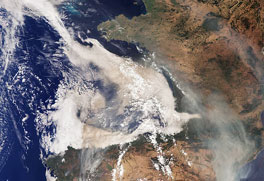
Europe wildfires torch over 1 million hectares of forests, outpacing 2017 devastation, 26 August 2025
CO₂ emissions equivalent to annual output of Portugal or Sweden


Down To Earth
Data that is stored and not used has a carbon footprint. How companies can manage dark data better, 25 August 2025
Rethinking dark data management is a step towards reducing digital emissions and conserving resources


Down To Earth
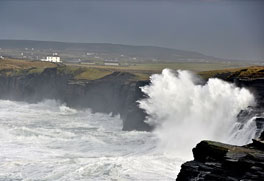
Why Ireland’s mild temperatures won’t protect it from the climate crisis, 25 August 2025
Ireland cannot hold back the seas or calm the storms. But it can decide how to respond — through stronger science, smarter policy and, above all, collective responsibility


Down To Earth
Younger forests outnumbering old, disturbing world’s carbon balance, 24 August 2025
Young forests grow faster, their regrowth does not fully compensate for the carbon loss from older forests


Down To Earth
India to improve weather forecasting accuracy for better power demand estimation, amid renewables push, 22 August 2025
With climate change driving weather unpredictability and solar and wind power generation highly dependent on local conditions, tracking them accurately now critical


Down To Earth
Extreme heat threatening worker safety and productivity globally: WHO, WMO sound alarm on growing workplace heat stress, 22 August 2025
Report finds rising wet-bulb temperatures slash productivity and endanger health; construction, agriculture and informal labour most exposed as climate change drives up risks


Down To Earth
Wildfire disasters are increasingly in the news, yet less land is burning globally — here’s why, 22 August 2025
Advancements in fire prevention and control, shifts in agricultural practices and urban expansion play a large role


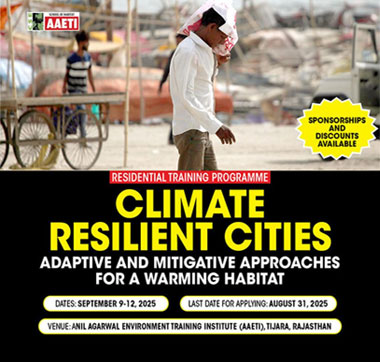
Carbon Politics Podcast   Onsite Training Course
     
Down To Earth
 
Down To Earth


Video    
     
Down To Earth
 
Down To Earth
     
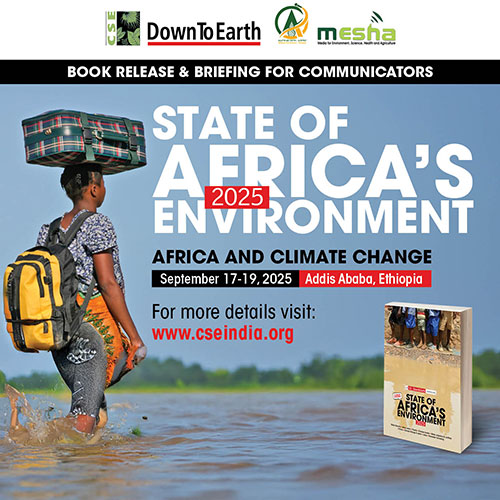
Book Release
     
Down To Earth
 
     
This weekly digest is published by Down to Earth and the Centre for Science and Environment, a Delhi-based global think tank advocating on global south developmment issues.
We would love your feedback on this weekly digest. To speak to our experts for quotes and comments on the above stories. Please email to vikas@cseindia.org
 
Follow us on
spacer facebook spacer Down to Earth video spacer twitter spacer
  If you like our work and would like others to join our climate network and the climate conversation, please forward this to your friends. Interested in Climate weekly? Sign Up here