|
Dear readers,
Welcome to the Climate Weekly digest by the Centre for Science and Environment’s Climate Change programme and Down to Earth.
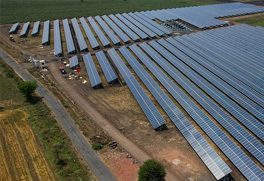
Despite China’s dominance in clean technologies over recent years, its latest Nationally Determined Contribution (NDC) fails to reflect its growing ambition in the climate and energy landscape. The country’s climate targets encompass a 7-10 per cent reduction in greenhouse gas emissions from peak levels (failing to specify a peak year), over 30 per cent increase in the share of non-fossil fuels in energy consumption, a six-fold increase in installed solar and wind power from 2020 levels to reach 3600 GW, and mainstreaming new energy vehicles (NEVs) in automobile sales, among other targets.
CSE Climate’s Avantika Goswami and Rudrath Avinashi unpack China’s latest NDC, writing that such conservative targets will allow the country to overachieve in coming years, even though it gives away China’s hesitation to accept the spotlight as a climate leader. The authors’ analysis reveals that a 7-10 per cent reduction (assuming emissions peaked in 2023) means an absolute drop of 1.12-1.59 gigatonnes of carbon dioxide equivalent (GtCO₂e) by 2035—roughly equalling Indonesia’s annual emissions in 2023. On the other targets, Goswami and Avinashi highlight that China will likely exceed its share of non-fossil fuels in the energy mix, dramatically expand wind and solar power, and achieve NEV mainstreaming in automobile sales. As the world’s largest annual emitter today, China’s progress on climate goals will be critical to achieve our collective climate targets.
Continuing with China’s role in the clean energy transition, new research by the Net Zero Industrial Policy Lab (NZIPL) has revealed that since 2022, Chinese firms’ overseas investments in clean technology manufacturing have surged past $220 billion, spanning 54 countries across sectors such as batteries, solar, wind, NEVs and green hydrogen. My latest article highlights how these investment flows are defining the green technology landscape, with the Global South capturing 75 per cent of the announced projects. The investment motivations involve accessing raw materials, host countries’ markets and third-country markets. Given recent geopolitical headwinds, firms are pivoting towards ‘light-asset’ strategies such as technology licensing and contract manufacturing.
Finally, the latest episode of Carbon Politics is set to be launched on Sunday, September 28. In this episode, Avantika Goswami speaks with Tim Sahay and Kate Mackenzie from the Polycrisis on the BRICS bloc’s climate ambition, green industrial strategies and the path ahead—given their dependence on the Global North for capital and technology.
|
|
|
| |
|
|
| |
 |
|
| |
By - Upamanyu Das
Climate Change, CSE
|
| |
|
|
|
|
| |
|
|
| |
| EXTREME WEATHER TRACKER |
| |
Maharashtra’s drought-prone regions experience deluge as extreme rainfall washes away 7 million acres of agricultural land, 25 September 2025
|
|
 |
|
|
| |
|
|
| |
 |
|
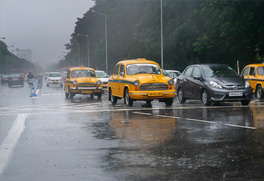
Unexpected interaction of atmospheric conditions, not cloudburst, caused Kolkata’s intense 180mm rainfall in 3 hours, says IMD, 24 September 2025
|
|
|
| |
|
|
| |
|
COMMENTARIES |
|
|
|
| |
|
|
| |
|
|
| |
|
|
| |
|
|
| |
CLIMATE NEWS | SCIENCE| IMPACTS| POLITICS |
|
| |
|
|
| |
|
|
| |
|
|
| |
|
|
| |
|
|
| |
|
|
| |
|
|
| |
|
|
| |
|
|
| |
|
|
| |
|
|
| |
|
|
| |
|
|
| |
|
|
| |
|
|
| |
|
|
| |
|
|
| |
|
|
| |
|
|
| |
|
|
| |
|
|
| |
|
|
| |
|
|
| |
|
|
| |
|
|
| |
| State of Africa’s Environment 2025 |
|
Carbon Politics: A Video Podcast by CSE |
| |
|
|
|
|
|
|
| |
|
|
| Gobar Times |
| |
|
|

|
|
|
| |
|
|