|
Dear readers,
Welcome to the Climate Weekly digest by the Centre for Science and Environment’s Climate Change programme and Down to Earth.
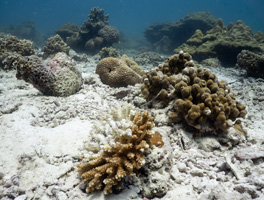
Of the nine planetary boundaries that make the Earth habitable, we have now breached seven. Down to Earth’s Rohini Krishnamurthy, writing about the latest Planetary Health Check (PHC) report, explains that planetary boundaries can be defined as ecological limits that keep life on Earth within a “safe operating space”. Ocean acidification, the report highlights, has crossed the safe operating space for the first time.
Oceans help stabilise the climate and act as a life-support system. Ocean acidification, driven by fossil fuel combustion, means that oceans are absorbing increasing amounts of carbon dioxide. As a result, surface ocean acidity has increased by 30-40 per cent since the industrial era. Other planetary boundaries that have been breached include climate change, biosphere integrity, land system change, freshwater change, modification of biogeochemical flows and introduction of novel entities.
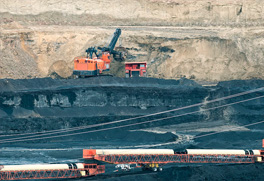
In fossil fuel news, the Trump administration has announced a significant coal expansion plan, opening up 13.1 million acres (or 5.3 million hectares) of US federal land for coal leasing. Down to Earth’s Preetha Banerjee reports that the announcement by the US Department of the Interior marks one of the largest coal development initiatives in recent history. The move is a part of Donald Trump’s ‘Beautiful Clean Coal' initiative and is supported by complementary policies by the US Environmental Protection Agency (EPA) and Department of Energy.
The EPA has proposed watering down environmental regulations that require a reduction in pollutants (such as sulphur dioxide) and compliance on wastewater regulation. The Department of Energy plans to allocate $625 million for the recommissioning or modernisation of coal plants and to support new coal initiatives. Taken together, the policies are set to fulfil the US President’s directive to increase domestic fossil fuel production and restore American energy dominance.
Lastly, the fifth episode of Carbon Politics, titled “BRICS: A Climate Force or Farce?”, went live on Sunday, September 28. In this episode, Avantika Goswami speaks with climate and political economy experts Tim Sahay and Kate Mackenzie about the BRICS bloc’s climate plans, green industrial strategies and if the bloc can emerge as a true climate leader.
|
|
|
| |
|
|
| |
 |
|
| |
By - Upamanyu Das
Climate Change, CSE
|
| |
|
|
|
|
| |
|
|
| |
| EXTREME WEATHER TRACKER |
| |
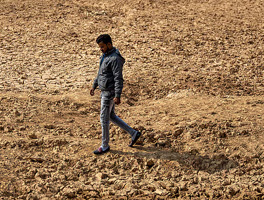
Monsoon 2025: Deoria India’s driest district, with 87% rainfall deficit, 26 September 2025
|
|
 |
|
|
| |
|
|
| |
 |
|
Seven of nine planetary boundaries breached as oceans cross dangerous threshold for first time, 26 September 2025
|
|
|
| |
|
|
| |
|
|
| |
|
|
| |
|
|
| |
|
|
| |
CLIMATE NEWS | SCIENCE| IMPACTS| POLITICS |
|
| |
|
|
| |
|
|
| |
|
|
| |
 |
|
|
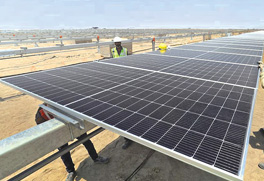
Transmission trap, 01 October 2025
|
|
|
Solar and wind power projects are facing curtailments, which developers and industry analysts attribute to delays in construction of electricity transmission lines and inaccurate demand forecasting
|
|
|
|
|
| |
|
|
| |
|
|
| |
|
|
| |
|
|
| |
|
|
| |
|
|
| |
|
|
| |
|
|
| |
|
|
| |
|
|
| |
|
|
| |
|
|
| |
|
|
| |
|
|
| |
|
|
| |
|
|
| |
|
|
| |
|
|
| |
|
|
| |
Carbon Politics:
A Video Podcast by CSE |
|
Gobar Times |
| |
|
|
|
|
|
|
|
|
| |
|
|