Down to Earth
Sign up for weekly digest
Down to Earth Facebook Down to Earth Twitter Down to Earth Twitter
 
October 3 - October 9, 2025
 
     
A weekly digest on impacts, politics and science of the climate emergency; from the Global South perspective. Access our extensive coverage on climate. You can find this digest in the web here.
Dear readers,

Welcome to the Climate Weekly digest by the Centre for Science and Environment’s Climate Change programme and Down to Earth.

As COP30 approaches closer, countries are submitting their updated five-year climate targets, or Nationally Determined Contributions (NDCs), under the 2015 Paris Agreement. However, the global climate governance architecture faces strong headwinds: militarism, trade wars, sovereign debt burdens and retreating multilateralism. In their latest two-part series, CSE Climate’s Avantika Goswami and Trishant Dev discuss the relevance of demanding ambitious NDCs based on emissions reduction and whether it serves the purpose of climate-resilient and low-carbon development in the Global South.

Goswami and Dev highlight that country pledges have prevented the world from yet higher levels of warming, bringing down potential warming from over 4°C to 2.7°C. NDCs also create a positive demand signal for clean technology investments and proliferation. The gap, however, is the lack of consideration for differentiated development and decarbonisation trajectories in developing economies. The barriers faced by the Global South—inadequate financial support, outdated trade rules, dependence on exports, high capital costs etc.—cannot be meaningfully addressed by cyclical demands for ambitious emissions reduction. NDCs, as they are currently framed, divorce countries’ climate needs from their development aspirations of growth and energy access.

In the second part of the series, Goswami and Dev ask veteran climate experts about the relevance of NDCs, who point out the importance of setting out credible pathways towards achieving climate targets, harnessing the co-benefits of climate action, the historical responsibility of developed nations, and framing NDCs as potential focal points for national political goals.

In energy transition news, according to the Renewables 2025 report by the International Energy Agency (IEA), global renewable power capacity is set to double by 2030, adding nearly 4,600 gigawatts (GW) of clean energy. Down to Earth’s Puja Das writes that solar photovoltaic (PV) continues to dominate clean energy expansion and is expected to become the world’s largest renewable source of electricity by 2030. Within this transition, India is emerging as a bright spot. The country poised to become the second-largest growth market for renewables, with capacity expected to increase 2.5 times by 2030. However, in order to meet the pledge of tripling global renewable capacity by 2030, countries will need to accelerate policy implementation, grid expansion and financial reforms.
   
 
Down To Earth
 
By - Upamanyu Das
Climate Change, CSE


EXTREME WEATHER TRACKER
 
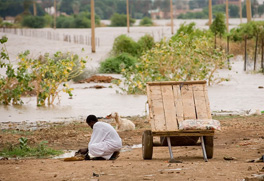
Extreme rainfall, nearly 100 landslides cause 17 deaths in north Bengal; Sikkim almost cut off, 05 October 2025
Down To Earth


COMMENTARIES
The NDC death loop (Part 1): Demands for ambition, disappointment and relevance in a fractured world, 07 October 2025
As COP30 approaches, the current cycle of voluntary climate pledges is facing a crisis of relevance; climate governance needs to be reinvented, especially for the Global South


The NDC death loop (Part 2): Demands for ambition, disappointment and relevance in a fractured world, 08 October 2025
As COP 30 approaches, the current cycle of voluntary climate pledges is facing a crisis of relevance; we ask experts to weigh in on how climate governance can be reinvented, especially for the Global South
 
   
  CLIMATE NEWS | SCIENCE| IMPACTS| POLITICS  
   
 
Down To Earth
Small island nations face $476 billion climate risk by 2050, urgent $12 billion annual investment needed, says new report, 09 October 2025
Without rapid action, adaptation finance gaps threaten survival of nations least responsible for the crisis, says Global Commission on Adaptation


Down To Earth
Massive climate finance gap for eight African countries, says Oxfam Report, 09 October 2025
Rich, high-polluting countries have only met four per cent of the climate finance needs for Djibouti, Eritrea, Ethiopia, Kenya, Somalia, South Sudan, Sudan and Uganda


Down To Earth
Renewables have now passed coal globally — and growth is fastest in countries like Bhutan and Nepal, 09 October 2025
Change driven by factors beyond climate concerns, like reducing reliance on costly fossil fuels and improving energy security


Down To Earth
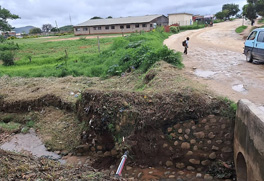
Zimbabwe is facing the brunt of a changing climate, which has become a deadly ally of urban decay, 09 October 2025
Country’s municipal mismanagement and outright theft of public funds, are dovetailing with the climate, bringing the carnage onto residents’ doorsteps, say citizens


Down To Earth
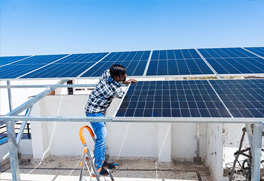
ISA plans to replicate India’s PM-KUSUM to power farms and rural homes in members countries, 08 October 2025
We want to showcase both success stories of PM-KUSUM and PM Surya Ghar in countries where connectivity is an issue, says Union minister Pralhad Joshi


Down To Earth
India pushes adaptation finance to the forefront ahead of COP30, 08 October 2025
Need for reform in multilateral development banks as well as innovative instruments such as blended finance, resilience bonds, and adaptation-focused funds, stress experts


Down To Earth
The Arabian Sea’s secret: A warm pool that helps the monsoon resist El Niño’s disruption, 08 October 2025
Though just a few hundred kilometers in area, the Arabian Sea MWP influences winds, rains, and lives across the Indian subcontinent


Down To Earth
China boasts 70-90% carbon capture storage cost edge as Europe faces soaring capture prices, 08 October 2025
The UK emerges as Europe’s sole exception through its pioneering Dispatchable Power Agreement


Down To Earth
US policy reversals slow domestic transition, but global energy shift pushes forward: DNV report, 08 October 2025
Global transition powered by record renewable deployment in China


Down To Earth
India to become second-largest renewable market as global growth doubles: IEA, 08 October 2025
Energy transition accelerating, says organisation; however, world risks missing its most achievable climate milestone unless nations bridge gap between ambition and action


Down To Earth
Asia’s carbon capture gamble risks derailing global climate goals: Report, 06 October 2025
If Asia follows a “high-CCS” trajectory with poor performance, it could add emissions equivalent to lifetime CO2 output of South Korea & Australia combined


Video   Gobar Times
     
Down To Earth
 
Down To Earth


Data Centre   Carbon Politics: A Video Podcast by CSE
     
Down To Earth
 
Down To Earth
 
     
This weekly digest is published by Down to Earth and the Centre for Science and Environment, a Delhi-based global think tank advocating on global south developmment issues.
We would love your feedback on this weekly digest. To speak to our experts for quotes and comments on the above stories. Please email to vikas@cseindia.org
 
Follow us on
spacer facebook spacer Down to Earth video spacer twitter spacer
  If you like our work and would like others to join our climate network and the climate conversation, please forward this to your friends. Interested in Climate weekly? Sign Up here