|
Dear readers,
Welcome to the Climate Weekly Digest by the Centre for Science and Environment’s Climate Change programme and Down to Earth.
A decade since the signing of the Paris Agreement in 2015, the world is witnessing the hottest years in recorded history and extreme heat is killing more people than any other climate hazard. Down to Earth’s Puja Das, reporting on the latest global assessment by Climate Central and World Weather Attribution, writes that since 2015, the planet has been experiencing an average of 11 additional “hot days” every year. Regions such as Southeast Asia and the Pacific are seeing 20 to 35 additional hot days, while in India and Pakistan, spring temperatures that occurred once every 30 years are now occurring almost every two years.
In response, adaptation efforts have expanded, with 47 countries issuing national heat action plans. However, the gap remains stark, with large parts of the Global South lacking localised heat-health systems. Globally, heat-related adaptation projects have received less than 2 per cent of total climate finance. The report calls for “transformative adaptation”, i.e., rethinking urban planning, housing, labour laws and disaster systems for a hotter world. National adaptation plans need to protect the most vulnerable, embedding equity, gender and disability data into decision-making.
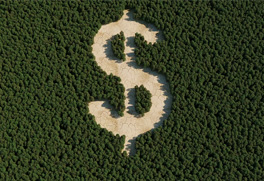
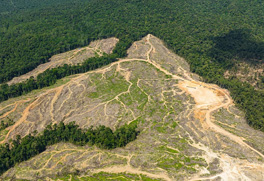
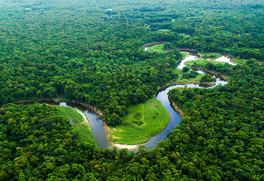
In deforestation news, according to the Forest Declaration Assessment 2025, countries remain off track in their goal of halting and reversing deforestation by 2030. Down to Earth’s Himanshu Nitnaware highlights that as deforestation rates continue to escalate, nearly 8.1 million hectares of forest were lost in 2024. The loss of irreplaceable humid tropical primary forest accounted for 6.7 million hectares, releasing 3.1 billion metric tons of greenhouse gases—nearly 150 per cent of the annual emissions from the United States’ energy sector. Forest restoration efforts remain low, with an estimated 10.6 million hectares being covered by restoration projects, which represents only 5.4 percent of the global reforestation potential. The report notes that a majority of governments are failing to align economic, trade and land-use policies with forest goals.
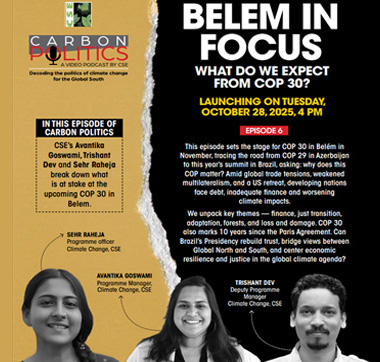
Finally, the latest episode of Carbon Politics titled “Belem in Focus: What do we expect from COP30?” will be released on Tuesday, October 28. In this episode, CSE Climate’s Avantika Goswami, Trishant Dev and Sehr Raheja discuss what is at stake at the upcoming COP30 and whether the conference can centre economic resilience and justice in the global climate agenda.
|
|
|
| |
|
|
| |
 |
|
| |
By - Upamanyu Das
Climate Change, CSE
|
| |
|
|
|
|
| |
|
|
| |
| EXTREME WEATHER TRACKER |
| |
Carbon dioxide as well as other warming gases increased by record levels in 2024: WMO, 16 October 2025
|
|
 |
|
|
| |
|
|
| |
 |
|
Earth enters ‘new reality’ as first climate tipping point triggers unprecedented coral reef dieback, 13 October 2025
|
|
|
| |
|
|
| |
|
|
| |
|
|
| |
|
|
| |
|
|
| |
|
|
| |
|
|
| |
|
|
| |
|
|
| |
|
|
| |
|
|
| |
CLIMATE NEWS | SCIENCE| IMPACTS| POLITICS |
|
| |
|
|
| |
|
|
| |
|
|
| |
|
|
| |
|
|
| |
|
|
| |
|
|
| |
|
|
| |
|
|
| |
|
|
| |
|
|
| |
|
|
| |
|
|
| |
|
|
| |
|
|
| |
|
|
| |
|
|
| |
|
|
| |
|
|
| |
|
|
| |
|
|
| |
|
|
| |
|
|
| |
|
|
| |
|
|
|