|
Dear readers,
Welcome to the Climate Weekly Digest by the Centre for Science and Environment’s Climate Change programme and Down to Earth.
The latest Global Multidimensional Poverty Index, released by the United Nations Development Programme (UNDP) and the University of Oxford, has revealed that more than 80 per cent of the world’s population living in multidimensional poverty lives in regions exposed to climate hazards. Down to Earth’s Managing Editor, Richard Mahapatra, writes that this is the first time that the Index has mapped how people living in multidimensional poverty are exposed to four climate hazards: high heat, drought, floods and air pollution. According to the report, out of 1.1 billion people living in multidimensional poverty, 887 million live in regions with at least one climate hazard.
South Asia has the highest population living in multidimensional poverty that is affected by the above climate hazards, with 380 million people having significant climate hazard exposures. Sub-Saharan Africa has 344 million people living in multidimensional poverty exposed to such hazards. Further, 99.1 per cent of multidimensionally poor people in South Asia live in regions affected by at least one climate hazard. The report also predicts that countries with higher current levels of multidimensional poverty will experience the greatest increases in temperatures by the end of this century—inextricably linking poverty with planetary pressures.
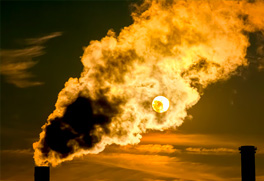
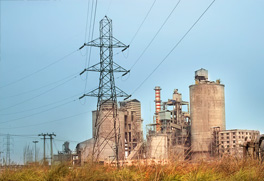
In mitigation news, On October 8, India notified its long-awaited greenhouse gas (GHG) emission intensity targets for key industrial sectors. CSE Industrial Pollution’s Parth Kumar explains that India had launched its Carbon Credit and Trading Scheme (CCTS) earlier in the year covering nine energy-intensive industrial sectors. By April, the Union Ministry of Environment, Forest and Climate Change issued draft GHG emissions intensity targets under the CCTS for four sectors: aluminium, cement, chlor-alkali, and pulp and paper, with the target applicable for the years 2025-26 and 2026-27. However, months of bureaucratic delay in notifying the targets have forced a downward revision in ambition, cutting overall emission reduction potential by more than 16 per cent from 14.5 million tonnes of GHG emissions to 12 million tonnes. The proposed targets will lead to improvements in energy and resource efficiency, including greater use of renewable energy.
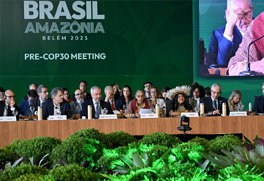
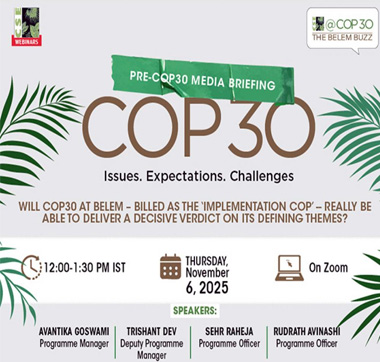
Lastly, the latest episode of Carbon Politics will be released on Tuesday, October 28. In this episode, titled “Belem in Focus: What do we expect from COP 30?”, CSE Climate’s Avantika Goswami, Trishant Dev and Sehr Raheja will unpack what is at stake at the upcoming conference in Belem, Brazil—and whether COP 30 can drive the Global South agenda for economic resilience and climate justice.
|
|
|
| |
|
|
| |
 |
|
| |
By - Upamanyu Das
Climate Change, CSE
|
| |
|
|
|
|
| |
|
|
| |
|
|
| |
|
|
| |
 |
|
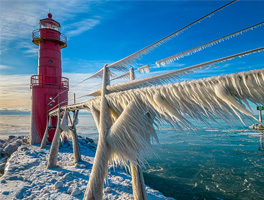
Warmer weather is leading to vanishing winters in North America’s Great Lakes, 17 October 2025
|
|
|
| |
|
|
| |
|
|
| |
|
|
| |
|
|
| |
|
|
| |
CLIMATE NEWS | SCIENCE| IMPACTS| POLITICS |
|
| |
|
|
| |
|
|
| |
|
|
| |
|
|
| |
|
|
| |
|
|
| |
|
|
| |
|
|
| |
|
|
| |
|
|
| |
|
|
| |
|
|
| |
|
|
| |
|
|
| |
|
|
| |
|
|
| |
|
|
| |
|
|
| |
|
|
| |
|
|
| |
|
|
| |
|
|
| |
|
|
| |
|
|
| |
|
|
| |
|
|
| |
|
|
|