Down to Earth
Sign up for weekly digest
Down to Earth Facebook Down to Earth Twitter Down to Earth Twitter
 
December 05 - December 11, 2025
 
     
A weekly digest on impacts, politics and science of the climate emergency; from the Global South perspective. Access our extensive coverage on climate. You can find this digest in the web here.
Dear readers,

Welcome to the Climate Weekly Digest by the Centre for Science and Environment’s Climate Change programme and Down to Earth.

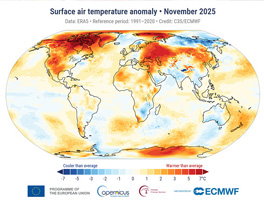
The latest update from Copernicus Climate Change Service (C3S) has revealed that 2025 is on track to become the second or third warmest year on record. Down to Earth’s Akshit Sangomla writes that global warming has accelerated rapidly over the past few years, and the period from 2023 to 2025 could be the first to exceed the 1.5°C warming limit above pre-industrial levels (1850-1900). The sequence of record-breaking annual and monthly temperatures that began in June 2023 has continued into November 2025, which ranked as the third warmest November on record.

Sangomla adds that this acceleration in warming has defied expectations, raising concerns that the world is moving towards a long-term breach of the 1.5°C threshold. In just the past two years (2023-2024), there has been an unprecedented temperature spike of 0.4°C globally. While a single year—or even three consecutive years—above 1.5°C does not constitute a formal breach of the long-term threshold, research indicates that the extreme warming observed in 2023 and 2024 may mark the onset of its long-term exceedance.

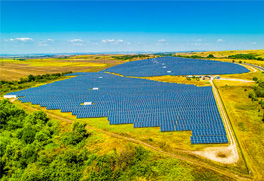
A new report by the Institute for Energy Economics and Financial Analysis (IEEFA South Asia) and JMK Research has analysed the impact of India’s Production-Linked Incentive (PLI) scheme for high-efficiency solar photovoltaic (PV) modules. Down to Earth’s Puja Das reports on the findings, highlighting that the scheme has driven a sharp jump in domestic manufacturing capacity since its launch in 2021, but faces significant structural challenges that threaten its long-term impact.

India’s domestic manufacturing has expanded rapidly since 2022, with module and cell manufacturing capacity reaching 120 GW and 29.3 GW respectively—an increase by 216 per cent and 344 per cent from 2022 levels. About 26 per cent of cell manufacturing capacity and 24 per cent of module manufacturing capacity are tied to PLI allocations. However, upstream manufacturing (of polysilicon and wafers) continues to remain limited and import-dependent. Furthermore, the scheme’s full potential remains hampered due to structural issues including high capital costs for upstream integration, inadequate incentives, inconsistencies in trade policy and global raw material price volatility. The report recommends reforms such as tax credits, low-cost finance, layered incentives, de-risking global price volatility, and coordinated institutional mechanisms to align trade, manufacturing and investment policies.
   
 
Down To Earth
 
By - Upamanyu Das
Climate Change, CSE


EXTREME WEATHER TRACKER


Extreme rainfall from cyclones Senyar and Ditwah made more intense by warming: WWA, 11 December 2025
Down To Earth


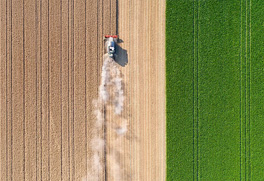
Down To Earth 2025 may become one of hottest years on record as 2023-2025 could cross 1.5°C threshold, 09 December 2025


COMMENTARIES
Committee calls for single-window solar clearances among steps to speed up India’s energy transition, 08 December 2025
It also pushes for state adoption of market-rate Right of Way compensation & dedicated portal for forest and wildlife clearances, among other things
 
   
  CLIMATE NEWS | SCIENCE| IMPACTS| POLITICS  
   
 
Down To Earth
India’s solar PLI scheme spurs strong manufacturing growth but faces major structural challenges: IEEFA report, 11 December 2025
Implementation challenges include high capital intensity of upstream integration, inadequate incentives, inconsistencies in trade policy, import dependency, and global raw material price volatility


Down To Earth
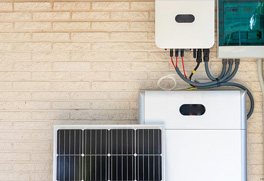
Batteries now cheap enough to make solar dispatchable, Ember report shows, 11 December 2025
At $65/MWh, storage is now cheap enough to shift a significant share of daytime solar into the night


Down To Earth
Rising temperatures contribute to higher ozone levels in atmosphere: UN Report, 11 December 2025
Ozone adversely affects respiratory health in humans and worldwide mortality due to ozone exposure increased by 46% between 2000 and 2019


Down To Earth
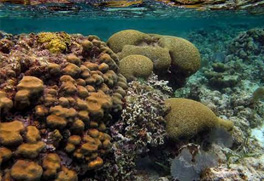
Caribbean coral reefs have halved since 1980s as heat, disease intensify, 11 December 2025
Nearly 10% of global coral reef area is now under heightened threat, scientists warn


Down To Earth
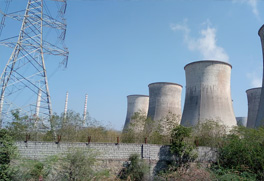
African countries transitioning from coal but not doing enough to exploit solar potential: UN Report, 11 December 2025
Countries on the continent will need ‘substantial support’, especially in developing environmentally sustainable infrastructure for housing, transportation, food, and energy, says document


Down To Earth
Heat stress, rare disease wipe out Goniopora coral colonies on Great Barrier Reef, 10 December 2025
Mortality among a thermally tolerant coral genus sends urgent global warning as the world faces its most widespread bleaching event


Down To Earth
Asia’s power giants already losing $6.3 billion a year to climate hazards, report warns, 10 December 2025
Losses for major utilities could rise by a third by 2050 without urgent investment in resilience


Down To Earth
Extreme heat, combined with land use change, may push nearly 8,000 species to extinction, 10 December 2025
In the worst-case scenario, most species will face unsuitable climate conditions in vast areas across Brazil, Bolivia and Paraguay, North Africa, the Middle East, India and Western Australia


Down To Earth
Warm oceans seem to be turning even ‘weak’ cyclones into deadly rainmakers, 09 December 2025
Ditwah and Senyar caused severe flooding in South Asia despite weak winds


Down To Earth
1TW by 2035: CEA submits decade-long power sector blueprint, rolling demand projections, 05 December 2025
‘Power University’ also planned to bridge skilled human resource gap


    Carbon Politics: A Video Podcast by CSE
 
    Video
spacer
DTE Hindi   DTE Hindi


Online Training Course   Data Centre
     
Down To Earth
 
Down To Earth
     
Gobar Times


This weekly digest is published by Down to Earth and the Centre for Science and Environment, a Delhi-based global think tank advocating on global south developmment issues.
We would love your feedback on this weekly digest. To speak to our experts for quotes and comments on the above stories. Please email to vikas@cseindia.org
 
Follow us on
spacer facebook spacer Down to Earth video spacer twitter spacer
  If you like our work and would like others to join our climate network and the climate conversation, please forward this to your friends. Interested in Climate weekly? Sign Up here