Down to Earth
Sign up for weekly digest
Down to Earth Facebook Down to Earth Twitter Down to Earth Twitter
 
December 12 – December 18, 2025
 
     
A weekly digest on impacts, politics and science of the climate emergency; from the Global South perspective. Access our extensive coverage on climate. You can find this digest in the web here.
Dear readers,

Welcome to the Climate Weekly Digest by the Centre for Science and Environment’s Climate Change programme and Down to Earth.

Between January and November 2025, India recorded extreme weather events on 331 out of 334 days, an increase from 295 days in 2024 and 292 days in 2022. The latest analysis by CSE and Down to Earth reveals that in 2025, extreme weather events claimed at least 4,419 lives, affected around 17.4 million hectares of cropped land, destroyed at least 181,459 houses and killed approximately 77,189 animals. This is a sharp rise from previous years, with 3,006 deaths recorded and 1.96 million hectares of cropped land damaged in 2022. 

Furthermore, extreme weather events occurred every day for nine of the eleven months analysed, an increase from six months in 2024 and five months in 2023. This indicates that extreme weather in India is now occurring across all seasons, rather than being confined to a few peak seasons—shrinking the window for what can be considered “normal weather”. For a third consecutive year, the impacts were felt across all 36 states and Union Territories. The analysis highlights that 2025 saw the greatest overall loss and damage recorded so far.

With the 30th Conference of Parties (COP30) ending in Belem, Brazil, CSE Climate’s Rudrath Avinashi, attending the conference for the first time as an observer, writes on his experiences during the two-week climate summit. Avinashi reflects on how geopolitical context and power dynamics play a key role in shaping which issues gain traction during negotiations. For instance, developed countries led by the European Union (EU) championed the Paris Agreement goal of limiting global temperature rise to 1.5°C, while the issue remained disconnected from developing countries’ demand for climate finance to strengthen their climate ambition.

Similarly, the proposed roadmap on the transition away from fossil fuels (TAFF) was supported by several developing and developed Parties and received significant media attention, despite not being a formal negotiation item. Avinashi explains that COPs can function as an arena for narrative contestation besides being a negotiating forum, serving as a confluence of climate science, political will, power, perception and influence. Yet, COP30 also managed to highlight the lived realities of vulnerable communities, with developing country groups demanding non-debt inducing financing mechanisms and arguing that trade protectionism hampers the Global South’s energy transition. Avinashi concludes that climate ambition must remain anchored in justice and equity, rather than top-down, one-size-fits-all targets.
   
 
Down To Earth
 
By - Upamanyu Das
Climate Change, CSE


EXTREME WEATHER TRACKER


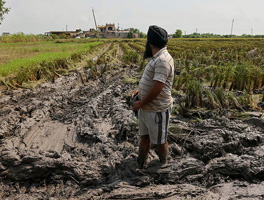
Year of extremes: India hit by disasters on 331 of 334 days in 2025, up from 295 in 2024 and 292 in 2022, 18 December 2025
Down To Earth


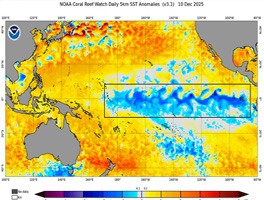
Down To Earth Equatorial Pacific shows early signals of El Niño return in 2026, 18 December 2025


COMMENTARIES
What was it like being at COP30 in Belém? Reflections from a first-time observer, 18 December 2025
After two weeks of traversing meeting rooms and long walkways, I realised that the UN climate summit functions as much as an arena of narrative contestation as it does as a negotiating forum


Bihar’s renewable energy policy signals a shift beyond electrification, 17 December 2025
Off-grid solar takes centre stage in the state’s new renewable energy roadmap
 
   
  CLIMATE NEWS | SCIENCE| IMPACTS| POLITICS  
   
 
Down To Earth
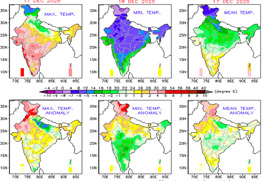
Weak western disturbances and shifting jet stream drive warm, dry winter in North India, 18 December 2025
Shifting upper-level winds may be suppressing rain and snow over the Himalayas, worsening air quality across the north-west


Down To Earth
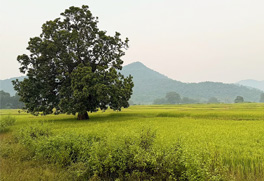
Small farms, big climate gains: ICAR study shows how agroforestry can be a powerful climate tool, 18 December 2025
Scientists worked with farmers in Odisha’s Eastern Ghats to set up a one-acre agroforestry model on their fields, integrating trees with existing crops; mango & cashew trees sequestered carbon and brought economic returns


Down To Earth
Clean energy subsidies jump 31% to Rs 32,000 crore in 2023-24, but PSU capex still flows to fossil fuels: IISD, 17 December 2025
Public investment patterns risk locking in carbon-intensive infrastructure, finds report


Down To Earth
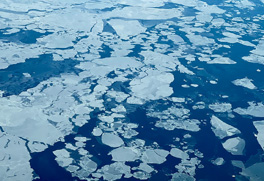
From record warming to rusting rivers, 2025 Arctic Report Card shows a region transforming faster than expected, 17 December 2025
Shorter snow seasons, shrinking sea ice and record ocean temperatures are intensifying floods, storms and wildfires


Down To Earth
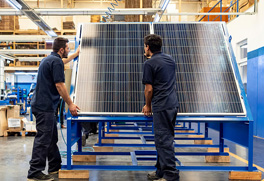
Global solar inverter market set to face two-year decline before stabilising, Wood Mackenzie forecasts, 16 December 2025
Report cites policy uncertainty, falling prices and market saturation; Cybersecurity rules and trade tensions add to market volatility


Down To Earth
IIT Madras study finds electrolyser design can cut green hydrogen emissions by up to 25 per cent, flags material risks, 16 December 2025
Research lays foundation for future work on detailed life-cycle datasets, production pathways and material availability, say authors


Down To Earth
2025’s extreme weather had the jet stream’s fingerprints all over it, from flash floods to hurricanes, 16 December 2025
The polar jet stream's unusual southward shift caused severe flash floods in the US, while steering hurricanes away this summer


Down To Earth
Heatwaves are becoming India’s deadliest climate disaster—but they still don’t count as one, 16 December 2025
As long as heatwaves don’t fit into the usual disaster framework, they will keep killing people quietly, hurting those who are least protected the most


Down To Earth
Biodiversity loss and land degradation fuel climate feedback loop, UN report warns, 15 December 2025
Human-driven ecosystem damage is amplifying climate change; Amazon and other key ecosystems show signs of weakening as carbon sinks, finds report


Down To Earth
Polar bears in southeast Greenland are changing their DNA to adapt and survive in a warming Arctic: Study, 12 December 2025
Changes found in gene expression areas of DNA linked to fat processing, which is important when food is scarce


    Carbon Politics: A Video Podcast by CSE
 
    Anil Agarwal Dialogue
spacer
DTE Hindi   DTE Hindi


    Gobar Times
 
    Online Training Course
spacer
DTE Hindi   DTE Hindi
 
     
This weekly digest is published by Down to Earth and the Centre for Science and Environment, a Delhi-based global think tank advocating on global south developmment issues.
We would love your feedback on this weekly digest. To speak to our experts for quotes and comments on the above stories. Please email to vikas@cseindia.org
 
Follow us on
spacer facebook spacer Down to Earth video spacer twitter spacer
  If you like our work and would like others to join our climate network and the climate conversation, please forward this to your friends. Interested in Climate weekly? Sign Up here