|
Dear readers,
Welcome to the Climate Weekly Digest by the Centre for Science and Environment’s Climate Change programme and Down to Earth.
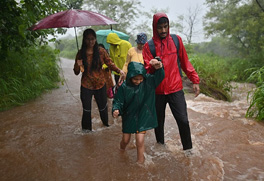
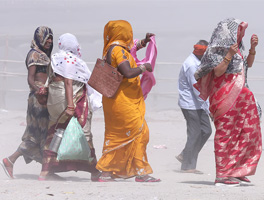
As climate change continued to fuel extreme weather across the world, heatwaves emerged as the deadliest climate disasters in 2025. Down to Earth’s Shagun Kapil, writing about the latest annual report by World Weather Attribution (WWA), highlights that heatwaves killed more people than floods, storms or wildfires—disproportionately affecting poor and marginalised communities. The WWA identified 157 extreme weather events in 2025 that met its humanitarian impact criteria, with floods and heatwaves being the most frequent.
The report shows that climate change has made extreme heat more intense and frequent, with global temperatures rising by about 0.3°C since 2015 and adding an average of 11 additional extremely hot days annually worldwide. Women, in particular, face disproportionate impacts as they are overwhelmingly employed in informal, heat-exposed work while also carrying the bulk of unpaid care work. The report stresses on adaptation measures to reduce vulnerability while warning that 2025 also showed how adaptation alone cannot keep pace with rising extreme weather disasters.
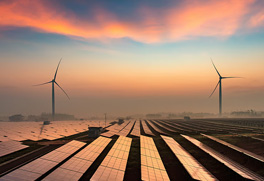
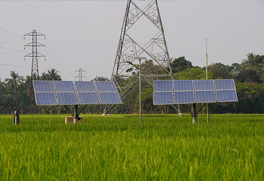
In renewable energy news, India’s Union government is preparing to roll out PM-KUSUM 2.0 in 2026 as a successor to its flagship PM-KUSUM Scheme, signalling a renewed push for decentralised solar agriculture. Down to Earth’s Puja Das reports that the current scheme has an outlay of INR 34,422 crore to add about 34,800 megawatt (MW) of solar capacity through decentralised grid-connected plants, standalone solar pumps and the solarisation of grid-connected agricultural pumps. As of November 2025, a total of 10,203 MW has been installed at INR 7,106 crore under all components of the PM-KUSUM Scheme.
Given the continued demand, PM-KUSUM 2.0 is expected to build on this progress with revised targets and incentives, focusing on a technically robust, financially viable and farmer-centric framework. Greater emphasis is expected on feeder-level solarisation and private participation in decentralised renewable projects. Das writes that while implementation-related challenges persist, payment security, quicker approvals and stronger state-level coordination will be crucial to scale up PM-KUSUM 2.0.
Lastly, the latest episode of Carbon Politics was released on December 28. In this episode titled “Beyond Belem: What's next on the multilateral climate agenda?”, CSE Climate’s Avantika Goswami, Trishant Dev, Sehr Raheja and Rudrath Avinashi discuss the critical outcomes from COP30 in Brazil as well as what to expect on global climate cooperation in 2026.
|
|
|
| |
|
|
| |
 |
|
| |
By - Upamanyu Das
Climate Change, CSE
|
| |
|
|
|
|
| |
|
|
| |
|
|
| |
|
|
| |
Heatwaves were the deadliest climate disasters in 2025, hitting poorest hardest, WWA finds, 30 December 2025
|
|
 |
|
|
| |
|
|
| |
 |
|
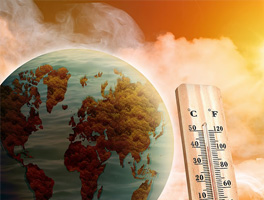
El Niño missing, blame fossil fuel for deadlier climate extremes in 2025: WWA, 30 December 2025
|
|
|
| |
|
|
| |
|
|
| |
|
|
| |
CLIMATE NEWS | SCIENCE| IMPACTS| POLITICS |
|
| |
|
|
| |
|
|
| |
|
|
| |
|
|
| |
|
|
| |
|
|
| |
|
|
| |
|
|
| |
|
|
| |
|
|
| |
|
|
| |
|
|
| |
|
|
| |
|
|
| |
|
|
| |
|
|
| |
|
|
| |
|
|
| |
|
|
| |
|
|
| |
| |
|
Carbon Politics: A Video Podcast by CSE |
|
|
|
 |

|
|

|
|
|
| |
|
|
| |
| Onsite Training |
|
Online Training Course |
| |
|
|
|
|
|
|
|
|
| |
|
|
|