Down to Earth
Sign up for weekly digest
Down to Earth Facebook Down to Earth Twitter Down to Earth Twitter
 
February 6 – February 11, 2026
 
     
A weekly digest on impacts, politics and science of the climate emergency; from the Global South perspective. Access our extensive coverage on climate. You can find this digest in the web here.
Dear readers,

Welcome to the Climate Weekly Digest by the Centre for Science and Environment’s Climate Change programme and Down to Earth.

A new Niti Aayog study claims that India’s goal of becoming a $30 trillion economy by 2047 and achieving net zero emissions by 2070 will depend on front-loading investment, energy systems reforms and deep social and resource trade-offs. Down to Earth’s Puja Das writes that as per the report’s ‘Net Zero Scenario’, India’s energy demand will grow at a modest pace despite an eleven-fold GDP expansion, being driven by energy efficiency gains, increased electrification and circularity. Fossil fuels will shrink to a residual role by 2070, and renewables and nuclear power will dominate electricity generation—supported by green hydrogen, bioenergy, energy storage and carbon capture technologies.

The scale of the transition means that India will require cumulative investment of about $22.7 trillion by 2070, with nearly half required in the power sector. Land and water constraints pose another challenge, alongside increased demand for critical minerals. The social transition will be crucial as millions of jobs remain tied to fossil fuels, thereby requiring targeted re-skilling and social protection. The report prescribes that energy supply expansion must be matched by demand-side measures including efficiency, behavioural change and circularity to cut down emissions and reduce infrastructure stress. Financing the transition will require systemic reforms such as deepening bond markets and scaling blended finance, while international climate finance will be essential. A whole-of-economy approach towards the net zero transition could anchor a cleaner, resilient growth model and offer a blueprint to the rest of the developing world.

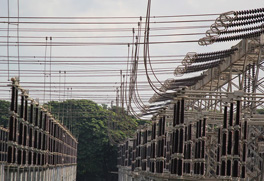
In energy news, according to the International Energy Agency (IEA), global electricity demand is projected to grow at its fastest pace in decades through 2030. Das explains that this increased demand will be driven by electrification of industry and transport, expansion of data centres and cooling. The IEA forecasts global power demand to rise by 3.6 per cent annually between 2026 and 2030, adding about 1100 terawatt-hours (TWh) each year‚ which is 50 per cent higher than the annual additions over the past decade. Within India, the demand is projected to grow at 6.4 per cent a year—among the fastest globally, with the country expected to add more than 570 TWh to its annual electricity consumption by 2030. The IEA points out that grid constraints continue to pose a major risk globally, and annual global grid investment need to increase by 50 per cent from current levels by 2030 to meet the projected demand.
   
 
Down To Earth
 
By - Upamanyu Das
Climate Change, CSE


EXTREME WEATHER TRACKER


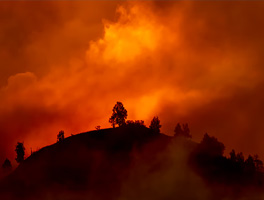
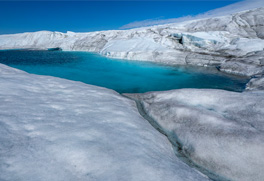
Climate change made Chile and Argentina wildfires this year up to three times more likely, study finds, 12 February 2026
Down To Earth


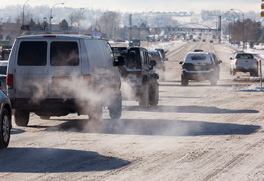
Down To Earth January 2026 fifth warmest on record despite cold snap in Europe, North America, 10 February 2026


COMMENTARIES
Budget 2026 is green on paper, fragile on the ground, 11 February 2026
It acknowledges climate risk, strengthens pollution control and supports clean energy innovation; but it stops short of embedding ecological thinking into the core of economic planning
 
   
  CLIMATE NEWS | SCIENCE| IMPACTS| POLITICS  
   
 
Down To Earth
Trump’s plan to wipe out US climate rules relies on EPA rescinding its 2009 endangerment finding — but will it survive court challenges?, 12 February 2026
Judge rules Energy Department review process violated federal law


Down To Earth
Redirecting fossil fuel taxes could fund India’s decarbonisation push, boost GDP: CSEP Study, 11 February 2026
No new taxes would be required; instead, a small portion of existing fossil-related revenues could be earmarked for climate finance


Down To Earth
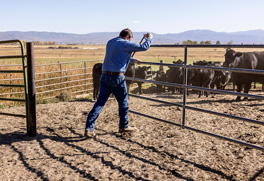
Sixth year of drought in Texas and Oklahoma leaves ranchers bracing for another harsh summer, 11 February 2026
Rising temperatures & La Niña climate pattern; water supply shortages; lingering economic impacts from previous drought key reasons for enduring droughts


Down To Earth
NITI Aayog report urges bold energy reforms to achieve $30 trillion GDP by 2047 & Net Zero by 2070, 10 February 2026
Achieving Net Zero requires cumulative investments of about $22.7 trillion by 2070, nearly half in the power sector alone


Down To Earth
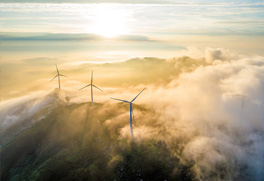
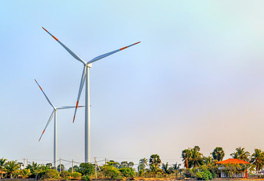
Global wind, solar pipeline hits record 4.9 TW, but rich economies fall behind, 10 February 2026
New GEM analysis shows emerging economies like India and China driving growth in clean energy projects, while G7 countries struggle to translate climate targets into large-scale deployment


Down To Earth
African climate science-policy has a serious blind spot: Slowing Atlantic circulation, 10 February 2026
A more responsive process needed to update regionally relevant climate change panel findings between global assessment cycles


Down To Earth
Climate risks far exceed what traditional economic models assume, new report warns, citing extremes and tipping points, 09 February 2026
Widely used economic and financial frameworks treat climate change as a marginal shock, overlooking compounding extreme weather, widening uncertainty and the risk of irreversible damage to natural and economic systems


Down To Earth
Global electricity demand set to surge through 2030 as data centres, EVs and cooling drive new ‘Age of Electricity’: IEA, 07 February 2026
India’s electricity demand is projected to grow at an average 6.4 per cent per year through 2030, among the fastest rates globally


Down To Earth
Urban heat in India set to intensify as some cities warm faster; new research finds, 06 February 2026
Jalandhar, Patiala, Hisar, and Erode to experience additional warming, likely to be reached in the second half of this century


Down To Earth
As the climate changes, what does the future hold for the Winter Olympic and Paralympic Games?, 06 February 2026
Strategies like adjusting event schedules and enhancing snowmaking are being considered to ensure the Games' sustainability, but these come with significant challenges and trade-offs


    Carbon Politics: A Video Podcast by CSE
 
    Video
spacer
CSE   DTE Hindi


    Online Training
 
    Anil Agarwal Dialogue
spacer
DTE Hindi   DTE Hindi
     
    Gobar Times


This weekly digest is published by Down to Earth and the Centre for Science and Environment, a Delhi-based global think tank advocating on global south developmment issues.
We would love your feedback on this weekly digest. To speak to our experts for quotes and comments on the above stories. Please email to vikas@cseindia.org
 
Follow us on
spacer facebook spacer Down to Earth video spacer twitter spacer
  If you like our work and would like others to join our climate network and the climate conversation, please forward this to your friends. Interested in Climate weekly? Sign Up here