|
Dear readers,
Welcome to the Climate Weekly Digest by the Centre for Science and Environment’s Climate Change programme and Down to Earth.
Only 15 days into February 2026—traditionally regarded as a winter month—temperatures across several Indian cities spiked and remained above normal. Shagun Kapil reports that out of 36 cities analysed by Down to Earth, 27 recorded maximum day temperatures that exceeded normal levels in the first 15 days of the month. Moreover, minimum night temperatures were above normal across 20 states. North India has been particularly impacted, with 15 north Indian cities recording maximum and minimum temperatures several degrees above average.
On February 15, for instance, New Delhi saw the day temperature reach 4.1°C above normal, while in Srinagar, the day temperature reached 7.8°C above normal. Many Himalayan states have also been experiencing an unusually dry winter with little rain or snowfall. The lack of winter precipitation coupled with higher-than-usual temperatures is troubling for agriculture and food security, with the India Meteorological Department (IMD) warning that the warm weather is expected to impact winter crops and reduce yields.
In energy updates, the International Solar Alliance (ISA) has launched a global AI-for-Energy mission to increase the adoption of Artificial Intelligence (AI) in clean energy across over 120 member countries. Down to Earth’s Puja Das writes that the proposed mission centres digital infrastructure and citizen-centric platforms within the energy transition, with AI seen as key to improve grid resilience, decentralised renewables and service delivery. The initiative seeks to align policy, strengthen data infrastructure and mobilise finance to move beyond isolated projects towards system-wide transformation. India’s digital public infrastructure in the power sector is being seen as a model in this regard, with the aim of integrating consumers, vendors, utilities and financial institutions through transparent and inclusive platforms.
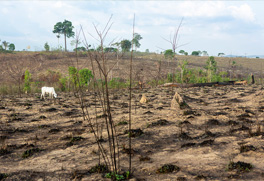
Lastly, new research has revealed that the Amazonian drought in 2023 resulted in the release of up to 170 million tonnes of carbon between September and November of that year. Down to Earth’s Himanshu Nitnaware explains that extreme drought and prolonged heatwave in 2023 pushed parts of the Amazon rainforest from acting as a carbon sink to becoming a carbon source. According to the study, unusually high sea surface temperatures in the surrounding oceans drove temperatures by more than 1.5°C above normal, disrupting the Amazon’s carbon cycle. The study suggested that ocean warming and prolonged drought could worsen the Amazon’s ability to absorb carbon—a shift that may accelerate climate impacts.
|
|
|
| |
|
|
| |
 |
|
| |
By - Upamanyu Das
Climate Change, CSE
|
| |
|
|
|
|
| |
|
|
| |
|
|
| |
|
|
| |
Valencia floods: Warming supercharges storms, signalling worldwide trend, 18 February 2026
|
|
 |
|
|
| |
|
|
| |
 |
|
Climate change made Chile and Argentina wildfires this year up to three times more likely, study finds, 12 February 2026
|
|
|
| |
|
|
| |
|
|
| |
|
|
| |
|
|
| |
|
|
| |
CLIMATE NEWS | SCIENCE| IMPACTS| POLITICS |
|
| |
|
|
| |
|
|
| |
|
|
| |
|
|
| |
|
|
| |
|
|
| |
|
|
| |
|
|
| |
|
|
| |
|
|
| |
|
|
| |
|
|
| |
|
|
| |
|
|
| |
|
|
| |
|
|
| |
|
|
| |
|
|
| |
|
|
| |
|
|
| |
|
|
| |
|
|
| |
|
|
| |
|
|
| |
|
|
| |
|
|
| |
|
|
| |
|
|
| |
| |
|
Carbon Politics: A Video Podcast by CSE |
|
|
|
 |

|
|

|
|
|
| |
|
|
| |
|
|
| |
|
|