Down to Earth
Sign up for weekly digest
Down to Earth Facebook Down to Earth Twitter Down to Earth Twitter
 
February 20 – February 26, 2026
 
     
A weekly digest on impacts, politics and science of the climate emergency; from the Global South perspective. Access our extensive coverage on climate. You can find this digest in the web here.
Dear readers,

Welcome to the Climate Weekly Digest by the Centre for Science and Environment’s Climate Change programme and Down to Earth.

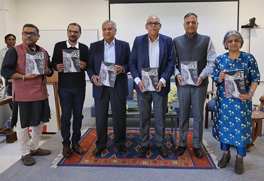
On February 25, CSE and Down to Earth released their annual flagship publication, “State of India’s Environment 2026” at the Anil Agarwal Dialogue 2026. The dialogue is an annual conclave of communicators and reporters from India working on environment and development. The latest iteration of the report draws attention to the breaching of planetary boundaries, or biophysical “safe zones”, that is putting humans and other species at risk. Out of nine planetary boundaries, seven have already been breached. This includes climate change, biosphere integrity, land system change, freshwater change, modification of biogeochemical flows, introduction of novel entities and ocean acidification.

The report highlights rising ocean acidification where surface ocean acidity has gone up by 30-40 per cent since the industrial era. In terms of biosphere integrity, the extinction rate of species is ranging above 100 extinctions per million species, way above the safe threshold of 10. Global forest cover has fallen well below the 75 per cent minimum threshold to 59 per cent, while novel entities such as plastics and synthetic materials remain a growing threat. The earth’s vital life support systems are collapsing, and human intervention remains the core driver.

In clean energy news, a new report has revealed that India’s clean electricity transition is gaining traction across most major states, though progress is uneven due to resource and institutional disparities. Down to Earth’s Puja Das, writing about the “Indian States’ Electricity Transition (SET)” report, explains that a wide group of states is advancing along different dimensions of power sector reform, renewable energy expansion and increased electrification. Southern and Himalayan states lead in decarbonisation, with Karnataka, Himachal Pradesh and Kerala being top performers in reducing power sector emissions intensity. Andhra Pradesh, Uttar Pradesh and Rajasthan are leading in policy-driven transition measures, such as green tariffs, promoting electric vehicles and energy storage. However, despite broad progress, states such as West Bengal, Telangana and Jharkhand remain in early stages of transitioning and require stronger institutions, improved utility finances and clear long-term policy frameworks.

Lastly, the latest episode of Carbon Politics was released on Saturday, February 28. Titled “Unpacking the Trade-Climate Nexus”, the episode features CSE Climate’s Trishant Dev in conversation with Dr. Rob Davies, Honorary Professor at Nelson Mandela School of Public Governance and former Minister of Trade and Industry for South Africa. The pair discuss the evolving dynamics between trade and climate, and how developing countries can industrialise in a decarbonising world.
   
 
Down To Earth
 
By - Upamanyu Das
Climate Change, CSE


EXTREME WEATHER TRACKER


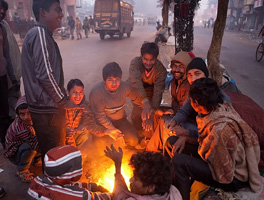
India’s cold wave events shifting or expanding geographically, no longer confined to core winter months: DTE analysis, 24 February 2026
Down To Earth


COMMENTARIES
SOE 2026: India is warming fast. Will it lead to a climate apocalypse?, 26 February 2026
There is a need for regionally tailored adaptation strategies contingent not only on the nature of climate change but on the exposure and vulnerability of local communities
 
   
  CLIMATE NEWS | SCIENCE| IMPACTS| POLITICS  
   
 
Down To Earth
CSE and Down To Earth release the 2026 State of India’s Environment report at Anil Agarwal Dialogue 2026, 25 February 2026
Report says the Earth’s ‘planetary boundaries’ or vital life support systems are getting breached and are collapsing due to human interventions


Down To Earth
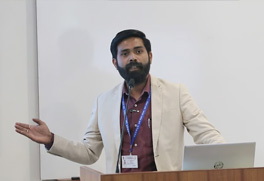
New climate states emerging in India, with drought exacerbating moisture and rainfall: Arpit Tiwari at AAD 2026, 26 February 2026
India needs region-specific adaptation plans, shift from national policy to finely tuned region-specific strategies for water management and agriculture


Down To Earth
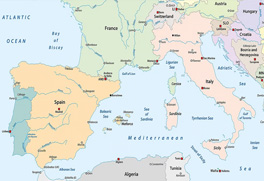
What led to extreme rain that deluged the Western Mediterranean this past month? Climate change, says WWA, 26 February 2026
Scientists able to ascertain that series of fierce storms caused by a blocking pattern in the upper atmosphere correlated to warming and consequent climate change


Down To Earth
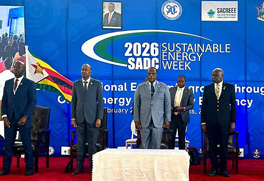
SADC Sustainable Energy Week opens in Zimbabwe, 26 February 2026
As southern Africa scrambles to end energy poverty, key decision makers from 16-member bloc gathered in Zimbabwe to explore ways of transforming energy challenges into a blueprint for a sustainable, powered-up future


Down To Earth
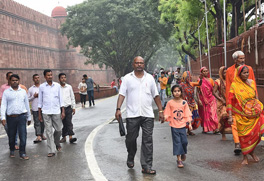
Lethal moist heatwaves during monsoon can be predicted for adaptation, 25 February 2026
When the southwest monsoon is active and the northern plains and central India are receiving rainfall, they face the risk of moist heatwaves; during break phases, the risk shifts towards southern and eastern India


Down To Earth
Ocean carbon blindspot could hamper climate change mitigation and adaptation: UNESCO Report, 25 February 2026
Analysis urges monitoring and data collection from all layers of the ocean, besides modelling of ocean processes and coordination among nations on ocean-based policies


Down To Earth
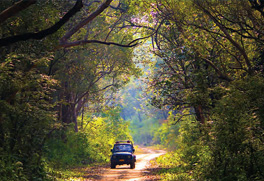
SOE 2026: Not healthy green, 25 February 2026
Indian forests exhibit hindered ability to translate the greenness into carbon uptake in recent decades


Down To Earth
Clean electricity transition spreads across Indian states, but gaps in utilities, policy execution remain, 22 February 2026
Karnataka, Himachal Pradesh & Kerala remained top performers in reducing power sector emissions intensity


Down To Earth
The highly salty Southern Indian Ocean is getting fresher due to global warming: Study, 20 February 2026
Plankton and sea grass are the foundation of the marine food web; salinity change could affect ocean biodiversity, say researchers


    Carbon Politics: A Video Podcast by CSE
 
    Online Training
spacer
CSE   DTE Hindi


    Gobar Times
 
    Cartoon
spacer
DTE Hindi   DTE Hindi
 
     
This weekly digest is published by Down to Earth and the Centre for Science and Environment, a Delhi-based global think tank advocating on global south developmment issues.
We would love your feedback on this weekly digest. To speak to our experts for quotes and comments on the above stories. Please email to vikas@cseindia.org
 
Follow us on
spacer facebook spacer Down to Earth video spacer twitter spacer
  If you like our work and would like others to join our climate network and the climate conversation, please forward this to your friends. Interested in Climate weekly? Sign Up here