|
Dear readers,
Welcome to the Climate Weekly Digest by the Centre for Science and Environment’s Climate Change programme and Down to Earth.
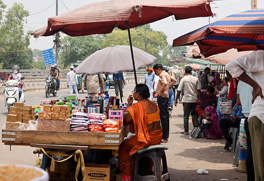
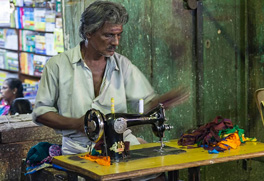
According to the India Meteorological Department’s (IMD) seasonal outlook for March to May, Summer 2026 is set to be hotter-than-normal for India’s hill regions, including the Himalayan region, the northeastern states and parts of the Western Ghats. Down to Earth’s Akshit Sangomla writes that the maximum temperatures for most of the country could likely be above-normal during this period. Minimum night-time temperatures could rise above-normal as well, except for some parts of southern peninsular India. Most parts of the country are expected to face an above-normal number of heatwave days between March and May.
For mountainous and hilly regions, heightened temperatures could be further worsened by the lack of rainfall in large parts of western Himalayas and northeast India. This, in turn, could lead to increased atmospheric dryness, drought-like conditions and wildfires. With the increased likelihood of heatwave conditions, the March-May season is set to pose significant risks to public health, water, power and essential services, particularly for vulnerable populations.
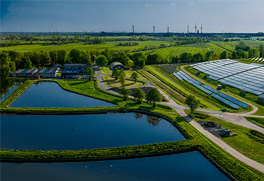
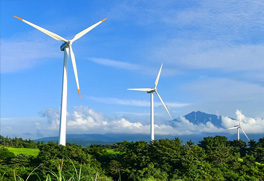
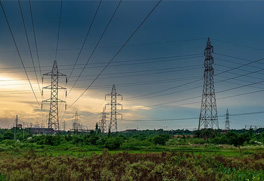
In energy updates, India’s Central Electricity Authority (CEA) has stated that the country’s renewable capacity is expanding faster than the system’s ability to absorb it. Down to Earth’s Puja Das explains that due to the pace of renewables expansion, curtailment issues, transmission delays and storage gaps are emerging as key barriers that must be addressed to sustain India’s clean energy growth.
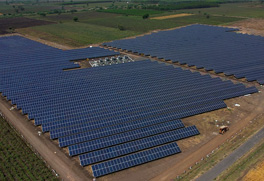
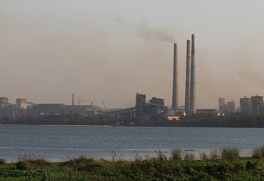
Curtailment has been a prominent concern, with India curtailing 2.3 terawatt-hours (TWh) of solar power between May and December 2025 despite record renewables expansion. Transmission constraints compound this issue, as project developers are unable to evacuate power adequately, leading to output cuts. Energy storage is emerging as a central pillar of India’s long-term power system, with battery energy storage systems (BESS) and pumped hydro storage touted as essential for reliable power supply. As India moves towards its target of 500 GW of renewable energy capacity by 2030, addressing these three areas will be crucial for the country’s clean energy transition outlook.
Lastly, the latest episode of Carbon Politics was released on Saturday, February 28. In this episode, titled “Unpacking the Trade-Climate Nexus”, CSE Climate’s Trishant Dev speaks to Dr. Rob Davies, former Minister of Trade and Industry for South Africa and Honorary Professor at Nelson Mandela School of Public Governance. They discuss the evolving dynamics between trade and climate, and how developing countries can industrialise in a decarbonising world.
|
|
|
| |
|
|
| |
 |
|
| |
By - Upamanyu Das
Climate Change, CSE
|
| |
|
|
|
|
| |
|
|
| |
|
|
| |
|
|
| |
 |
|
Possibility of scorching summer for India’s hilly regions in 2026, 02 March 2026
|
|
|
| |
|
|
| |
|
|
| |
|
|
| |
CLIMATE NEWS | SCIENCE| IMPACTS| POLITICS |
|
| |
|
|
| |
|
|
| |
|
|
| |
|
|
| |
|
|
| |
|
|
| |
|
|
| |
|
|
| |
|
|
| |
|
|
| |
|
|
| |
|
|
| |
|
|
| |
|
|
| |
|
|
| |
|
|
| |
|
|
| |
|
|
| |
|
|
| |
|
|
| |
| |
|
Carbon Politics: A Video Podcast by CSE |
|
|
|
 |

|
|

|
|
|
| |
|
|
| |
|
|
| |
|
|
|