Down to Earth
Sign up for weekly digest
Down to Earth Facebook Down to Earth Twitter Down to Earth Twitter
 
March 13 – March 19, 2026
 
     
A weekly digest on impacts, politics and science of the climate emergency; from the Global South perspective. Access our extensive coverage on climate. You can find this digest in the web here.
Dear readers,

Welcome to the Climate Weekly Digest by the Centre for Science and Environment’s Climate Change programme and Down to Earth.

Green public procurement (GPP) is emerging as a key strategy to increase the demand for low-carbon materials and support green industrialisation. CSE Sustainable Industrialisation Unit’s Sayantan Haldar and Parth Kumar explain how GPP can spur decarbonisation in India’s steel and cement sectors, which currently account for one-fifth of emissions from Indian industries. While technologies for green steel and low-carbon cement have already been developed, the demand for such technologies has remained weak, one of the primary obstacles being the “green premium” for environmentally-friendly production methods.

However, with greater demand and scaled production, this green premium can decline over time. Given that the Indian government is the largest buyer of steel and cement in the country, GPP can create predictable demand by mandating the use of low-carbon materials in government infrastructure projects. Haldar and Kumar point out that such predictable demand will also reduce investment risk and create market conditions for green production to become increasingly viable as the cost gap narrows.

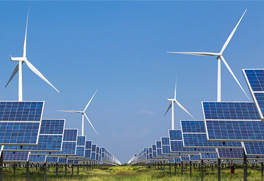
In energy news, India’s Central Electricity Authority’s midterm review of the 20th Electric Power Survey (EPS) has highlighted how India is set to undergo a massive transition over the next decade as power demand rises and renewable energy expands rapidly. Down to Earth’s Puja Das writes that India’s peak electricity demand is projected to reach 459 GW while installed power generation capacity will double from 520 GW in January 2026 to 1,121 GW by 2035-36. Within this, solar photovoltaic (PV) will lead the transition, accounting for 509 GW or 45 per cent of total installed capacity.

While renewable energy generation will increase significantly over time, coal is expected to continue supplying more than half of the country’s electricity output during this period, and by 2035-36, is expected to remain the second-largest energy source with 315 GW of installed capacity. Overall, India’s non-fossil fuel power capacity is projected to reach 786 GW, or nearly 70 per cent of the country’s total installed capacity by 2035-36—indicating a critical shift towards clean energy.

Finally, the next episode of Carbon Politics will be released on Saturday, March 28. In this episode titled “The Sovereign Debt Crisis: A Hindrance to Climate Action”, I speak with Marina Zucker-Marques, a Senior Academic Researcher at the Boston University Global Development Policy Center, about how high levels of sovereign debt can impede climate action in the Global South and the avenues for debt relief for developing countries.
   
 
Down To Earth
 
By - Upamanyu Das
Climate Change, CSE


EXTREME WEATHER TRACKER


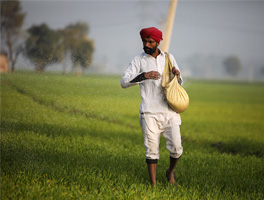
Death of winter: Heat arrives early, threatens to shrink Punjab and Haryana’s wheat harvest, 19 March 2026
Down To Earth


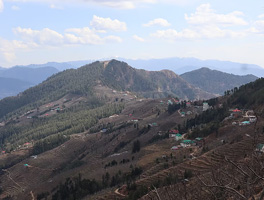
Down To Earth Death of winter: Himachal no longer shivering as weather patterns shift, 18 March 2026


COMMENTARIES
Renewable Pioneers: How South India is powering energy transition, 17 March 2026
Experiences of Karnataka and Tamil Nadu, which together generate over a fifth of India's renewable energy, offer crucial lessons for accelerating the country's power transition
 
   
  CLIMATE NEWS | SCIENCE| IMPACTS| POLITICS  
   
 
Down To Earth
India’s power capacity to double to 1,121 GW by 2035-36 as solar leads energy transition: CEA’s 20th Electric Power Survey Midterm Review, 19 March 2026
Coal will continue as India’s primary baseload power source through 2035-36


Down To Earth
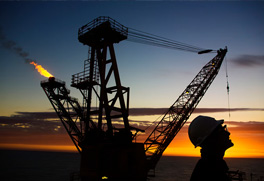
Methane’s heavy hitters: Turkmenistan tops list of worst-emitting oil and gas sites, 19 March 2026
New satellite tracking reveals concentrated sources behind powerful warming emissions


Down To Earth
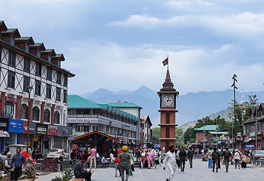
Globally one in every six people felt climate change-driven heat impacts in last three months, Srinagar most affected in India, 18 March 2026
Climate change-triggered risky heat prevailed for every single day in 47 countries during December 25 to February 26


Down To Earth
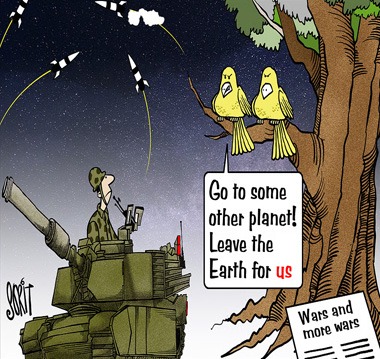
West Asia conflict sends energy jitters across Asia, revives nuclear ambitions in Japan, South Korea, 18 March 2026
Wood Mackenzie analysis finds coal cushions short-term shocks as LNG crisis ripples across Asia


Down To Earth
Climate finance has failed Africa twice over — how to fix it, 18 March 2026
Africa faces a worsening climate crisis as inadequate finance and a broken global system stall both adaptation and decarbonisation


Down To Earth
Renewable Pioneers: How Karnataka’s rapid transition was achieved, 17 March 2026
Almost overnight, the state flipped the switch from inadequate hydro and thermal power to solar energy


Down To Earth
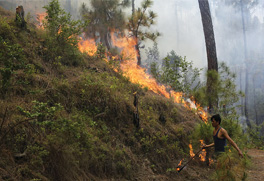
Himalayan fire shift: Tale of flames and ice unfolding across the range, 17 March 2026
As the Himalayas warm and winters grow drier, forest fires are climbing to unprecedented heights, where their number has quadrupled over the past decade


Down To Earth
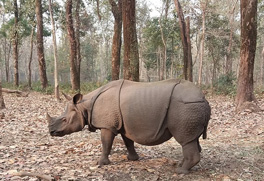
Does a changing climate increase the risk of rhino poaching? Yes, say experts, 17 March 2026
Climate-related pressures disrupt livelihoods, particularly among rural communities who live alongside wildlife, increasing the risk of poaching and other wildlife crimes


Down To Earth
African countries forced to extract fossil fuels to service external debt: Report, 16 March 2026
These countries are trapped in an “economic architecture” designed to drain wealth and resources from the continent, shows report


Down To Earth
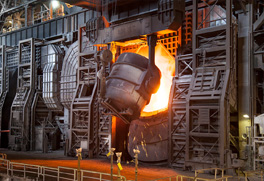
Green public procurement is key to decarbonising India’s steel and cement sectors, 16 March 2026
Government demand for low-carbon construction materials can unlock investment, cut emissions and drive India’s green industrial transition


Down To Earth
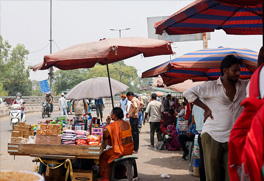
Extreme heat severely limits daily activity for more people in India than anywhere else: Study, 13 March 2026
Heat limitation more pronouced for elderly and most severe in Indo-Gangetic Plain, eastern lowlands


Down To Earth
Rising temperatures begin to reshape behaviour of plants and wildlife across India, say scientists, 13 March 2026
Unusually high temperatures are disrupting breeding, flowering and survival cycles across species


    Carbon Politics: A Video Podcast by CSE
 
    Cartoons
spacer
CSE   DTE Hindi


    Gobar Times
 
    Cartoons
spacer
DTE Hindi   DTE Hindi
 
     
This weekly digest is published by Down to Earth and the Centre for Science and Environment, a Delhi-based global think tank advocating on global south developmment issues.
We would love your feedback on this weekly digest. To speak to our experts for quotes and comments on the above stories. Please email to vikas@cseindia.org
 
Follow us on
spacer facebook spacer Down to Earth video spacer twitter spacer
  If you like our work and would like others to join our climate network and the climate conversation, please forward this to your friends. Interested in Climate weekly? Sign Up here