|
Dear readers,
Welcome to the Climate Weekly Digest by the Centre for Science and Environment’s Climate Change programme and Down to Earth.
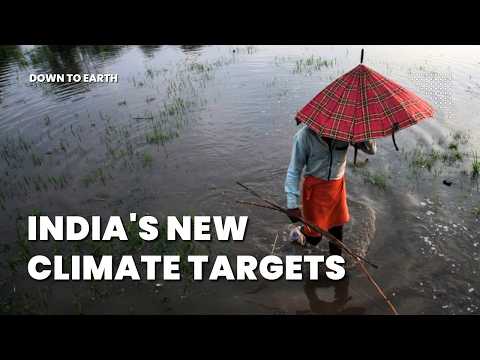
On 25 March, India’s Union Cabinet approved the country’s new Nationally Determined Contribution (NDC) for the period 2031-2035. CSE Climate’s Sehr Raheja and I analyse how India’s latest climate targets build on previous goals and commit to enhanced climate ambition under the Paris Agreement. The latest NDC aims to reduce emissions intensity of GDP by 47 per cent by 2035 from 2005 levels, expand non-fossil power capacity to 60 per cent of total installed power capacity by 2035, and create 3.5-4 billion tonnes of CO2 equivalent carbon sink by 2035 from 2005 levels. Additionally, the NDC commits to climate-friendly economic development pathways, climate-resilient infrastructure, mobilising low-cost climate finance, capacity building and R&D, and alignment with the principle of “Lifestyle for Environment (LiFE)”.
According to our analysis, India’s renewable energy capacity addition trajectory is likely to exceed the target, with the non-fossil capacity target of 60 per cent (as against the present 52.57 per cent) likely to be achieved by 2028. Furthermore, India’s Fourth Biennial Update report states that India’s emissions intensity of GDP reduced by 36 per cent by 2020 from 2005 levels, while an additional carbon sink of 2.29 billion tonnes CO2 equivalent had been created between 2005 and 2021. The latest NDC follows a pragmatic approach taken by other large emerging economies, and highlights how balancing developmental priorities with climate goals continues to be a top concern.
Moving onto trade and climate, The World Trade Organization's (WTO) 14th Ministerial Conference (MC14) was held in Cameroon between March 26-29. CSE Climate’s Trishant Dev and Rudrath Avinashi, who were in attendance at the conference, write about the key issues in discussion as well as climate and green industrial policy concerns at the WTO. Alongside, CSE’s latest briefing on the trade-climate nexus directly engages with structural inequalities in global trade and proposes guidelines to ensure that a global green transition can be just and inclusive.
Lastly, the latest episode of Carbon Politics was released on Saturday, March 28. In this episode titled “The Sovereign Debt Crisis: A Hindrance to Climate Action”, I speak to Marina Zucker-Marques, a Senior Academic Researcher at the Boston University Global Development Policy Center, to understand how sovereign debt impacts climate action in developing economies and the avenues for debt relief for the Global South.
|
|
|
| |
|
|
| |
 |
|
| |
By - Upamanyu Das
Climate Change, CSE
|
| |
|
|
|
|
| |
|
|
| |
|
|
| |
|
|
| |
Kenya faces hotter, riskier year after one of its warmest years in 2025, 26 March 2026
|
|
 |
|
|
| |
|
|
| |
 |
|
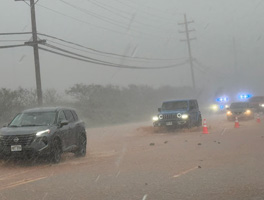
Hawaii records its most serious floods in 20 years, 23 March 2026
|
|
|
| |
|
|
| |
|
|
| |
|
|
| |
|
|
| |
|
|
| |
|
|
| |
|
|
| |
CLIMATE NEWS | SCIENCE| IMPACTS| POLITICS |
|
| |
|
|
| |
|
|
| |
|
|
| |
|
|
| |
|
|
| |
|
|
| |
|
|
| |
|
|
| |
|
|
| |
|
|
| |
|
|
| |
|
|
| |
|
|
| |
|
|
| |
|
|
| |
|
|
| |
|
|
| |
|
|
| |
|
|
| |
|
|
| |
|
|
| |
|
|
| |
|
|
| |
|
|
| |
|
|
| |
|
|
| |
|
|
| |
|
|
| |
|
|
| |
|
|
| |
|
|
| |
|
|
| |
|
|
| |
|
|
| |
| |
|
Carbon Politics: A Video Podcast by CSE |
|
|
|
 |
|
|

|
|
|
| |
|
|
| |
|
|
| |
|
|