|
Dear readers,
Welcome to the Climate Weekly Digest by the Centre for Science and Environment’s Climate Change programme and Down to Earth.
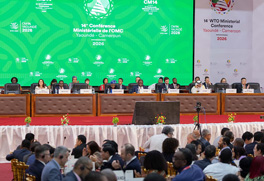
The World Trade Organization’s 14th Ministerial Conference (MC14), held in Cameroon between March 26-29, ended without agreement on key issues, with talks set to resume in Geneva. CSE Climate’s Trishant Dev and Rudrath Avinashi, in attendance at the conference, report that a deadlock emerged over the US’s push for a permanent e-commerce moratorium, which was met with resistance from Brazil. India, along with other developing countries, pushed back on a WTO reform proposal due to concerns around inclusivity in the reform process. Further issues surrounding investment facilitation, agriculture and fisheries failed to see any convergence among members.
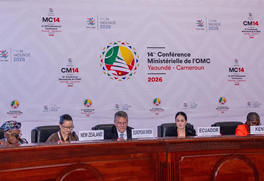
Dev and Avinashi also write about climate-related developments at the conference, with the Coalition of Trade Ministers on Climate (co-led by the trade ministers of Ecuador, the EU, Kenya and New Zealand) adopting a communiqué that agrees on a menu of voluntary actions to guide future work. The communiqué covers Ministerial-level dialogues, multilateral engagement, support for developing countries, sectoral cooperation, standards and measurements, private sector engagement and trade agreements. In addition, 48 WTO members also reaffirmed their commitment to fossil fuel subsidy reform at the conference.
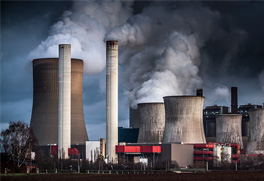
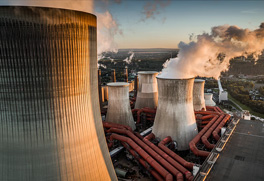
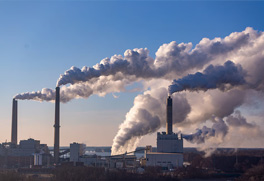
In emissions news, a new study has revealed that US-led emissions caused more than $10 trillion in global economic damage since 1990 through 2020. Down to Earth’s Puja Das writes that the findings make the US—already the world’s largest carbon dioxide emitter—the biggest contributor to global losses linked to climate change. Around 30 per cent of the damage, or $2.97 trillion, occurred within the US, while another 14 per cent affected the EU. For India, the estimated damage reached $500 billion while for Brazil, it reached $330 billion. However, as Das writes, instead of taking accountability, the US is actively stepping back from international and domestic climate commitments. The study also attributes $8.7 trillion in global economic damage to China and $6.4 trillion to the EU.
Lastly, the latest episode of Carbon Politics was released on Saturday, March 28. In this episode titled “The Sovereign Debt Crisis: A Hindrance to Climate Action”, I speak with Marina Zucker-Marques, a Senior Academic Researcher at the Boston University Global Development Policy Center. The discussion ranges from how sovereign debt impacts climate action in developing economies, China’s growing role as a development financier to the avenues for debt relief for the Global South.
|
|
|
| |
|
|
| |
 |
|
| |
By - Upamanyu Das
Climate Change, CSE
|
| |
|
|
|
|
| |
|
|
| |
|
|
| |
|
|
| |
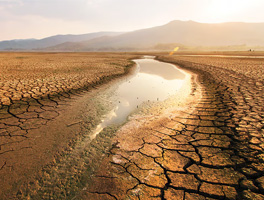
India’s winter is fading, 01 April 2026
|
|
 |
|
|
| |
|
|
| |
 |
|
Warm nights, above normal heat waves across India in April-June 2026: IMD, 01 April 2026
|
|
|
| |
|
|
| |
|
|
| |
|
|
| |
CLIMATE NEWS | SCIENCE| IMPACTS| POLITICS |
|
| |
|
|
| |
|
|
| |
|
|
| |
|
|
| |
|
|
| |
|
|
| |
|
|
| |
|
|
| |
|
|
| |
|
|
| |
|
|
| |
|
|
| |
|
|
| |
|
|
| |
|
|
| |
|
|
| |
|
|
| |
|
|
| |
|
|
| |
|
|
| |
|
|
| |
|
|
| |
|
|
| |
|
|
| |
|
|
| |
|
|
| |
| |
|
Carbon Politics: A Video Podcast by CSE |
|
|
|
 |
|
|
|
|
|
| |
|
|
| |
|
|
| |
|
|
|