| |
|
|
 |
Dear readers,
Welcome to the Climate Weekly Digest by the Centre for Science and Environment’s Climate Change programme and Down to Earth.
The US-Israel war against Iran has caused significant disruption to the world’s energy supply, throwing into question what the future energy map looks like. CSE’s Director General, Sunita Narain, in a new editorial, discusses the impacts of the ongoing crisis—particularly in the Global South which remains dependent on imported fuel. She argues that the world was in the midst of an energy transition well before the war began, with renewables accounting for close to 50 per cent of the world’s installed electricity generation capacity. Further, many of the world’s most climate-vulnerable countries are fast-tracking electro-tech pathways domestically—given their cheaper costs, higher reliability and lower import bills.
The current disruption is raising energy costs and heightening the need for energy security. There is a scramble underway to find new sources of oil and gas with Nigeria, Guyana, Russia and the US in sight. Countries will also look to utilise their own resources including coal and charcoal, but they could also look to transition away from fossil fuels as clean energy technologies become increasingly cost-competitive. The rationale for the clean energy transition, this time around, would be rooted in national energy security with the co-benefits of climate mitigation.
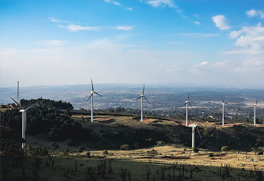
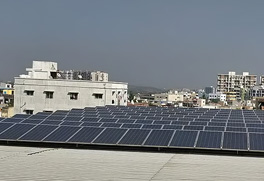
In energy news, a new report by the global energy think tank Ember has revealed that battery storage is now cheap enough to enable solar power to meet as much as 90 per cent of India’s electricity demand. Down to Earth’s Puja Das writes that India will need 930 gigawatt (GW) of solar capacity and 2,560 gigawatt-hour (GWh) of battery storage to achieve this, which is equivalent to 4.9 GW of solar and 13.5 GWh of storage for every 1 GW of average demand. Currently, while solar expands rapidly across India, the country has struggled to scale up battery storage, leading to frequent renewable energy curtailment. However, falling battery storage costs can unlock India’s vast solar potential, making round-the-clock solar electricity a viable and cheaper alternative to fossil fuels.
Finally, the latest episode of Carbon Politics, titled “The Sovereign Debt Crisis: A Hindrance to Climate Action”, was released on March 28. In this episode, I speak with Marina Zucker-Marques from the Boston University Global Development Policy Center about how sovereign debt impedes climate action in the developing world, the role of Chinese development finance, and the avenues for debt relief for the Global South.
|
|
|
| |
|
|
| |
 |
|
| |
By - Upamanyu Das
Climate Change, CSE
|
| |
|
|
|
|
| |
|
|
| |
|
|
| |
|
|
| |
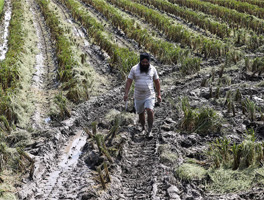
Pre-monsoon season emerging as new high-risk period for crops, analysis shows, 09 April 2026
|
|
 |
|
|
| |
|
|
| |
 |
|
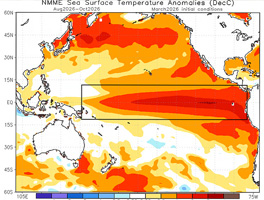
A rare “Super El Niño” may be forming in the Pacific — and it could reshape global weather starting this summer, 08 April 2026
|
|
|
| |
|
|
| |
|
|
| |
|
|
| |
CLIMATE NEWS | SCIENCE| IMPACTS| POLITICS |
|
| |
|
|
| |
|
|
| |
|
|
| |
|
|
| |
|
|
| |
|
|
| |
|
|
| |
|
|
| |
|
|
| |
|
|
| |
|
|
| |
|
|
| |
|
|
| |
|
|
| |
|
|
| |
|
|
| |
|
|
| |
|
|
| |
|
|
| |
|
|
| |
| |
|
Carbon Politics: A Video Podcast by CSE |
|
|
|
 |
|
|

|
|
|
| |
|
|
| |
| Online Training |
|
Gobar Times |
| |
|
|
|
|
|
|
|
|
| |
|
|
|