| |
A weekly digest on impacts, politics and science of the climate emergency from the Global South perspective. You can find this digest in the web here.
|
|
| |
|
|
 |
Dear readers,
Welcome to the Climate Weekly Digest by the Centre for Science and Environment’s Climate Change and Green Economy programme and Down to Earth.
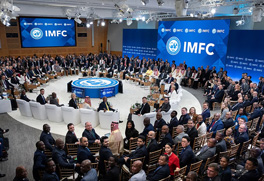
The Spring meetings of the World Bank and the International Monetary Fund (IMF), which concluded on April 18 in Washington, D.C., saw significant pushback on the climate agenda—primarily from the United States. CSE Climate’s Sehr Raheja, reporting on the key issues at the meeting, writes that the World Bank’s climate action plan, slated to end in June 2026, saw significant friction with the US (the bank’s largest stakeholder) attempting to discontinue the plan beyond its expiry. The World Bank’s 2nd Climate Change Action Plan (CCAP) carries a commitment of 45 per cent of all lending going towards climate-related activities.
US Treasury Secretary Scott Bessent explicitly called the plan ‘nonsensical and myopic’ while claiming that it undermines poverty reduction and economic growth. The EU, along with some South American countries and small island nations, expressed diverging views while France stated that negotiations to extend the plan are underway. As official development assistance continues to shrink across the board, the removal of climate-linked lending from the Bank’s core mandate is concerning, especially for developing economies. Countries most affected by climate change and, as a result, most in need of accessible and high-quality climate finance, stand to lose if the Bank’s climate mandate is not renewed.
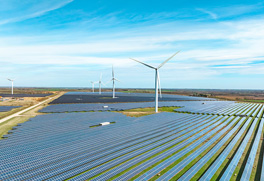
In energy news, a new report by the global energy think tank Ember has shown that clean power contributed to all growth in global electricity demand in 2025, preventing an increase in fossil-based generation. Down to Earth’s Puja Das writes that this shift pushed renewables to 34 per cent of global electricity generation, overtaking coal’s 33 per cent share for the first time in over a century. Furthermore, the transition to renewables has primarily been powered by solar and wind energy, with solar alone meeting 75 per cent of the increase in global electricity demand.
Finally, the latest episode of the Carbon Politics podcast is slated to be released on Tuesday, April 28. In this episode, titled “Green Industrialisation for the Global South”, CSE Climate’s Avantika Goswami speaks with Dr. Ilias Alami, Assistant Professor in the Political Economy of Development, University of Cambridge. The pair discuss the relevance of green industrialisation as countries seek to unite the aims of decarbonisation, development and structural transformation, and how the Global South can advance this agenda for its own aims.
|
|
|
| |
|
|
| |
 |
|
| |
By - Upamanyu Das
Climate Change and Green Economy, CSE
|
| |
|
|
|
|
| |
|
|
| |
|
|
| |
|
|
| |
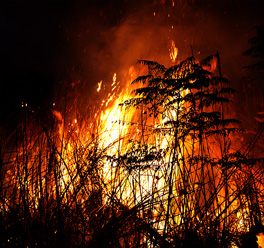
Wildfires in North America are changing the fire calendar, becoming longer, more intense and harder to control: Study, 20 April 2026
|
|
 |
|
|
| |
|
|
| |
|
|
| |
|
|
| |
CLIMATE NEWS | SCIENCE| IMPACTS| POLITICS |
|
| |
|
|
| |
|
|
| |
|
|
| |
|
|
| |
|
|
| |
|
|
| |
|
|
| |
|
|
| |
|
|
| |
|
|
| |
|
|
| |
|
|
| |
|
|
| |
|
|
| |
|
|
| |
|
|
| |
|
|
| |
|
|
| |
|
|
| |
|
|
| |
|
|
| |
|
|
| |
| |
|
Carbon Politics: A Video Podcast by CSE |
|
|
|
 |
|
|
|
|
|
| |
|
|
| |
|
|
| |
|
|
|