| |
A weekly digest on impacts, politics and science of the climate emergency from the Global South perspective. You can find this digest in the web here.
|
|
| |
|
|
 |
Dear readers,
Welcome to the Climate Weekly Digest by the Centre for Science and Environment’s Climate Change and Green Economy programme and Down to Earth.
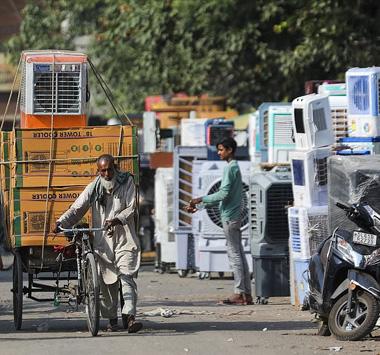
India’s power sector is undergoing a complex transition as rising heat stress, rapid renewables expansion, increased cooling demand and new industries such as data centres reshape the country’s electricity planning. Down to Earth’s Puja Das, reporting from a policy discussion held on May 13, writes that India is no longer dealing with a conventional power supply challenge—with rapidly evolving electricity demand patterns, generation sources and transmission needs. Rising heat is emerging as a major stress factor, with cooling devices accounting for 40 per cent of household electricity use and the residential sector accounting for 25 per cent of total electricity consumption in 2024-25.
Das also writes that India’s challenge is no longer about meeting higher demand but managing when that demand occurs. While renewables are meeting a larger share of the peak demand, the evening demand spike remains a concern as solar generation falls at this time of day and night-time temperatures are continuing to rise. Other challenges include the need for large-scale battery storage systems and pumped hydro projects, transmission expansion and increasing the level of electrification of overall energy demand.
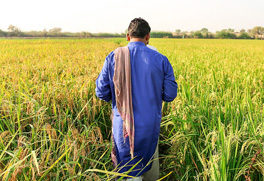
In agriculture news, a new study has found that every degree Celsius (°C) of temperature rise reduces India’s national average crop yield by about 8 per cent. Down to Earth’s Shagun Kapil writes that the study, which analyses data for 10 major crops from 1966 to 2016, points towards heat and rainfall shocks causing persistent losses in agricultural productivity, with certain crops suffering far steeper losses in productivity than the national average. Staples such as rice, wheat, maize and pearl millet experience significant loss in yields under a 1°C rise in temperature, with the yield of pearl millet declining by 19 per cent and maize yield declining by 16 per cent.
This is happening during a period when crop production needs to increase by 56 per cent between 2010-2050 to meet the projected growth in demand for food—fuelled by population growth. The impact of such reductions in agricultural yield due to climate change will directly reflect in farmers’ incomes and add inflationary pressure on food prices.
Finally, the latest episode of Carbon Politics was released on April 28. In this episode, titled “Green Industrialisation for the Global South”, CSE’s Avantika Goswami speaks with Dr. Ilias Alami from the University of Cambridge about green industrial strategies for the Global South and how developing countries can advance this agenda to unite their aims of decarbonisation, development and structural transformation.
|
|
|
| |
|
|
| |
 |
|
| |
By - Upamanyu Das
Climate Change and Green Economy, CSE
|
| |
|
|
|
|
| |
|
|
| |
|
|
| |
|
|
| |
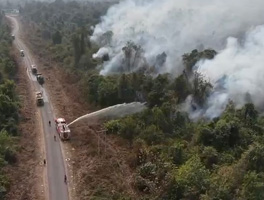
After months without rain, Arunachal Pradesh villages count losses from severe forest fires, 13 May 2026
|
|
 |
|
|
| |
|
|
| |
 |
|
April 2026 witnessed second-highest sea surface temperatures, 08 May 2026
|
|
|
| |
|
|
| |
|
|
| |
|
|
| |
|
|
| |
|
|
| |
CLIMATE NEWS | SCIENCE| IMPACTS| POLITICS |
|
| |
|
|
| |
|
|
| |
|
|
| |
|
|
| |
|
|
| |
|
|
| |
|
|
| |
|
|
| |
|
|
| |
|
|
| |
|
|
| |
|
|
| |
|
|
| |
|
|
| |
|
|
| |
|
|
| |
|
|
| |
|
|
| |
|
|
| |
|
|
| |
|
|
| |
|
|
| |
| |
|
Carbon Politics: A Video Podcast by CSE |
|
|
|
 |

|
|
|
|
|
| |
|
|
| |
|
|
| |
|
|
|