| |
A weekly digest on impacts, politics and science of the climate emergency from the Global South perspective. You can find this digest in the web here.
|
|
| |
|
|
 |
Dear readers,
Welcome to the Climate Weekly Digest by the Centre for Science and Environment’s Climate Change and Green Economy programme and Down to Earth.
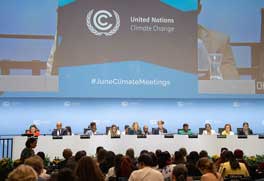
As the Paris Agreement moves from rule-making to implementation, multilateral climate negotiations are starting to run into the hard politics of translating commitments into reality as they try to balance the imperatives of equity and urgency. CSE’s Climate team summarises the recently concluded multilateral climate summit at Bonn, Germany, highlighting how key negotiations on mitigation and adaptation ended without any agreements while talks on climate-trade linkages and climate finance were steered away from the political questions that matter: who pays, who is responsible and who decides.
On just transition, negotiations centred on implementation of the work programme and operationalising the Just Transition Mechanism. Developing countries argued that the work programme should enhance the means of implementation, including finance, technology transfer and capacity building, while developed countries wanted to limit its scope to a knowledge-sharing platform. Trade came into focus as well, with developing countries voicing concerns over climate-related trade measures and their implications on development and climate action at the first UNFCCC Dialogue on Trade and Climate. Developed countries defended trade measures such as carbon border adjustment mechanisms as tools to support decarbonisation.
Discussions on the roadmap for Transitioning Away from Fossil Fuels—a parallel process outside the UNFCCC—exposed a familiar fault line: developing nations pushed for the roadmap to be anchored in equity and CBDR-RC, while their developed counterparts pushed for ambition and the need to focus on the ‘best available science’. Negotiations on the Global Goal on Adaptation ended in deadlock as well, with Parties unable to resolve their differences over adaptation finance, means of implementation and governance of future adaptation work.
Climate finance remained a contentious issue at Bonn, with developing countries raising their concern over the lack of progress on the Climate Finance Work Programme, the key process intended to advance the implementation of public climate finance from developed to developing countries. Furthermore, negotiations over the future of the Mitigation Work Programme, which ends this year, ended without agreement, with differences over raising mitigation ambition and addressing the implementation barriers faced by developing countries. The result is that the difficult questions across key negotiation tracks have been kicked down the road to COP31 in Türkiye.
Lastly, the latest episode of the Carbon Politics podcast was released on Sunday, June 28. Titled “The IPCC in the Age of Misinformation”, the episode features CSE Climate’s Trishant Dev in conversation with Dr. Minal Pathak and Dr. Aditi Mukherji, two distinguished IPCC authors from India. They discuss the workings of the IPCC's assessment cycles, explain why political consensus can lag behind scientific confidence, and share insights on how the next assessment cycle, AR7, is taking shape.
|
|
|
| |
|
|
| |
 |
|
| |
By - Upamanyu Das
Climate Change and Green Economy, CSE
|
| |
|
|
|
|
| |
|
|
| |
|
|
| |
|
|
| |
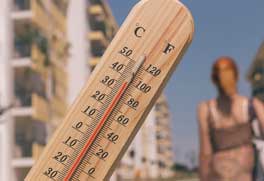
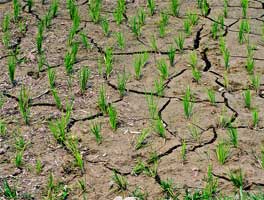
India among countries most exposed as El Niño threatens rainfed crops, FAO says, 24 June 2026
|
|
 |
|
|
| |
|
|
| |
|
|
| |
|
|
| |
|
|
| |
|
|
| |
CLIMATE NEWS | SCIENCE| IMPACTS| POLITICS |
|
| |
|
|
| |
|
|
| |
|
|
| |
|
|
| |
|
|
| |
|
|
| |
|
|
| |
|
|
| |
|
|
| |
|
|
| |
|
|
| |
|
|
| |
|
|
| |
|
|
| |
|
|
| |
|
|
| |
|
|
| |
|
|
| |
|
|
| |
|
|
| |
|
|
| |
|
|
| |
| |
|
Carbon Politics: A Video Podcast by CSE |
|
|
|
 |
|
|
|
|
|
| |
|
|
| |
|
|
| |
|
|