| |
A weekly digest on impacts, politics and science of the climate emergency from the Global South perspective. You can find this digest in the web here.
|
|
| |
|
|
 |
Dear readers,
Welcome to the Climate Weekly Digest by the Centre for Science and Environment’s Climate Change and Green Economy programme and Down to Earth.
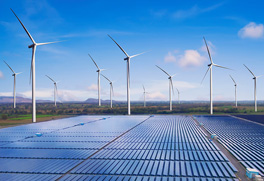
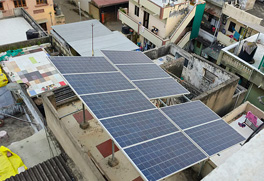
A new report by the International Renewable Energy Agency (IRENA) has revealed that renewable energy projects commissioned in 2025 helped avoid $480 billion in fossil fuel costs globally. Down to Earth’s Puja Das writes that renewable energy continued to strengthen its cost advantage over fossil fuels, with over 90 per cent of the newly-added utility-scale renewable capacity generating electricity at lower costs than the cheapest new fossil fuel alternatives. Solar PV, onshore and offshore wind all maintained or improved their cost advantage over conventional fossil sources.
Across 20 major economies accounting for four-fifths of global renewable energy generation, renewables helped avoid about $377 billion in fossil fuel purchases in 2025. China accounted for the largest savings at $177 billion, followed by the United States at $35 billion, Brazil at $32 billion, India and Germany at $18 billion, and Japan at $15 billion. Furthermore, even as geopolitical tensions in West Asia raised the cost of conventional power generation in early 2026, existing renewable energy assets helped countries avoid fossil fuel price shocks, reinforcing the role of renewables in improving energy security and economic resilience.
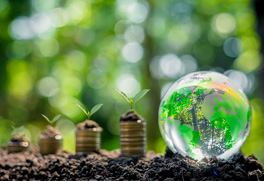
In climate finance updates, global climate finance flows crossed $2 trillion for the first time in 2024, according to the latest Global Landscape of Climate Finance 2026 report by the Climate Policy Initiative (CPI). Das explains that climate finance has continued to grow despite the COVID-19 pandemic, energy market volatility, sovereign debt pressures and geopolitical conflicts, signalling a maturing market for climate investments. However, annual growth in climate finance flows slowed down sharply to 6 per cent in 2024 from from 16 per cent in 2023 and 22 per cent in 2022. CPI’s estimates suggest that annual climate investment much reach at least $6.2 trillion by 2035, raising concerns over whether capital can be mobilised fast enough to meet global climate goals.
Lastly, the latest episode of the Carbon Politics podcast was released on Sunday, June 28. In this episode, titled “The IPCC in the Age of Misinformation”, CSE Climate’s Trishant Dev speaks to Dr. Minal Pathak and Dr. Aditi Mukherji, two IPCC authors from India, who discuss the workings of the IPCC's assessment cycles, why climate science continues to be misunderstood and contested, and how the next assessment cycle, AR7, is taking shape.
|
|
|
| |
|
|
| |
 |
|
| |
By - Upamanyu Das
Climate Change and Green Economy, CSE
|
| |
|
|
|
|
| |
|
|
| |
|
|
| |
|
|
| |
Global daily sea surface temperature breaks record in June 2026, hints at global marine heatwaves, 01 July 2026
|
|
 |
|
|
| |
|
|
| |
 |
|
Imprint of El Nino, other weather patterns on India’s deficit June 2026 rainfall, 30 June 2026
|
|
|
| |
|
|
| |
|
|
| |
|
|
| |
|
|
| |
|
|
| |
CLIMATE NEWS | SCIENCE| IMPACTS| POLITICS |
|
| |
|
|
| |
|
|
| |
|
|
| |
|
|
| |
|
|
| |
|
|
| |
|
|
| |
|
|
| |
|
|
| |
|
|
| |
|
|
| |
|
|
| |
|
|
| |
|
|
| |
|
|
| |
|
|
| |
|
|
| |
|
|
| |
|
|
| |
|
|
| |
|
|
| |
|
|
| |
|
|
| |
|
|
| |
|
|
| |
|
|
| |
|
|
| |
|
|
| |
|
|
| |
|
|
| |
| |
|
Carbon Politics: A Video Podcast by CSE |
|
|
| |
|
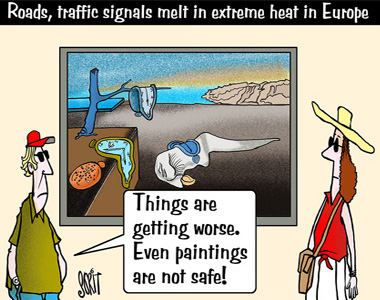
Simply Put: Europe heatwave |
|
 |

|
|
 |
|
|
| |
|
|
| |
|
|
| |
|
|
|