| |
A weekly digest on impacts, politics and science of the climate emergency from the Global South perspective. You can find this digest in the web here.
|
|
| |
|
|
 |
Dear readers,
Welcome to the Climate Weekly Digest by the Centre for Science and Environment’s Climate Change and Green Economy programme and Down to Earth.
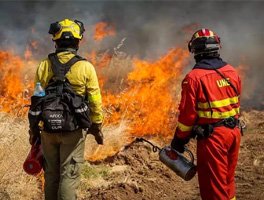
The latest analysis by World Weather Attribution (WWA) has shown that human-induced climate change made the fire weather conditions behind July’s severe wildfires about twice as likely in south-west France and 20 times more likely in central Spain. Down to Earth’s Akshit Sangomla explains that the affected regions saw rapid vegetation growth at the start of the year which was followed by months of extreme heat and drought, creating the perfect conditions for wildfires to spread. Between July 13 and 28, wildfires burned around 140,000 hectares in Spain while 115,000 hectares have been burnt in France since the start of the year. This has led to three deaths and about 300,000 people to be displaced across the two countries. According to the researchers, climate change is repeatedly increasing hot, dry and flammable conditions that fuel such devastating wildfires.
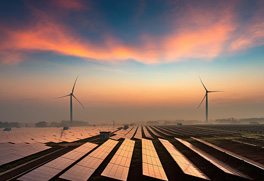
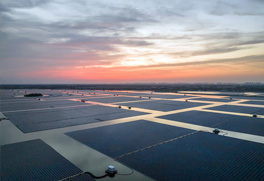
In clean energy news, a recent report by the Institute for Energy Economics and Financial Analysis (IEEFA) has revealed that India’s distributed solar capacity has increased more than 17 times from 1.8 GW in FY2018 to 31.5 GW in FY2026. Down to Earth’s Puja Das reports that India’s rooftop solar capacity expanded from 1.1 GW in FY2018 to 25.7 GW in FY2026, while off-grid solar pumps rose from 0.7 GW to 5.8 GW over this period. The report highlights that flagship government schemes such as Pradhan Mantri Surya Ghar Muft Bijli Yojana and PM KUSUM have been the primary drivers behind this growth.
However, despite the creation of an enabling ecosystem for distributed energy resources, significant gaps remain in areas such as grid connectivity, affordable financing, smart metering, subsidy disbursals and land availability. The report recommends harmonisation of regulations across different states, time-bound approvals, improved access to finance and credit guarantees, expansion of single-window digital platforms beyond residential rooftop solar, and strengthening domestic manufacturing and deployment of smart meters. India’s estimated rooftop solar potential stands at 637 GW.
Lastly, the latest episode of the Carbon Politics podcast was released on Tuesday, July 28. In this episode, titled “The Global Electrification Agenda”, I speak with Dr. Binu Parthan and Dr. Toyo Kawabata from IRENA’s Country Engagement and Partnerships Division. We discuss the ‘35 per cent by 2035’ global electrification target proposed by the incoming Turkish Presidency for COP31, whether such targets can account for diverse national contexts, and the barriers faced by the Global South in advancing electrification.
|
|
|
| |
|
|
| |
 |
|
| |
By - Upamanyu Das
Climate Change and Green Economy, CSE
|
| |
|
|
|
|
| |
|
|
| |
|
|
| |
|
|
| |
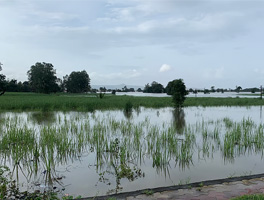
Maharashtra’s semi-arid districts face highest risk from rapidly intensifying flash droughts, study says, 05 August 2026
|
|
 |
|
|
| |
|
|
| |
 |
|
Climate change made wildfire weather twice as likely in France and 20 times more likely in Spain: WWA, 31 July 2026
|
|
|
| |
|
|
| |
|
|
| |
|
|
| |
CLIMATE NEWS | SCIENCE| IMPACTS| POLITICS |
|
| |
|
|
| |
|
|
| |
|
|
| |
|
|
| |
|
|
| |
|
|
| |
|
|
| |
|
|
| |
|
|
| |
|
|
| |
|
|
| |
|
|
| |
|
|
| |
|
|
| |
|
|
| |
|
|
| |
|
|
| |
|
|
| |
|
|
| |
|
|
| |
| |
|
Carbon Politics: A Video Podcast by CSE |
|
|
|
 |
 |
|

|
|
|
| |
|
|
| |
|
|
| |
|
|
|