August 21 - August 27, 2026
  A weekly digest on impacts, politics and science of the climate emergency from the Global South perspective. You can find this digest in the web here.  
     
Dear readers,

Welcome to the Climate Weekly Digest by the Centre for Science and Environment’s Climate Change and Green Economy Programme and Down to Earth.

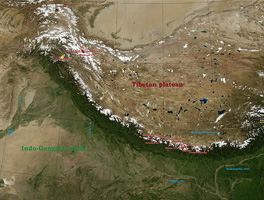
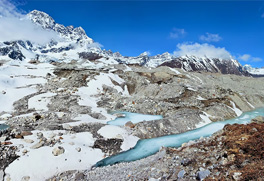
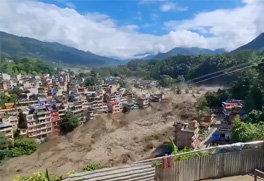
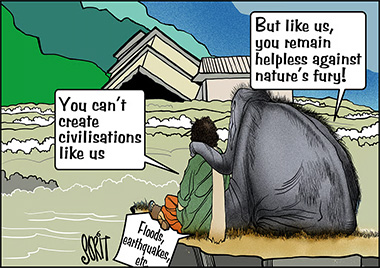
The latest devastating flood in Nepal’s Rasuwa region is raising concerns about a changing pattern of disasters across the Himalaya. Preliminary assessments suggest that the Bhote Koshi flood may not have been caused by extreme rainfall alone. Instead, an avalanche of rock and ice may have plunged into the river, temporarily blocked its flow and then released a destructive torrent of water, boulders and sediment. The event bears some similarities to the 2021 Rishiganga disaster in Uttarakhand and the 2025 Dharali disaster. In both cases, catastrophic debris flows occurred without rainfall intense enough to explain the scale of destruction. The emerging risk is therefore one that conventional flood planning may struggle to capture, i.e., cascading disasters triggered by unstable mountains, glaciers, landslides and temporary natural dams.

Climate change may not be the immediate trigger of every such event, but a warming Himalaya is altering the physical conditions in which these disasters develop. Retreating glaciers, expanding glacial lakes, unstable moraines and changing freeze-thaw cycles are creating new vulnerabilities.
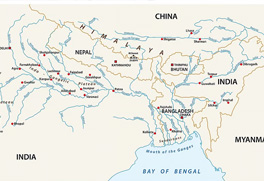
The implications extend across borders. Rivers originating in the high Himalaya can carry the consequences of disasters across national boundaries, making regional monitoring, early-warning systems and information sharing increasingly critical.

Closer home, India’s April 2026 power surge captured the complexity of its transition - solar briefly met nearly a third of demand, but coal still supplied nearly two-thirds of generation as evening demand peaked. India’s rapid clean-energy expansion is thus reshaping its power system, but coal remains central to electricity generation, state revenues and millions of livelihoods.  Experts argue that a successful transition must go beyond renewables to protect coal-dependent communities through economic diversification, worker support and stronger Centre-state planning.

Lastly, a new episode of CSE’s Carbon Politics podcast is finally out. In this episode, Avantika Goswami and Trishant Dev from the Climate Change and Green Economy Programme examine a central question for the global clean energy transition - can countries in the Global South build the clean technologies they need, or will they remain dependent on concentrated global supply chains? The episode explores the challenges and opportunities around building domestic clean-tech manufacturing capacity, and what this means for a transition that is to be equitable as well as ambitious.
   
 
Down To Earth
 
By - Sehr Raheja
Climate Change and Green Economy, CSE


EXTREME WEATHER TRACKER


Nepal, Rishiganga and Dharali are signals of a Himalayan crisis, 27 August 2026
Down To Earth


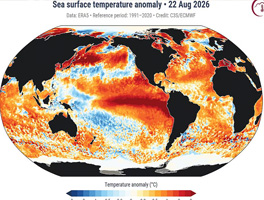
Down To Earth Global ocean records hottest day ever, 24 August 2026


COMMENTARIES
India must integrate the working of its renewable energy sector with its coal-based power sector for successful energy transition, says new CSE study, 21 August 2026
Coal flexibilisation is the key to unlocking India’s renewable energy potential


India’s energy transition: Who pays the price?, 24 August 2026
The transition’s success will be judged by whether it creates a more equitable future for the millions whose livelihoods have long been tied to the fossil-fuel economy
 
   
  CLIMATE NEWS | SCIENCE| IMPACTS| POLITICS  
   
 
Down To Earth
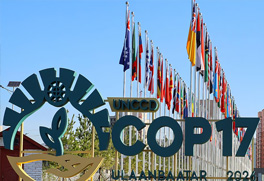
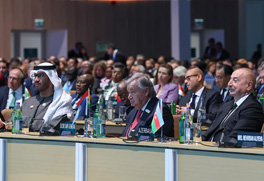
Combat desertification COP17: ‘Rangelands must be recognised as eligible for climate and adaptation funds’, 27 August 2026
On the sidelines of COP17 in Mongolia, UNCCD Global Mechanism chief Louise Baker spoke to Down To Earth about funding gaps, rangelands and private capital for drought resilience


Down To Earth
Global gas demand hits record 4,202 bcm in 2025, set to fall by 7 bcm in 2026: Report, 27 August 2026
Global Gas Report 2026 expects gas demand to return to its underlying growth trajectory once the Strait of Hormuz disruption eases


Down To Earth
Rasuwa flash flood brings GLOFs back into spotlight, 27 August 2026
India has witnessed a major GLOF incident in the last five years


Down To Earth
Rasuwa border flood underscores need for stronger regional cooperation on climate risks, HKH law-makers say, 27 August 2026
Lawmakers were speaking at the 2nd Hindu Kush Himalaya Parliamentarians’ Meet in Thimphu


Down To Earth
Did an ice-rock avalanche originating from a high-altitude area trigger the Trishuli flash flood?, 27 Au-gust 2026
Scientists from ICIMOD are investigating whether this may be the case


Down To Earth
Nepal‑Tibet floods: When disaster strikes before communities recover from previous climate ex-tremes, crisis escalates, 27 August 2026
Back-to-back Himalayan and Sri Lankan floods expose the perilous recovery gap that leaves communi-ties weaker when the next climate disaster hits


Down To Earth
Fossil fuel import bills surge over $330 billion in six months since Hormuz crisis: CREA, 26 August 2026
India was the second-largest payer, incurring an additional $22.5 billion in fossil fuel import costs be-tween March and August 2026


Down To Earth
Nepal flash flood: What triggered the deadly event killing over dozens and sweeping away villages and bridges, 26 August 2026
Preliminary assessments attribute to ice avalanche to an earthquake to a glacial lake burst


Down To Earth
Study links carbon majors to major water losses in western US, 26 August 2026
122 fossil fuel companies are responsible for about half of the Western US’s climate change-driven water losses over the past decade


Down To Earth
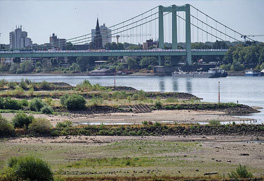
Extreme summer of 2026 has cost Germany at least 36 billion euros, says Greenpeace, 26 August 2026
Extreme heat and drought are not merely environmental problems. They can disrupt workplaces, agri-culture, transportation, healthcare, education and industry simultaneously, says assessment


Down To Earth
Combat desertification COP17: US Draws red line against any drought instrument; says drought nation-al, not global issue, 26 August 2026
As a severe El Niño deepens droughts worldwide, negotiators remain deadlocked over whether the world's response should be binding, voluntary, or nothing at all


Down To Earth
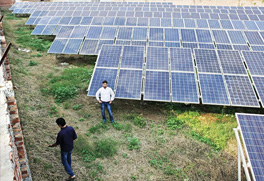
India’s solar PV manufacturing capacity hits 100 GW, but upstream import dependence remains high: NITI Aayog, 25 August 2026
China major source of dependence, followed by Vietnam, Thailand, Malaysia


Down To Earth
Extreme heat costs Bangladesh $4.1 billion in lost wages each year: Study, 25 August 2026
Experts recommend stronger workplace protections, enforceable heat threshold, recognition of heat-related illness as an occupational disease


Down To Earth
ALTÉRRA reflects a broader shift in the politics of climate finance, 24 August 2026
As the traditional Global North has struggled to close the long-standing climate-finance gap, new sources of capital and new actors are beginning to assume a greater role in supporting the global tran-sition


Down To Earth
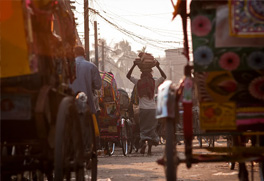
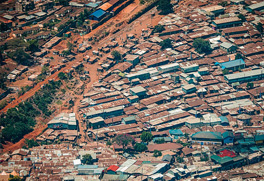
Extreme heat is becoming an urban inequality crisis across Africa, finds study, 21 August 2026
Effective adaptation requires approaches that address both heat exposure and the underlying socio-economic and environmental conditions that increase vulnerability


    Carbon Politics: A Video Podcast by CSE
 
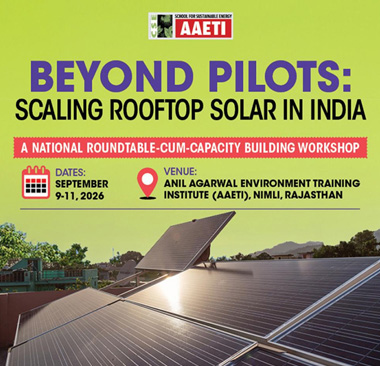
    Workshops
spacer
DTE Hindi   Down To Earth


Cartoon   Online Training Course
     
Down To Earth
 
Down To Earth
 
     
CSE
This weekly digest is published by Down to Earth and the Centre for Science and Environment, a Delhi-based global think tank advocating on global south developmment issues.
We would love your feedback on this weekly digest. To speak to our experts for quotes and comments on the above stories. Please email to vikas@cseindia.org
 
Follow us on
spacer facebook spacer Down to Earth video spacer twitter spacer
  If you like our work and would like others to join our climate network and the climate conversation, please forward this to your friends. Interested in Climate weekly? Sign Up here