| |
A weekly digest on impacts, politics and science of the climate emergency from the Global South perspective. You can find this digest in the web here.
|
|
| |
|
|
 |
Dear readers,
Welcome to the Climate Weekly Digest by the Centre for Science and Environment’s Climate Change and Green Economy Programme and Down to Earth.
Nearly one month has passed since the devastating floods in Nepal. Sunita Narain, Director General, CSE, writes in her latest op-ed, that the disaster is not just a human tragedy, but a reflection of willful inaction and human hubris. She highlights that the events of 26th August were not caused by an out-of-the-ordinary flashflood, but rather, were triggered by the collapse of a high-altitude glacier near the Langtang Lirung peak. The glacial collapse dislodged an estimated 142 million cubic metres of ice and rocks, leading to the formation of natural dams, behind which water and moraine accumulated. Once these dams broke, even more devastating floods were unleashed downstream.
One the question of why this tragedy occurred, she underlines the fact that there are multiple causes at play. First, the impacts of warming caused by climate change, in worsening the situation cannot be denied, she writes. Additionally though, she points to the misguided belief of the ability of human beings to “control nature” that is implicit in all “developmental” decision making – she underlines the many more planned hydroelectric projects being built in fragile ecosystems, for which damming narrow rivers is a necessity. She points to the multiple projects being developed in the Indian Himalayas, in an attempt at “re-engineering” the Ganga. Added onto the poorly planned river-choking dams, are the many tunnels and mountain roads, more often than not, constructed without sound slope management. She ends with the warning that “we are not hearing the message nature is giving us” – to shift the belief that nature can be dominated. “Change or perish” – but the question remains, if as a society, we are able to truly hear this before it is too late.
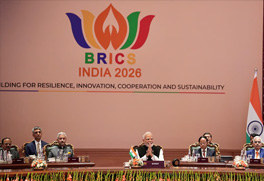
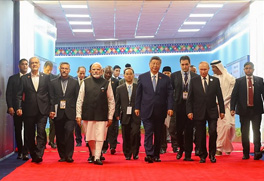
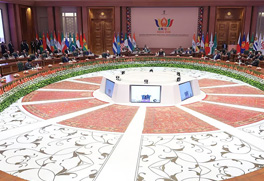
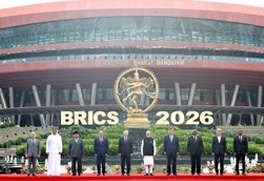
More recently, as India finished hosting the 18th BRICS summit in New Delhi, CSE reacted to the climate, energy and Global South solidarity agenda. The key outcome of the meet, summed up in the New Delhi Decalration, highlights many critical point, including but not limited to – the need for better Southern representation in global economic and financial governance; the need to foster better competition among emerging economies, especially on clean technology and manufacturing; and the continued objection against top-down unilateral trade measures such as carbon border adjustment mechanisms. While the reality of continued dependence of emerging economies on fossil fuels is acknowledged in the summit outcome, Avantika Goswami, Programme Manager, Climate Change and Green Economy, CSE, highlights that “Doubling down on scaling up renewable energy and economy-wide decarbonisation is the need of the hour — not only to cut emissions, but also to shield from volatility and supply disruptions like those precipitated by the Hormuz crisis.”
|
|
|
| |
|
|
| |
 |
|
| |
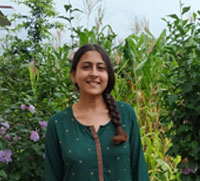
By - Sehr Raheja
Climate Change and Green Economy, CSE
|
| |
|
|
|
|
| |
|
|
| |
|
|
| |
|
|
| |
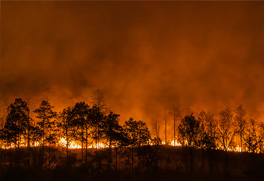
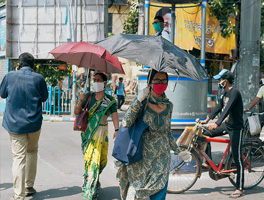
Climate change added a month of risky heat for 1.5 billion people; 117 million affected in India, 17 September 2026
|
|
 |
|
|
| |
|
|
| |
 |
|
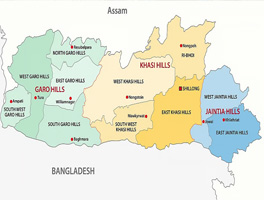
Meghalaya, ‘Abode of the clouds’, has India’s highest rainfall deficit throughout Monsoon 2026, 16 September 2026
|
|
|
| |
|
|
| |
|
|
| |
|
|
| |
|
|
| |
|
|
| |
|
|
| |
|
|
| |
|
|
| |
|
|
| |
CLIMATE NEWS | SCIENCE| IMPACTS| POLITICS |
|
| |
|
|
| |
|
|
| |
|
|
| |
|
|
| |
|
|
| |
|
|
| |
|
|
| |
|
|
| |
 |
|
|
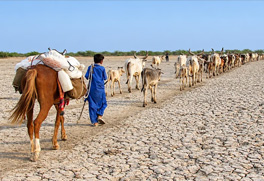
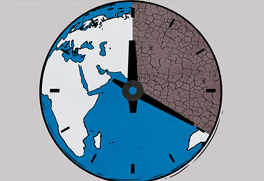
Derailed from the start, 16 September 2026
|
|
|
While there is no disagreement that drought is increasingly becoming economically and environmentally devastating, there is no unified global mechanism to fight this crisis
|
|
|
|
|
| |
|
|
| |
|
|
| |
|
|
| |
|
|
| |
|
|
| |
|
|
| |
|
|
| |
|
|
| |
|
|
| |
|
|
| |
|
|
| |
|
|
| |
|
|
| |
|
|
| |
|
|
| |
|
|
| |
|
|
| |
|
|
| |
|
|
| |
|
|
| |
|
|
| |
|
|
| |
|
|
|