October 23 - October 29, 2026
  A weekly digest on impacts, politics and science of the climate emergency from the Global South perspective. You can find this digest in the web here.  
     
Dear readers,

Welcome to the Climate Weekly Digest by the Centre for Science and Environment’s Climate Change and Green Economy Programme and Down to Earth.

COP31 in Antalya begins on November 9, and much of this week’s work from the Climate team looks towards it.

Sehr Raheja writes on the first Xingu Finance Talks, held in Bangkok on October 11 and 13 on the sidelines of the IMF-World Bank Annual Meetings. Discussions focused on expanding fiscal space and reducing the cost of capital, while developing countries and civil society groups warned that private finance, debt swaps and guarantees cannot replace developed countries’ obligations to provide climate finance under Article 9 of the Paris Agreement. Kartikeya Garg notes that the UNFCCC’s NDC Synthesis Report finds new NDCs would deliver only a 6 per cent reduction in global emissions by 2035 compared to 2019 levels, or 9 per cent if all conditional targets are fully implemented. UNEP’s Emissions Gap Report puts the world on track for around 2.6°C of warming even with full implementation of national pledges. Climate finance and means of implementation, he adds, remain the elephant in the room.

Akshit Sangomla reports that the IPCC failed for the sixth consecutive time to agree on a timeline for its Seventh Assessment Cycle reports. Vulnerable nations want assessments completed before the 2028 Global Stocktake, while India and others favour a longer timeline to safeguard scientific rigour. Ahead of COP31, Susan Chacko writes, an Oxfam report finds the richest 0.1 per cent emit more carbon than the poorest 44 per cent of people combined.

In Carbon Politics Episode 17, a video podcast by CSE, Trishant Dev and Kartikeya Garg unpack recent developments in the EU CBAM and the key legal questions raised by Russia’s challenge at the WTO. They also look at what the dispute could mean for countries, including India.

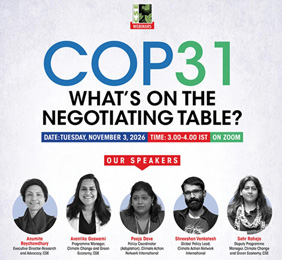
On November 3, the webinar COP31: What’s on the Negotiating Table? will unpack what Adaptation, Mitigation, Just Transition and Finance mean for developing countries and what to expect in Antalya. On November 12, CSE will hold a closed-door roundtable, Clean Energy Manufacturing in India: The Way Ahead, to discuss India’s position in global clean energy supply chains, with solar manufacturing as its primary focus. Participation is by invitation only; for details, write to adwait.limaye@cseindia.org.
   
 
Down To Earth
 
By - Adwait Limaye
Climate Change and Green Economy, CSE


EXTREME WEATHER TRACKER


Super El Niño could cause 55,000 additional heat-related deaths in India by March 2027, 29 Oc-tober 2026
Down To Earth


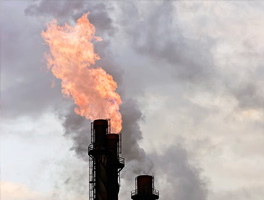
Down To Earth Greenhouse gases hit record highs in 2025, locking in further global warming, warns WMO, 28 October 2026


COMMENTARIES
PM-KUSUM 2.0: Energy experts urge for revamped focus on farmers, financing and agrivoltaics, 28 October 2026
India’s flagship scheme on solar power deployment for farmers is about to enter its second phase, but needs to address uneven progress in primary targets along with institutional and fi-nancial challenges


Sri Lanka’s grid collapse has a warning for South Asia’s solar ambitions, 25 October 2026
The island nation’s power grid failure highlights the need for stronger grids, smarter inverters and clearer rules for integrating growing renewable energy generation


In Bangkok, the climate and finance worlds met — what next on the road to COP31?, 24 Octo-ber 2026
Questions remain over whether the Xingu Talks have laid the groundwork for sustained financial reforms in the years ahead
 
   
  CLIMATE NEWS | SCIENCE| IMPACTS| POLITICS  
   
 
Down To Earth
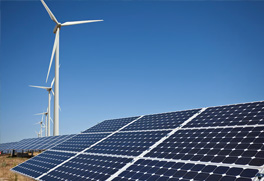
Solar and wind investment in emerging markets could reach $356 billion by 2040, but high fi-nancing costs pose risks, 29 October 2026
Expensive loans, inadequate grid infrastructure and unreliable electricity payments threaten in-vestment, finds new analysis


Down To Earth
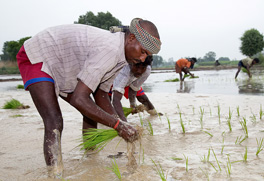
El Nino 2026: How India can protect its rural communities, 29 October 2026
A strengthening El Niño threatens to expose the weaknesses in rural India’s water security, farm-ing systems and safeguards for vulnerable workers


Down To Earth
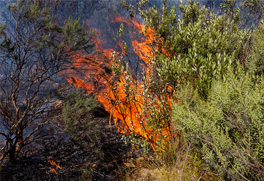
Climate change, drought and invasive vegetation make wildfires harder to control, 29 October 2026
Water scarcity, growing vegetation fuel loads and expanding human activity near fire-prone landscapes are increasing the risks, particularly in parts of southern Africa, a forestry expert warns


Down To Earth
Richest 1% emit more carbon than the world’s poorest, says Oxfam, 28 October 2026
The super-rich profit from pollution, disasters and cleanup, while ordinary people hit by succes-sive climate disasters struggle to recover, warns the latest report by the international charity group


Down To Earth
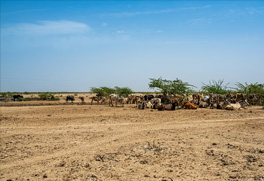
Gujarat, Rajasthan declare drought in 18 districts as rainfall deficit hits farmers, 27 October 2026
Gujarat announces crop-loss compensation, subsidised fodder and employment support for farmers in four drought-hit districts, while Rajasthan declares drought in 14 districts


Down To Earth
All coral reef ecosystems may collapse by 2075, 26 October 2026
Heat stress from human-induced climate change the most dominant, consistent threat driving coral reef decline


Down To Earth
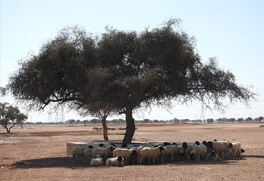
Rajasthan faces worsening drought conditions, rainfall deficit hits crops and livestock, 23 Octo-ber 2026
Of the 693 large and small dams in Rajasthan, 216 are completely empty, while 378 are partial-ly filled


Down To Earth
IPCC fails to agree on climate science report timeline for sixth time, drawing criticism from vul-nerable nations, 23 October 2026
Vulnerable nations want key climate assessments completed before the 2028 Global Stocktake, while India and others favour a longer timeline to safeguard scientific rigour and participation


    CSE Podcast
 
    Online Training Course
spacer
DTE Hindi   Down To Earth


    Webinar
 
    Webinar
spacer
CSE   CSE
 
     
CSE
This weekly digest is published by Down to Earth and the Centre for Science and Environment, a Delhi-based global think tank advocating on global south developmment issues.
We would love your feedback on this weekly digest. To speak to our experts for quotes and comments on the above stories. Please email to vikas@cseindia.org
 
Follow us on
spacer facebook spacer Down to Earth video spacer twitter spacer
  If you like our work and would like others to join our climate network and the climate conversation, please forward this to your friends. Interested in Climate weekly? Sign Up here