|
OUR ‘GREEN’ FEATURES |
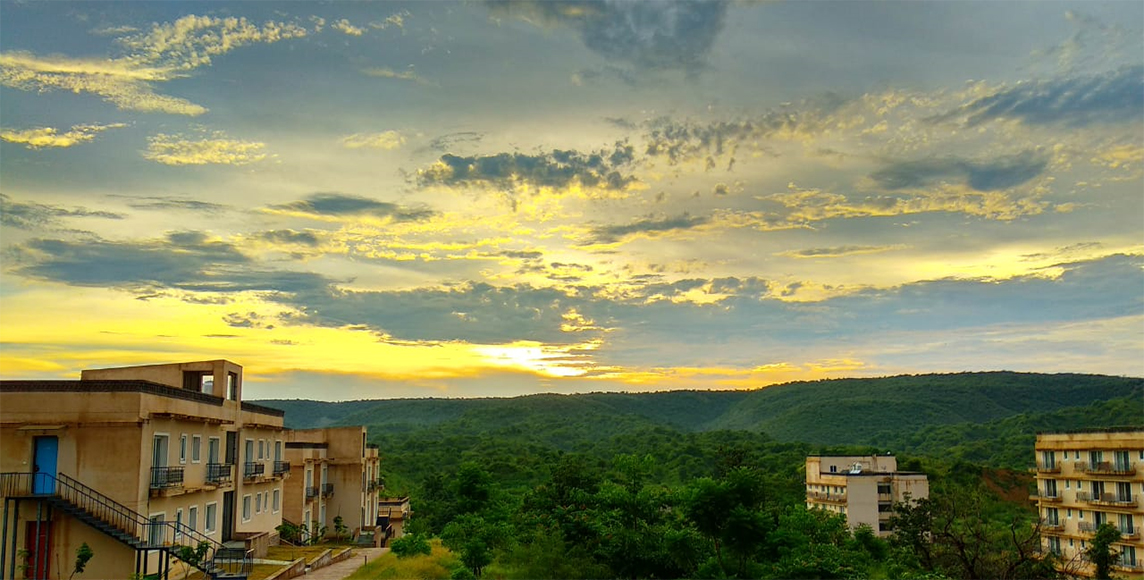
Carefully planned site
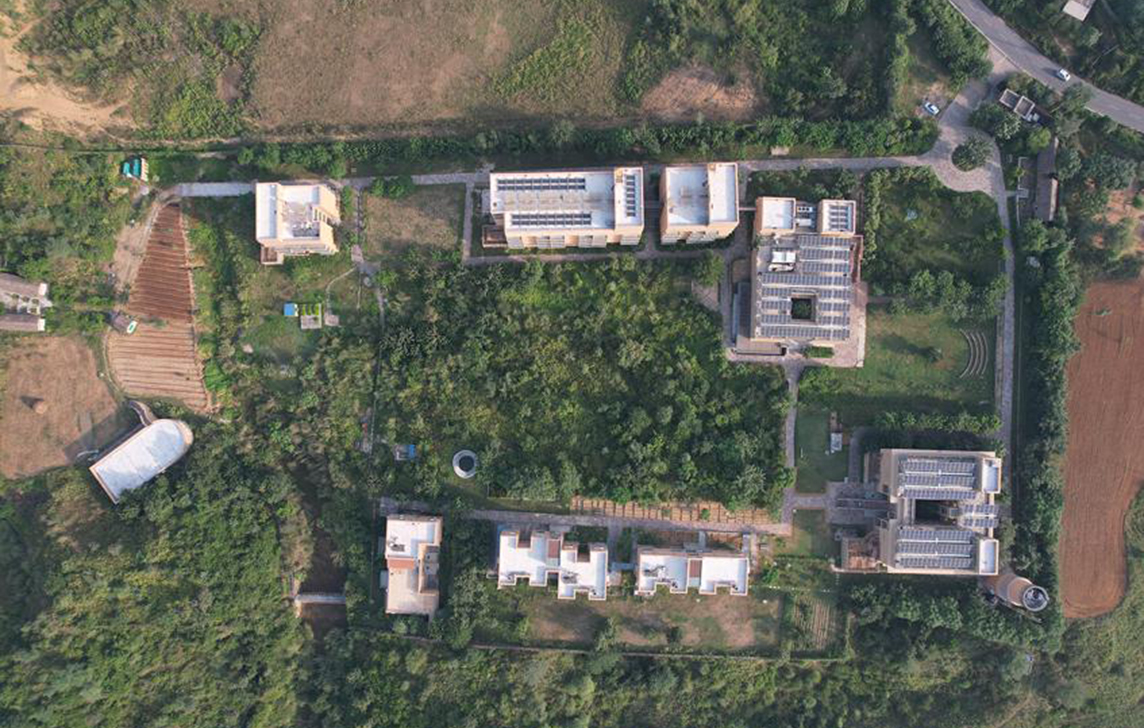
The campus has been built keeping in mind the local topography and site features. Native, local trees and vegetation have been retained and replanted; new plantations have been done with infinite care; and building-construction footprints have been kept to a minimal. Less than nine per cent of the land has been used for construction.
Building materials and designs
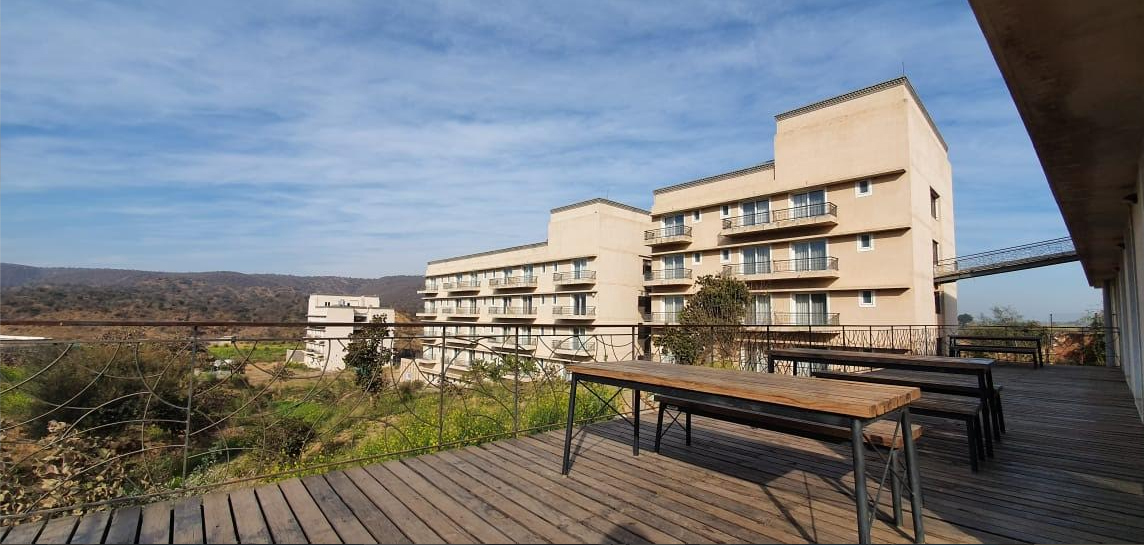
The campus buildings have been designed in a compact manner, enabling them to utilise maximum daylight and avoid using artificial light during daytime. Effort has been made to insulate the buildings as best as possible, for which the choice of building material is critical. Most of the buildings avoid direct sunlight; ventilation has been designed to ensure that wind plays a role in enhancing the comfort levels.
Managing energy use – optimising for climate and power requirements
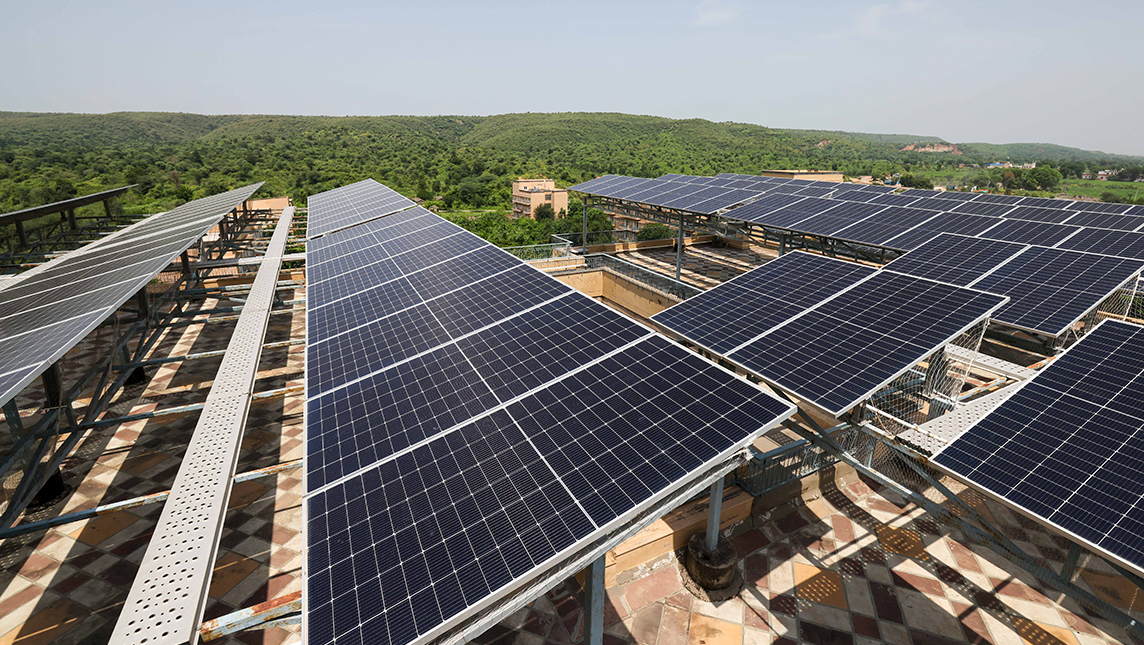
AAETI lies in a region of extreme climates. Conventional methods for ensuring a comfortable stay would entail the use of ACs and heaters, but these add to energy bills and have environmental impacts. The Institute has, therefore, opted for an efficient heating, ventilation and air conditioning (HVAC) system. Passive architectural principles (such as designing windows to enable use of filtered sunlight) have been adapted to keep the energy footprint low.
AAETI also uses energy-efficient appliances. For clean energy generation, the Institute has installed a solar power system.
Managing water – making way for a water-neutral campus
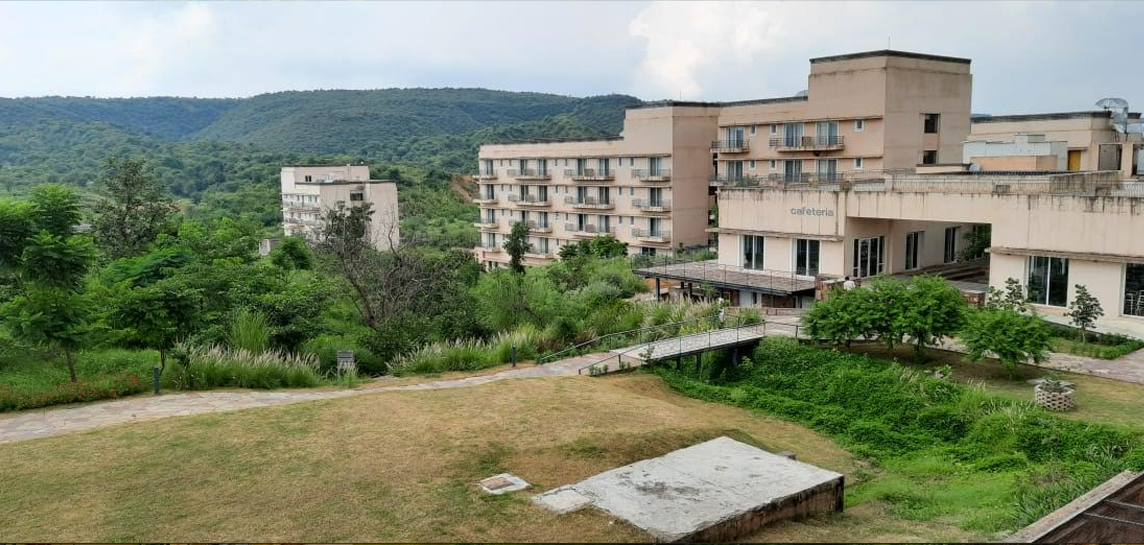
AAETI is surrounded by the Aravallis; this means that it has a large catchment area for its water, as the hills drain into the plains. We also have a seasonal water channel that flows through the campus. To ensure that the campus remains water-neutral, the AAETI management has made efforts to channelise the flowing water to improve recharge and store rainwater for use; taken steps to do careful water budgeting to minimise demand; treat all wastewater for reuse; regularly monitor groundwater levels to ensure that we do not deplete our aquifers; and monitor the quality of water supplied for use in the campus.
The campus site can harvest over 11,000 kilolitre of rainwater every year. Underground tanks store the rainwater, which is treated and cleaned and pumped to the Institute’s drinking water system. Rigorous regular checking is conducted to ensure the quality of the water. The groundwater recharge system consists of recharge wells, gabions and check-dams. Our carefully designed rainwater harvesting and groundwater recharge system ensures that we put back more into the ground than what we draw.
Water consumption is pegged at 86 litre per capita daily (LPCD), as against the national standard of 135 LPCD. Efficient water fixtures and conservation measures has brought the consumption down by about 36 per cent.
Managing wastewater – decentralise, recycle, reuse
Here, the objective is to use and demonstrate decentralised sewage management technologies. The total wastewater generation is estimated at 61 kilolitre daily (KLD), when the campus is fully operational. AAETI has four separate systems for wastewater treatment, which together account for about 30 KLD: (1) a decentralised wastewater treatment system (DWWTS) treats the sewage from the academic building and faculty housing – the water is used for horticulture; (2) a soil biotechnology-based system treats the wastewater from the cafeteria, student housing and support staff housing and uses the water for flushing; (3) an improved septic tank; (4) and a prefabricated septic tank also exist on the campus as technology demonstrators.
Managing solid waste – aiming for a zero-waste facility
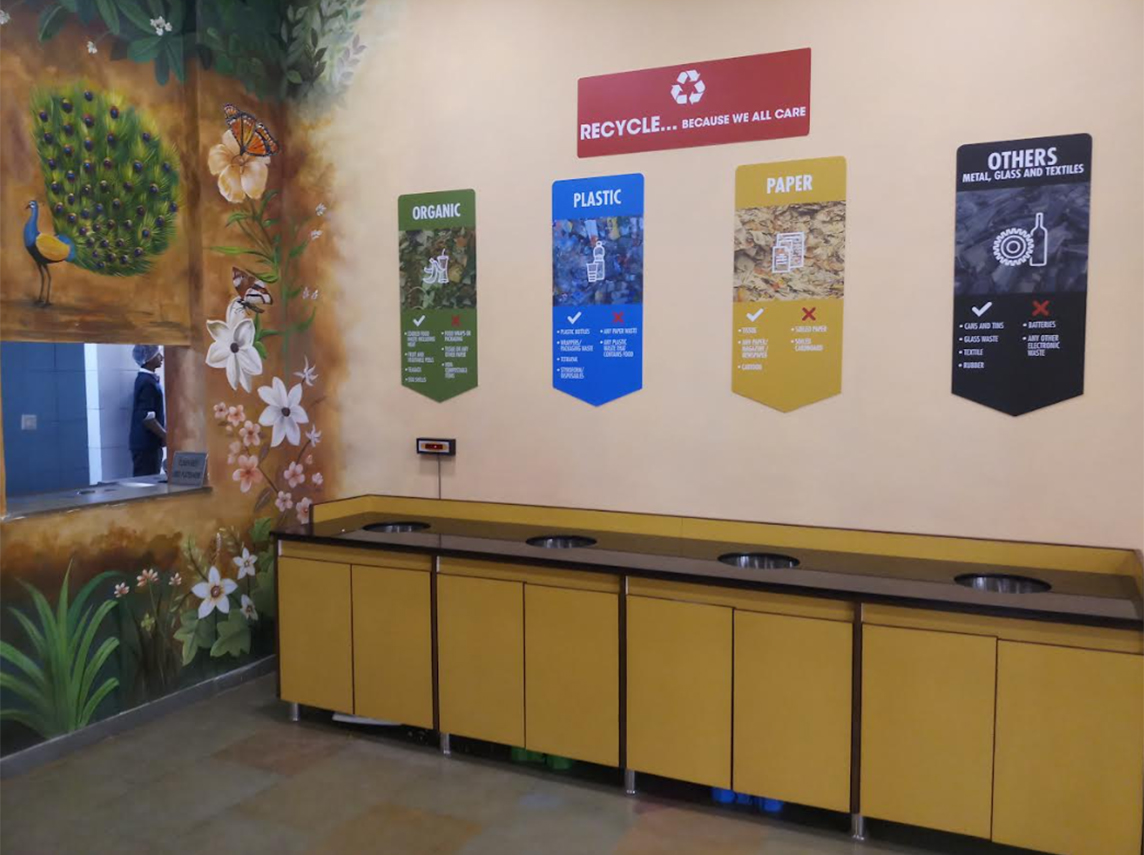
AAETI sees all waste as a resource, and aims to become a ‘zero-waste’ campus. In 2024-25, the facility generated a little over 9,000 kg of waste, the lion’s share of which was wet waste. Segregation and recycling are the key mantras – solid waste is segregated at source, and recycling is done through informal recyclers. Certain types of non-recyclable materials – including plastic carry-bags, PET bottles etc -- are banned on campus; efforts are made to keep the use of plastics to a minimum. The biodegradable material is either composted on site or used to fuel the biogas plant; care is taken to reduce food wastage.