|
Dear readers,
Welcome to the Climate Weekly Digest by the Centre for Science and Environment’s Climate Change programme and Down to Earth.
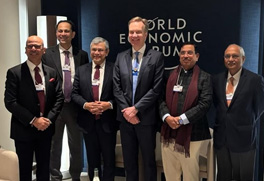
According to the latest report by the World Economic Forum, titled “Global Risks Report 2026”, extreme weather events remain the greatest long-term threat to humanity, especially for poor and developing nations. The report assesses global risks across three time horizons, immediate (2026), short-to-medium term (to 2028) and long-term (to 2036). CSE’s Kiran Pandey writes that, in the short-term, geopolitical tensions and economic instability are overshadowing environmental concerns. Further, over the next two years, non-environmental risks are expected to dominate policy attention over environmental threats such as extreme weather events, pollution, biodiversity loss and critical changes to Earth systems.
In the long term, environmental risks dominate the global risk landscape, with extreme weather events ranking as the top global risk, followed closely by biodiversity loss and critical changes to Earth systems. This gap, however, between short-term political priorities and long-term environmental threats could be particularly harmful to developing countries. Environmental shocks such as extreme weather events and biodiversity loss serve to deepen poverty, food insecurity and social inequity, worsening the lives and livelihoods of vulnerable communities. Global cooperation, the report warns, is weakening at the time when it is most needed.
In trade news, the proposed India–European Union Free Trade Agreement (FTA) is emerging as far more than a conventional market-access pact. Down to Earth’s Puja Das reports that the FTA is being seen as one that could recalibrate geopolitics, stabilise supply chains and reshape sustainability norms within international commerce. Among the critical issues within the India-EU FTA is its intersection with sustainability and climate policy, particularly the EU’s Carbon Border Adjustment Mechanism (CBAM), which came into force on January 1, 2026.
CBAM imposes a carbon tax on the import of emissions-intensive goods within the EU. While developing countries have perceived the policy as a trade barrier, this perception is now evolving. While CBAM will raise compliance costs, the India-EU FTA could also unlock the technology transfer and investment needed to meet those standards domestically, reflecting how climate policy is being integrated into trade strategy.
Lastly, the latest episode of the Carbon Politics podcast is set to be released on Wednesday, January 28. In this episode titled “Did the US kill multilateralism?,”, CSE Climate’s Sehr Raheja speaks to Brandon Wu from ActionAid USA on the US's disruptive shift away from multilateralism under Trump 2.0—and who leads global climate cooperation now.
|
|
|
| |
|
|
| |
 |
|
| |
By - Upamanyu Das
Climate Change, CSE
|
| |
|
|
|
|
| |
|
|
| |
|
|
| |
|
|
| |
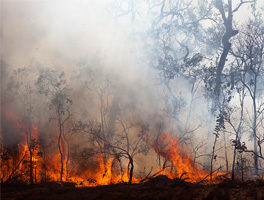
Australia’s January heatwave was ‘five times more likely’ due to climate change, 22 January 2026
|
|
 |
|
|
| |
|
|
| |
 |
|
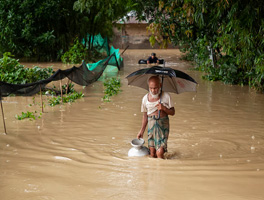
Extreme weather events world’s most severe long-term risk for third year in a row: WEF Global Risks Report 2026, 16 January 2026
|
|
|
| |
|
|
| |
|
|
| |
|
|
| |
CLIMATE NEWS | SCIENCE| IMPACTS| POLITICS |
|
| |
|
|
| |
|
|
| |
|
|
| |
|
|
| |
|
|
| |
|
|
| |
|
|
| |
|
|
| |
|
|
| |
|
|
| |
|
|
| |
|
|
| |
|
|
| |
|
|
| |
|
|
| |
|
|
| |
| |
|
Carbon Politics: A Video Podcast by CSE |
|
|
|
 |
|
|

|
|
|
| |
|
|
| |
|
|
| |
|
|
|