|
Dear readers,
Welcome to the Climate Weekly Digest by the Centre for Science and Environment’s Climate Change programme and Down to Earth.
India’s Economic Survey 2025-26, tabled on January 29, highlights key issues that need to be tackled for sustaining India’s renewable energy momentum. Down to Earth’s Puja Das reports that high capital costs, land acquisition delays and grid constraints limit the country’s renewable energy expansion, while large-scale deployment of battery storage and pumped hydro storage projects are required to manage renewable variability. Further, all this must happen alongside digital and financial reforms to transform the electricity sector and improve long-term growth.
The survey notes a significant improvement in the financial health of distribution utilities (DISCOMs) which recorded a positive net profit in FY25 after years of losses. Distribution infrastructure reforms are underway as well, with ongoing and proposed schemes targeting rural electrification, subsidised supply and improved efficiency. While coal continues to anchor India’s energy security, the share of clean energy is rising—and renewables now account for almost 50 per cent of the total installed capacity.
In the world of trade, India and the European Union (EU) finalised the long-awaited Free Trade Agreement (FTA) on January 27. Das writes that the agreement includes substantial tariff reductions and expanded market access across a wide range of goods and services. India-EU bilateral trade in goods and services currently stands at about €190 billion annually, and the FTA could unlock export growth of more than $75 billion for India.
An important aspect of the FTA is its interaction with the EU’s Carbon Border Adjustment Mechanism (CBAM), which is a tariff on the import of carbon-intensive goods and set to become fully operational in 2026. CBAM has been a key issue as it could impact India’s steel, aluminium and cement exports. In response, the FTA contains CBAM-related provisions including a most-favoured nation assurance, enhanced technical cooperation, and financial assistance and targeted support to help Indian exporters reduce emissions and increase compliance. The agreement also reinforces broader climate and clean energy cooperation and covers renewables, energy efficiency, grid modernisation and green hydrogen.
Finally, the latest episode of the Carbon Politics podcast was released on Wednesday, January 28. Titled “Did the US kill multilateralism?”, the episode features CSE Climate’s Sehr Raheja in conversation with Brandon Wu, Director of Policy and Campaigns at ActionAid USA, where they discuss the US’s disruptive foreign policy under Trump 2.0 while also unpacking how global climate cooperation can move ahead and who leads it now.
|
|
|
| |
|
|
| |
 |
|
| |
By - Upamanyu Das
Climate Change, CSE
|
| |
|
|
|
|
| |
|
|
| |
|
|
| |
|
|
| |
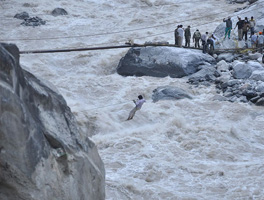
Himalaya-Karakoram glacial flood risks poorly assessed, study warns, 29 January 2026
|
|
 |
|
|
| |
|
|
| |
 |
|
Nearly half of world’s population to face extreme heat by 2050: Oxford study, 27 January 2026
|
|
|
| |
|
|
| |
|
|
| |
|
|
| |
|
|
| |
|
|
| |
CLIMATE NEWS | SCIENCE| IMPACTS| POLITICS |
|
| |
|
|
| |
|
|
| |
|
|
| |
|
|
| |
|
|
| |
|
|
| |
|
|
| |
|
|
| |
|
|
| |
|
|
| |
|
|
| |
|
|
| |
|
|
| |
|
|
| |
|
|
| |
|
|
| |
|
|
| |
|
|
| |
|
|
| |
|
|
| |
|
|
| |
|
|
| |
| |
|
Carbon Politics: A Video Podcast by CSE |
|
|
|
 |
|
|

|
|
|
| |
|
|
| |
| Online Training Course |
|
Podcast |
| |
|
|
|
|
|
|
|
|
| |
|
|