Down to Earth
Sign up for weekly digest
Down to Earth Facebook Down to Earth Twitter Down to Earth Twitter
 
January 30 – February 5, 2026
 
     
A weekly digest on impacts, politics and science of the climate emergency; from the Global South perspective. Access our extensive coverage on climate. You can find this digest in the web here.
Dear readers,

Welcome to the Climate Weekly Digest by the Centre for Science and Environment’s Climate Change programme and Down to Earth.

A key announcement in India’s Union Budget 2026-27 was a five-year Rs 20,000 crore outlay for Carbon Capture, Storage and Utilisation (CCUS) through a dedicated scheme. CSE Industrial Pollution’s Kushagra Goyal explains that the scheme will support CCUS initiatives to aid the decarbonisation of five industrial sectors, namely, power, steel, cement, refineries and chemicals. CCUS refers to technologies that capture carbon dioxide emissions from industrial processes at the source, and either reuse them in industrial applications or store them underground, helping reduce the amount of greenhouse gases released into the atmosphere.

In December 2025, India’s Union Department of Science and Technology released a roadmap aimed at research and development pathways for CCUS technologies. Similarly, the Union Ministry of Petroleum and Natural Gas has released a draft roadmap for accelerating CCUS development in India’s upstream oil and gas sector. However, India’s experiments with CCUS are currently limited to a few pilot projects, largely financed by public sector companies. Further, concerns around CCUS remain, including high costs, slow deployment and limited operating capacity. The final details of the scheme will determine the future trajectory of CCUS initiatives across the five identified sectors in India.

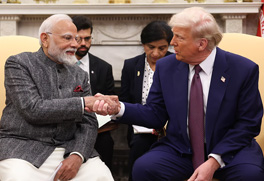
In the world of trade, on February 3, the US President Donald Trump announced that the US had agreed to cut tariffs on Indian goods to 18 per cent, down from as high as 50 per cent. Down to Earth’s Puja Das reports that the agreement marks a major reset in India-US ties after months of tariff escalation, particularly over India’s energy sourcing. According to US government claims, the reduced tariffs will give Indian exporters a competitive edge in manufacturing and clean energy technologies compared to its neighbours. The US is already India’s most important overseas market for solar exports. However, the agreement is interim, with a longer term ambition to expand bilateral trade from $212 billion in 2025 to $500 billion by 2030. Energy remains a critical pillar of the trade reset, with a reduction in Russian oil imports being a key condition for rolling back tariffs.

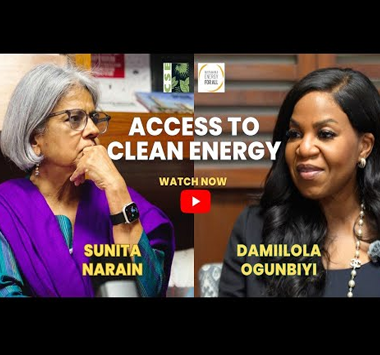
Lastly, the latest episode of Carbon Politics was released on Wednesday, January 28. In this episode titled “Did the US kill multilateralism?”, CSE Climate’s Sehr Raheja speaks to Brandon Wu, Director of Policy and Campaigns at ActionAid USA, on the US’s new disruptive foreign policy era under Trump 2.0 and who can lead global climate cooperation now.
   
 
Down To Earth
 
By - Upamanyu Das
Climate Change, CSE


EXTREME WEATHER TRACKER


Heatwaves and lightning should be added to national disaster list, Finance Commission says, 02 February 2026
Down To Earth


Down To Earth Threat of global warming looms large on next winter Olympics despite being at a high-altitude Alpine city: Study, 31 January 2026


COMMENTARIES
India’s Rs 20,000-crore CCUS push: What the Union Budget’s carbon capture bet really means, 02 February 2026
Budget backing raises questions about costs, scale, and whether carbon capture can deliver real climate gains alongside renewables


Union Budget 2026 needs to prioritise the energy transition in rural India, 31 January 2026
Scope of existing schemes should be enhanced via procedural ease for DRE-based power generation and inclusion of emerging technologies which address land-use of RE projects
 
   
  CLIMATE NEWS | SCIENCE| IMPACTS| POLITICS  
   
 
Down To Earth
Oxford study warns overreliance on carbon removal could breach international law, 04 February 2026
The authors argue that aligning climate plans with legal guardrails will require far greater emphasis on immediate emissions reductions and more realistic, transparent use of CDR


Down To Earth
Climate change threatens the Winter Olympics’ future — and even snowmaking has limits for saving the Games, 04 February 2026
As host cities warm and snowfall declines, scientists warn the Winter Games may no longer be viable in many former venues


Down To Earth
Data centres to drive 790 TWh surge as Asia Pacific power markets enter pivotal 2026: Wood Mackenzie, 04 February 2026
Challenges include policy recalibration, supply-chain constraints, and the economic viability of low-carbon fuels


Down To Earth
Rajasthan’s new demand flexibility rules explained: How shifting electricity use could unlock more solar power, 04 February 2026
The notification of Demand Flexibility/Demand Side Management rules by the RERC will steer the transition of electricity demand into an active stakeholder in power sector, helping integrate higher levels of renewable energy into the power system


Down To Earth
India-US trade deal: Tariffs cut to 18%, $500 billion purchases floated as energy, solar sectors watch closely, 03 February 2026
Energy remains the most sensitive pillar of the trade reset


Down To Earth
Preventable deaths in a warming world: How politics shapes who lives & who dies, 03 February 2026
Vulnerability is not fate. With early warning systems, targeted outreach and timely intervention, many such fatalities can be prevented


Down To Earth
Energy efficiency must anchor India’s decarbonisation push as demand surges: Experts, 03 February 2026
Digital tools, artificial intelligence, smart metering expected to play central role


Down To Earth
Big promises, slow ground action: What Budget 2025-26 delivery reveals about India’s rural, farm, climate & energy priorities, 02 February 2026
Climate and farm pledges shine in Budget 2025-26 speech, but factories outpace fields one year later


Down To Earth
Union Budget 2026-27 was all about building assets but ignoring climate and ecological ground realities, 02 February 2026
Why does the country’s general budget still treat climate, ecosystems, and livelihoods as after thoughts


Down To Earth
Budget 2026-27 sets aside Rs 20,000 crore to accelerate carbon capture in heavy industry, 01 February 2026
Investment aimed at bridging the gap between pilot projects and commercially viable, large-scale systems


Down To Earth
Union Budget 2026: Biogas-blending gets a boost, 01 February 2026
Excise exemption for biogas creates incentive to raise blending and meet national targets


Down To Earth
India curtails 2.3 TWh of solar power in 2025 as grid flexibility falls short: Ember report, 30 January 2026
The mismatch between solar generation and coal plant operations led to significant curtailment, highlighting the need for improved system flexibility, energy storage, and demand-side management


    Carbon Politics: A Video Podcast by CSE
 
    Video
spacer
CSE   DTE Hindi


    Online Training
 
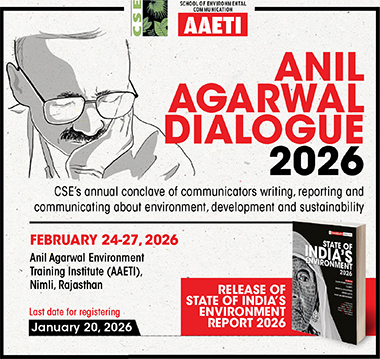
    Anil Agarwal Dialogue
spacer
DTE Hindi   DTE Hindi
     
    Gobar Times


This weekly digest is published by Down to Earth and the Centre for Science and Environment, a Delhi-based global think tank advocating on global south developmment issues.
We would love your feedback on this weekly digest. To speak to our experts for quotes and comments on the above stories. Please email to vikas@cseindia.org
 
Follow us on
spacer facebook spacer Down to Earth video spacer twitter spacer
  If you like our work and would like others to join our climate network and the climate conversation, please forward this to your friends. Interested in Climate weekly? Sign Up here