| |
A weekly digest on impacts, politics and science of the climate emergency from the Global South perspective. You can find this digest in the web here.
|
|
| |
|
|
 |
Dear readers,
Welcome to the Climate Weekly Digest by the Centre for Science and Environment’s Climate Change and Green Economy programme and Down to Earth.
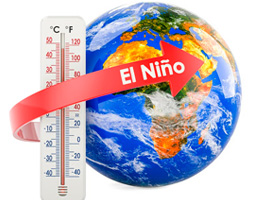
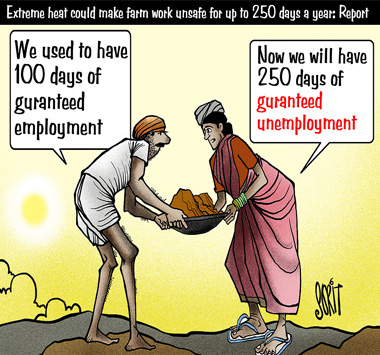
After the third-warmest year on record in 2025, global warming could be supercharged in the summer of 2026 by a “super” El Niño. Down to Earth’s Akshit Sangomla explains that the El Niño, which is the warmer-than-normal phase of the El Niño Southern Oscillation (ENSO) in the equatorial Pacific, has a high possibility of occurring in June-August and could last until the end of 2026. Meteorological assessments predict this could be the strongest El Niño event of the century so far.
While such events are rare—only three very strong El Niños have been recorded since 1950—some climate models suggest that the upcoming El Niño could exceed previous episodes by a wide margin, raising concerns about adverse climatological impacts in a world of accelerated global warming. The summer of 2026, Sangomla writes, could be a brutal test of the human capacity to cope with extreme heat.
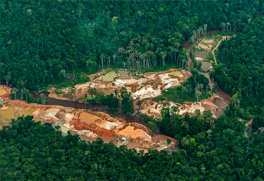
Meanwhile, a new study has warned that the Amazon rainforest faces a higher risk of ecological breakdown far earlier than previously estimated. Down to Earth’s Himanshu Nitnaware writes that global warming and deforestation could push two-thirds of the Amazon towards critical ecological breakdown at 1.5-1.9°C of warming. This is lower than previous models estimated, which projected critical thresholds between 2°C and 6°C of warming.
The Amazon is already showing signs of weakening resilience with increased droughts, loss of biodiversity, forest degradation and loss in its ability to sequester carbon. The study warns that these combined stresses could push the biome closer to a tipping point where it could begin driving its own decline—transitioning parts of the Amazon into degraded forest systems. It also notes that without any further deforestation, the critical warming threshold could rise to 3.7-4°C, underlining the importance of limiting global warming below 1.5°C and halting deforestation in the Amazon.
Finally, the latest episode of Carbon Politics was released on Tuesday, April 28. In this episode titled "Green Industrialisation for the Global South", CSE’s Avantika Goswami speaks with Dr. Ilias Alami from the University of Cambridge. They discuss why green industrialisation matters for the Global South and how developing countries can advance this agenda to meet their own aims of decarbonisation, development and structural transformation.
|
|
|
| |
|
|
| |
 |
|
| |
By - Upamanyu Das
Climate Change and Green Economy, CSE
|
| |
|
|
|
|
| |
|
|
| |
|
|
| |
|
|
| |
El Niño meets warming, 01 May 2026
|
|
 |
|
|
| |
|
|
| |
 |
|
The Super El Nino is more than a weather event; it is a profound cultural, systemic, and structural failure, 06 May 2026
|
|
|
| |
|
|
| |
|
COMMENTARIES |
|
|
A steady voice in the age of noise, 01 May 2026
|
|
|
As Down To Earth enters its 35th year of publication, I want to make one thing clear: we are neither for nor against any government. We stand firmly for development that is inclusive, and therefore sustainable
|
|
|
| |
|
|
| |
CLIMATE NEWS | SCIENCE| IMPACTS| POLITICS |
|
| |
|
|
| |
|
|
| |
|
|
| |
|
|
| |
|
|
| |
|
|
| |
|
|
| |
|
|
| |
|
|
| |
|
|
| |
|
|
| |
|
|
| |
|
|
| |
|
|
| |
|
|
| |
|
|
| |
|
|
| |
|
|
| |
|
|
| |
|
|
| |
|
|
| |
|
|
| |
| |
|
Carbon Politics: A Video Podcast by CSE |
|
|
|
 |
|
|
|
|
|
| |
|
|
| |
| Onsite Training |
|
Workshops |
| |
|
|
|
|
|
|
|
|
| |
|
|