| |
A weekly digest on impacts, politics and science of the climate emergency from the Global South perspective. You can find this digest in the web here.
|
|
| |
|
|
 |
Dear readers,
Welcome to the Climate Weekly Digest by the Centre for Science and Environment’s Climate Change and Green Economy programme and Down to Earth.
According to the latest climate finance report by the Organisation for Economic Co-operation and Development (OECD), developed countries provided $136.7 billion in climate finance to developing countries in 2024. Down to Earth’s Puja Das writes that this is the third consecutive year that climate finance mobilised by developed economies surpassed the $100 billion annual goal, after crossing the $100 billion mark in 2022 and reaching $132.8 billion in 2023.
Mitigation finance continued to dominate overall flows, accounting for nearly two-thirds of the mobilised finance, with adaptation finance remaining laggard and reaching $34.7 billion. Public climate finance continued to account for nearly three-quarters of the total in 2024, while private finance mobilised through public interventions recorded its biggest annual increase to reach $30.5 billion. However, loans accounted for 67 per cent of all public climate finance, while grants represented 29 per cent—raising concerns over debt burdens, equity and fairness. Das also highlights distributional concerns, with low-income countries receiving just 7 per cent of total climate finance.
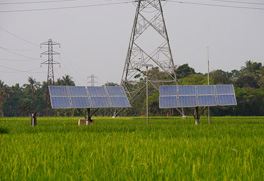
Moving to the world of energy, CSE’s Director General Sunita Narain, in her latest editorial, discusses India’s energy options given the ongoing energy disruption. The question, she writes, is how green technologies like solar and wind can fit into the grid while ensuring that the supply remains reliable. The intermittent nature of renewable sources and limited availability of energy storage are critical concerns to be resolved. For India, ensuring that the grid can meet demand during non-solar hours will require redesigning coal plants for ‘flexibility’—to be able to ramp up and ramp down the plant’s capacity based on the energy demand.
Grid planning needs a rethink to prevent a buildout of more coal plants, which would otherwise lead to similar concerns around intermittency of renewables and inflexibility of coal. Another part of the solution is to build storage for electricity generated during the day to be used at night. The future of energy, Narain writes, is no longer about the reliability of old technologies but about “finding order in great disorder.”
Finally, the upcoming episode of the Carbon Politics podcast is set to be released on Thursday, May 28. In this episode, titled “Can Climate Finance be too Expensive?”, CSE Climate’s Sehr Raheja speaks with Neha Khanna from Climate Policy Initiative about the high cost of capital for green technologies in the Global South, why this is a barrier for climate action, and how developing countries can address this issue.
|
|
|
| |
|
|
| |
 |
|
| |
By - Upamanyu Das
Climate Change and Green Economy, CSE
|
| |
|
|
|
|
| |
|
|
| |
|
|
| |
|
|
| |
The 2026 El Niño is developing unusually fast — and may rival the strongest ever recorded, 20 May 2026
|
|
 |
|
|
| |
|
|
| |
 |
|
Explosive winds in the deadly Uttar Pradesh storms a symptom of warming, 15 May 2026
|
|
|
| |
|
|
| |
|
|
| |
|
|
| |
|
|
| |
|
|
| |
CLIMATE NEWS | SCIENCE| IMPACTS| POLITICS |
|
| |
|
|
| |
|
|
| |
|
|
| |
|
|
| |
|
|
| |
|
|
| |
|
|
| |
|
|
| |
|
|
| |
|
|
| |
|
|
| |
|
|
| |
|
|
| |
|
|
| |
|
|
| |
|
|
| |
|
|
| |
|
|
| |
 |
|
|
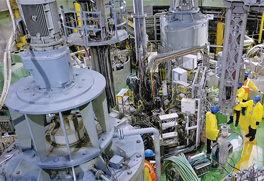
One step closer, 19 May 2026
|
|
|
India attains criticality in fast breeder reactor technology, reaching the second stage of the country’s three-stage nuclear programme towards energy security
|
|
|
|
|
| |
|
|
| |
|
|
| |
|
|
| |
|
|
| |
|
|
| |
|
|
| |
|
|
| |
|
|
| |
|
|
| |
| |
|
Carbon Politics: A Video Podcast by CSE |
|
|
|
 |
|
|

|
|
|
| |
|
|
| |
|
|
| |
|
|