July 10 – July 16, 2026
  A weekly digest on impacts, politics and science of the climate emergency from the Global South perspective. You can find this digest in the web here.  
     
Dear readers,

Welcome to the Climate Weekly Digest by the Centre for Science and Environment’s Climate Change and Green Economy programme and Down to Earth.

India’s renewable energy additions have continued to grow apace in 2026, with the country adding a record 26 GW of solar and 2.9 GW of wind capacity between January and June. Down to Earth’s Puja Das reports that solar installations rose by 43 per cent compared with the same period last year, while wind capacity additions declined 16 per cent year-on-year. Further, the strong performance means solar installations in the first half of 2026 have already reached nearly 70 per cent of the total capacity installed last year, with total  solar and wind installations in 2026 expected to reach 47 GW.

Within solar, India added about 19 GW of utility-scale capacity and 6.4 GW of rooftop solar—which recorded the fastest growth primarily driven by the PM Surya Ghar scheme. Gujarat (29 per cent), Rajasthan (25 per cent) and Tamil Nadu (9 per cent) were the largest contributors in solar installations, while the wind sector was led by Gujarat (43 per cent), Maharashtra (17 per cent) and Karnataka (16 per cent). India’s cumulative renewable energy has reached 288 GW by June 2026.

In decarbonisation news, India’s carbon market has moved closer to operationalisation with the publication of draft targets for the iron and steel sector. CSE Sustainable Industrialisation’s Kushagra Goyal and Parth Kumar write that the notified targets cover 255 units for the fiscal year 2026-27, with the required reduction in emissions intensity ranging from 2.1-9.3 per cent across various steel entities in the list. India has the world’s second-largest steel sector that contributes 10-12 per cent of the country’s total carbon dioxide emissions. As of 2023-24, India’s average emissions intensity per tonne of crude steel produced was 2.54 tonnes of carbon dioxide, while the global average stands at 1.9 tonnes of carbon dioxide.

Goyal and Kumar point out that the inclusion of iron and steel targets under India’s carbon market will likely drive improvements through energy efficiency and low-cost operational measures. The real test, they write, will be whether future targets begin to influence long-term investments and accelerate the adoption of low-carbon technologies, driving a structural shift in the sector’s emissions trajectory.

Finally, the latest episode of the Carbon Politics podcast, titled “The IPCC in the Age of Misinformation”, features CSE’s Trishant Dev in conversation with Dr. Minal Pathak and Dr. Aditi Mukherji, two IPCC authors from India. They discuss the workings of the IPCC assessment cycles, the divide between political consensus and scientific confidence, and how the upcoming assessment cycle, AR7, is taking shape.
   
 
Down To Earth
 
By - Upamanyu Das
Climate Change and Green Economy, CSE


EXTREME WEATHER TRACKER


Ladakh, India’s cold desert, is getting more monsoon rain than normal — for the fifth year in a row, 16 July 2026
Down To Earth


Down To Earth These are the 111 districts the government flagged as vulnerable to El Niño 2026 — and 69 are already rainfall deficient, 16 July 2026


Himalayan climate alarm: Jammu & Kashmir warms by nearly 1 °C in two decades, scientists warn, 15 July 2026
Experts call for strengthened mountain climate monitoring, sustained observations and targeted adaptation policies to safeguard one of the world’s most vulnerable ecosystems


COMMENTARIES
Climate finance is Paris Agreement’s weakest link, 10 July 2026
World Bank’s move away from fixed climate-finance targets shows developing countries are being asked to raise ambition without funding certainty


Climate law expert: Europe’s deadly heatwaves belong in court, 10 July 2026
From Denmark’s 37°C shock to continent-wide fatalities, courts should use climate models to hold governments accountable for missed carbon targets
 
   
  CLIMATE NEWS | SCIENCE| IMPACTS| POLITICS  
   
 
Down To Earth
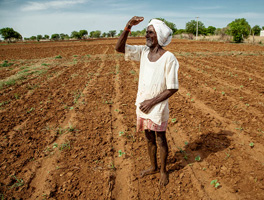
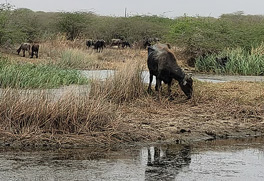
Delayed monsoon is driving ecological distress and economic strain across Kutch, 16 July 2026
With sowing windows closing and fodder prices doubling, the Gujarat region’s rainfed economy buckles under a stalled monsoon


Down To Earth
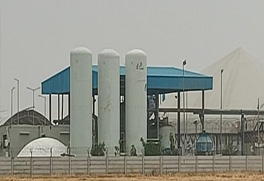
Chhattisgarh’s new biogas policy picks up where others left off, 16 July 2026
State's 2026 policy on compressed biogas outlines feedstock supply & fills several gaps


Down To Earth
‘7.6 billion mugs of tea a second’: a new way to make sense of the heat pouring into our oceans, 16 July 2026
Why oceans, not air, hold 90% of global warming’s heat – and what that means for our future


Down To Earth
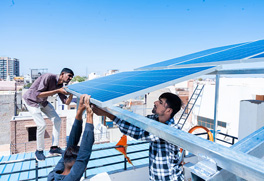
India adds record 29 GW solar, wind in first half of 2026, 15 July 2026
Rooftop solar doubles, Gujarat largest contributor to solar installations


Down To Earth
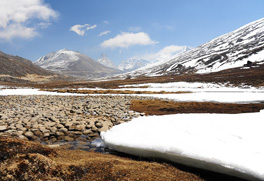
Himalayan snowfall has been miscalculated for years, here’s how we found a new way to measure it, 15 July 2026
A breakthrough in measuring snow on frozen lakes offers sharper insight into Himalayan meltwater, helping communities plan for droughts and rising regional tensions


Down To Earth
Seeding clouds with seawater could change Earth’s weather and prevent a super El Nino: Study, 15 July 2026
Marine cloud brightening could weaken El Niño extremes, say researchers


Down To Earth
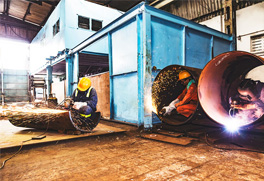
India’s iron and steel sector moves closer to CCTS compliance: Will larger decarbonisation follow?, 14 July 2026
Draft targets for 255 units of iron and steel sector announced, making it the largest sector under India’s carbon credit and trading scheme


Down To Earth
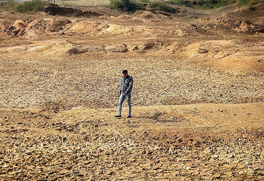
Kharif crop in trouble? Rainfall deficit hits 397 districts as paddy-growing areas along the Ganga face drought-like conditions, 14 July 2026
Poor monsoon rain across Uttar Pradesh, Bihar and Jharkhand has slowed kharif sowing, with overall planting 16% lower than the same period last year


Down To Earth
Meteorological truth and media representation of April-May 2026 heat season frequently diverged in ways that matter for public safety and policy, 14 July 2026
Ultimately, the 2026 heat season illustrates that the thermometer’s data matter only insofar as someone accurately listens, interprets, and acts


Down To Earth
Big bees have the most to lose as global CO₂ levels rise: new research, 13 July 2026
Rising CO₂ is shrinking and weakening populations of large bees, threatening the pollination services that underpin global food crops and wild ecosystems


Down To Earth
Can climate models get the future monsoon right if they miss the Arabian Sea’s surface temperature?, 13 July 2026
Even though global climate models are the best tools available for projecting future climate, their simulations must be interpreted carefully


Down To Earth
Heat waves pushed 57 million hectares of tropical forests beyond photosynthesis limits: Study, 13 July 2026
This number could nearly double by 2100 to 160 million hectares, an area larger than South Africa, authors warn


Down To Earth
Climate change could double water bills in some urban cities by mid-century, finds study, 13 July 2026
It concludes that addressing climate-driven water affordability will require more than local utility action


Down To Earth
Rising heat disrupts schooling across India as 68% children report missing classes or routine activities, finds CRY report, 13 July 2026
Andhra Pradesh and West Bengal report high school disruption, with poorer children disproportionately impacted by heat stress


Down To Earth
Nearly 169 years earlier from Europe’s 2026 heatwave, the British almost lost India to heat on Delhi’s Ridge, 11 July 2026
Caught between rebellion, cholera and a blistering summer, British troops in 1857 discovered that weather could be as formidable an adversary as the battlefield itself


Down To Earth
How Kashmir’s warming winters are driving a new agricultural crisis, 10 July 2026
Wild boars once thought to have vanished from the Valley are damaging farms and orchards as milder winters help their numbers rise


    Webinar
 
    Carbon Politics: A Video Podcast by CSE
spacer
DTE Hindi   DTE Hindi


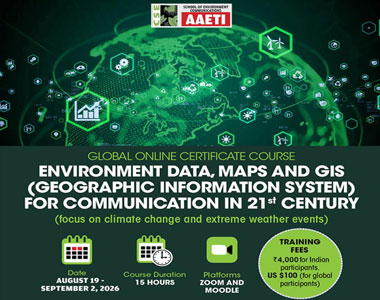
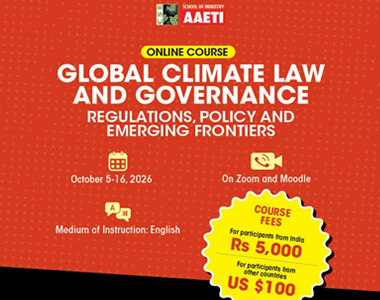
Online Training Course   Online Training Courses
     
Down To Earth
 
Down To Earth
 
     
CSE
This weekly digest is published by Down to Earth and the Centre for Science and Environment, a Delhi-based global think tank advocating on global south developmment issues.
We would love your feedback on this weekly digest. To speak to our experts for quotes and comments on the above stories. Please email to vikas@cseindia.org
 
Follow us on
spacer facebook spacer Down to Earth video spacer twitter spacer
  If you like our work and would like others to join our climate network and the climate conversation, please forward this to your friends. Interested in Climate weekly? Sign Up here