
Cse In News

Air Pollution: Delhi awaits Cloud Seeding

Delhi, which suffers from severe pollution every, awaiting the implementation of cloud seeding or artificial rain for months as the Delhi government has been considering it to provide clean air to its citizens. The city remained most polluted by a wide margin during the 2024-25 winter, with an average PM2.5 concentration of 175 micrograms per cubic metre, as per Centre for Science and Environment. According to a report by the Energy Policy Institute at the University of Chicago (EPIC), the air pollution in the city is reducing citizens’ life expectancy by an average of 11.9 years compared to the World Health Organisation’s (WHO) guidelines. Now, in order to combat air pollution, Delhi is set to carry out artificial rain through cloud seeding flights between August 30 and September 10. The operation, originally scheduled for July 4 to 11, has been postponed following recommendations from experts at the India Meteorological Department (IMD) and the Indian Institute of Tropical Meteorology (IITM), Pune. The Rs 3.21 crore pilot project, titled ‘Technology Demonstration and Evaluation of Cloud Seeding as an Alternative for Delhi NCR Pollution Mitigation,’ was announced by Environment Minister Manjinder Singh Sirsa. The initiative will use five specially modified Cessna aircraft to disperse rain-inducing materials over parts of the capital, with the goal of washing out airborne pollutants. Initial operations will focus on low-security air zones in northwest and outer Delhi. Each flight, or sortie, is expected to last about 90 minutes and will cover approximately 100 square kilometres. What is Cloud Seeding? Cloud seeding involves introducing substances like silver iodide, dry ice, or salts into clouds to encourage precipitation. This method is used globally to address issues such as drought, inadequate snowfall, or persistent smog and fog. The formulation developed for this project by IIT Kanpur includes silver iodide nanoparticles, iodised salt, and rock salt. The decision to delay the cloud seeding operations came after meteorological experts advised that the initial July window, though during monsoon season, was not ideal for effective cloud seeding. Critics had questioned the timing, arguing that rain during monsoon would not significantly help reduce pollution and would waste public funds. However, experts clarified that the presence of active monsoon clouds is essential for cloud seeding to work. The project marks a significant step in Delhi’s ongoing efforts to find innovative ways to address its persistent air quality challenges.
Sulphur dioxide emission norms relaxed for thermal power plants

The central government has granted widespread exemptions to thermal power plants from complying with air pollution emissions norms, in a move experts say could be detrimental to public health. On July 11, the Ministry of Environment, Forests, and Climate Change issued a notification exempting thermal power plants which are due to retire by 2030 from complying with sulphur dioxide emissions standards, as long as they declare their year of retirement to the Central Pollution Control Board and the Central Electricity Authority. As per the notification, only ‘Category A’ plants – those located within 10 kilometres of the National Capital Region and other cities with populations exceeding one million – need to comply with sulphur dioxide emissions standards by December 2027. Plants that have obtained environmental clearance and are located within a 10-kilometre radius of other critically polluted areas – ‘Category B’ – have the option of complying with norms by December 2028 or appealing to the centrally-appointed Expert Appraisal Committee for exemption. Whether up-and-coming plants in this category need to comply with emissions norms will be determined through the environmental clearance process, the notification says. The most dramatic change is for ‘Category C’ plants that are neither located close to big cities nor to critically polluted areas, but which make up the vast majority of thermal power plants in the country. The notification states that these plants needn’t comply with sulphur dioxide standards at all, as long as the height of their chimneys (stacks) meet required limits. Once released into the atmosphere, sulphur dioxide can react with other pollutants to form hazardous PM2.5 particles. Between June 2022 and May 2023, thermal power plants released approximately 4,327 kilotonnes of sulphur dioxide. Non-retiring and non-compliant plants will have to pay environmental compensation of up to Rs. 0.40 per unit of electricity generated, depending on the tenure of non-compliance. The government has said the changes were introduced because of limited availability of flue gas desulphurisation (FGD) technologies, supply chain issues, price escalations, and “low sulphur dioxide concentration in ambient air” — all reasons that have been challenged by policy experts and scientists. Previously, all thermal power plants, regardless of category, were mandated to meet emissions standards by installing FGD technology. “Granting such a large-scale exemption undermines the effectiveness of the emission standards and poses a serious risk to public health and environmental sustainability,” said Shreya Verma, programme manager at the Centre for Science and Environment, in a statement.

लोगों के लिए संकट बन रही वैश्विक अव्यवस्था

पिछले कुछ महीनों से एक ऐसा समय देखने को मिल रहा है जो इस वक्त की हकीकत है लेकिन यह अवास्तविक सा लगता है। हमारी दुनिया एक लट्टू की तरह धुरी पर घूमती प्रतीत होती है जिस पर लगता है कि किसी का नियंत्रण नहीं है। मैं यह विशेष रूप से उन लोगों के लिए कह रही हूं जिन्होंने मेरी तरह ही अपने जीवन के पांच दशक पूरे कर लिए है और जो औपनिवेशिक काल के बाद के दौर में बड़े हुए। इस पीढ़ी ने एक ऐसी वैश्विक व्यवस्था देखी है जिसमें बेहद असमानता थी लेकिन फिर भी उस व्यवस्था में सुधार संभव लगता था। संभवतः वह थोड़ी मासूमियत का दौर था। लेकिन हमें वैश्विक कानून के शासन से उम्मीदें थीं। निश्चित तौर पर संयुक्त राष्ट्र की इसमें एक अहम भूमिका थी। भले ही सुरक्षा परिषद, तब और अब, एक ऐसी संस्था थी जो एक असमान और अनुचित वैश्विक शक्ति व्यवस्था को प्रतिबिंबित करती थी – लेकिन यह गलत के खिलाफ, सही के साथ खड़ा था। अब ऐसा लगता है कि जैसे हमारे पैरों तले जमीन खिसक गई है और हम खो गए हैं। निश्चित रूप से, मैं इस वैश्विक व्यवस्था को नहीं समझ पा रही हूं जहां कोई देश किसी भी उकसावे के बिना, दूसरे देश पर बमबारी करते हुए एकतरफा कार्रवाई कर सकता है और दुनिया बिल्कुल असहाय और खामोश होकर यह सब देखती रहती है। अब आलम यह है कि हम दूसरे देश में सत्ता परिवर्तन की बात सुनते हैं और इसे बेहद सामान्य मानकर टाल देते हैं। हम तनाव न लेने के लिए ज्यादा से ज्यादा यही करते हैं कि टीवी चैनल बदल देते हैं क्योंकि हम इसे और नहीं देख सकते। हम पूरी तरह से लाचार हैं। ईरान पर हाल का हमला केवल अमेरिका या इजरायल के सही या गलत होने से नहीं जुड़ा है बल्कि यह नियमों पर बनी वैश्विक व्यवस्था के भविष्य से जुड़ा है जिस पर विभिन्न राष्ट्रों ने सहमति जताई थी और फिर वैश्विक संस्थाओं के माध्यम से लागू किया था। इस मामले में ईरान, परमाणु अप्रसार संधि (एनपीटी) का एक हस्ताक्षरकर्ता देश है और यह संधि, परमाणु हथियारों के खिलाफ एक अंतरराष्ट्रीय समझौता है। वर्ष 1970 में लागू हुई इस संधि को व्यापक रूप से सफल माना जाता है। इस संधि से 191 देश, पक्षकार के तौर पर जुड़े हैं और उन्होंने यह स्वीकार किया है कि ‘परमाणु हथियारों का प्रसार, परमाणु युद्ध के खतरे को गंभीरता से बढ़ाएगा।’ इस संधि के एक हस्ताक्षरकर्ता देश के रूप में, ईरान को परमाणु हथियार हासिल करने से प्रतिबंधित किया गया है। वियना में मौजूद, अंतरराष्ट्रीय परमाणु ऊर्जा एजेंसी (आईएईए) को यह सुनिश्चित करना होता कि इन नियमों का पालन किया जाए। ईरान आईएईए की सुरक्षा प्रणाली के नियमों के अंतर्गत आता है और इस क्षेत्र की भू-राजनीतिक अहमियत को देखते हुए, इस क्षेत्र को व्यापक रूप से कड़ी निगरानी व्यवस्था के दायरे में माना जाता है। एनपीटी के तहत, पांच देशों को परमाणु हथियार संपन्न राष्ट्रों के रूप में मान्यता मिली है जिनमें अमेरिका, रूस, ब्रिटेन, फ्रांस और चीन शामिल हैं और इसमें आप यह तर्क दे सकते हैं कि यह भेदभावपूर्ण है। ये सभी देश संयुक्त राष्ट्र सुरक्षा परिषद के स्थायी सदस्य भी हैं। भारत और पाकिस्तान ने अपनी परमाणु-हथियार क्षमता घोषित की है लेकिन एनपीटी पर हस्ताक्षर नहीं किए हैं, वहीं उत्तर कोरिया इससे बाहर हो चुका है। लेकिन इजरायल की वजह से यह स्थिति और भी ‘अवास्तविक’ हो जाती है जिसने ईरान की परमाणु महत्त्वाकांक्षाओं को अपने अस्तित्व के लिए खतरा बताया है जबकि उसने खुद भी कभी एनपीटी पर हस्ताक्षर नहीं किए हैं। व्यापक तौर पर यह बात स्वीकारी जाती है कि इजरायल का एक गुप्त परमाणु-हथियार कार्यक्रम चल रहा है। यहां एक देश, वैश्विक नियमों से बंधा हुआ है और उस पर एक ऐसे देश द्वारा हमले किए जा रहे हैं खुले तौर पर वैश्विक नियमों और संस्थाओं को नकारता है। ऐसे में यह एक बहुपक्षवाद या अव्यवस्था पर नहीं बल्कि व्यवस्थाओं पर आधारित वैश्विक व्यवस्था के भविष्य के बारे में क्या संदेश देता है? मई महीने में ईरान पर आईएईए की रिपोर्ट में इसके महानिदेशक ने कुछ मुद्दों पर अपने निरीक्षकों की चिंता उठाई थी जिनमें ‘संवर्धित यूरेनियम का तेजी से भंडारण’ करने की बात शामिल थी। लेकिन रिपोर्ट में कहीं भी यह नहीं कहा गया है कि उनके पास इस बात के सबूत हैं कि ईरान के पास परमाणु हथियार हैं जिसके लिए किसी देश को यूरेनियम को 90-95 फीसदी तक संवर्धित करने की आवश्यकता होती है। इसके अलावा इस मुद्दे पर अगला कदम, संबंधित पक्ष के साथ चर्चा करना होना चाहिए था और अगर आवश्यक हो तब इस मामले को संयुक्त राष्ट्र सुरक्षा परिषद में ले जाना चाहिए था। इस तरह की चिंता का उपाय, देश के परमाणु ऊर्जा और अन्य संबंधित स्थलों पर बमबारी करना नहीं हो सकता, जिससे विनाशकारी रिसाव का खतरा पैदा हो जाए। इन सभी परिस्थितियों में हमें पूछना होगा कि इसके कारण आईएईए की विश्वसनीयता कहां रह जाती है? आईएईए सभी देशों में सुरक्षा उपायों को बनाए रखने की भूमिका कैसे निभा सकता है? यदि किसी दूसरे पर बमबारी करने के लिए केवल शक्ति और आक्रामक बल का उपयोग करना ही काफी है तब देशों को कानून के शासन की औपचारिकताएं बनाए रखने की परवाह क्यों करनी चाहिए? संयुक्त राष्ट्र और इसके महासचिव की भूमिका तार-तार हो गई है क्योंकि अब इनकी भूमिका केवल प्रेस विज्ञप्ति जारी करने और ऐसी सलाह देने तक सीमित है जिसे कोई नहीं सुनता। हमें वास्तव में यह पूछने की जरूरत है कि ये संस्थाएं अपनी जमीन पर क्यों नहीं खड़ी हो रही हैं या फिर इस तरह की अव्यवस्था को दूर करने में कोई भूमिका क्यों नहीं निभा रही हैं? क्या ये इस हद तक समझौता कर चुकी हैं या उन्होंने कुछ देशों के आक्रामक व्यवहार के सामने हार मान ली है? यह एक परस्पर निर्भर वैश्विक व्यवस्था के लिए आगे बढ़ने का रास्ता नहीं है। मैं यह इसलिए पूछती हूं क्योंकि यहां बहुत कुछ दांव पर लगा है। हम जानते हैं कि जलवायु परिवर्तन का खतरा वास्तविक है और इसके लिए दुनिया को एक साथ काम करने की आवश्यकता है। यह साझा संसाधनों का एक वास्तविक संकट है और इसे सभी की भागीदारी के बिना हल नहीं किया जा सकता है। एक टूटी हुई वैश्विक व्यवस्था जिसमें वैश्विक संस्थाएं बरबाद और कलंकित हो चुकी हैं, वे ऐसे और इसी तरह के अन्य वैश्विक मुद्दों का समाधान खोजने के लिए काम नहीं करेंगी। हम जानते हैं कि फिलहाल जिसकी लाठी उसकी भैंस है, लेकिन यह मर्दाना प्रकृति की और युद्धरत वैश्विक अव्यवस्था, मनुष्यों या प्रकृति के साथ शांति व्यवस्था नहीं बना पाएगी। (लेखिका सेंटर फॉर साइंस ऐंड एनवायरनमेंट से जुड़ी हैं)

Majority ofthe coal-based TPPs spared from installing anti-pollution flue gas desulphurization systems

NEW DELHI: In a move that may spare majority of the coal- and lignite-based thermal power plants (TPPs) in the country from installing anti-pollution ue gas desulphurisation (FGD) systems, the environment ministry has issued a revised notication regarding Sulphur Dioxide (SO₂) emission standards for such plants and introduced a new compliance framework based on categories exemptions, penalties, and extensions. All these power plants were earlier expected to install FGD equipment to meet the SO2 standards by the previous deadline but many of them failed to do it. The FGD is a process of removing sulphur compounds from the exhaust emissions of fossilfueled power stations The TPPs that do not retire by December 31, 2030 and fail to meet pollution standards (especially for Sulphur Dioxide) within their respective deadlines will have to pay a penalty called environmental compensation. Their compliance deadlines have already been extended four times since 2017. Though there will not be any exemption for existing and under-construction TPPs within 10 km of the air pollution hotspot, the national capital region (NCR), or cities with 1 million plus population (Category A cities, comprising 11% of total 600 of plants in the country) under the revised notication, it will be the governmentʼs discretion to decide exemption of another 11% such plants located within 10 km of Critically Polluted Areas (CPAs) or Non-Attainment Cities (Category B) beyond the NCR. The remaining TPPs (78% of the total) in the rest of the cities which fall under Category C will be fully exempted from adhering to the anti-pollution norms relating to the Sulphur Dioxide (SO₂) emission standards. "The revised notication weakens Indiaʼs clean air ambitions by diluting or removing SO₂ norms for Category B and C thermal power plants, which together represent most of the country ʼs coal capacity. Together, these exemptions threaten to derail progress on industrial air pollution control, compromise public health, and reduce the eectiveness of Indiaʼs environmental regulations, " said Nivit Kumar Yadav, director, industrial pollution team of the Centre for Science and Environment (CSE). The CSE analysis shows that the exempting all Category C plants from SO₂ norms simply based on location ignores cumulative pollution, especially in areas like Singrauli or Korba which are not "ocially" CPAs but are severely impacted. Notably, more than 75% of Indiaʼs thermal power capacity— amounting to approximately 166,885.5 MW—falls under Category C. "Granting such a large-scale exemption undermines the eectiveness of the emission standards and poses a serious risk to public health and environmental sustainability, " said Yadav. The notication, issued on Saturday, came six months aer the ministry gave the TPPs a fourth extension by stretching the timeline by three more years to install pollution control equipment. Giving

Centre extends SO2 norm compliance deadlines for thermal power plants

New Delhi: The union environment ministry has issued a notification once again extending the timelines for thermal power plants to comply with sulphur dioxide (SO2) emission standards. According to expert analysis, the notification also effectively exempts a large proportion of thermal power plants—representing more than 75% of India’s thermal power capacity—from complying with SO2 norms, provided they ensure compliance with stack height regulations. Addressing SO2 emissions is critical due to their contribution to secondary particulate emissions. The new notification, issued on July 11, introduces a revised compliance mechanism for SO2 norms applicable to coal- and lignite-based thermal power plants. It categorises these plants into three groups: Category A: Located within a 10 km radius of the National Capital Region (NCR) or cities with a population exceeding one million. Category B: Located within a 10 km radius of Critically Polluted Areas (CPAs) or Non-Attainment Cities. Category C: All other plants not included in Categories A or B. Overall, if a thermal power plant plans to retire before December 31, 2030, it is not required to meet the SO2 emission standards, provided it officially submits an undertaking to the Central Pollution Control Board (CPCB) and Central Electricity Authority (CEA), stating that the plant will be retired by December 31, 2030. All existing and under-construction category A plants must meet SO2 norms by the end of 2027. For category B plants, the Centre will determine whether SO2 standards will apply. Existing plants that have already received environmental clearance can now apply for a review of the applicability of SO2 norms. This application must be submitted on the PARIVESH portal within six months of the notification date. Category C thermal power plants are now exempted from SO3 emission standards. Instead, they must comply with stack height requirements as per an earlier notification issued in 1990. All existing category C thermal power plants must ensure compliance with the stack height rule by December 31, 2029. “Exempting all category C plants from SO3 norms simply based on location ignores cumulative pollution, especially in areas like Singrauli or Korba which are not ‘officially’ CPAs but are severely impacted. Notably, more than 75% of India’s thermal power capacity—amounting to approximately 166,885.5 MW—falls under category C. Granting such a large-scale exemption undermines the effectiveness of the emission standards and poses a serious risk to public health and environmental sustainability,” a statement issued by Centre for Science and Environment on Saturday said. This is not the first time that the ministry of environment, forest and climate change (MoEFCC) has extended the timelines for thermal power plants to comply with SO2 norms. HT reported on September 7, 2022, that the environment ministry extended the deadline to meet SO2 norms to December 31, 2027, for units scheduled to retire, and to December 31, 2026, for plants that will continue operations beyond that period. The ministry had already given prior extensions to coal-fired power plants for meeting SO2 and other pollution norms. Again, through an order dated December 30, 2024, the MoEFCC further extended the compliance timelines for SO2 emissions to December 2027, December 2028, and December 2029 for category A, B, and C thermal power plants, respectively. Addressing SO2 emissions is critical due to their role in the formation of secondary particulate matter 2.5 (PM2.5), a major air pollutant identified by scientists as a significant health hazard. Sulphur dioxide emission standards were first notified by the centre in 2015 and have been amended periodically since. “Many representations were received regarding exemption or relaxation in timelines of these emission standards due to limited availability of technology providers, its techno-economic feasibility, negative impact of COVID-19 pandemic on supply chain, price escalation due to high demand and low supplies, low SO2 concentration in ambient air and heavy burden on consumer due to increase in electricity prices etc., and explicit recommendation of the Ministry of Power was received in this regard,” a notification issued on July 11 said. The notification also said that several studies were conducted by research institutions to assess the effectiveness and rationale behind the SO2 standards and their impact on regional ambient air pollution. Stakeholder consultations were held with industry, the ministry of power, CPCB, scientific institutions, and others. It further states that a committee under the CPCB was constituted to assess the issue holistically. The committee reviewed study reports, relevant data, and implementation challenges before making its recommendations. “CPCB, after detailed analysis, has submitted its recommendation based on its study on National Ambient Air Quality Standards of Sulphur dioxide across most of the regions of the country; resource conservation in terms of avoiding additional consumption of water, auxiliary power, and limestone; increase in carbon footprint or Carbon dioxide emission into the atmosphere due to operation of control measures being deployed, and mining and transportation of limestone required for these control measures; the techno-economic feasibility of implementation of such control measures in all coal or lignite based thermal power plants…” the notification added.

Solutions for Delhi Pollution problems

Studies indicate that Industries contribute 11% and the dust-heavy construction sector adds 7% to Delhi’s pollution. In contrast, data from the Indian Institute of Tropical Meteorology shows stubble burning contributes just 1.3% to Delhi’s pollution. Similarly, an analysis by CSE (Centre for Science and Environment) highlighted that 50.1% of the pollution is contributed through transportation, while stubble burning contributes only 8.9% to it. Delhi has 1.2 crore registered vehicles, including 33.8 lakh private cars (2020-21 data) A study by the Centre for Research on Energy and Clean Air found that NCR’s thermal power plants emit 281 kilotonnes of sulphur dioxide annually – 16 times more than the emissions from burning 8.9 million tonnes of paddy straw in Punjab and Haryana. With coal still supplying over 70% of Bharat’s electricity, and the fact that 33.6% of Delhi’s electricity – and a staggering 95% of Mumbai’s – comes from coal-fired power plants indicate that EV adoption targets for cleaner transport are superfluous and just symbolic. A report by Outlook Business, highlighted that GRAP (The Graded Response Action Plan) which is intended to effectively manage air quality in the NCR, suggests that primary pollution sources – vehicular emissions, construction activities, and industrial operations – must be controlled. Delhi Government had started implementing the GRAP-III and GRAP-IV measures from 2023 and 2024 respectively which attract tougher compliance guidelines for environment protection and pollution control. These guidelines are essential for maintaining stable air quality in large urban centres. As part of the National Clean Air Programme (NCAP), Bharat identified 131 non‑attainment cities—urban areas that chronically fail to meet air quality standards. in the Indo-Gangetic Plain (IGP) region, there are 39 non‑attainment cities. All 39 have officially prepared GRAP frameworks. However, these GRAP Guidelines are currently being implemented actively in Delhi-NCR Region, and down the line it will become imperative to apply these guidelines in several other cities in Bharat. In recent years, other cities like Mumbai (Air Quality Index, i.e., AQI 208 in November 2024), Bhopal (AQI above 300 in winter months) and Lucknow (AQI 306 in November 2024) reported severe air pollution.

Preserving Seed Sovereignty: NER’s heirloom challenge

The push for high-yielding varieties (HYVs) and hybrid seeds, driven by multinational corporations (MNCs) and our own National Agricultural Research System, poses a threat to the rich biodiversity of native (heirloom) seeds that have supported communities for centuries. This issue is particularly urgent in Northeast India, a biodiversity hot-spot that is home to unique land-races adapted to local micro-climates and soils. To protect this genetic wealth, ensure food security, and combat the risks of monoculture, there is a pressing need to establish community-led seed banks across the region. Through this article, I urge the state government to develop a plan to establish a network of community-driven seed banks in each of Meghalaya’s five agro-climatic zones. Importance of Native Seeds Native seeds, often referred to as land-races, are the result of many generations of both natural selection and adaptation. These seeds are suited to local environmental conditions, require fewer chemical inputs, and are resilient to stresses such as droughts, floods, and pests. Northeast India, recognized as one of the world’s 36 biodiversity hot-spots, is home to traditional crops such as rice, millets, spices, and pulses that thrive across various micro-climates, from Assam’s flood-prone plains to Arunachal’s hilly terrains. According to the 2022 ScienceDirect study, there are likely over 9,500 land-races of paddy alone in Northeast India. The evidence suggests high diversity, making Northeast India a key area for preserving agricultural heritage through community-led seed banks. These seeds are not just agrarian assets; they are cultural and nutritional treasures. Communities in the Northeast have cultivated unique varieties, such as Meghalaya’s red pumpkin and Assam’s flood-tolerant rice, which are integral to local diets and traditions. Navdanya (an NGO) has conserved 33 salt-tolerant and 54 flood-tolerant rice varieties in Odisha, highlighting land-races’ ability to withstand climate challenges. Unlike HYVs, which often prioritize yield over nutrition, native seeds offer diverse flavours, medicinal properties, and resilience. The Trap of High-Yielding Varieties and MNCs The Green Revolution of the 1960s shifted India’s focus toward HYVs, promising higher yields to support a growing population. While these varieties initially increased production, they also brought significant costs: a greater reliance on chemical fertilizers, pesticides, and irrigation, which harmed soil health and raised farming expenses. Now, the latest development: The Government of India’s National Mission on High-Yielding Seeds, launched in the 2025-26 Union Budget, aims to develop more than 100 new seed varieties, which could further reduce traditional seed diversity. Multinational corporations (MNCs) have capitalized on this shift, dominating seed markets with patented hybrids that often come with licensing restrictions. In NER, where small and marginal farmers are predominant, this model is especially harmful. The high cost of commercial seeds, coupled with their dependence on chemical inputs, burdens farmers with debt and restricts their autonomy. Additionally, monoculture farming promoted by HYVs makes crops more vulnerable to pests and diseases, as seen in the 2022 dwarf virus outbreak in Punjab’s paddy fields. Vandana Shiva of Navdanya, a leading advocate for seed sovereignty, has highlighted how seed monopolies driven by MNCs threaten biodiversity and increase chemical usage. The key point is that community seed banks are vital tools for preserving agricultural diversity and empowering farmers. The Centre for Science and Environment (CSE) estimates that community seed banks across India hold over 887 climate-resilient varieties, but poor documentation and funding limit their impact. Community seed banks are grassroots efforts that enable farmers to conserve, exchange, and multiply native seeds. In Karnataka, the GREEN Foundation has partnered with small farmers to establish seed banks, recognizing women as essential custodians of seed knowledge. Similarly, Navdanya’s 150 seed banks across 22 states have preserved over 4,000 rice varieties, demonstrating the scalability of such models. Northeast India: A Biodiversity Hotspot at Risk Northeast India’s agro-ecological diversity is unmatched, hosting thousands of indigenous crop varieties. For instance, the MS Swaminathan Research Foundation’s Tribal Agro-biodiversity Centre in Jeypore, Odisha, preserves over 1,200 rice varieties, many of which share genetic traits with Northeastern land-races. I once did a bit of research of my own, to discover that there are at least seven different land-races of chillies in the NER. I am aware of an initiative by a woman farmer from the West Khasi Hills who preserved a native land-race of paddy. In the Northeast, community seed banks can serve multiple purposes: (1) conserving genetic diversity, (2) providing access to climate-resilient seeds, and (3) promoting seed sovereignty. By involving local farmers, these banks help preserve traditional knowledge and practices, as seen in the Kolli Hills, where women farmers have revived millet cultivation through seed festivals. We must all note that many of these land-races are facing extinction due to the spread of commercial agriculture and insufficient conservation infrastructure. In the Northeast, where traditional seed-saving practices are still maintained, there is a unique opportunity to expand these efforts before the region’s genetic diversity is lost forever. A State-Led Scheme To harness the Northeast’s potential as a seed conservation hub for the country, I suggest that each state government develop a comprehensive plan to establish a network of community-led seed banks. Meghalaya stands out among the states in the region for its sensitivity toward farmers; therefore, it can take the lead in inspiring all Northeastern states for a national impact. Each state should set up a central traditional Seed Bank and create agro-climatic zone-specific seed banks within its jurisdiction. The proposed scheme could include the following components: 1. Establishment of community-led seed banks: Develop a network of community-managed seed banks in each agro-climatic zone of the state, connected to a central conservation centre. These banks should record and store land-races, with an emphasis on climate-resilient varieties. 2. Farmer Training and Incentives: Educate farmers, especially women, in seed selection, storage, and organic farming techniques. Provide incentives such as certification as “biodiversity custodians,” an approach pioneered by an NGO, ‘Sahaja Samrudha’. 3. Policy Support and Funding: Allocate funds to develop infrastructure, such as storage facilities, using traditional methods. Policies should also prioritize native seeds in public procurement programmes, ensuring market demand. The relentless pursuit of high-yielding varieties should be pushed back. 4. Collaboration with NGOs and Research Institutions: Partner with organizations like Navdanya, CSE, and MSSRF to leverage their expertise in seed conservation. Empower the farmers to undertake surveys for identifying new landraces. Organize regional workshops to address this issue and develop a detailed, comprehensive action plan. 5. Public Awareness Campaigns: Promote the nutritional and ecological benefits of native crops through seed festivals and ‘native cooking’ competitions to counter the urban preference for polished, high-yielding grains and pulses. Challenges and the Way Forward Community seed banks face challenges like funding shortages, declining interest in traditional seeds, and competition from HYVs. To tackle these issues, the state scheme must integrate seed conservation into broader agricultural policies, ensuring native seeds are not overshadowed by commercial interests. Successful models such as the Deccan Development Society’s work (Zaheerabad, Telangana) with 5,000 women farmers near Hyderabad can help the Northeast build a robust seed-saving movement. The Northeast’s biodiversity is a national treasure, and protecting it is essential. A state-led plan to establish community seed banks will not only safeguard land-races but also empower farmers, decrease dependence on multinational corporations, and promote the development of a resilient food system. The time to act is now—before the region’s genetic heritage is lost forever. This is the kind of task that the BRDC should consider working along with the Agriculture Department. I hope someone out there reads articles like this one. The writer is former member of the IAS

MNIT, CSE ink agreement

Jaipur: The Malaviya National Institute of Technology (MNIT) Jaipur signed a memorandum of understanding (MoU) with the Centre for Science and Environment (CSE), New Delhi, Thursday. Under the agreement, MNIT Jaipur and CSE will jointly strengthen technical, advisory, and knowledge-based support in key areas such as energy and climate action, multi-sector clean air strategies, waste and dust management, and sustainable urban mobility. Officials said this collaboration will help promote structured training, resource sharing, and curricular innovation, with a concentrated focus on developing sustainable and liveable urban habitats.

Why Delhi’s crackdown on old vehicles may not be effective in tackling air pollution

“Older vehicles do require action, but a standalone ban dependent on just age alone is concerning,” said Anumita Roychowdhury, executive director of research and advocacy at the Delhi-based Centre for Science and Environment. On July 1, the Delhi government undertook a significant measure to tackle air pollution: it banned fuel stations from selling fuel to diesel vehicles that were more than ten years old and petrol vehicles that were more than 15 years old. Vehicular emissions are one of the leading causes of air pollution in Delhi through the year. They can contribute between one-third and two-thirds of the capital’s toxic air, a 2018 analysis showed. The government’s move was based on a “directive order” issued by the Commission for Air Quality Management in April. The commission is a statutory body established by the Union environment ministry to manage the air quality of the National Capital Region and its adjoining areas. To identify such “end-of-life” vehicles, automated camera systems were installed in 498 petrol stations in Delhi to scan the number plates of vehicles that entered – if any was found to be above the age limit, or to not possess a pollution under control certificate, the station was to deny it fuel. Authorities also cracked down on overage vehicles: across the city, 87 such vehicles were impounded and 176 notices were issued to owners of others. But these apparently decisive moves belied considerable confusion over strategy and policy within the government. This became apparent just three days later on July 3, when the Delhi government asked the commission to reconsider its guidelines because it was facing challenges in implementing the ban: perhaps most significantly, faulty camera systems were often erroneously flagging newer cars. Delhi’s chief minister, Rekha Gupta, posted on X that the move was “adversely affecting the daily lives and livelihoods of millions of families”. After deliberations between Delhi government and the Commission for Air Quality Management, the commission on July 8 decided to “partially amend” its earlier instructions, and instead direct that the fuel ban be activated from November 1 onwards in five “high vehicle density districts” – Gurugram, Faridabad, Ghaziabad, Gautam Budh Nagar and Sonipat. From April 2026, the ban will extend to the rest of the National Capital Region. Even as the ban is set to return, experts argue that rather than imposing blanket bans, a more targeted approach to removing polluting vehicles from the streets would be more effective, and easier to implement on a large scale. “Older vehicles do require action, but a standalone ban dependent on just age alone is concerning,” said Anumita Roychowdhury, executive director of research and advocacy at the Delhi-based Centre for Science and Environment.

Yamuna River pollution: Problem of governance, not infrastructure

The allowable Biochemical Oxygen Demand (BOD)4 a key indicator of organic pollution, in treated effluent was tightened to 10 mg/litre (from the earlier 30 mg/litre) to account for the Yamuna’s low flow and assimilative capacity (Centre for Science and Environment, 2025). Delhi’s 22-km stretch of the Yamuna river remains notoriously polluted despite decades of cleanup efforts and though it constitutes only 2% of the river’s total length, it contributes up to 76-80% of its total pollution load. The river is effectively “dead” by the time it exits the city; dissolved oxygen is zero, and faecal coliform counts exceed 1.5 million MPN/100 ml1 (the safe limit is 500) (Central Pollution Control Board, 2022-23). Despite nearly Rs. 8,000 crore spent since 1993 on various action plans, the Yamuna continues to be a foaming, toxic drain. The reasons lie not in technical shortcomings, but in persistent governance and institutional failures. The Yamuna Action Plan (YAP), launched in 1993 with support from the Japan International Cooperation Agency (JICA), has been one of India’s largest river restoration programmes. Across three phases, JICA extended loans of about Rs. 4,245 crore. In the first two phases (1993-2013), Rs. 1,514 crore was spent to build sewage treatment plants, lay sewer lines, and create a treatment capacity of around 942 million litres per day. Yet, many new sewage treatment plants were underutilised or dysfunctional as the existing sewer network could not channel sewage to them. Industries and unauthorised colonies carried on with the practice of discharging waste directly into drains leading to the river. Even as of 2025, over 500 unauthorised colonies and 160 villages in Delhi remain unconnected to the sewage grid (Primus Partners, 2023). YAP Phase III, approved in 2011 with a Rs. 1,656 crore budget, aimed to construct new sewage treatment plants (including a plant at Okhla with a capacity of 546 million litres per day), rehabilitate older units, and build interceptor drains (JICA, 2017). Despite JICA’s additional Rs. 2,000 crore investment, delays in land acquisition, contractor mobilisation, and the Covid-19 pandemic stalled progress. By 2025, over Rs. 1,000 crore has been spent under this phase, yet the river remains heavily polluted. Out of Delhi’s 37 sewage treatment plants, 16-19 were recently found violating effluent norms2 and some discharged water with faecal coliform levels 10 times higher than the safe limit (CPCB, 2021-22). Crucial works like interceptors3 for the Najafgarh and Shahdara drains are still incomplete; 22 major drains continue to carry raw sewage directly into the Yamuna. Systemic sewage management gaps Delhi generates about 3,600 million litres daily (792 million gallons per day) of sewage, however only 565 million gallons per day is actually treated; over 220 million gallons per day flows untreated into open drains (Economic Survey of Delhi, 2024). The city’s installed sewage treatment plant capacity is around 3,033 million litres daily (667 million gallons per day), but a large portion of this remains underutilised. This is primarily attributable to unsewered areas such as informal settlements, unauthorised colonies, and peri-urban villages. The Najafgarh drain, Delhi’s largest, carries around 65% of the city’s sewage. Combined with the Shahdara drain, these account for roughly 84% of the Yamuna’s pollution load within the city. Without intercepting these flows or treating them adequately, cleaning the river is nearly impossible. Even when sewage reaches treatment plants, performance is an issue. A 2024 review found that only 14 of 37 sewage treatment plants met the revised effluent discharge standards. Several sewage treatment plants suffer from poor maintenance, intermittent electricity supply, and outdated infrastructure. The Delhi Pollution Control Committee recorded faecal coliform levels as high as 2,400 MPN/100 ml in treated water from the sewage treatment plant at Ghitorni. Some Okhla units have been non-operational for months. A critical factor here is outdated or poorly maintained equipment, coupled with more stringent standards introduced for Delhi in recent years. The allowable Biochemical Oxygen Demand (BOD)4 a key indicator of organic pollution, in treated effluent was tightened to 10 mg/litre (from the earlier 30 mg/litre) to account for the Yamuna’s low flow and assimilative capacity (Centre for Science and Environment, 2025). However, many older sewage treatment plants cannot meet these stricter norms without upgrades, which have proceeded slowly. Utilisation levels remain low despite the large capital outlay, reflecting the misalignment between infrastructure and service delivery. Fragmented governance and weak enforcement One of the root causes of Yamuna’s ongoing pollution is institutional fragmentation. Multiple agencies hold overlapping responsibilities: (i) Delhi Jal Board manages sewage treatment plants and sewerage, (ii) Municipal Corporations maintain many stormwater drains, (iii) Delhi Development Authority controls riverfront land, (iv) Delhi Pollution Control Committee and Central Pollution Control Board regulate effluent compliance, and (v) The Upper Yamuna River Board oversees upstream water-sharing. This institutional maze has resulted in poor coordination and limited accountability. The Delhi Jal Board may build sewage treatment plants, but if sewer lines remain disconnected or storm drains continue to carry raw sewage, those efforts are nullified. Regulatory action is also limited in scope and continuity. Environmental authorities have penalised plants run by Delhi Jal Board for non-compliance, but enforcement rarely leads to long-term systemic correction. Regulation of industrial pollution is similarly ineffective. A 2020 study of the Central Pollution Control Board found that all 10 common effluent treatment plants in Delhi’s industrial clusters failed to meet pollution norms; 14 of the 22 major drains entering the Yamuna were found carrying untreated sewage or industrial waste. Toxic foam, high ammonia levels, and dangerously high bacterial counts are visible outcomes and despite repeated directives to upgrade common these plants and penalise violations, little has changed on the ground. Penalties have been few, and compliance monitoring remains inconsistent. Laws exist, but their enforcement has been sporadic and non-deterrent. A flawed investment logic Between 2017 and 2022, over Rs. 6,857 crore was spent on Yamuna-related projects, including under the Namami Gange programme. Yet water quality has not improved. Much of the spending has focused on building new infrastructure (such as sewage treatment plants, pipelines, and riverfront amenities) while ignoring longstanding systemic weaknesses in the form of inadequate sewer coverage, non-functional existing plants, and lax monitoring. This approach of ‘infrastructure without governance’ has defined Delhi’s river restoration story. Time and again, capital-intensive projects have taken precedence over maintenance, staff training, enforcement, or community engagement. Public relations efforts have often overshadowed actual environmental outcomes. Policy priorities for a cleaner Yamuna If the Yamuna is to be revived meaningfully, Delhi’s approach must shift from hardware expansion to systemic reform. Five key priorities emerge: Upgrade existing sewage treatment plants First and foremost, Delhi’s 37 existing sewage treatment plants must operate at full capacity and meet the latest effluent norms. Many require urgent repairs, staff training, and better operational budgets. Utilising this infrastructure should precede any new construction. Regular third-party audits and public disclosure of performance data can build accountability. Ensure universal sewer connectivity All colonies including unauthorised and slum areas must be linked to the sewerage grid. Where full connectivity is not feasible, decentralised solutions like faecal sludge treatment units or small-scale sewage treatment plants should be explored. Completion of the delayed interceptor drain network is critical. Simply capturing sewage from Najafgarh and Shahdara drains would dramatically reduce pollution. Enforce pollution norms strictly Industrial units discharging untreated effluents must face meaningful penalties, including closure. Common effluent treatment plants must be upgraded or shut down if they continue to underperform. Real-time sensors on major drains can aid surveillance and publishing pollution data online can help build citizen pressure and political accountability. Rationalise institutional responsibility A single, empowered Yamuna River Authority should be constituted, with control over planning, sewage treatment, and enforcement across departments. Alternatively, a high-powered task force with legal and financial autonomy could ensure cross-agency coordination. Without such reform, accountability will remain elusive. Promote civic engagement Citizen groups should be engaged in waste management, local monitoring, and awareness drives. This idea has been repeated many times – from school essays to government plans – but it will only make a difference when it is actually put into practice. Involving the public more closely with the river can instill a sense of civic responsibility. Further, highlighting the Yamuna’s cultural and religious value can help people feel more responsible for keeping it clean. Way forward Policymakers are beginning to acknowledge the challenges. Under Namami Gange, Rs. 4,400 crore has been sanctioned for Yamuna basin projects since 2015, aiming to create or rehabilitate treatment capacity of 1,837 million litres daily (Press Information Bureau, 2022). In early 2025, the central government launched a “mission-mode” initiative to make the water of the Yamuna bathing-quality, with decentralised sewage treatment plants and real-time monitoring. The Delhi government’s 2025-26 Budget earmarked Rs. 9,000 crore for water and sewerage infrastructure, including Rs. 500 crore for upgradation of sewage treatment plants. While promising, these moves must be backed by institutional accountability and sustained enforcement. The Yamuna’s pollution is not an infrastructure problem – it is a governance problem. Its revival depends on political will, administrative reform, and collective public action. The views expressed in this post are solely those of the author and do not necessarily reflect those of the I4I Editorial Board. Notes: MPN stands for Most Probable Number, a standard method for estimating microbial concentration in water samples.Effluent norms refer to standard limits for pollutants in treated wastewater, typically including Biochemical Oxygen Demand (BOD), Total Suspended Solids (TSS), and faecal coliforms.Interceptor drains are constructed to divert sewage and polluted water from open drains to nearby sewage treatment plants, preventing untreated waste from directly entering the river.Biochemical Oxygen Demand (BOD) measures the amount of dissolved oxygen needed by micro-organisms to break down organic matter in water. Further Reading Centre for Science and Environment (2025), ‘Yamuna: The Agenda for Cleaning the River’. Central Pollution Control Board (2021), ‘Annual Report 2021-22’. Central Pollution Control Board (2023), ‘Annual Report 2022-23’. Government of National Capital Territory of Delhi (2024), ‘Economic Survey of Delhi 2023-24’, Planning Department. Japan International Cooperation Agency (2017), ‘Projects in India’. Press Information Bureau (2022), ‘Cleaning of River Ganga, Yamuna and Godavari’. Primus Partners (2023), ‘Beyond the Froth: 22 Kilometres of Crisis, Over 20 Million Reasons to Revive Yamuna’.

Monsoon giftthatDelhi is thankfulfor: Clean air

Anumita Roychowdhury, executive director of research and advocacy at the Centre for Science and Environment (CSE), said: "The air quality during the monsoon months is substantially cleaner primarily because of the washout and cleansing eect of the rains and strong winds. Monsoon months are generally the cleanest in Delhi as favourable meteorological conditions, including rain and strong winds, help in settling pollutants down. During the monsoon last year, Delhi saw 27 consecutive days of satisfactory air quality, from July 28 to Aug 23. The city experienced 13 such days in a row in the monsoon of 2023, 11 days in 2022, and 20 days in Anumita Roychowdhury, executive director of research and advocacy at the Centre for Science and Environment (CSE), said: "The air quality during the monsoon months is substantially cleaner primarily because of the washout and cleansing eect of the rains and strong winds. The level of particulate matter reduces substantially and as a result, the toxic gaseous pollutants like ozone become the lead pollutant in the city." She added that the cleaner air quality that is achieved due to the climatic and atmospheric conditions needs to be achieved yearround with the help of clean air action.

Seine greets swimmers in Paris after 100 years. Will Delhi pass Yamuna test?

Flowing 22-kilometres through New Delhi, the Yamua's stretch in the national capital accounts for over 80% of the river's pollution despite being just 2% of its length, says the Centre for Science and Environment (CSE), a New Delhi-based research and advocacy organisation. From lovers' whispers to tearful adieus, the Seine in Paris saw it all, even as it flowed lifeless for a hundred years. Dismissed as too poisonous to swim in, and too polluted even to touch, the Seine, which once had a "poop problem", woke to new life after a century. It welcomed swimmers with open arms last weekend, a year after athletes from the world swam in it during the 2024 Summer Olympics. The Seine's revival has a message for Indians. And it holds up a mirror to New Delhi and its own polluted and dying river, the Yamuna. Will Delhiites ever get to swim in the Yamuna like the Parisians are doing? If Paris could revive the Seine, and Beijing could clear its skies with bold moves, what is stopping Delhi from reclaiming the sacred Yamuna – the very river that gave the national capital its identity and existence? Delhi can't afford to lose the river on whose banks the journey of Indraprastha was believed to have begun 3,000 years ago. And the truth is, it doesn't need a miracle. Just three things: Treat every drop. Enforce the rules. And, sustain the flow. PARIS' SEINE WELCOMES SWIMMERS AFTER A CENTURY AFTER 1.4-BILLION EURO CLEAN-UP The transformation of the Seine, which was plagued by untreated sewage, has now emerged as a victory of persistent efforts and pinpointed investment of time and resources. For decades, untreated sewage and industrial waste rendered the river toxic, leading to a swimming ban in 1923. Paris's clean-up began in earnest in the 1990s, with a 1.4 billion investment in sewage treatment plants, stricter industrial regulations, and real-time water quality monitoring. That's roughly Rs 1,405 crore in Indian currency. By 2024, ahead of the Paris Olympics, Paris intensified efforts. It deployed advanced filtration systems and built green infrastructure like wetlands and filtered pollutants along the river's course. The result? Last weekend, Parisians swam in the Seine for the first time in 100 years. Paris Deputy Mayor Pierre Rabadan said water from the Seine was tested daily to confirm its safety. Although French environmental authorities confirmed that bacteria levels in the Seine were well below official thresholds for safe swimming, a BBC report noted that some bacteria, including E coli, persisted due to rainfall. But still, the Seine's successful revival highlights the possibility of restoring polluted rivers. It is a challenging yet hopeful reminder for Delhi in its struggle to clean the Yamuna. Paris Mayor Anne Hidalgo, who promised the Seine would be clean, took a dip in it in 2024 to prove that the promise had been fulfilled. Meanwhile, in Delhi, the challenge of taking a dip in the Yamuna turned into a political dare. In October 2024, Delhi BJP chief Virendra Sachdeva landed in hospital with itching and breathing trouble, just two days after he took a dip in the filth-laden Yamuna to call out the Aam Aadmi Party (AAP) government's failure to clean it. YAMUNA: CHOKED, DEAD, AND FORGOTTEN The Yamuna, which for centuries served as Delhi's lifeline, is now so far from swimmable. Even a dip in the Yamuna could be dangerous. BJP's Sachdeva experienced it first-hand. Even the vegetation along the Yamuna River's floodplains in Delhi and the underlying groundwater are turning toxic due to the river's severe pollution, with heavy metals and contaminants from untreated sewage and industrial effluents seeping into the soil and water table. That's a recipe for both agriculture and public health disasters. Flowing 22-kilometres through New Delhi, the Yamua's stretch in the national capital accounts for over 80% of the river's pollution despite being just 2% of its length, says the Centre for Science and Environment (CSE), a New Delhi-based research and advocacy organisation. The river's biochemical oxygen demand (BOD) is 70 mg/l, far exceeding the safe limit of 3 mg/l, according to a January 2025 Delhi Pollution Control Committee report. A higher BOD indicates higher levels of pollution by microorganisms, which consume more oxygen, denying it to aquatic species. Faecal coliform levels in March reached 84,00,000 MPN/100 ml, against a desirable 500, and the fundamental parameter of dissolved oxygen is virtually zero, rendering the river biologically dead. Yamuna's dire condition mostly made it to the front-pages during Chhath Puja, with photos of devotees performing rituals in layers of toxic foam cover. Political attention has, predictably, followed the ritual.

World Population Day 2025: बढ़ती आबादी क्‍यों बन रही है सांस की बीमारियां की वजह? जानें डॉक्‍टर की राय

सेंटर फॉर साइंस एंड एनवायरनमेंट (CSE) की रिपोर्ट बताती है कि दिल्ली, मुंबई, कानपुर जैसे बड़े शहरों में पीएम2.5 का लेवल, डब्‍ल्‍यूएचओ (WHO) के मानकों से 6-8 गुना ज्यादा है। हर साल 11 जुलाई को विश्व जनसंख्या दिवस 2025 (World Population Day 2025) मनाया जाता है, ताकि जनसंख्या बढ़ने से जुड़े मुद्दों पर लोगों का ध्यान खींचा जा सके। साल 2025 में यह मुद्दा और भी गंभीर होता जा रहा है, खासकर जब बात आती है सांस की बीमारियों (Respiratory Diseases) की। डॉक्टर्स और पर्यावरण विशेषज्ञों का मानना है कि बढ़ती जनसंख्या केवल संसाधनों पर बोझ नहीं डाल रही, बल्कि यह वायु गुणवत्ता को भी तेजी से प्रभावित कर रही है। लखनऊ के पल्‍स हॉर्ट सेंटर के कॉर्ड‍ियोलॉज‍िस्‍ट डॉ अभ‍िषेक शुक्‍ला ने बताया क‍ि घनी आबादी वाले शहरों में वाहनों की संख्या बढ़ी है, निर्माण कार्य ज्‍यादा हो रहे हैं, औद्योगिक कचरा बढ़ा है और हरियाली घट रही है। इन सभी कारणों से वायु प्रदूषण (Air Pollution) का लेवल खतरनाक रूप से बढ़ा है। इसके नतीजतन दमा (Asthma), क्रॉनिक ऑब्सट्रक्टिव पल्मोनरी डिजीज (COPD), ब्रोंकाइटिस और एलर्जी जनित सांस की बीमारियां तेजी से फैल रही हैं। बच्चे, बुज़ुर्ग और पहले से बीमार लोग इसकी चपेट में सबसे पहले आते हैं। इस लेख में हम जानेंगे कि कैसे बढ़ती आबादी सांस की बीमारियों को बढ़ावा दे रही है और इस पर डॉक्टर्स की क्या राय है। यूएन पॉपुलेशन डिविजन के मुताबिक, 2025 तक विश्व की आबादी 8.2 बिलियन को पार कर जाएगी, जिसमें भारत का योगदान सबसे ज्‍यादा है। भारत पहले ही 2023 में चीन को पीछे छोड़कर सबसे ज्‍यादा जनसंख्या वाला देश बन चुका है और अब यहां की शहरी आबादी तेजी से बढ़ रही है। सेंटर फॉर साइंस एंड एनवायरनमेंट (CSE) की रिपोर्ट बताती है कि दिल्ली, मुंबई, कानपुर जैसे बड़े शहरों में पीएम2.5 का लेवल, डब्‍ल्‍यूएचओ (WHO) के मानकों से 6-8 गुना ज्यादा है। एक अनुमान के मुताबिक, भारत में हर साल लगभग 16 लाख लोग वायु प्रदूषण के कारण जान गंवाते हैं, जिनमें से ज्‍यादातर मौतें फेफड़ों से जुड़ी बीमारियों की वजह से होती हैं। बच्चों में अस्थमा के मामले 20 % तक बढ़े हैं और हर 10 में से 3 बच्चों को सांस लेने में तकलीफ की शिकायत रहती है। इन आंकड़ों से साफ है कि अगर आबादी को कंट्रोल नहीं किया गया और वायु गुणवत्ता में सुधार नहीं हुआ, तो आने वाले समय में यह एक सार्वजनिक स्वास्थ्य आपदा बन सकती है।

हर साल डूब रही दिल्ली: 50 साल पुराना है सिस्टम, 'नया ड्रेनेज मास्टर प्लान है जरूरी'; 1970 में की थी ये गलती

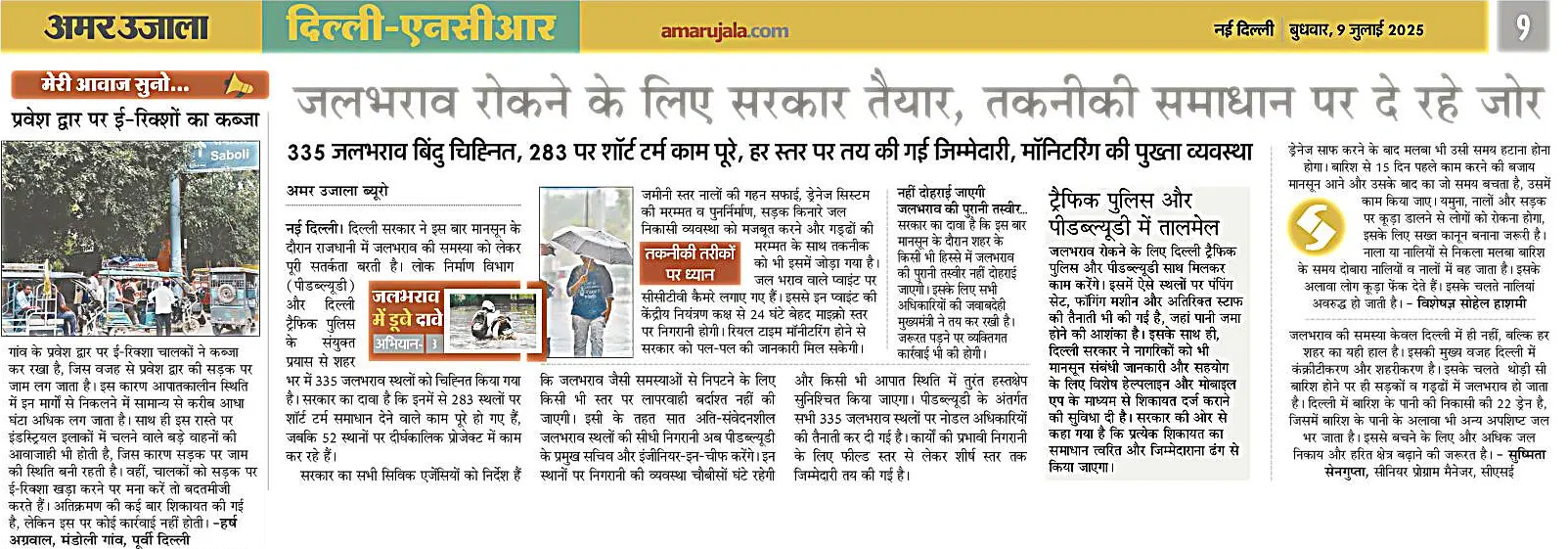
सेंटर फॉर साइंस एंड एनवायरनमेंट (सीएसई) के अध्ययन के अनुसार, राजधानी के ड्रेनेज सिस्टम का डिजाइन पुराना है और यह आधुनिक शहरीकरण और जलवायु परिवर्तन के कारण होने वाली तीव्र बारिश का सामना नहीं कर पाता। भारी बारिश के बाद राजधानी की सड़कों पर पानी का जमाव, ट्रैफिक जाम और जनजीवन का ठप होना हर साल की कहानी बन चुका है। शहरी नियोजकों और विशेषज्ञों के अनुसार, पुराना ड्रेनेज सिस्टम अनियोजित शहरीकरण और नालों की खराब स्थिति इसकी प्रमुख वजहें हैं। दिल्ली का ड्रेनेज सिस्टम करीब 50 साल पुराना है, जिसे 1986 में 50 मिमी बारिश को ध्यान में रखकर बनाया गया था। मौजूदा समय दिल्ली की आबादी 2 करोड़ से अधिक है और 2024 में 64 मिमी तक बारिश दर्ज की गई, जो सिस्टम की क्षमता से कहीं ज्यादा है। लोक निर्माण विभाग (पीडब्ल्यूडी) 2064.08 किलोमीटर छोटे-बड़े नालों का प्रबंधन करता है, जो शहर के कुल जल निकासी नेटवर्क का 55 फीसदी है, लेकिन यह भारी बारिश में नाकाम साबित होता रहा है। सेंटर फॉर साइंस एंड एनवायरनमेंट (सीएसई) के अध्ययन के अनुसार, राजधानी के ड्रेनेज सिस्टम का डिजाइन पुराना है और यह आधुनिक शहरीकरण और जलवायु परिवर्तन के कारण होने वाली तीव्र बारिश का सामना नहीं कर पाता। अनियोजित निर्माण और प्राकृतिक जल निकायों पर अतिक्रमण ने स्थिति को और जटिल किया है। विशेषज्ञों का कहना है कि नया ड्रेनेज मास्टर प्लान जरूरी है, लेकिन इसे अभी तक मंजूरी नहीं मिली है। राजधानी में जलभराव की समस्या का एक रोचक पहलू यह भी है कि 1970 के दशक में जब बसों के लिए सड़कों को ऊंचा किया गया था, इससे निचले इलाकों में पानी का जमाव शुरू हुआ, जो धीरे-धीरे एक बड़ी समस्या बन गया। शहरी नियोजक बताते हैं कि सड़कों के डिजाइन में जल निकासी को प्राथमिकता नहीं दी गई, जिसके परिणामस्वरूप नालों का पानी सड़कों पर फैलने लगा। नया ड्रेनेज सिस्टम इसलिए है जरूरी दिल्ली सरकार ने हाल ही में जल बोर्ड को स्वायत्तता प्रदान की है और यमुना की सफाई व नालों के उपचार के लिए कदम उठाए हैं। मुख्यमंत्री रेखा गुप्ता ने मानसून से पहले नालों की सफाई के लिए सख्त निर्देश दिए हैं। हालांकि, विशेषज्ञों का कहना है कि जब तक पुराने ड्रेनेज सिस्टम को पूरी तरह से अपग्रेड नहीं किया जाता, तब तक समस्या का स्थायी समाधान संभव नहीं है। दिल्ली का जलभराव संकट पुराने ड्रेनेज सिस्टम, अनियोजित शहरीकरण और प्राकृतिक जल निकायों के क्षरण का परिणाम है। विशेषज्ञों और सीएसई जैसे संगठनों के अध्ययन इस बात पर जोर देते हैं कि आधुनिक ड्रेनेज सिस्टम, रेनवाटर हार्वेस्टिंग और बेहतर शहरी नियोजन ही इस समस्या का समाधान हो सकता है। सरकार के ताजा प्रयास उम्मीद जगाते हैं, लेकिन जमीनी स्तर पर अमल और समयबद्ध कार्यान्वयन ही दिल्ली को जलभराव से मुक्ति दिला सकता है। सीएसई के विशेषज्ञों का कहना है कि नालों की सफाई के साथ-साथ टिकाऊ शहरी ड्रेनेज सिस्टम जैसे उपायों की जरूरत है। लंदन और न्यूयॉर्क जैसे शहरों में रेन गार्डन्स और परमिएबल सतहों का उपयोग कर बाढ़ को प्रभावी ढंग से नियंत्रित किया जाता है। दिल्ली में ऐसी प्रणालियों को लागू करने की दिशा में अभी बहुत काम बाकी है। शहर की जल निकासी प्रणाली को दुरुस्त करने की जरूरत है। दिल्ली का ड्रेनेज सिस्टम पुराना है। इसे ठीक करने के साथ ही नालियों पर अतिक्रमण को हटाया जाए और इसकी सफाई ठीक तरह से हो। नालियों में सीवेज व कोई ठोस अपशिष्ट जाने की अनुमति न हो और बरसाती पानी सीवर सिस्टम में नहीं बहाया जाना चाहिए। यमुना नदी के बाढ़ क्षेत्र पर भी अतिक्रमण है। सभी जल निकासी के चैनल एक बॉटलनेक हो गए हैं।

Parking Woes in Crowded Areas: How It Affects Common People's Mental Health and Time

According to a report by the Centre for Science and Environment (CSE), up to 30% of traffic congestion in Indian cities is caused by vehicles searching for parking. This figure may seem surprising until one experiences the frantic loops around Connaught Place in Delhi or the MG Road stretch in Pune during rush hours. It’s a problem hiding in plain sight, yet one that continues to drain people of time, energy, and mental peace. In urban India, where rapid urbanization collides with inadequate infrastructure, parking has become a daily battlefield. From the honking chaos of Delhi to the cramped lanes of Mumbai and the bustling bylanes of Bangalore, finding a parking spot in crowded areas is more than just a logistical hassle—it’s a major source of stress for millions of citizens. The Everyday Parking Struggle For most people living in metro cities, the hunt for parking space is a routine ordeal. Office-goers spend precious minutes circling blocks. Shoppers abandon visits to their favourite markets due to fear of not finding a spot. Residents park their cars far from home, constantly worried about theft or damage. According to a report by the Centre for Science and Environment (CSE), up to 30% of traffic congestion in Indian cities is caused by vehicles searching for parking. This figure may seem surprising until one experiences the frantic loops around Connaught Place in Delhi or the MG Road stretch in Pune during rush hours. It’s a problem hiding in plain sight, yet one that continues to drain people of time, energy, and mental peace. Mental Health: The Invisible Toll While the physical consequences of poor parking infrastructure are widely discussed—like traffic jams and air pollution—the psychological impact is often overlooked. A 2021 study by ResearchGate on urban stress factors found that urban residents exposed to daily traffic and parking stressors report 27% higher anxiety levels than those with smoother commuting experiences. Waiting, uncertainty, and confrontations over parking spaces often lead to heightened cortisol (stress hormone) levels. Over time, this affects mood, sleep, and even interpersonal relationships. Imagine starting your day with a heated altercation over a wrongly parked vehicle or ending it with a tow notice despite parking “just for five minutes.” These small but repeated stressors accumulate, affecting overall mental well-being. Parents dropping children to school, senior citizens visiting hospitals, and small business owners trying to reach clients—all face these daily micro-stress events. In essence, parking is no longer just about space; it’s about dignity, convenience, and emotional bandwidth. The Time Drain The Boston Consulting Group (BCG), in a 2018 report on urban mobility, estimated that drivers in Indian metro cities spend up to 20 minutes per trip looking for parking. Cumulatively, that amounts to 7.5 days per year spent in search of a parking spot! When this lost time is multiplied across millions of drivers daily, the economic and personal cost becomes staggering. For a working professional, this could mean missed meetings. For a delivery executive, it could mean lower earnings. For a parent, it could mean less time with their child. In a society where time is increasingly equated with productivity and success, parking chaos has silently emerged as one of the most time-consuming, non-productive activities in a person’s day. Who Is Most Affected? Middle-class car owners: They often live in buildings without designated parking, facing nightly uncertainty and arguments with neighbors. Women drivers: Safety concerns compound the parking problem, especially during late hours in isolated areas. Gig workers: Cab drivers, delivery agents, and ride-sharing partners often face fines or lose customers due to poor parking availability. Emergency services: Even ambulances and fire engines are frequently delayed due to blocked or congested lanes. Possible Solutions and Tech Interventions Cities around the world have adopted smart parking technologies. Singapore uses real-time parking availability apps, while Tokyo has implemented strict regulations requiring proof of parking before car purchase. In India, startups and civic bodies are beginning to explore digital parking solutions. For example, apps like ParkMate are providing tech-driven solutions for real-time parking space discovery and booking. Municipal corporations in cities like Hyderabad and Indore have piloted smart meters and digital ticketing systems. But these innovations need scale, government backing, and public adoption to make a real difference. A Call for Urban Empathy As cities continue to expand, the importance of inclusive, intelligent urban planning becomes critical. Parking is not a luxury—it’s an essential component of urban life. Solutions must consider not only vehicle volume but also human experience. Multi-level parking systems, community parking bays, digitized mapping, and incentives for off-peak travel can all contribute to easing this urban menace. Most importantly, policymakers and citizens must recognize that parking stress is not trivial. It is a contributor to urban anxiety, lost productivity, and social conflict. The parking crisis in crowded urban areas is far more than just an infrastructure gap—it’s a mental health and time management issue that affects millions daily. As we build smarter cities, we must also aim for emotionally healthier ones. Solving parking problems isn’t just about creating more space—it’s about giving people back peace of mind and the valuable time they deserve.