CSE has been well known for influencing the design of international climate policy since well before such policy was enshrined in formal institutions - whether it is the landmark paper released in 1991 by Sunita Narain and Anil Agarwal, calling for a decolonisation of carbon budget accounting, or CSE’s commentary on every UN climate meeting since 1992. CSE has led the discourse in climate policy for over three decades advocating for equity, the principle of Common but Differentiated Responsibilities, and investing in resilient economies for the poor.
The Climate Change and Green Economy Programme is committed to championing the study of the most pressing climate issues relevant for the Global South. CSE’s publications on climate-critical topics, its presence at UNFCCC proceedings such as COP summits and Subsidiary Body meetings, public outreach and advocacy, media engagement, and training programmes are designed to create multipliers in society for climate action.
MORE +

 |
 |
 |
| Online Training Courses | ||
 |
||
| Onsite Training Courses | ||
 |
||
| Climate Weekly Bulletin | ||
 |
||
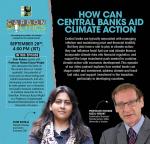
Carbon Politics Episode 16: How can Central Banks Aid Climate Action
In this episode, Sehr Raheja will be talking to Professor Richard Kozul-Wright, noted economist and former head of UNCTAD's Globalisation and Development Strategies Division.
Climate Change and Trade Protectionism
Date: February 2023
Avantika Goswami
Climate Change
CSE
Loss and Damage: Politics and COP 27 Deny distract delay
By: Sunita Narain
Director General, CSE
Loss and Damage Politics and COP 27 Deny distract delay
By: Avantika Goswami
Climate Change, Centre for Science and Environment
Vanuatus perspectives on Climate vulnerability Assessing L&D and Climate Justice at COP27 and beyond
Dr. Christopher Bartlett
Climagte Diplomacy Manager
Republic of Vanuatu

UNEP’s Emissions Gap Report 2026: Is 1.5°C Still Within Reach?
What does UNEP’s “Emissions Gap Report 2026” tell us about the world’s climate trajectory, the widening gap between ambition and action, and the path ahead?
Is the COP31 Electrification Target affordable and accessible?
Electrification could be one of the biggest levers for reaching net zero targets. But while electric cars, heat pumps and smart grids scale rapidly in developed economies
How do developing nations go green? ft. CSE India | Subtext by Zerodha
Pranav sits down with Avantika Goswami and Trishant Dev from the Center for Science and Environment (CSE) to unpack the messy reality of green industrialization.


Otter Trotters!
Trot in step with the otter experts to explore the world of these delightful semi-aquatic mammals!
 In Bangkok, the climate and finance worlds met — what next on the road to COP31?
  The EU CBAM is taken to the WTO: What does this mean?
  The global electrification agenda: Low-hanging fruit, with high-hanging costs that must be addressed
 Bonn Climate Conference 2026: Countries push for UN-led just transition mechanism, but finance remains a sticking point
 Bonn Climate Conference 2026: Developing countries push back against climate-linked trade measures at UNFCCC dialogue
 Bonn Climate Conference 2026: What happened on climate finance in week one
 Bonn Climate Conference 2026: First Veredas Dialogue focuses on increasing finance flows, adaptation finance, and international barriers
 Bonn Climate Conference 2026: Mid-year climate talks to see adaptation, fossil fuels and delivery in focus
 COP30 created roadmap processes on fossil fuels and forests. Here is how countries have responded
 The green industrialisation agenda for the Global South: A conversation with Ilias Alami
 17th Petersberg Climate Dialogue attempts to reaffirm multilateral climate action amid geopolitical tensions
 WB-IMF Spring meetings: Leaders confront geopolitical crisis, global climate agenda threatened by US
 An Equitable Trade Climate Agenda: Rewiring Systemic Policy, Governance, and Knowledge Gaps for Equity
 WTO MC14: Key conference outcomes; US stance drives deadlock
 WTO MC14: Trade-climate agenda pushes ahead as ministers adopt communique
 WTO MC14: Reform discussions anchor agenda as Ministerial opens in Cameroon
 India unveils new UN climate target: 47% emissions intensity cut by 2035, 60% non-fossil power capacity