
Free download of the CSE report
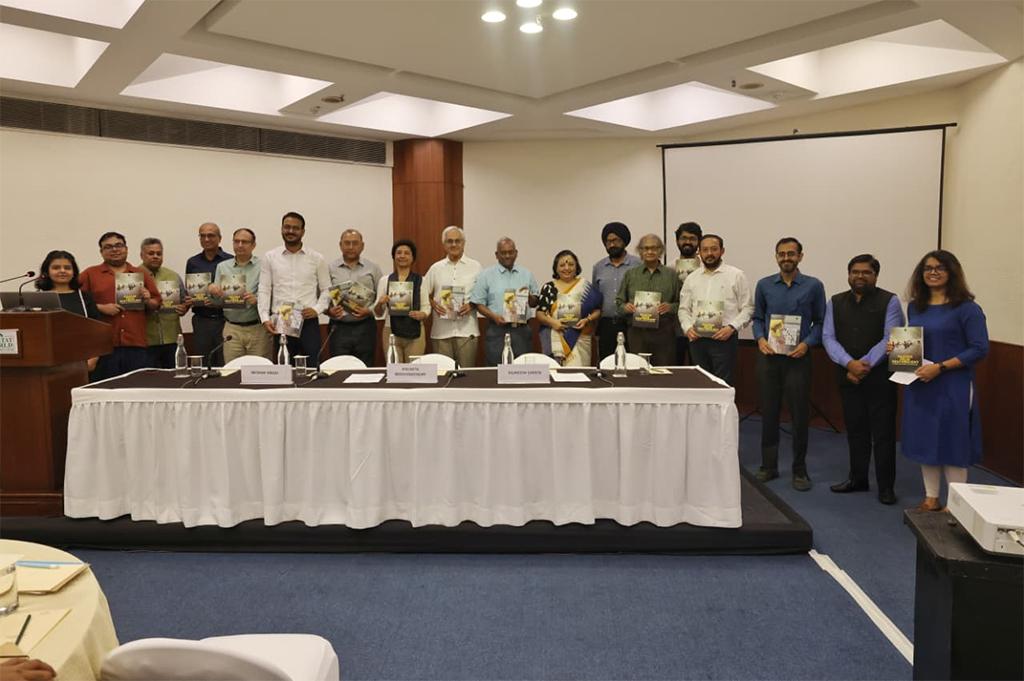
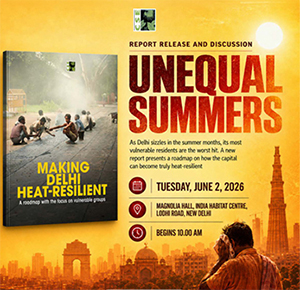
New Delhi, June 2, 2026: On May 25, 2026, Delhi recorded its warmest night in 14 years. Every summer, as the city reels under the onslaught of intense heat during the daytime, its nights are no longer offering any relief – says a new report from Centre for Science and Environment (CSE) released here today.
Says Mitashi Singh, programme manager, sustainable habitat, CSE and the lead author of the CSE report: “According to the India Meteorological Department (IMD), a ‘warm night’ occurs when the maximum temperature remains above 40°C and the minimum temperature departs from the normal by 4.5°C to 6.4°C. On May 25, the night-time temperature went up to 32.4°C to qualify it as the warmest on record in 14 years. This was when day-time temperatures have ranged above 40°C across the month.”
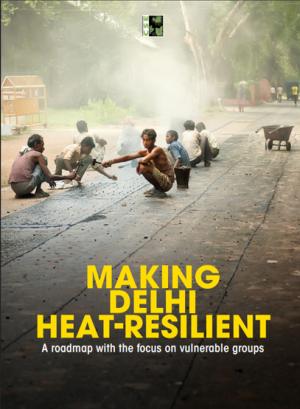
Making Delhi Heat-Resilient, as the CSE report is titled, focuses on Delhi’s vulnerable communities – construction workers, gig workers, street vendors, the homeless and those living in informal settlements, and its women, children and the elderly – and how they are impacted by the heat.
Says Rajneesh Sareen, programme director, sustainable habitat, CSE: “These vulnerable communities are estimated to form at least 50 per cent of Delhi’s population. They do not have adequate means to adapt to the rising heat and are impacted more severely (compared to the more well-off residents). They toil through the day to earn their daily bread – this becomes brutal when the nights do not provide any respite either. To add to this, if there is a heat-related disruption in work – if they fall sick – it means wage losses.”
In May 2024, CSE had released another study – Delhi: Urban Heat Stress Tracker – which had estimated that the diurnal cooling had reduced by 9 per cent in the city over the decade of 2014-23. Says Singh: “This means if the day-night land surface temperatures in the decade of 2001-10 had a difference of around 12°C, 2023 showed a difference of 9.8°C.”
Singh adds: “Higher night-time temperature can take a heavier toll on human health. It does not allow the body to cool down after accumulating heat stress through the day. This can lead to more cardiovascular strain, disrupt sleep cycles, and disable tissue repair: in simple terms – lasting physiological damage.”
Sareen points out that “while city heat action plans acknowledge the different vulnerable groups in Delhi,they do not offer any strategies that can increase their resilience. In the absence of such action, Delhi will see moreand more people being affected by rising temperatures. The city needs a scientific and systematicresponse for its vulnerable populations”.
The CSE report says that the soaring temperatures are pushing citizens to resort to air-conditioners – Singh points out that Delhi’s peak power demand recently reacheda high of 8,231 MW.The rise in AC use strains the energy systems and aggravates the urban heat island effect. A running AC ejectsheat into the ambient environment and heats up the air-shed of those who rely onthe outdoor environment for cooling. “Essentially, it spurs cooling inequity,”says the report.
Reducing heat stress and addressing vulnerability
Why has Delhi lost its ability to cool down in summer nights? The reasonsrange from its dense built form, shrinking green and blue spaces, buildings that do not have appropriate shading and insulation, layouts that are not designed to support ventilation, and surfaces that trap heat from ACs and vehicles.
The CSE study proposes a dual-strategy roadmap toaddress this. It includesimplementing year-round, city-wide actions such as mandating thermally
efficient roofs in industrial areas, office complexes, markets and informal settlements; recognising heat as a notified disaster; developing a heat dashboard; implementing climate-appropriate planning and passive design principles in newbuildings and in those that need retrofitting; developing public cooling infrastructure; leveraging existing schemes and climate funds for heat management among others.
The second strategy includes focused interventions for exposed populations such as enforcing mandatorycooling breaks, staggering work timings, developing standard operating procedures, and dedicated fiscal, medical and supportduring extreme heat emergencies.
Says Sareen: “Addressing heat vulnerability now requires an active heat management approach. Most important is not looking at it as an occasional occurrence but a harsh reality that is going to stay or perhaps even worsen. This has nowbecome vital for cities to make them liveablein climate-risked times.”
For more information, interviews etc, please contact Sukanya Nair of The CSE Media Resource Centre: sukanya.nair@cseindia.org, 8816818864
Share this article