Cse In News

Night Heat Stress: शहरों में क्यों बढ़ रहा नाइट हीट स्ट्रेस, इसकी वजह एसी या आपका अपना घर?

भारत के बड़े शहरों में गर्मियों की रातें अब वैसी राहत नहीं देती जैसी पहले देती थी. सूरज डूबने के बाद भी तापमान अक्सर 30 डिग्री सेल्सियस से ऊपर ही रहता है. इस वजह से लोगों को आराम से सोने में मुश्किल होती है. वैज्ञानिक स्टडी से यह पता चलता है कि रात में बढ़ती गर्मी की वजह कोई एक चीज नहीं है. दरअसल यह कंक्रीट की इमारत, खराब शहरी योजना, कम होती हरियाली और एयर कंडीशनर के बढ़ते इस्तेमाल का मिला-जुला असर है. गर्मी को रोकने वाली हीट ट्रैप रात में बढ़ते तापमान की सबसे बड़ी वजहों में से एक है आधुनिक घरों के बनने का तरीका. दरअसल ज्यादातर शहरी इमारतें कंक्रीट, सीमेंट, ईंट, कांच और स्टील से बनती हैं. ये सभी चीजें दिनभर सूरज की गर्मी को सोखती हैं और रात में धीरे-धीरे उसे छोड़ती हैं. सूरज डूबने के बाद ठंडा होने के बजाय घर जमा हुई गर्मी को बाहर निकालते रहते हैं. इस वजह से घर के अंदर का तापमान 30 डिग्री सेल्सियस से 35 डिग्री सेल्सियस के बीच बना रहता है. वेंटीलेशन की समस्या तेजी से हो रहे शहरीकरण की वजह से इमारतें एक दूसरे के काफी पास बन रही हैं. हालांकि ज्यादातर घरों में खिड़कियां होती हैं लेकिन अक्सर हवा के सही तरह से आने जाने की व्यवस्था नहीं होती. ताजी हवा के लगातार बहाव के बिना घर के अंदर की गर्म हवा अंदर ही फंसी रह जाती है. हरियाली की कमी पारंपरिक घरों में घर के अंदर के तापमान को प्राकृतिक रूप से कंट्रोल करने के लिए अक्सर मिट्टी का प्लास्टर, छायादार आंगन, ‌ मोटी दीवार और आसपास के पेड़ों का इस्तेमाल किया जाता था. लेकिन आधुनिक इमारतों में आमतौर पर ठंडक देने वाली यह खूबी नहीं होती. कंक्रीट की खुली छत, पेड़ की कमी और ग्रीन रूफ न होने की वजह से इमारत दिन में ज्यादा गर्मी सोखती है और सूरज डूबने के बाद धीरे-धीरे उसे छोड़ती है. एयर कंडीशनर का ज्यादा इस्तेमाल हालांकि एयर कंडीशनर घर के अंदर की जगह को ठंडा करते हैं लेकिन वे अंदर से निकाली गई गर्मी को अपने कंडेंसर यूनिट के जरिए बाहर भेजते हैं. जब अपार्टमेंट कॉम्पलेक्स, बाजार और रिहायशी इलाकों में हजारों एयर कंडीशनर एक साथ चलते हैं तो आसपास के माहौल में छोड़ी गई गर्मी बाहर के तापमान को काफी ज्यादा बढ़ा देती है. अर्बन बाउंड्री लेयर का असर वैज्ञानिक रातें ज्यादा गर्म होने की एक और बड़ी वजह अर्बन बाउंड्री लेयर को बताते हैं. दरअसल रात के समय हवा की निचली परत ज्यादा स्थिर हो जाती है. इस वजह से गर्म हवा आसानी से ऊपर नहीं उठ पाती. यही वजह है कि इमारत, सड़क, गाड़ी और एयर कंडीशनर से निकलने वाली गर्मी हवा में फैलने के बजाय जमीन के पास ही फंसी रह जाती है. शहरों में प्राकृतिक रूप से ठंडा होने का समय कम हो रहा सेंटर फॉर साइंस एंड एनवायरमेंट जैसे पर्यावरण संगठनों की रिपोर्ट से यह पता चलता है कि भारतीय शहर दिन के मुकाबले रात में तेजी से गर्म हो रहे हैं. दिल्ली में 25 मई 2026 को रात का न्यूनतम तापमान 32.4 डिग्री सेल्सियस दर्ज किया गया था. यह पिछले 14 सालों में सबसे गर्म रात थी. रिपोर्ट्स के मुताबिक पिछले दशक में दिल्ली में दिन और रात के तापमान का अंतर लगभग 9% कम हो गया है. शहर अपने आसपास के ग्रामीण इलाकों की तुलना में काफी ज्यादा गर्म रहते हैं. ऐसा इसलिए क्योंकि कंक्रीट, डामर और इमारतें गर्मी को ज्यादा देर तक रोककर रखती हैं. रात के समय सरफेस अर्बन हीट आईलैंड की तीव्रता को मापने वाली रिसर्च से शहरों और आसपास के ग्रामीण इलाकों के बीच औसत तापमान के अंतर का पता चलता है. आपको बता दें कि रात के तापमान के मामले में ग्रामीण इलाकों की तुलना में अहमदाबाद लगभग 3.1 डिग्री सेल्सियस, दिल्ली 2.5 डिग्री सेल्सियस, सूरत 2.4 डिग्री सेल्सियस, हैदराबाद 2.3 डिग्री सेल्सियस, चेन्नई 1.9 डिग्री सेल्सियस, मुंबई 1.5 डिग्री सेल्सियस और कोलकाता लगभग 1.5 डिग्री सेल्सियस ज्यादा गर्म रहे.
West Bengal emerges as major black carbon hotspot; CSE calls for urgent national strategy

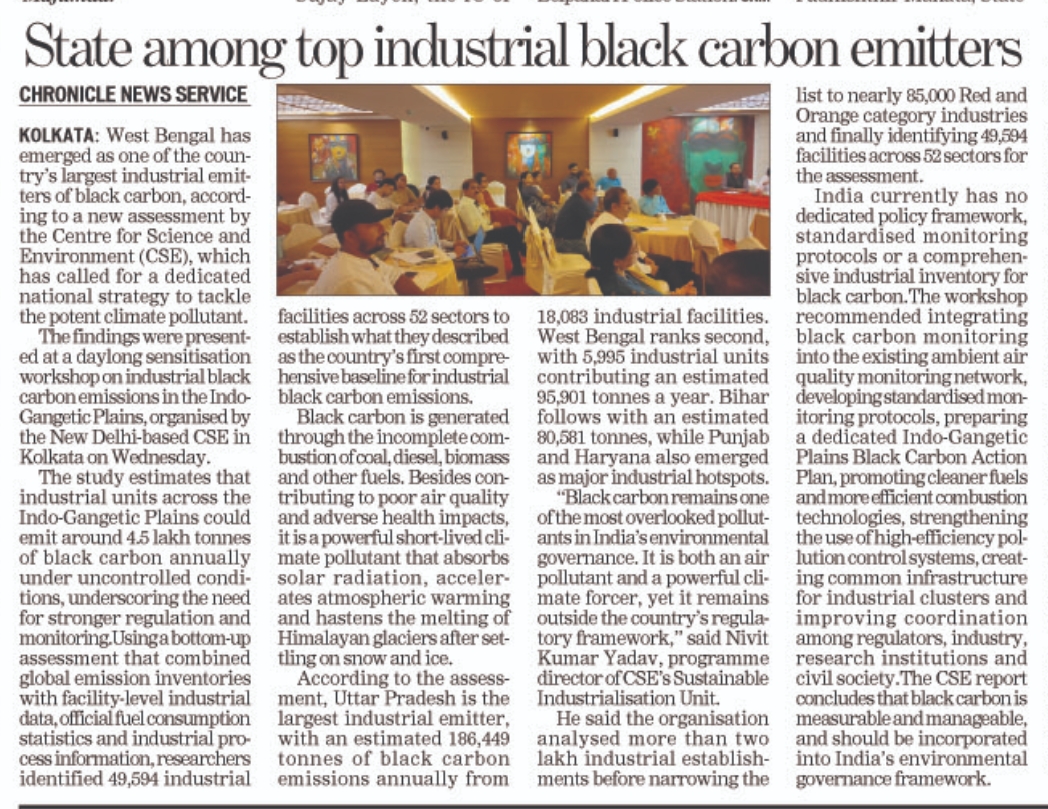
West Bengal has emerged as a critical industrial hotspot for black carbon emissions, discharging a staggering 95,901 tonnes annually into the atmosphere. A pioneering study by the Centre for Science and Environment (CSE) reveals that the state is the second-largest emitter in the Indo-Gangetic Plains (IGP), a region that collectively generates roughly 4.5 lakh tonnes of industrial black carbon each year under uncontrolled conditions. The assessment mapped 5,995 industrial facilities across 38 categories in West Bengal to track the root causes of this footprint. The findings highlight the state’s massive industrial fuel dependency: local factories devour 51.6 million tonnes of coal, 251,416 kilolitres of petroleum products, and 4.8 million tonnes of alternative fuels annually. The principal sectors driving Bengal's high emissions include Iron & Steel, Chemicals, Foundries & Rolling Mills, Paper & Pulp, and Food Processing, alongside brick kilns and distilleries. To address these findings, CSE organized a vital sensitization workshop in Kolkata on July 1, 2026. Bringing together the West Bengal Pollution Control Board (WBPCB), the Central Pollution Control Board (CPCB), and industry leaders, the workshop aimed to forge state-specific pathways for emission mitigation. "Black carbon remains one of the most overlooked pollutants in India’s environmental governance," stated Nivit Kumar Yadav, Programme Director at CSE. "It is both a public health hazard and a powerful climate forcer. Bringing it into mainstream policy will deliver immediate benefits for air quality and regional climate mitigation." The urgency of a localized, bottom-up approach is highlighted by flaws in global data models. Standard global inventories offer wildly divergent estimates for the region, ranging from 1.3 lakh to 8.4 lakh tonnes. By verifying facility-level data across 49,594 facilities in the IGP, CSE has provided a reliable regulatory roadmap. Shobhit Srivastava, Programme Manager at CSE, noted that mapping these facilities provides a practical baseline for prioritizing high-emitting clusters. Black carbon, a byproduct of the incomplete combustion of fossil fuels and biomass, traps solar radiation and severely accelerates the melting of Himalayan glaciers. Despite these threats, India currently lacks standardized monitoring protocols or dedicated policy frameworks for it. Moving forward, CSE has called for a dedicated Indo-Gangetic Plains Black Carbon Action Plan. Key recommendations include integrating black carbon tracking into the existing Ambient Air Quality Monitoring Systems (AAQMS), establishing shared green infrastructure for MSME clusters, and accelerating fuel transitions. The report concludes that black carbon is entirely manageable if integrated into India’s mainstream environmental governance.

Persistent harmful ozone threatens city’s air quality

Ground-level ozone is emerging as a major air pollution challenge in Bengaluru, with a new analysis by the Centre for Science and Environment (CSE) showing that the city is witnessing prolonged exposure to the harmful pollutant during summer months. Of 25 major Indian cities analysed between March 1 and May 10, 2026, Bengaluru recorded 55 days when the eight-hour National Ambient Air Quality Standard (NAAQS) for ozone was found to have exceeded. The city also reported one of the longest durations of daily exposure, with ozone concentrations remaining above safe limits for an average of 15.9 hours in a day, thereby placing it among the worst-affected cities across the country. Experts say that, traditionally considered to be a daytime pollutant, ozone is now persisting after sunset due to atmospheric conditions that prevent its rapid breakdown. Bengaluru recorded 14 nights with ozone levels exceeding the prescribed standards, second only to Delhi-NCR ( which recorded 46 such nights). While Delhi-NCR remains the country’s largest ozone hotspot, CSE says Bengaluru is among the cities where ozone pollution is expanding both spatially and in duration. Ground-level ozone is not emitted directly. It forms when nitrogen oxides (NOx) and volatile organic compounds (VOCs), largely released from vehicles, industries and other combustion sources, react under intense sunlight and high temperatures. According to CSE, rising temperatures and increasing emissions are accelerating ozone formation, making it a growing year-round concern rather than a seasonal problem.

Ozone pollution spreading across India, Delhi-NCR emerges as prime hotspot: CSE report

Ground-level ozone, an invisible but highly harmful air pollutant, is emerging as a year-round public health and climate challenge across India's cities, a new analysis by the Centre for Science and Environment (CSE) said. Based on six years of data from 25 cities, the analysis said that ozone pollution is no longer confined to isolated summer spikes or a handful of northern urban centres. Rather, it has spread across regions, with prolonged exposure becoming increasingly common in both inland and coastal cities.

Burning Eyes And Constant Cough? Why Spikes In Invisible Ozone Gas In Delhi-NCR Is Affecting Your Lung Health

Burning Eyes And Constant Cough? Why Spikes In Invisible Ozone Gas In Delhi-NCR Is Affecting Your Lung Health The invisible ozone gas in Delhi-NCR is affecting lung health. Here is what a new analysis highlights and why India needs to focus on implementing a multi-pollutant strategy. Written by: Rupashi Chhabra News Jul 01, 2026 12:51 pm IST Published On Jul 01, 2026 12:51 pm IST Last Updated On Jul 01, 2026 12:51 pm IST Read Time: 6 mins Open Google preferences (light) Share TwitterWhatsAppFacebookRedditEmail Ozone pollution is causing short-term and long-term effects Ozone pollution is causing short-term and long-term effects AI generated image Show Quick ReadSummary is AI-generated, newsroom-reviewed What are the most effective ways to purify indoor air from ozone? Burning eyes, throat irritation, dry cough are common complaints that are affecting the people in Delhi-NCR. Most people attribute these health issues to the general rise in air pollutants and their respective impact on their health. But a new analysis performed by the Centre for Science and Environment(CSE) from 2021 to 2026 flags Delhi-NCR as the largest regional hotspot for a rise in ozone pollution. While the effect is present in other Indian cities such as Chandigarh, Jaipur, Ahmedabad, Mumbai, Chennai, Bengaluru, Patna, the % of the impact varies. The latest CSE analysis suggests that growing heat along with rising in gaseous emissions is worsening the ozone problem. It is invisible, summer-driven and poses a grave threat to your health if it remains ignored. The presence of ground-level ozone is a year-around issue as it can impact your eyes, throat, lung health as well.

Indian Cities, New Study Warns

Ozone used to disappear when winter ended. Not anymore. A six-year study finds toxic ozone now blankets Indian cities through most of the year — and Delhi-NCR has it worst. The Centre for Science and Environment (CSE) tracked ozone levels from 2021 to 2026. Heat, strong sunlight and rising emissions are pushing readings far above safe limits, even in cities once seen as only mildly polluted. Ozone forms when nitrogen oxides (NOx) and volatile organic compounds (VOCs) react in sunlight and heat. Unlike smoke or dust, it cannot be seen. It damages lungs, crops and the climate. “Rising ground-level ozone and prolonged exposure windows are transforming India’s localised, winter-time particulate problem into a year-round, transboundary crisis that peaks during the summer,” said Anumita Roychowdhury, executive director of CSE and the study’s lead author.

दिल्ली-NCR बना ग्राउंड-लेवल ओजोन प्रदूषण का हॉटस्पॉट, बढ़ती गर्मी से बढ़ा खतरा; कई शहरों को चेतावनी

देश के कई बड़े शहरों में ग्राउंड-लेवल ओजोन प्रदूषण (Ground-level ozone pollution) तेजी से बढ़ रहा है। पिछले 6 साल के आंकड़ों के विश्लेषण में सामने आया है कि इस समस्या से सबसे ज्यादा प्रभावित क्षेत्रों में दिल्ली-NCR शामिल है। विशेषज्ञों के अनुसार, बढ़ता तापमान और वाहनों व उद्योगों से निकलने वाली प्रदूषण फैलाने वाली गैसें ओजोन बनने की प्रक्रिया को तेज कर रही हैं। इसके कारण हवा में जमीन के पास मौजूद ओजोन का स्तर बढ़ रहा है, जो मानव स्वास्थ्य के लिए चिंता का विषय बन सकता है। दिल्ली-NCR के अलावा चंडीगढ़, जयपुर, अहमदाबाद, मुंबई, चेन्नई और बेंगलुरु जैसे शहरों में भी ग्राउंड-लेवल ओजोन का प्रभाव बढ़ता देखा गया है।

6 साल के आंकड़ों की जांच में सामने आया कि ओजोन प्रदूषण सिर्फ कुछ शहरों तक सीमित नहीं है

देश के कई बड़े शहरों में ग्राउंड-लेवल ओजोन प्रदूषण तेजी से बढ़ रहा है। दिल्ली-NCR सबसे बड़ा हॉटस्पॉट बन गया है। गर्मी और प्रदूषण फैलाने वाली गैसों के कारण ओजोन का स्तर बढ़ा, जिससे स्वास्थ्य पर खतरा। 6 साल के आंकड़ों की जांच में सामने आया कि ओजोन प्रदूषण सिर्फ कुछ शहरों तक सीमित नहीं है. बढ़ती गर्मी के साथ इसका असर देश के कई हिस्सों में बढ़ रहा है. दिल्ली-NCR तो हॉटस्पॉट है. कैंसिल देश के कई बड़े शहरों में ग्राउंड-लेवल ओजोन प्रदूषण तेजी से बढ़ रहा है. छह साल के आंकड़ों के विश्लेषण में सामने आया है कि दिल्ली-NCR इस समस्या का सबसे बड़ा हॉटस्पॉट बन गया है. वहीं चंडीगढ़, जयपुर, अहमदाबाद, मुंबई, चेन्नई और बेंगलुरु समेत कई शहर भी इसकी चपेट में हैं. बढ़ती गर्मी और प्रदूषण फैलाने वाली गैसों की वजह से ओजोन का स्तर बढ़ रहा है, जिससे लोगों की सेहत पर खतरा बढ़ सकता है. सेंटर फॉर साइंस एंड एनवायरनमेंट ने 2021 से 2026 तक के आंकड़ों का विश्लेषण किया है. रिपोर्ट के मुताबिक, 1 मार्च से 10 मई 2026 के बीच देश के 25 बड़े शहरों का अध्ययन किया गया. इसमें 15 शहर ऐसे मिले, जहां गर्मियों के दौरान ग्राउंड-लेवल ओजोन का स्तर सरकार की तय सुरक्षित सीमा से ऊपर रहा. टू-फ्रंट जाल में PAK? सिंधु पर भारत से तनाव, पीट रहा अफगानिस्तान'कृत्रिम सूरज' के लिए चीन ने बनाया दुनिया का सबसे बड़ा मैग्नेट600 भूकंप के झटके, 1700 से ज्यादा मौतें, 58 हजार इमारतें ध्वस्त, वेनेजुएला की तबाही ने झकझोर दिया चंडीगढ़ में सबसे ज्यादा औसत ओजोन स्तर दर्ज किया गया. इसके बाद जयपुर, अहमदाबाद और भोपाल का स्थान रहा. वहीं मुंबई, चेन्नई और बेंगलुरु जैसे शहरों में भी ओजोनतेजी से बढ़ता मिला. रिपोर्ट में कहा गया है कि अब यह समस्या सिर्फ उत्तर भारत तक सीमित नहीं है, बल्कि देश के दूसरे हिस्सों में भी फैल रही है. ग्राउंड-लेवल ओजोन जमीन के पास बनने वाली एक हानिकारक गैस है. यह सीधे हवा में नहीं निकलती. जब वाहनों, फैक्ट्रियों, बिजलीघरों और ईंधन जलाने से निकलने वाली गैसें तेज धूप और गर्मी के संपर्क में आती हैं, तब आपस में मिलकर ओजोन बनाती हैं. ज्यादा मात्रा में यह गैस इंसानों, फसलों और पर्यावरण तीनों के लिए नुकसानदायक मानी जाती है. दिल्ली-NCR इस समय ग्राउंड-लेवल ओजोन प्रदूषण का सबसे बड़ा क्षेत्रीय हॉटस्पॉट बन गया है. स्टडी के दौरान पूरे 71 दिनों तक यहां ओजोन का स्तर सरकार की तय सुरक्षित सीमा से ऊपर रहा. दिल्ली के अलावा ग्रेटर, नोएडा और गाजियाबाद के कई मॉनिटरिंग स्टेशनों पर भी लगातार ज्यादा ओजोन दर्ज किया गया. अब यह प्रदूषण सिर्फ दिल्ली तक सीमित नहीं है, बल्कि पूरे NCR में फैल चुका है. स्टडी में सामने आया कि सिर्फ यह देखना काफी नहीं है कि ओजोन कितने दिनों तक बढ़ा. यह भी जरूरी है कि एक दिन में वह कितनी देर तक ऊंचे स्तर पर बना रहता है. जितनी देर ओजोन हवा में रहता है, उतनी देर लोग भी उसके संपर्क में रहते हैं. भोपाल में औसतन 17 घंटे तक ओजोन का स्तर तय सुरक्षित सीमा से ऊपर रहा. लखनऊ में यह समय 16.3 घंटे दर्ज किया गया. वहींपहले माना जाता था कि ओजोन प्रदूषण सिर्फ दिन में ज्यादा होता है, लेकिन अब कई शहरों में इसका असर रात में भी बना रहता है. दिल्ली-NCR में सबसे ज्यादा 46 रातों तक ओजोन का स्तर तय सीमा से ऊपर दर्ज किया गया. इसके बाद बेंगलुरु में 14,में 13 और पटना व मुजफ्फरपुर में 8-8 रातों तक ज्यादा ओजोन रिकॉर्ड किया गया. इसका मतलब है कि लोगों का प्रदूषित हवा के संपर्क में रहने का समय लगातार बढ़ रहा है. वाहनों, फैक्ट्रियों, बिजलीघरों, घरों में इस्तेमाल होने वाले ईंधन और कचरा या फसल के अवशेष जलाने से कई तरह की गैसें निकलती हैं. इनमें नाइट्रोजन ऑक्साइड , VOC और कार्बन मोनोऑक्साइड शामिल हैं. जब ये गैसें तेज धूप और ज्यादा गर्मी के संपर्क में आती हैं, तो आपस में मिलकर ग्राउंड-लेवल ओजोन बनाती हैं. इसलिए गर्मियों में इसका स्तर तेजी से बढ़ जाता है. ज्यादा ओजोन फेफड़ों को नुकसान पहुंचा सकता है. इससे सांस लेने में दिक्कत, अस्थमा की परेशानी बढ़ना, गले और सांस की नली में जलन जैसी समस्याएं हो सकती हैं. लंबे समय तक इसके संपर्क में रहने से दिल और फेफड़ों से जुड़ी गंभीर बीमारियों का खतरा भी बढ़ सकता है. इसका असर खेती पर भी पड़ता है. ओजोन की वजह से पौधों की बढ़त प्रभावित होती है और गेहूं जैसी फसलों की पैदावार हर साल 14% से 15% तक कम हो सकती है. रिपोर्ट में कहा गया है कि सिर्फ धूल और PM2.5 को कम करना काफी नहीं होगा. ओजोन बनाने वाली गैसों के इमिशन को भी घटाना होगा. इसके लिए वाहनों, फैक्ट्रियों, घरों में इस्तेमाल होने वाले ईंधन, कचरा और फसल के अवशेष जलाने से होने वाले प्रदूषण पर प्रभावी नियंत्रण जरूरी है. वायु प्रदूषण से निपटने की मौजूदा प्लानिंग में ओजोन को भी शामिल करने की जरूरत बताई गई है. बढ़ती गर्मी के साथ ग्राउंड-लेवल ओजोन प्रदूषण अब देश के कई शहरों में तेजी से फैल रहा है. अगर समय रहते इस पर ध्यान नहीं दिया गया, तो आने वाले वर्षों में इसका असर लोगों की सेहत, खेती और पर्यावरण पर और ज्यादा पड़ सकता है. Bathroom Tiles Cleaning: Bathroom Tiles Cleaning: बाथरूम के टाइल्स पर दिख रहे हैं जिद्दी पीले दाग, इस चीज से करें सफाई, चमकेंगी नई जैसीबाथरूम में छिपाते थे पैसे, निकालने की ये थी ट्रिक... चढ़ावा चोरों ने पूछताछ में सब कबूलामकान मालिक सिक्योरिटी डिपॉजिट से नहीं काट पाएंगे मनमाना पैसा, HC का फैसलादिल्ली में अगले 48 घंटे में आंधी तूफान और जोरदार बारिश की चेतावनी

Hope In Green: Inside Odisha's Growing Environmental Movement and the NGOs Quietly Rewriting the Future

Similarly, the Centre for Environmental Studies (CES), operating under Odisha's Department of Forest, Environment and Climate Change, has helped establish one of the state's most influential environmental education networks. Through Eco-Clubs operating in schools and colleges, thousands of students participate annually in biodiversity documentation, plantation activities, waste management initiatives, climate awareness programmes, and nature education projects. The significance of environmental education has long been emphasised by Dr Ashutosh Debata, one of Odisha's most respected environmentalists and educators. Through decades of work in environmental awareness and public engagement, he has consistently advocated that conservation cannot succeed through legislation alone. According to his publicly expressed views and environmental initiatives, communities must become active participants in protecting natural resources if sustainability is to be achieved. His efforts have helped shape a generation of environmentally conscious citizens across Odisha.