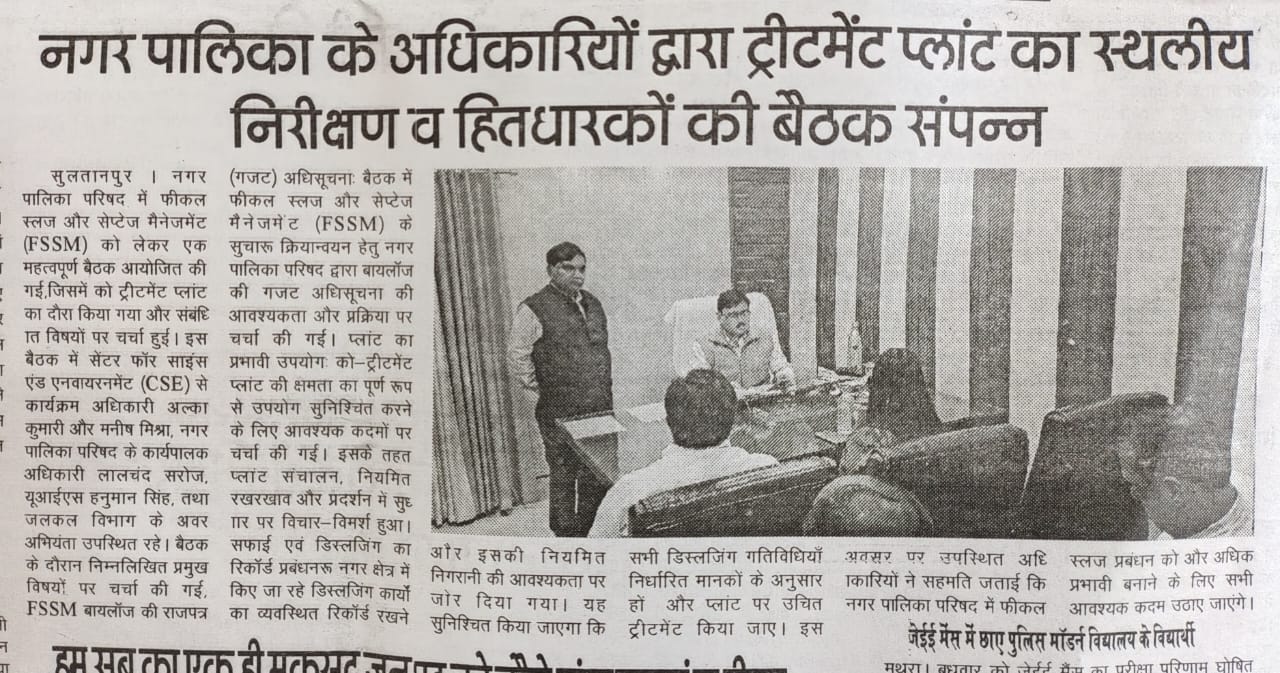
This unchecked discharge is transforming our rivers into open sewers, aggravating the twin challenges of water stress and the climate-induced intensification of the water cycle. These factors are further straining our already inadequate water and sanitation infrastructure. Additionally, the growing presence of large informal settlements is compounding the crisis by increasing both water demand and wastewater discharge. According to the Central Pollution Control Board (CPCB), India currently generates approximately 70,000 million litres of wastewater per day (MLD). However, most cities lack the necessary infrastructure to effectively manage and treat this wastewater. Let’s take a closer look at the situation. Our sanitation systems, often referred to as “flush and forget,” are modelled after those in developed countries. However, they rely heavily on large volumes of water to function effectively, making them unsustainable in water-scarce conditions. Despite the presence of these systems, they demand extensive operations, maintenance, and frequent repairs due to clogging. The situation is even more critical in dense informal settlements, where basic infrastructure is either inadequate or entirely absent. The irony lies in the fact that our densely populated informal settlements rely on non-sewered systems, which are not connected to centralized sewer networks, while affluent and planned colonies benefit from well-established sewered systems. According to the 2011 Census, out of nearly 8,000 cities in India, only 10% have sewered systems, and even those are only partially developed. Urban India’s sanitation challenge is compounded by rapid city expansion and growing populations driven by migration and other factors. To address this, we need a combination of systems that can effectively serve both planned, privileged areas and the underserved peripheral settlements. The second major challenge for urban sanitation is that 40% of India’s total land area—not just urban areas—falls within semiarid and arid zones. Climate change and water stress further diminish the feasibility of traditional sewered systems. Moving forward, decentralized, non-sewered solutions tailored to local contexts should be prioritized. Decentralized systems are less resource-intensive and can function without extensive sewer networks by transporting sewage or septage to localized treatment facilities. These systems also promote greater equity and justice, ensuring that both privileged and underserved settlements have access to proper sanitation and treatment solutions. Another advantage of decentralized sanitation systems is that the waste processed through these treatments can be reused locally, including both treated wastewater and biosolids, making the reuse highly effective. Since 2017, India has implemented a national policy for faecal sludge and septage management, resulting in the establishment of over 500 faecal sludge treatment plants across various states. The Centre for Science and Environment (CSE) has Centre conducted a study on 69 of these treatment plants.
Howrah’s air quality was “very poor” for nearly half of January, the state pollution control board’s air quality report has shown. Howrah had 13 days of “very poor” air in January. There were 14 days of “poor” air and four days of “moderate” air. Ghusuri suffered the most of all Howrah pockets with the monitoring station there recording 13 “very poor” days and an equal number of “poor” days. According to the National Air Quality Index, prepared by the Central Pollution Control Board (CPCB), very poor air can cause “respiratory illness on prolonged exposure”. Poor air can result in breathing discomfort in most people on prolonged exposure. A resident of Howrah’s Shibpur said he could sense a burning smell in the ambient air on almost all days this winter. “There is a thick haze every morning and dust all around,” he said. Air quality management experts and scientists ascribed the foul air in Howrah to industrial activities, truck traffic and transport terminals. “There is a lot of industrial activity in Howrah. Add to that the large number of trucks plying through Kona Expressway,” said Anumita Roy Chowdhury, the executive director of the Delhi-based Centre for Science and Environment (CSE). “There are well laid out guidelines and rules on controlling emissions from industrial units. These have to be enforced.” Kalyan Rudra, the chairperson of the West Bengal Pollution Control Board, admitted that managing Howrah’s air quality was a challenge. “Howrah is a challenge. There are two important transport terminals there — Shalimar station and Howrah station. It is a very congested city with little green cover and open space. There is also a huge truck traffic. All these factors have made air quality management in Howrah challenging,” said Rudra. “We have prepared a graded response action plan (GRAP), which will bring in restrictions with the drop in air quality.” When asked if Howrah’s air quality worsened the air quality of Calcutta — the two cities are separated by the river Hooghly — Rudra said it was still too early to comment. “We have started research to understand how transboundary pollution affects Calcutta. It is still too early to say whether Howrah is impacting Calcutta,” Rudra said. Doctors said foul air weakens the natural defence of humans, making them vulnerable to infections. For people with chronic obstructive pulmonary disease (COPD) and asthma, the foul air can exacerbate symptoms and even lead to hospitalisation, said a doctor. Poor air quality can also lead to a resurgence of symptoms in people with allergic rhinitis, who were otherwise without any symptoms for several months. The World Health Organisation (WHO) estimated that “the combined effects of ambient air pollution and household air pollution are associated with 6.7 million premature deaths annually”. The six grades of air quality are good, satisfactory, moderate, poor, very poor and severe. Metro reported on Monday that Calcutta did not have a single day in January when the air quality was “good” or “satisfactory”. Howrah’s air quality report for January is far worse. The breakdown of the air quality in Howrah further revealed that Ghusuri had 13 “very poor” days and 13 “poor” days, while Padmapukur had one “severe” day, 16 “poor” days, 12 “very poor” days and one “moderate” day. “Severe” air quality “affects healthy people and seriously impacts those with existing diseases,” says the National Air Quality Index.
Chennai: Andhra Pradesh has denied allegations that Nellore trawlers were responsible for olive ridley turtle carcasses washing ashore in Chennai. During a National Green Tribunal (NGT) hearing on Friday, it said turtle excluder devices (TEDs), installed in fishing nets to allow turtles to escape while retaining the catch, have been mandatory for trawlers in the state since 2010 and enforced through a tie-up with a US agency. Strict penalties, including catch seizure, are imposed on boats operating without TEDs or within five nautical miles of the shore. Taking note, NGT Southern Zone directed Tamil Nadu to consult experts from the Centre for Science and Environment (CSE) to see if the AP model could be replicated along the Chennai coast to prevent further turtle deaths. It also questioned TN's enforcement failure, asking why trawlers cannot be restricted during the Jan-April turtle nesting season if TED rules remain unenforced. The state fisheries department was asked to submit a response and the matter posted for the next hearing on March 18. Last month, NGT, criticised TN for poor enforcement, noting that TEDs a low-cost and effective solution were not implemented properly. Earlier this week, TN govt detained four AP fishermen near Ennore thermal power station for operating trawlers without TEDs. During the inspection, a patrol team found 16 live olive ridleys beneath the catch in their nets.
Bulbul Nag located in Newa village of Pulwama district is a natural spring that has been providing drinking water supply to the entire area for centuries. When the Government began providing clean drinking water supply through pipelines in late 1970’s in Newa and adjoining villages, the Bulbul Nag was chosen as one of the water sources by the Public Health Engineering Department-PHE of J&K, also referred to as Jal Shakti Department. There are many such Naags which serve as drinking water sources for PHE and huge funds have been used for their upkeep and development. I remember in Daulatpura village of Chadoora, the govt spent almost Rs 30 crores on development of water supply scheme in the last 15 years, and finally when a large tank was constructed the source of this water supply plant-Arbal Naag dried up. This was due to constant riverbed mining happening in Doodh Ganga. I had written a detailed article on this issue in noted science magazine Down to Earth a few months back. For more than 45 years drinking water was supplied by the PHE-Jal Shakti Department from Bulbul Nag to more than two dozen villages in Pulwama. The PHE Department has installed high end water pumping machines some decades back. The water would gush out from this spring, locals told me when I visited the site last year in September, but for the last 3 to 4 years water level in this Naag (spring) has receded to a great extent. I was told by the local residents that there were multiple openings / aquifers in the Bulbul Nag but now only one or two are working which has depleted the water supply to this fresh water spring. The PHE Department is not able to supply drinking water to a huge population of around 20,000 to 30,000 people living in Newa and adjoining villages. The illegal mining happening in nearby Romshi stream is said to be the main reason for depletion of water level in Bulbul naag. The dozens of springs located around small rivers originating from Pir Panjal mountain range especially like Vaishav, Rambiara, Romshi, Doodh Ganga, Shali Ganga, Sukhnag etc., have dried up. Situation is also similar in North Kashmir I have been told. Springs around Sukhnag dried up For the last few years I have written extensively about destruction caused in Sukhnag stream (nallah) which flows through dozens of villages in Beerwah tehsil of Budgam district. As the District Administration, Irrigation and Flood Control Department, Geology & Mining Department as well as Fisheries Department failed to act on my repeated pleas, I had to move a petition in National Green Tribunal-NGT New Delhi last year. A team was deputed by the Hon’ble NGT that visited the site and filed a detailed report highlighting the loot and plunder caused to this fresh water stream. The details provided by Geology & Mining Department J&K to National Green Tribunal (NGT) reveal that mere Rs 1.53 crore rupees have been realised as compensation in the last 4 years against the 77 short term permits (STPs). The amount realised is not even 2% of the actual market cost of the material? These permits were issued to a private construction that is working on construction of Srinagar Ring Road. This information was provided by the District Mineral Officer (DMO) to Member Secretary JK Pollution Control Committee-JKPCC who further submitted this evidence before the Hon’ble NGT. In Zainigam, Sail, Kangripora, and Kanigund villages as many as 20 springs have dried up. The locals told this to the visiting NGT constituted team on Dec 26th 2024. All these springs were fed with water supply from the Sukhnag stream. As Sukhnag underwent 10 to 20 meters deep mining in the last 3 to 4 years using heavy machinery the supply lines to springs were cut. After NGT team came to the site on December 26th 2024 this illegal work was stopped, but who will restore the dried up springs? In Kanigund village alone, as many as four springs have dried up, a local resident Mushtaq Ahmad told me. Conclusion The illegal Riverbed Mining has not only caused environmental disaster and huge loss to state exchequer across Jammu & Kashmir, it has also led to drying up of springs (naags). This is mainly due to deep mining which has receded water table around the streams and rivers. Even the bore wells and tube wells in many villages have dried up. The situation in coming months and years would be disastrous as we are already facing drought-like situations due to scarcity of snowfall and rainfall. The Government needs to consult experts to overcome this terrible situation and punish those Govt officers who played their role in destroying these water bodies.
NEW DELHI: India has announced that its installed solar power capacity has exceeded 100 GW as it aims to generate 500 GW of electricity from non-fossil fuel sources by 2030 under its Nationally Determined Contributions to the Paris Agreement. As of Jan. 31, India’s total installed solar capacity stood at 100.33 GW. Another 84.10 GW are under implementation and an additional 47.49 GW under tendering, according to data shared by New and Renewable Energy Minister Pralhad Joshi on Friday. “India’s energy journey over the past 10 years has been historic and inspiring. Initiatives like solar panels, solar parks and rooftop solar projects have brought about revolutionary changes,” Joshi said in a statement. “Today India has successfully achieved the target of 100 GW of solar energy production. In the field of green energy, India is not only becoming self-reliant but is also showing the world a new path.” According to the ministry’s data, India’s solar power sector has increased capacity by 3,450 percent over the past decade, rising from 2.82 GW in 2014. That growth has been fueled by local solar module production, which in 2014 had a capacity of only 2 GW. “Over the past decade, this has surged to 60 GW, establishing India as a global leader in solar manufacturing,” Joshi said in his statement. “With continued policy support, India is on track to achieve a solar module production capacity of 100 GW by 2030.” Solar energy is the dominant contributor to the country’s renewable energy growth, accounting for 47 percent of the total installed renewable energy capacity. “India’s milestone of 100 GW installed solar capacity is a testament to its rapid clean energy transition, proving its ability to scale renewable infrastructure ... However, challenges remain: grid integration, financing gaps, and the continued dependence on coal for baseload power highlight the complexities of India’s energy future,” Binit Das, renewable energy program manager at the Centre for Science and Environment in New Delhi, told Arab News. “As the country pushes toward its 280 GW solar target by 2030, addressing these hurdles will be key to ensuring a truly sustainable and resilient energy system,” Das added. “To truly achieve energy independence, India must complement solar with robust storage, hybrid solutions, and emerging technologies like green hydrogen and offshore wind. A diversified, resilient strategy is key to unlocking the full potential of renewables.”
Hoshiarpur has been recognised as the “Best Green District” under the Green School Programme, a nationwide initiative run by the Ministry of Environment, Forest and Climate Change, Government of India. The award was presented to District Education Officer Lalita Arora at a ceremony organised at the India Habitat Centre in New Delhi. Additionally, 12 schools from the district were honoured with Green Certificates for their exceptional efforts. The award was conferred by education reformer Sonam Wangchuk and Sunita Narain, Director General of the Centre for Science and Environment, New Delhi. Deputy Commissioner Komal Mittal expressed pride in the district’s achievement, emphasising Hoshiarpur had taken a leading position on the national stage. She said the Punjab State Council for Science and Technology had established Eco Clubs in 8,000 schools and colleges across the state under the Environment Education Programme, where the management of air, energy, food, land, water and waste was audited as part of the Green School Programme. Hoshiarpur secures ‘Best Green District’ award for eco initiatives Hoshiarpur has been recognised as the “Best Green District” under the Green School Programme, a nationwide initiative run by the Ministry of Environment, Forest and Climate Change, Government of India. The award was presented to District Education Officer Lalita Arora... article_Author . Updated At : 04:49 AM Feb 07, 2025 IST fb twitter whatsapp Follow us Follow us Connect with us Connect with us featured-imgfeatured-img District Education Officer Lalita Arora receives the 'Best Green District' award from Sonam Wangchuk and Sunita Narain in New Delhi. Advertisement Hoshiarpur has been recognised as the “Best Green District” under the Green School Programme, a nationwide initiative run by the Ministry of Environment, Forest and Climate Change, Government of India. The award was presented to District Education Officer Lalita Arora at a ceremony organised at the India Habitat Centre in New Delhi. Additionally, 12 schools from the district were honoured with Green Certificates for their exceptional efforts. The award was conferred by education reformer Sonam Wangchuk and Sunita Narain, Director General of the Centre for Science and Environment, New Delhi. Deputy Commissioner Komal Mittal expressed pride in the district’s achievement, emphasising Hoshiarpur had taken a leading position on the national stage. She said the Punjab State Council for Science and Technology had established Eco Clubs in 8,000 schools and colleges across the state under the Environment Education Programme, where the management of air, energy, food, land, water and waste was audited as part of the Green School Programme. Advertisement The DC said the Green School Programme, which was launched in partnership with the Punjab School Education Department and the Centre for Science and Environment, has registered 11,917 schools across the state. Of these, green audits have been successfully completed in 7,406 schools, including 1,945 schools from Hoshiarpur district. DC Mittal noted that out of the 345 schools selected nationwide under the programme, 196 were from Punjab, with 12 schools hailing from Hoshiarpur. She commended the district administration and the education department staff for their dedication to establishing eco-friendly systems in local schools. She said the district is committed to creating a fully sustainable environment across all schools in the near future.
Finance Minister Nirmala Sitharaman in her speech on the Union Budget 2025-26, has underscored the need for localisation of electric vehicle (EV) manufacturing and raw material security for battery production. This signals a firmer policy thrust on industrial development and employment generation around EV production in India. This can be an opportunity to join climate and clean air action with an industrial strategy to accelerate clean energy transition in the automotive sector. The budget proposal has further connected electrification with the upscaling of mass commuting modes of electric buses to maximise the energy and emissions-saving gains.
At the valedictory session of the two-day science conclave organised on the topic “Amazing World of Science and Technology” at Kurukshetra University, Vice-Chancellor Som Nath Sachdeva said India’s future was bright in the field of science and technology as India was among the top countries in space technology. He talked about the country’s achievements, especially the Chandrayaan-3 satellite. Youngsters should move from sensitivity to creativity to overcome various challenges through innovation, he added. He said India was committed to serve humanity through scientific research. At present, India stood fourth in the world in the defence sector, he said. The country was improving immensely in the fields of food processing, agriculture, science, technology and research, he added. Joint Organising Secretary Dr Deepak Rai Babbar said 1,200 students from various schools participated in science quiz, poster and model competitions as part of the conclave. Rai sports school awarded Sonepat: Motilal Nehru School of Sports, Rai, was awarded the Green School Award for the ninth time. The school was awarded the certificate for sustainable water practices for recycling water at the school STP plant. The school has also been awarded the Sterling Award. Environmentalist and Centre for Science and Environment Director General Sunita Narain presented the award to the school. Climate activist Sonam Wangchuk was also present at the event. Narain praised the commendable work done by the school and hoped that MNSS, Rai, would continue to contribute to sustainable development.
A primary school under the Municipal Corporation of Delhi (MCD) in Nangloi village-II has be honoured with the 'Green Schools Award' for its outstanding...
MCD Boys School Nangloi Village-II in Delhi received the 'Green Schools Award' for its environmental initiatives. The award ceremony, part of the national 'Green School Program' by the Centre for Science and Environment, was held at India Habitat Centre. Teachers and students from Class 5 represented the school.
From Delhi to Pune, temperatures have surged to unseasonal highs, turning what should be peak winter into a prelude to summer. The early onset of heat has sparked concerns about an intense summer ahead, with May and June likely to bring extreme heatwaves. Heatwaves in February: An Alarming Shift Several cities have already reported above-normal temperatures. On Wednesday, Pune recorded a sweltering 36°C, an unusual high for this time of the year. Delhi’s Safdarjung station registered 26°C on Tuesday, almost 4°C above average. Similar temperature spikes have been observed in Bhubaneswar (35°C), Kannur, and Kottayam (36°C+), signaling a premature arrival of summer. The rising heat is not limited to the day; minimum temperatures have also remained higher than usual, reducing the usual winter coolness. Many regions that typically experience cold nights in February are now seeing milder temperatures, forcing people to pack away their winter wear much earlier than usual. IMD Forecast: Warmer Days, Drier Weather The India Meteorological Department (IMD) has predicted that February 2025 will see above-normal minimum temperatures across most parts of the country, except for a few pockets in Northwest and Southern India. The IMD has also warned of below-average rainfall, which could further intensify the heatwave risks in the coming months. Winter’s Sudden Exit January was marked by severe cold spells, especially in North India, where temperatures had dropped to near-freezing levels. However, the sharp transition from extreme cold to sudden warmth in February has left meteorologists and climate experts alarmed. The lack of extended winter chill is part of a larger pattern of shifting climate trends, where extreme cold spells are followed by abrupt temperature spikes. Is India Heading for Another Record-Breaking Summer? The early departure of winter raises alarms about the potential for record-breaking heatwaves in the coming months. Experts warn that May and June could bring extreme temperatures, posing serious risks to public health, water supplies, and agriculture. Recent climate patterns suggest that India is facing more frequent and intense weather events, from heatwaves to unpredictable monsoons. A report from the Centre for Science and Environment (CSE) revealed that 2024 saw 255 days of extreme weather events, wreaking havoc on lives, crops, and infrastructure. The early onset of heat in 2025 could signal another challenging year ahead.
A global climate conference under DawnMedia’s ‘Breathe Pakistan’ initiative on Thursday brought together experts and leaders to find solutions to climate change with them calling for urgent funding to power adaptation initiatives to respond to threats posed by changing environmental and climatic conditions. Day one of the moot began at 10am and concluded past 6pm at Islamabad’s Jinnah Convention Centre after a marathon session of discussions, keynote addresses, and speeches by various experts and dignitaries elaborating on issues, challenges, opportunities and solutions related to climate change and pollution. Experts and policymakers shed light on the need for stronger policies, technological innovations and collaborative efforts to tackle the challenges while stressing the role of urban planning, renewable energy and public awareness in dealing with environmental issues. The two-day moot aims to make Pakistan climate-resilient by 2047 while fostering regional cooperation across South Asia, where countries face shared challenges of rising temperatures, water scarcity and increasing natural disasters. 6:23pm — Himal Southasian founder closes today’s final session Concluding today’s discussion, Dixit said, “Let me compliment the audience because this audience is nothing if not steadfast. “You stayed on all these hours mainly because you understand the gravity of the issue.” 6:21pm — Indrika Ratwatte, UN Resident Coordinator Afghanistan The UN official talked about securing localised energy and alternative options at a community level, saying that while developing countries had the potential, they needed to scale up such solutions. He also stressed the need to build trust and create awareness and lauded the organisers for holding today’s moot. “This is one of the first opportunities bringing us all together to have this conversion as South Asia and take it to the next level.” 6:10pm — Rakshya R Thapa, South Asia Climate Change and Energy Adviser & Carbon Finance Specialist, Unicef The Unicef official began by sharing good news related to the latest data on renewable energy. She said that renewable energy grew by a record 36 per cent in terms of capacity and generation in 2023, “While it may sound like a small number, it’s a record made after almost a decade. Similarly, renewable energy jobs concurrently increased by almost 8 to 10pc. And for people who have been without reliable sources or access to energy, the number of those people has marginally declined. “We haven’t done a great job when it comes to meeting SGD 7, which is environmental conservation, but we are progressively getting there, hopefully. “Another good news is that Asia, overall, is leading when it comes to energy generation globally. So, I think this is something for us to celebrate during these dull times. In South Asia, we are not doing very badly, as 20pc of our total energy generation comes from renewable sources.” She pointed out that challenges still persisted as 70-80pc of energy generation was still fossil fuel-based, saying that it was a “significant number”. 5:57pm — Harjeet Singh, Global Engagement Director for Fossil Fuel Non-Proliferation Treaty Initiative In response to Dr Suleri, panellist Harjeet Singh, the global engagement director for Fossil Fuel Non-Proliferation Treaty Initiative, said, “Our thinking over the last few years has evolved. And it’s not the environment versus development anymore. At least at the conceptual level, we have resolved that. On the ground, however, there are still many challenges, and that is where we need to be really moving forward from that narrative to implementation. And that’s why we also moved from MDGs to SDGs (sustainable development goals), where the focus is on sustainability.” He said that no development activity could be sustainable if it was done at the cost of the environment and degradation of nature. 5:53pm — Dr Abid Qaiyum Suleri, Executive Director, SDPI, session moderator Discussing the decarbonisation of economies and the impact of fossil fuel use on climate change, Sustainable Development Policy Institute Executive Director Abid Qaiyum Suleri said, “Many developed nations, including the United States, are shying away from decarbonisation.” He then asked the panellists how countries should navigate the challenge of balancing two conflicting Millennium Development Goals (MDGs): economic prosperity (Goal 1) and environmental conservation (Goal 7). 5:51pm — Panel begins on fossil fuels and balancing development with carbon reduction 5:48pm — Sunita Narain, Director General, Centre for Science and Environment India The non-profit’s director general proposed the need for localised solutions to tackle air pollution. “The air pollution problem in our cities will grow until we find local solutions to traffic, congestion, the use of coal-burning in factories and garbage that is burnt because we are not segregating the wet from the dry,” she said. Narain further added: “Please let us recognise that this is our challenge and also our opportunity to do things differently, to build an urban future which is resilient because the solutions we have chosen are affordable and inclusive and because of that, they are sustainable.” Sunita Narain, director general of Indian non-profit Centre for Science and Environment, speaks at Breathe Pakistan conference. — Tanveer Shahzad/Mohammad Asim 5:32pm — UN resident coordinator stresses need for regional air-quality framework Echoing Marriyum’s concerns, Special Representative for Afghanistan Indrika Ratwatte also talked about the need for transboundary-level solutions to tackle air pollution. He emphasised the need to establish a regional air-quality framework, carry out cross-border monitoring and data-sharing, harmonise air-quality standards, coordinate policy action and emission control measures and incentivise alternatives. “[We also have to look at] the role of international institutions […] and financial and technical assistance going hand in hand with multinational banks and IFI.” 5:20pm — WHO official warns about climate change’s risk to life Ellen Mpangananji Thom, WHO’s deputy representative in Pakistan, is currently speaking about the impacts of air pollution on health. “WHO estimates that between 2030 and 2050, climate change will cause an additional 250,000 a year worldwide due to malnutrition, malaria, diarrhoea and heat stress alone.” She said that air pollution was not an issue that should be isolated from conversations on climate change.
The first day of the two-day global climate conference, Breath Pakistan, concluded on Thursday with urgent calls for regional collaboration to address the escalating threats of glacial melt, transboundary air pollution, and climate-induced disasters in South Asia.Pakistani cuisine recipes The conference brought together policymakers, climate experts, and civil society leaders to discuss sustainable strategies for tackling the region’s pressing environmental challenges. Prime Minister’s Coordinator for Climate Change, Romina Khurshid Alam, proposed the establishment of a South Asian Glacier Research Consortium to enhance regional cooperation on glacier monitoring and disaster response. She highlighted the alarming retreat of Pakistan’s 7,000 glaciers—the largest concentration outside the polar regions—warning of severe implications for water security and livelihoods. She emphasized the need to strengthen the SAARC environment action plan, promote transboundary water diplomacy, and secure regional climate financing to support adaptation strategies for communities dependent on glacial waters. The session on “Glacial Melt – A Sustainable Strategy for the Water Towers of South Asia” saw contributions from experts. Kanak Mani Dixit, editor of Himal, called for the creation of a “Himalaya-Kindu-Kush Council” to address the accelerating melting of glaciers and permafrost in the region. He warned that terms like “glacial lake outburst floods (GLOFs)” no longer suffice to describe the scale of the crisis, citing recent disasters in Sikkim, India, and Nepal’s Melamchi River as indicators of an impending catastrophe. Dechen Tsering, Director of the United Nations Environment Programme (UNEP), underscored the far-reaching impacts of glacial melt, linking it to the triple planetary crisis of climate change, biodiversity loss, and pollution.Pakistani cuisine recipes She pointed to the devastating 2022 superfloods in Pakistan as an example of intensified monsoon patterns, which have led to widespread health crises, infrastructure damage, and energy insecurity. Sonam Wangchuk, the renowned Indian engineer and Ramon Magsaysay Award winner, proposed innovative solutions to harness glacial water. He advocated for the creation of artificial glaciers in high-altitude regions like Ladakh, where water can be refrozen and stored for use during dry seasons. “Height is a great resource—more than oil,” Wangchuk remarked, emphasizing the need to preserve water at its source. The conference also addressed the transboundary nature of air pollution, with Punjab Senior Minister Marriyum Aurangzeb highlighting the recent smog crisis in Lahore and its regional implications. She stressed the need for cross-border cooperation to tackle air quality issues, noting that pollution knows no boundaries. Ellen Mpangananji Thom, WHO’s Deputy Representative in Pakistan, linked air pollution to severe health impacts, estimating that climate change could cause an additional 250,000 deaths annually between 2030 and 2050 due to malnutrition, malaria, diarrhea, and heat stress. She called for integrating air pollution into broader climate change discussions. Indrika Ratwatte, the UN’s Special Representative for Afghanistan, emphasized the need for a regional air-quality framework to harmonize standards, monitor cross-border pollution, and coordinate policy actions. Sunita Narain, Director General of India’s Centre for Science and Environment, advocated for localized solutions to urban air pollution, urging cities to address traffic congestion, coal burning, and waste management. Meanwhile, Dr. Abid Qaiyum Suleri, Executive Director of SDPI, criticized developed nations, including the U.S., for reluctance in committing to decarbonisation during a panel discussion. He questioned how countries can balance economic growth with environmental conservation. Harjeet Singh, Global Engagement Director for the Fossil Fuel Non-Proliferation Treaty Initiative, argued that sustainability must be integrated into all development efforts. He emphasized the shift from Millennium Development Goals (MDGs) to Sustainable Development Goals (SDGs) as a recognition that economic progress cannot come at the cost of environmental degradation. As Breath Pakistan enters its second day, participants are expected to focus on actionable strategies for regional collaboration, climate financing, and innovative adaptation measures to safeguard South Asia’s future in the face of an escalating climate crisis.
Punjab won the prestigious ‘best state' and ‘best district' awards at the Green Schools Awards 2025, organised by the Centre for Science and Environment (CSE) at the India Habitat Centre, New Delhi. The awards were presented by environmentalist Sonam Wangchuk and Sunita Narain, head of the Centre for Science and Environment, to Pritpal Singh, executive director, and Kulbir Singh Bath, joint director of the Punjab State Council for Science and Technology (PSCST). The Green Schools Programme (GSP) was implemented in Punjab by PSCST under its environment education programme, which encourages schools to optimise resource management by conducting rigorous environmental audits across six key domains: air, energy, food, land, water, and waste. These awards recognise Punjab's leadership in fostering environmental sustainability and awareness among students and educational institutions. Out of 11,917 registered schools nationwide, 7,406 schools from Punjab completed environmental audits, accounting for 84% of all audits conducted across the country. A total of 196 schools from Punjab were awarded Green School status, including 171 govt schools and 25 private schools. The best district award was bestowed upon Hoshiarpur, which set a national record with 1,945 schools completing environmental audits, the highest number from any district in India. Chandigarh: Punjab won the prestigious ‘best state' and ‘best district' awards at the Green Schools Awards 2025, organised by the Centre for Science and Environment (CSE) at the India Habitat Centre, New Delhi. The awards were presented by environmentalist Sonam Wangchuk and Sunita Narain, head of the Centre for Science and Environment, to Pritpal Singh, executive director, and Kulbir Singh Bath, joint director of the Punjab State Council for Science and Technology (PSCST). The Green Schools Programme (GSP) was implemented in Punjab by PSCST under its environment education programme, which encourages schools to optimise resource management by conducting rigorous environmental audits across six key domains: air, energy, food, land, water, and waste. These awards recognise Punjab's leadership in fostering environmental sustainability and awareness among students and educational institutions. Out of 11,917 registered schools nationwide, 7,406 schools from Punjab completed environmental audits, accounting for 84% of all audits conducted across the country. A total of 196 schools from Punjab were awarded Green School status, including 171 govt schools and 25 private schools. The best district award was bestowed upon Hoshiarpur, which set a national record with 1,945 schools completing environmental audits, the highest number from any district in India.
In recognition of its outstanding contribution to environmental conservation and sustainable development, PM Shri Government Senior Secondary School, Raipur, has been honoured with the prestigious ‘Green School Award’ for the year 2024-25. The award was presented at the Green Schools Programme (GSP) Carnival and Awards Ceremony 2025, organised by the Centre for Science and Environment at India Habitat Centre, New Delhi. This achievement makes it the only school from Chamba district to receive this honour, bringing pride to the region at the national level. The award recognises the school’s dedicated efforts in promoting environmental sustainability and green initiatives. The success is attributed to the collective contributions of the school’s principal, teachers, students, parents and education department officials. Special appreciation was extended to the Chamba district education department and science supervisor Gaurav Vaid, whose guidance and support were instrumental in achieving this milestone. Advertisement Expressing his views, Rajiv Kumar, eco club in-charge and GSP coordinator, said the award was the result of their collective efforts. “Environmental conservation is not just an initiative but a responsibility that we must fulfil with complete dedication. This recognition will further inspire us to continue our efforts towards making our school and community greener and cleaner,” he said. The award is a moment of pride not just for the school but for the entire district and state. It is expected to motivate other schools to take up environmental conservation initiatives and set new benchmarks in sustainable development, Kumar added.