In October this year, the Indian forest department gave final clearance for a project to transfer water from the Ken river as it flows through the state of Madhya Pradesh to the nearby Betwa river. The Ken-Betwa river interlink, which would involve damming the Ken and laying a canal to the Betwa, is supposed to be the first of 30 proposed river interlinks which would fundamentally transform India’s river systems. The original idea was conceptualised in the 19th century by Arthur Cotton, a British general and irrigation engineer. Cotton suggested connecting all of India’s major rivers to enable better irrigation and navigation, and to capitalise on what was seen as the paradoxical phenomenon of having floods in one part of the country while other areas faced drought. Post independence, despite official enthusiasm for large infrastructure projects, including hydropower dams, this particular approach did not gain any significant traction. In 1980 the Ministry of Irrigation (now subsumed under the Ministry of Jal Shakti) prepared a National Perspective Plan (NPP) “for transferring water from water surplus basins to water-deficit basins”, but no further government action followed. In 2002, however, A.P.J. Abdul Kalam, who was the President of India at the time, made a speech mentioning the subject. Using the speech, Ranjit Lal, a senior lawyer to the Supreme Court, filed a public interest litigation in September 2002, and the court pronounced a judgement soon after asking for the project to be accelerated. Decisions made based on secret data In 2012, the Supreme Court came back to the subject and declared in its judgement that that “these projects are in the national interest, as is the unanimous view of all experts, most state governments and particularly, the central government”. But environmental experts who were consulted on the project as members of an expert committee set up as part of the Supreme Court judgements have regularly raised concerns. Himanshu Thakkar, coordinator of the South Asia Network on Dams, Rivers and People, a network of activists working in the water sector, was a member of the Ministry of Water Resources’ expert committee on river interlinking from 2009 to 2011. He told The Third Pole that while most of the committee members were government appointees who agreed with the project, independent experts like him, water management pioneer Rajendra Singh and watershed conservationist Vijay Paranjape often dissented. One of the major issues for Thakkar was the use of secret hydrological data. “When I asked for the data as a member of the expert committee, I was told that the Ken is part of the Ganges basin, an international basin, and [since] hydrology figures of international basins are a state secret, these cannot be made available [even to the committee members],” he said. “The hydrology data pertaining to the Ken basin and the Betwa basin is neither in the public domain nor has it ever undergone any independent public scrutiny. In fact, the rainfall data of districts the Ken and the Betwa pass through, in the previous four years (2023, 2022, 2021, 2020), is not appreciably different. So why has the Ken basin been categorised as having surplus water?” Bhopal Singh, director general of the National Water Development Agency (NWDA) which is entrusted with the river linking project, disputes this. He told The Third Pole: “the project was based on detailed hydrological and simulation studies duly accounting [for] the upstream/downstream needs, environmental flows, etc., in the Ken basin.” “The hydrological studies were done by the National Institute of Hydrology (NIH), Roorkee, and examined and reviewed by the Central Water Commission,” Singh added. The NWDA website carries a detailed project report based on a NIH study conducted in 2003-04, but the study itself is not included. Singh told The Third Pole that “the entire modelling cannot be shared”. New science may upturn old models Another urgent issue is that science has moved a far pace from Cotton’s time, and the impact of interlinking rivers may be much more complicated than was appreciated in the 19th century. Subimal Ghosh, institute chair professor at the Indian Institute of Technology Bombay’s Department of Civil Engineering and convener of the Interdisciplinary Program in Climate Studies, explained that atmospheric water has traditionally not been factored into consideration of water cycles. A recent study which Ghosh co-authored found that adjacent river basins do not exist in isolation, and moving water from one to another may have additional impact due to atmospheric water. The study builds on the fact that towards the end of the Indian summer monsoon, when the soil is saturated and evapotranspiration (the supply of moisture from the land to the atmosphere) is fairly high, recycled precipitation contributes to about 25% of monsoon rainfall. If water from one basin were to be used to irrigate another basin, the combination of increased evapotranspiration and wind could reduce the late monsoonal rain by 12% in some arid regions of the country, and increase rainfall up to 10% in other parts. “Now we know for certain that altering the terrestrial water cycle can impact atmospheric processes,” said Ghosh. He argued that there is “an urgent need to include rigorous model-guided evaluation of hydro-meteorological consequences” for projects like river interlinking. In response, Singh of the NWDA said that they could not comment on a hypothetical study. “Considering the scale of meteorological and hydrological cycles in the country, these inter-basin water transfers to water-short areas are minor in nature … As far as the Ken-Betwa link is concerned, the majority of harnessed flood water shall be utilised in the Ken basin itself and some water shall be utilised to fulfil the water needs of other regions including recharge of existing tanks in the Bundelkhand region,” he added. The illusion of water surplus A deeper problem, according to Thakkar, may be that the river basins classified as having a water surplus are only regarded as such because they are less developed. He pointed out that districts in the upper Ken basin are largely devoid of water-intensive agriculture, and with few dams built for storage. In contrast, the lower Betwa runs through agricultural districts where water-intensive crops are grown, with a fair number of dams. The surplus, he said, is only an illusion created by the different levels of water utilisation in different geographies. “Now dams are sought to be built in the upper Betwa region, which will create a shortfall in the existing lower Betwa basin dams,” said Thakkar. “That shortfall is proposed to be rectified by water from the Ken basin.” In response, Singh said that the Ken-Betwa link is not only about the inter-basin transfer of water – the central premise of river interlinking from Cotton’s time to the Supreme Court decisions – but also about conserving flood water. Most rainfall occurs in a few days during the monsoon, and “there are hardly any flows in the Ken during the non-monsoon period,” said Singh. “The region is also not very rich in groundwater due to hard rock and marginal alluvium terrain. We expect this project to stabilise the availability of water and improve water management in the region particularly during drought years.” Major downstream impacts of river interlinking Singh’s vision of the total utilisation of water raises its own issues, according to Depinder Kapur, director of the water programme at the Centre for Science and Environment in Delhi. “The more river waters we use for agriculture and irrigation and urban consumption, the less will be left to enter the sea, especially in peninsular India where rivers aren’t fed by Himalayan waters,” said Kapur. According to a 2018 study, if all 30 proposed river interlinking projects in the country are fully implemented, the average annual discharge by the affected basins will reduce by 73%. While the study focused on impacts to wetlands and estuaries, which would be deprived of key sources of water, there would also be major ramifications for the ocean. A significant fall in the flow of fresh river water into the sea would disrupt the upper layer of water in the Bay of Bengal, which is made up of low-salinity and low-density water that helps maintain a sea surface temperature higher than 28 degrees Celsius. This high surface temperature in turn creates low-pressure areas and intensifies monsoon activity, explained Mihir Shah, distinguished professor at Shiv Nadar University and former chair of a new National Water Policy drafting committee set up by the Ministry of Jal Shakti in 2019. “Rainfall over much of the [Indian] subcontinent is effectively controlled by this layer of low-salinity water. A disruption in this layer because of the massive damming proposed by the river interlinks … could have serious long-term consequences for climate and rainfall in the subcontinent, endangering the livelihoods of a vast population.” Rivers carry more than water, and sediment would also be held back by new dams built for river interlinking. This is a critical concern for the deltas of the Ganga–Brahmaputra, Mahanadi, Godavari, Krishna and Kaveri basins, home to more than 160 million people who would be deeply impacted by sea level rise due to climate change. A new study of the Ganga-Brahmaputra Delta found that the approximately 1 billion tonnes of sediment that rivers currently carry each year would increase by 34-60% in the 21st century because of more monsoon rainfall. More sediment in the delta would help to offset sea level rise and naturally sustain the delta. But, as the 2018 study pointed out, if all dams involved in the proposed river interlinking projects are built, this sediment load would fall by 87%. Singh of the NWDA responded by saying that sediment trapping by reservoirs and their impact on deltas was “always exaggerated without proper scientific study”. While suggesting that such impacts would be “nominal”, he told The Third Pole that the NWDA had “already initiated system studies of the proposed link projects to study the likely impact of climate change on hydrology and water availability, demand patterns, surface and ground water interactions”. Looking ahead, with the Bharatiya Janata Party having returned to power in Madhya Pradesh in the November 2023 elections, and with river interlinking having been featured in the party’s 2019 general election manifesto, it seems likely that work on the Ken-Betwa link will be prioritised as evidence of the plan making progress. Charu Bahri is a freelance writer and editor based in Rajasthan.
For the first time since I arrived in Delhi about 40 years ago, I skipped winter in the city for two months expressly to avoid air pollution and stayed in a coastal town. I would have been away longer if I could have helped it. This would have been unimaginable about 10 years ago. I loved Delhi winters—the chill, the fog, the charcoal fires and aromas wafting from tandoors. But the charm is now cl Under Supreme Court orders, polluting industries were forced out of the capital. Coal-based power plants in the city have closed down. From the beginning of 2022, industries in the capital region were barred from using coal. Their annual consumption was at least 1.4 million tonne, the Centre for Science and Environment—an environmental activist group—reported in an article. For cooking, the reside
It is unfortunate that the climate change and global warming are not getting the attention it deserves. Global conferences set long term goals, which are too little too late. UN convention on climate change comes out with targets year after year and latest global conference, CoP28 held in December last has again come out with some targets to achieve near net zero emission of methane and drastic reduction in use of fossil fuel by 2050. All these are fine but the question is whether the world will be liveable by then in view of massive destruction floods and droughts cause to humanity. Is global administration really serious or is it that these conferences end up as mere talking shop. Take the case of recent floods in Tamil Nadu. First the cyclone caused havoc in Chennai and its four neighbouring districts with a rainfall of around 40 cm in just one or two days when these areas receive just 20-25 cm of rains in the northeast monsoon spanning over two months in November-December. In 2015 cyclone, the worst in 100 years, Chennai received around 50 cm of rain. These are unprecedented events, which are worst than cloudbursts, that happen in Himalayas. This Chennai rain was followed by yet another disaster in four southern districts of Tamil Nadu including Kanyakumari and Thoothukudi. These four districts too had around 40 cm of train in a day or two when average rainfall during this time of year is around 2-2.5 cm. This year it might have been Chennai but the fact of the matter floods are ravaging most of the metropolitan cities one year or other due haphazard development, be it Mumbai, Kolkata, Delhi, Bengaluru and many more. More importantly, these disasters have become a regular phenomenon and India witnessed an extreme weather event almost every other day in the first nine months of 2023. Close to 3000 people have been killed. Over 80,000 houses destroyed, 1.84 million hectares crop area devastated. More than 92,000 livestock snuffed out. It is therefore not only Tamil Nadu, but the entire country is suffering from extreme weather disaster, which included extreme heat, cold waves, cyclones and lightning to heavy rains, floods and landslides. According to New CSE Down to Earth assessment between January one and September 30, 2023, such events hit the country with tenacious and frightening regularity and impact on 86 per cent of the days. Madhya Pradesh had the highest number of extreme events in this period and Bihar, the highest number of deaths. These statistics were released by the centre for science and environment and Down to Earth as part of pre-COP28 assessment of extreme weather events in India in 2023. These are mindboggling numbers and indicate the frequency and expanding geography of extreme weather events in the country. It also shows that what the country has witnessed in 2023 is new “abnormal” in a warming world, according to Sunita Narain, CSE director general. As the extreme weather was witnessed on 235 days of the 273 days from January one to September 30 2023, no state in the country has been spared, be it southern states, Punjab, Bihar, Madhya Pradesh, Uttar Pradesh, east and northeast. Added to this, this is cyclone and floods in Andhra Pradesh and Tamil Nadu in December of 2023. What is more alarming, according to Sunita Narain is that it is not about a single event, but about the increased frequency of such events. An extreme event that we used to witness once every 100 years, has now begun to occur every five years, or even less. This is breaking the back of poorest people, who are the worst affected and fast losing their capacities to cope. Also comparative analysis made in the report indicates that 2023 was worse than 2022 in the sense all the 36 states and union territories were affected in 2023 as against 34 in 2022. Besides, the extent of cropped areas that has suffered damages has widened. It was limited to 15 states in 2022 and in 2023, 20 states were affected. These are very serious issues but there seems to general apathy among the public, politicians, administration and people who matter. Take the case of condition in Delhi during winter months due to air pollution. Year after year, there seems to be no serious effort. Everybody blamed the other party for scoring brownie points without making any concerted effort to find a solution. This is true of the recent Tamil Nadu floods. Everybody seemed to be interested in some short time gain out of such natural calamities rather than trying to find a permanent solution to mitigate this huge human problem for the common good of the society at large. Apart from ,depoliticising this grave issue, good Samaritans should join hands to create awareness and make every person do their bit to arrest this trend as otherwise it could disastrous for future generations. (IPA)
There's a growing focus on environmental sustainability in India's automotive industry, but the latest data indicates a shortfall in meeting the fuel efficiency benchmarks. Indian manufacturers have fallen short of the corporate average fuel economy (CAFE) targets for the fiscal year that concluded on March 31. CAFE is a critical gauge of a vehicle's carbon emissions, and the collective performance of these automakers yielded an average of 116.78 grams of CO2 per kilometre, slightly above the Ministry of Road Transport and Highways (MoRTH) goal of 113 grams per kilometre. This deviation from the target marks the first time India has not met its fuel efficiency goals since the policy's implementation five years ago. The implications are significant, potentially affecting the nation's aggressive climate objectives, including a 45% reduction in CO2 emissions by 2030, relative to 2005 levels. Despite concerted efforts, the lag in India's progress toward these targets is becoming evident. The government is taking a meticulous approach to evaluate the situation, as confirmed by a high-ranking official. While there's acknowledgement of the industry's improvement from a previous figure of 130 grams per kilometre down to the current 115-116 range, the mere proximity to the target is insufficient. Delays in public disclosure of the CAFE scores have been attributed to the late submission of individual automaker scores. It was only recently that manufacturers provided their data in the required format to the International Centre of Automotive Technology (ICAT), which then relayed the information to MoRTH. When compared to global standards, India's ambitions seem modest. Europe's stringent fuel economy benchmark stands at 95 grams of CO2 per kilometre, according to Anumita Roychowdhury, Executive Director at the Centre for Science and Environment in New Delhi. European nations have been more successful in transitioning to electrified powertrains, despite vehicles with larger, heavier engines.
Bhopal: Indian Institute of Science Education and Research, Bhopal (IISER Bhopal) researchers have developed an effective photocatalyst, a substance that absorbs a wide range of solar energy and light to quicken chemical processes in laboratories and industries. The findings of this research have been published in the peer-reviewed journal Angewandte Chemie (D.O.I: https://doi.org/10.1002/anie.202312910) in a paper co-authored by Prof Abhijit Patra, department of Chemistry, IISER Bhopal, and his research scholars, Shilpi Jaiswal, Dr Arkaprabha Giri, Dr Dependranath Mandal, and Madhurima Sarkar. This new, sustainable development contributes to harnessing a renewable energy source for detoxifying harmful substances such as chemical warfare agents. Chemical warfare agents include mustard gas simulants like ‘2-chloroethyl ethyl sulfide’ (CEES) and nerve agents, which are highly poisonous chemicals that affect a person’s nervous system. This research represents a significant advancement in the field of ‘Photocatalysis’, a process where a substance (a photocatalyst) is used to change the rate of a chemical reaction when exposed to light. While many different types of photocatalysts are used in various industries for effective light harvesting, they all suffer from a drawback in that they only absorb UV or high-energy parts of light. The novel photocatalyst developed by IISER Bhopal researchers solves that problem. The newly-developed material called ‘UC-POP-Au’ displays remarkable strength and catalytic efficiency as it absorbs the entire spectrum of light, making it a more potent catalyst during chemical processes. Explaining the scenarios in which the photocatalyst can be deployed in the real world, Prof Patra said, “The current investigation unveils a novel direction in the development of advanced light-harvesting porous organic polymer nanocomposite materials, showing potential applications in designing smart protective coatings against chemical warfare agents under natural sunlight conditions.” Speaking on the technical aspects of this research, Prof Patra added, “We have developed an innovative design approach that involves the integration of plasmonic and upconversion nanoparticles with a conjugated porous organic polymer, which opens up new vistas towards artificial light harvesting.” The photocatalyst can be used five times over. No significant change in the catalytic activity was observed during multiple uses. The research team from IISER Bhopal is now further expanding the scope of their work in developing advanced materials for harnessing light energy to break down other toxic chemicals. We also published the following articles recently IISER Bhopal Researchers develop material to break down chemical warfare agents like Mustard GasResearchers at IISER Bhopal have developed a highly efficient photocatalyst called UC-POP-Au. This novel material absorbs the entire spectrum of light, making it a potent catalyst for chemical processes. It combines near-infrared absorbing upconversion nanoparticles and visible light absorbing gold nanoparticles with a UV rays absorbing conjugated porous organic polymer. The photocatalyst has been tested and shown excellent performance in detoxifying mustard gas simulant. It is also reusable and can be used multiple times without a significant loss in catalytic activity. The research team is now exploring the application of this photocatalyst in creating personal protective equipment and other industries.106551041 Chemical or organic? Your choice mattersThe root cause of the decline in food quality can be attributed to the loss of micro-nutrients due to the use of chemicals in food production. Over the years, the focus on increasing production has led to a decrease in the nutritive value of food. A comparison of nutrient content in cabbage and spinach from 1914 to 1992 revealed a significant decline in calcium levels. Lab testing by the Centre for Science and Environment (CSE) found that macro and micro nutrients have decreased in grains, vegetables, fruits, eggs, and buffalo milk. This decline in nutrient levels may be linked to the increase in cases of diabetes, hypothyroidism, and hyperlipidemia. The bioavailability of micro-nutrients from naturally grown food is higher than synthetic supplements, making it crucial for maintaining overall health.106610417 Massive fire breaks out in chemical factory in Navi MumbaiA massive fire erupted at Mehk Chemicals Pvt Ltd, a chemical factory in MIDC Pawane, Navi Mumbai. Fire tenders are working to control the fire at the facility. No casualties or injuries have been reported.106530626
Do you find tomatoes less tasty than before? Do you feel a few batches of cilantro are missing their favourite aroma? Are you often changing your rice brand in search of that particular smell that you are familiar with when you were a kid? If you find answers to all these questions in affirmative, let’s try to find the root cause that is affecting the food quality. If micro-nutrients add taste and aroma to food, it’s the chemicals that are being used to push production that is robbing food of its nutrient value. Over the years though production could be increased, in that effort, quality and nutritive value were lost. natural farming An analysis of nutrients present in a cabbage and spinach in 1914 and 1992 revealed that calcium content in cabbage came down from 248mg/ 100 g in 1914 to mere 47mg/100g in 1992. The value must have gone further down in the last 30 years making it almost devoid of essential nutrients. natural farming A lab testing of various crops by Centre for Science and Environment (CSE) revealed that the macro and micro nutrients have gone down drastically not only in grains and vegetables but also in fruits, eggs and buffalo milk. Deficiency diseases have been identified long back but the recent spurt in cases of diabetes, hypothyroidism and hyperlipidemia are something that have no explanation and a section of medical experts has started linking them with not just food habit, but the kind of raw materials available. narural farming “If the vegetables and fruits we eat are devoid of iron, calcium, magnesium zinc and other trace micronutrients, how can we expect to be fit?” asked Siddhartha Jaiswal, co-author of the paper on nutrition that won first prize at nutrition conference at All India Institute of Medical Sciences (AIIMS) in 2018 for drawing the link between healing and naturally grown food which could be helpful for the patient during ERAS (Enhance recovery after surgery) period and restorative health since bioavailability of micro-nutrients obtained from food is higher than synthetic food supplement. natural farming 2 YRS OF TURNING GREEN I was introduced to the idea of natural farming around two years back while attending village meetings of women selfhelp groups (SHG) where we were told how cow dung and urine can be used to make organic fertilisers. Initially, I was a little sceptical, but then gave it a try on my small farmland. During the process, I faced a problem sourcing the organic fertilisers for my land and that is when I started manufacturing it. I learnt how cow urine collected in a tank can be fermented with small amount of gram flour and jaggery to be used as liquid manure. I also learnt the technique of manufacturing Shivansh Khad by collecting farm waste and weeds and fermenting it with cow dung. Gradually, my farm became a bio-resource centre (BRC) which supplies Jeevamrit, Ghanjeevamrit, Shivansh Khad and bio pesticides such as Neemastra, Brahmastra and Agneyastra to farmers. The BRC, managed by a group of women entrepreneurs now, has become an additional source of income for them.
Bhopal: The court of judicial magistrate first class (JMFC), Vidhan Maheshwari, reserved judgement on the contention of lawyers appearing for US chemical giant M/s Dow Chemical that it has no jurisdiction to summon a company based in the USA for trial in connection with the Bhopal gas disaster criminal case. A battery of 15 lawyers appearing for Dow Chemical including senior council Siddartha Luthara and Ravindra Shiravastava argued for over 5 hours how Dow Chemical could not have been summoned by the court based at Bhopal on an application moved by an NGO -Bhopal Group for Information & Action (BGIA). Advocate Avi Singh argued the case for BGIA and Siyaram Meena for the prosecution agency CBI. The BGIA had sought the presence of Dow Chemical in the Bhopal gas disaster criminal case contending that it had taken over Union Carbide Corporation (UCC), a proclaimed absconder in the case. In this way, Dow Chemical is shielding an absconder in the case, BGIA contended. Dow Chemical had appeared in the case for the first time last year after the 7th summons issued by the Bhopal court was served on the company through the US justice department. However, senior counsel Ravindra Shrivastava, who led the battery of lawyers appearing for Dow Chemical in the first hearing, refused to accept jurisdiction of the Bhopal court to summon Dow Chemical and said their presence should not be deemed as Dow Chemical accepting the jurisdiction of the court and submitting to it. The arguments on the issue of jurisdiction have continued in the last 3 hearings. After prolonged arguments on Saturday, the JMFC court reserved its judgement over the issue for January 18. We also published the following articles recently IISER Bhopal Researchers develop material to break down chemical warfare agents like Mustard GasResearchers at IISER Bhopal have developed a new photocatalyst, UC-POP-Au, that absorbs the entire spectrum of light and shows great catalytic efficiency. This breakthrough allows for the detoxification of chemical warfare agents like mustard gas simulants. The photocatalyst has been tested on cotton cloth under direct sunlight and has demonstrated excellent performance in expediting photocatalysis. Furthermore, UC-POP-Au is reusable and can be used multiple times without significant loss in catalytic activity. This research opens up new possibilities in the development of advanced materials for harnessing light energy to break down toxic chemicals.106551041 SC to examine court jurisdiction in Mahua caseSolicitor general Tushar Mehta argued before the Supreme Court that internal proceedings of Lok Sabha should not be subject to judicial review in the case of TMC leader Mahua Moitra's expulsion. Mehta emphasized that Parliament has its own sovereignty and can manage disciplinary issues internally. The separation of powers under the Constitution would be violated if the judiciary interfered in the functioning of Parliament. The court agreed to examine the jurisdiction and scope of judicial review. Moitra's lawyer, Abhishek Manu Singhvi, highlighted the violation of natural justice in the proceedings against her.106528816 Chemical or organic? Your choice mattersThis article discusses the impact of chemicals on food quality and the loss of micro-nutrients. It highlights a study that found a significant decrease in calcium content in cabbage over the years. The Centre for Science and Environment (CSE) conducted lab testing and discovered a decline in macro and micro nutrients in various crops. Medical experts have started linking the deficiency of essential nutrients in food to the rise in certain diseases. The article also mentions the benefits of naturally grown food in terms of healing and restorative health.106610417
India has missed its fuel efficiency target for passenger vehicles in the last financial year, the first time since the initiative’s inception five years ago. This could have major repercussions for the country’s ambitious climate goals, especially its aim to reduce carbon dioxide emissions by 45% by 2030 from the 2005 levels.
I am standing on a sun-baked landscape, barren and desolate as far as the eye can see. This is Ananthapuramu district in Andhra Pradesh, where rain this year was less than normal and farmers missed the sowing season. But as I look down, I can see signs of crop life bursting. T Vijay Kumar, who heads the state government’s community-managed natural-farming programme called Rythu Sadhikara Samstha, explains that the crops are growing from pelletised seeds — in this method, farmers coat the seeds with materials like cow dung and ash, and then plant them in circles with minimal disturbance to the soil. These seeds can lie in the soil for 30-45 days, waiting for as little as 5-10 mm of rain to sprout. Another risk-mitigation measure is planting a variety of crops, from red gram to castor oil plant to beans. The women farmers tell me that this technique has allowed them to cultivate during a season that would have gone to waste. In our climate-risked times, when rainfall will become even more variable, this is the reworking of farm practices we desperately need. We then go on to visit more farmers practising what is called natural farming. I wanted to understand how different this practice is from what we know as organic or non-chemical farming. Field after field, we see a combination of trees and food crops. I can see arecanut, moringa tree (drumstick), and papaya on the farm boundaries, and vegetables like beetroot, spinach, and beans, all growing with millets, corn, and even lentils. Everything is growing in profusion, but without any order, or at least that is how it seems to me. But then Lakshma Naik, chief technology and innovation officer of Rythu Sadhikara Samstha, tells me there is an order to this cultivation. The objective is to build a web of plants so that this biodiversity can regenerate the soil structure with different fungi and bacteria. The objective is also to provide farmers income from diverse crops with different durations. Mr Naik calls this particular model ATM or Anytime Money. It’s a bonanza of crops, all grown using only natural fertilisers or bio-stimulants. What excites me is the incredible scale of this programme, which covers every district of Andhra Pradesh. The programme, initially called zero-budget farming, was started in 2015. Today, 800,000 farmers or 14 per cent of the state’s cultivators practise natural farming in some form. This is not the organic-farming method that I knew. In this agriculture, conventional science is turned upside down. The first principle of this method is that biodiversity is integral to building soil strength. This means that polycropping is not just a risk-mitigation method but also needed to improve the soil’s microbial life. The second principle, which again goes against what farm scientists tell us, is to not expose the soil to sunlight — in other words, keep the land covered with biomass at all times. This is then combined with the practice in which the soil is minimally disturbed or not tilled. All this is done to improve soil porosity and soil biodiversity, which then reduces water consumption and improves photosynthesis. Then comes the use of bio-stimulants, made from cow dung, urine, jaggery, and lentil flour. These trigger actions in the soil to improve productivity. As I understand, this practice is not much about plant science but about soil science. But this is why there is so much resistance to the idea of this kind of agriculture. It is different — organic agriculture is still largely about conventional practices but without chemicals. In this case, science promotes competition in the plants so that they can build soil reservoirs of fungi and bacteria and everything underneath we know little about. The question is why farmers are taking to natural farming and what it will take to make it even more popular. The answer to the first question is simple; it is economics that is driving the change. Farmers who practise natural farming tell me that their productivity matches that of their neighbours who practise conventional farming. But they spend next to nothing on seeds, pesticides, or fertilisers. Their water expenses are low. They use family labour, and in this way they earn double or more of what others do. They are also able to mitigate risk with multiple crops. The second question is difficult to answer. The fact is that there is no buy-in from the established agricultural paraphernalia. Scientists still view this agriculture as unproductive. The knowledge of its practice is not considered enough to support its extension. This is why today, in Andhra Pradesh, the real force behind the practice is not men but women. It is the village women’s self-help groups that are coming together to practise, to learn, and to propagate the idea. I come back inspired, but also sad to see how the business of science has lost the courage of imagination. This is where the gods are failing us.
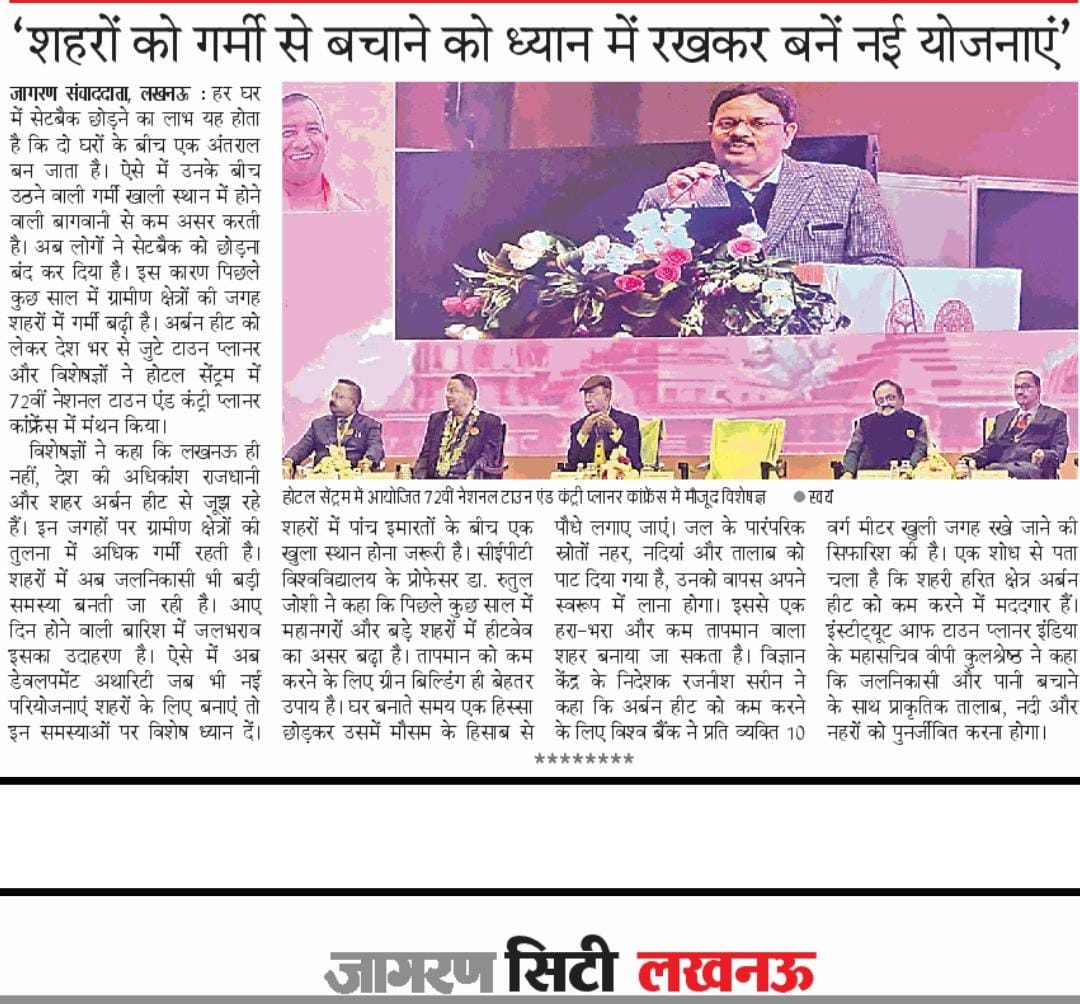
Lucknow: Make it mandatory to have open spaces for every five buildings, rejuvenate water bodies, and interlink them if possible to address issues like urban heat islands (UHIs) and urban flooding (waterlogging), which Lucknow is also facing. These were the suggestions given by experts at the 72nd National Town and Country Planners Conference on Saturday. These would create a greener and cooler city by preserving parks and recreational areas, said experts at the ongoing meet in the city. During a panel discussion, experts said UHIs occur when urban areas become much hotter than the surrounding rural areas due to the heat-absorbing nature of buildings and infrastructure. Rajneesh Sareen, director of the Centre of Science, emphasized the importance of having 10 square metres of open space per person, as recommended by the World Bank, to mitigate the UHI effect. He said research indicates that urban green spaces (UGSs) play a crucial role in combating UHIs. Dr. Rutul Joshi, an architect and urban planner, said that implementing these measures can make Lucknow a more sustainable and liveable city, improving air quality, public health, and the overall urban environment. To address urban flooding, VP Kulshrestha, general secretary of the Institute of Town Planners India, suggested upgrading drainage infrastructure. This includes expanding storm drains, revitalizing natural streams, and implementing decentralized storage solutions like retention ponds and green roofs. “Involving the community through awareness campaigns and local flood mitigation plans can help Lucknow build a future free from waterlogging issues,” he added.
The year 2023’s winter months were a period when the region of Delhi-NCR slipped back into the abyss of high pollution levels — despite having seen a gradual long-term improvement in annual PM 2.5 concentrations since 2015-17. Particles are defined by their diametre for air quality regulatory purposes. Those with a diametre of 10 microns or less (PM10) are inhalable into the lungs and can induce adverse health effects. Fine particulate matter is defined as particles that are 2.5 microns or less in diametre (PM2. 5). The forward march towards cleaner air and clearer skies came to a grinding halt in 2023, says a new analysis by Centre for Science and Environment (CSE), partly due to meteorological factors. The region witnessed cleaner-than-usual summer and monsoon seasons, and much lower ingress of smoke from farm stubble fires in the northern states. But unusually low surface wind speed in winter meant that local pollution, which was already quite high, was trapped. This led to the spike in pollution levels. Says Anumita Roychowdhury, executive director, research and advocacy, CSE: “Due to the impact of the unusual winter levels, the overall annual concentrations plateaued and even worsened, undoing the gains of the long-term downward trend. "With the contribution of stubble burning to Delhi’s pollution going down this year, with more rains in November and less severe cold winter conditions, the annual level should have improved further. Instead, the worsening of meteorological conditions — lowering of wind speed — tilted the scale adversely simply because the local pollution was still very high. Delhi needs more aggressive emissions reduction steps to meet the national ambient air quality standard.” Avikal Somvanshi, senior programme manager, Urban Lab, CSE points out: “Interestingly, the summer and monsoon months in 2023 were unusually cleaner compared to the months in the previous years. But winter levels turned out to be one of the worst due to very slow surface wind speed. This impeded the dispersal of pollution and led to higher levels. "This trapping of local pollution from all sides made this winter exceptionally bad despite lesser smoke from farm fires. The meteorology also explains lower pollution peaks and relatively uniform bad air quality with minimal fluctuations in the PM2.5 concentration throughout the season.” The winter pollution analysis was carried out by CSE’s Urban Lab. The objective, says Somvanshi, has been “to understand the trend and the starting line of the onset of the winter pollution season in this region.” Key Highlights Of The CSE Analysis 2023’s annual average PM2.5 levels worse than that of 2022 — but not as high as it used to be: Delhi has been witnessing a gradual yet consistent decline in its annual PM2.5 levels since 2015-17, with 2020 being the only outlier due to massive disruption caused by pandemic lockdowns. But this downward movement stopped in 2023. Delhi’s PM2.5 annual average for 2023 (up till 29 December 2023) stood at 100.9 microgram per cubic metre (µg/m3). This was an increase of 2 per cent compared to the 2022 annual level, and was 6 per cent higher than an exceptionally clean 2020. However, the levels were not as high as they used to be earlier — the average of 2018-22 winters is higher than that of the winter of 2023. Winter condition has affected the 2023 trend — summer is getting progressively cleaner: In 2023, about 151 days met the National Ambient Air Quality Standard. This was similar to the 2021 trend and second only to 2020 (a lockdown year) when 174 days had met the standards. In 2022, only 117 days met the standard. Almost all of these cleaner days were observed during summer and monsoon seasons. There was a significant fall in the number of ‘good’ air quality days (when levels are 50 per cent below the standard) in 2023; this stood at 24 days compared to 41 in 2022. Meanwhile, in 2023, the number of days with PM2.5 concentration in the ‘very poor’ or ‘worse’ categories (as per the air quality index classification) stood at 107 days, including 24 with ‘severe’ levels (until 30 December 2023). In 2022, there were 106 ‘very poor’ or ‘worse’ days, but ‘severe’ days were just nine in number — this was less than half of that of 2023. Summer is cleaner, while winter is becoming worse: In 2023, the summer months (from March to June) were significantly less polluted (14-36 per cent) than the corresponding months in 2022. But the winter months of January, November and December were much more polluted in 2023 (12-34 per cent) compared to the months in 2022 (see corresponding graph in the complete report). The transition period including February, July, September and October does not show much change, which might be due to the fact that the monsoon months were already very clean. What Went Wrong In The Winter Of 2023? Though the number of days with ‘very poor’ and ‘severe’ PM2.5 concentration increased, peak pollution was down: Between 1 October and 29 December, there were only three days of ‘satisfactory’ air quality and zero days of ‘good’ air quality. There were more days of these categories in the same period in the previous two years. The number of ‘severe+’ days was the same as in the winters of 2019, 2020 and 2021, but the peak intensity was lower. The peak in 2023 was 349 µg/m3 and happened on 13 November (the day after Diwali). This is much lower than the peaks recorded in the previous years: in 2022, the peak was 401 µg/m3, while in 2019 it went up to 546 µg/m3. Highest number of smog episodes observed this season in last six winters: Delhi usually experiences two smog episodes (a smog episode is defined as at least three or more minimum continuous days with air quality in the ‘severe’ category) in the months of November and December. In 2023, there were three episodes by 24 December; on 30 December, Delhi was reeling under its third day of continuous ‘severe’ air quality, which was turning into the city’s fourth smog episode. This was the highest number of smog episodes observed in a season in last six winters. Overall, 2023 winter seems to have had the most consistently bad air compared to the last six winters, with minimal fluctuations in daily PM2.5 levels. Data indicates that it was the longest spell of ‘very poor’ or ‘worse’ air in last six years. Slow surface winds seem to be the main contributory factor to the winter trend: Farm stubble fire smoke is generally perceived to be the main contributor to heightened PM2.5 levels during the first half of the winter season. But in 2023, the number of fires in Punjab and Haryana were nearly identical to 2022’s number of incidences. In November 2023, the average surface wind speed in Delhi was 9.8 m/s, which was the lowest in the last six years. It was 21 per cent less than the wind speed in November of 2022. Somvanshi explains: “Low wind speed means that local pollution dispersion is horizontally restricted, while vertical dispersion is already restricted because of the winter inversion phenomenon. This trapping of local pollution from all sides has made this winter exceptionally bad despite lesser smoke from farm stubble fires. "This also explains low peaks and relatively uniform bad air quality with minimal fluctuations in PM2.5 concentration throughout the season. It must also be noted that heavy rains in November had insignificant impact on air quality.” Way Ahead Steps are required for clean fuel transition in all segments of industries, with stringent compliance with emissions targets and replacement of solid fuels in households and eateries. Action towards elimination of waste burning, with a comprehensive waste management system ensuring 100 per cent segregated collection, material recovery and remediation of legacy waste and stringent measures in the construction sector.
Bathinda: Despite cleaner-than-usual summer and monsoon seasons, and lesser smoke from farm fires in Punjab and Haryana, Delhi and the national capital region (NCR) slipped back into the abyss of high pollution levels in the winter months of 2023. This was due to the low surface wind speed which impeded the dispersal of pollution and led to higher levels. This trapping of local pollution from all sides made this winter exceptionally bad, revealed the new analysis by Centre for Science and Environment (CSE) released on Thursday. Smoke from stubble fire is generally perceived to be the main contributor to heightened PM 2.5 levels during the first half of the winter season, however, in 2023, the number of farm fires in Punjab and Haryana were less than those recorded in 2022. The analysis stated that despite seeing a gradual long-term improvement in annual PM 2.5 concentrations since 2015-17, the forward march towards cleaner air came to a grinding halt in 2023 partly due to meteorological factors. Data from both MODIS and VIIRS satellites shows that the contribution of farm fires to PM 2.5 in November 2023 only adds up to 1.48 tonne (calculated on the basis of SAFAR’s decision support system estimates) which was lowest in the last six years. Winters in 2023 also recorded the maximum rainfall in the last six years, and the cold conditions were less severe than usual. Avikal Somvanshi, senior programme manager, Urban Lab, CSE, said: “All these factors should have led to a cleaner winter. But this was undone by the lack of surface winds.” He said low wind speed meant that local pollution dispersion was horizontally restricted, while vertical dispersion was already restricted because of the winter inversion phenomenon. This trapping of local pollution from all sides made this winter exceptionally bad despite lesser smoke from farm stubble fires, he said, adding that: “This also explains low peaks and relatively uniform bad air quality with minimal fluctuations in PM 2.5 concentration throughout the season. It must also be noted that heavy rains in November had insignificant impact on air quality.” Anumita Roychowdhury, executive director, research and advocacy, CSE, said: “This winter is a lasting reminder of the fact that Delhi, despite succeeding to bend the long-term pollution curve downward over the last few years, has not achieved deeper cuts in emissions to sustain a more aggressive reduction for meeting air quality standards and prevent winter spikes.”
A few months ago, the Centre for Science and Environment, a non-governmental organisation released its own extreme weather analysis claiming that India witnessed an extreme weather disaster almost every day of the first nine months of this year – fro...
सांसों में घुलता जहर बच्चों और बुजुर्गों के साथ-साथ हर उम्र के लोगों को परेशान कर रहा है। सेंटर फॉर साइंस एंड एनवायरनमेंट (सीएसई) के अनुसार 2023 में जाड़ों के महीने जनवरी, नवंबर और दिसंबर 2022 की तुलना में 12 से 34% ज्यादा प्रदूषित रहे। मार्च से जून 2023 में गर्मियों के महीने 2022 में इन महीनों की तुलना में कहीं ज्यादा साफ रहे। आंकड़े बताते हैं कि इस दौरान प्रदूषण 14 से 36% कम रहा। फरवरी, जुलाई, सितंबर और अक्तूबर को देखें तो उस दौरान वायु गुणवत्ता में बहुत ज्यादा अंतर नहीं देखा गया। मानसून के महीने भी सामान्य से अधिक साफ रहे। दिल्ली-एनसीआर में प्रदूषण के महीन कणों पीएम 2.5 के स्तर में गिरावट का जो सिलसिला 2015-17 में शुरू हुआ था वो 2023 में सर्दियों के दौरान थम गया। विश्लेषण में इसके लिए मौसम संबंधी कारकों को जिम्मेदार माना है। ब्यूरो गर्मी-मानसून में ज्यादा साफ रहा मौसम दिल्ली-एनसीआर में असामान्य परिस्थितियों के चलते प्रदूषण का स्तर ऊंचा रहा। 2023 के दौरान गर्मी व मानसून का मौसम सामान्य से कहीं ज्यादा साफ रहा। सर्दियों में इस साल उत्तरी राज्यों में पराली जलाने से होने वाला प्रदूषण पिछले वर्षों की तुलना में कम रहा। हवा असामान्य रूप से सुस्त थी। नवंबर 2023 के दौरान दिल्ली में हवा की रफ्तार 9.8 मीटर/सेकंड थी, जो छह वर्षों में सबसे कम रही। इससे इस क्षेत्र में सर्दियों के दौरान प्रदूषण के स्तर में इजाफा दर्ज किया गया। सीएसई के अनुसार, दिल्ली में 2015-17 के बाद से पीएम 2.5 के स्तर में गिरावट आई है। हालांकि यह प्रवृत्ति 2023 में रुक गई। इस दौरान पीएम 2.5 का वार्षिक औसत स्तर 100.9 माइक्रोग्राम प्रति घन मीटर दर्ज किया गया।