Cse In News

Whether many coal based power plants around Delhi are not complying the emission norms and are likely contributing to the prevailing high pollution levels in the NCR as per the recent study by the Centre for Science and Environment

GOVERNMENT OF INDIA MINISTRY OF ENVIRONMENT, FOREST AND CLIMATE CHANGE LOK SABHA UNSTARRED QUESTION NO. 2499 TO BE ANSWERED ON 18.12.2023 Emission Norms for Coal-fired TPPs 2499. SHRI M. SELVARAJ: Will the Minister of ENVIRONMENT, FOREST AND CLIMATE CHANGE be pleased to state: (a) whether many coal based power plants around Delhi are not complying the emission norms and are likely contributing to the prevailing high pollution levels in the NCR as per the recent study by the Centre for Science and Environment; (b) if so, the details thereof; (c) whether the Government has notified emission norms for coal-fired TPPs (Thermal Power Plants) in the year 2015, if so, the details thereof; (d) whether the Government has taken action/ propose to initiate action against these power plants for not abiding by the norms; and (e) if so, the details thereof and if not, the reasons therefor? ANSWER MINISTER OF STATE IN THE MINISTRY OF ENVIRONMENT, FOREST AND CLIMATE CHANGE (SHRI ASHWINI KUMAR CHOUBEY) (a) to (e): Ministry vide notification dated 07.12.2015 revised the emission norms for particulate matter (PM) and stipulated new norms for sulphur dioxide (SO2), nitrogen oxides (NOx) and mercury (Hg) emission for coal-based thermal power plants. The implementation of the emission norms, got delayed due to various techno-economic constraints faced by thermal power plants and further affected by the impact of COVID-19 pandemic. Considering these constraints, the Central Government initially decided for phased implementation of norms with maximum timelines up to December 2022, and later vide notifications dated 31.03.2021 and 05.09.2022 granted further extension of time limit for implementation of new emission norms based on plants’ location, which are as below: Category Location/Area Timelines for compliance with parameters other than SO2 emission Timelines for compliance with SO2 emission limit Category A Within 10 km radius of National Capital Region (NCR) or cities having million plus population (as Upto 31st December 2022 Upto 31st December 2024 per 2011 census of India) Category B Within 10 km radius of Critically Polluted Areas or Non-attainment cities (as defined by CPCB) Upto 31st December 2023 Upto 31st December 2025 Category C Other than those included in Category A and B Upto 31st December 2024 Upto 31st December 2026 The timeline for Category A plants, including those located within 10 km radius of NCR, to comply with new emission norms for parameters other than SO2 emission was December 31, 2022. There are four thermal power plants under Category A located within 10 km radius of NCR these thermal power plants have complied with the applicable emission limits i.e. for parameters other than SO2 emission. Besides, there are seven thermal power plants under Category C are located within 300 km radius of Delhi, for which the time limits to comply with the emission norms for parameters other than SO2 and for SO2 is 31st December 2024 and 31st December 2026 respectively.
JUNK FOOD आपको बना रहा है बूढ़ा, जानें ये कैसे कर रहा है आपको अंदर से खोखला

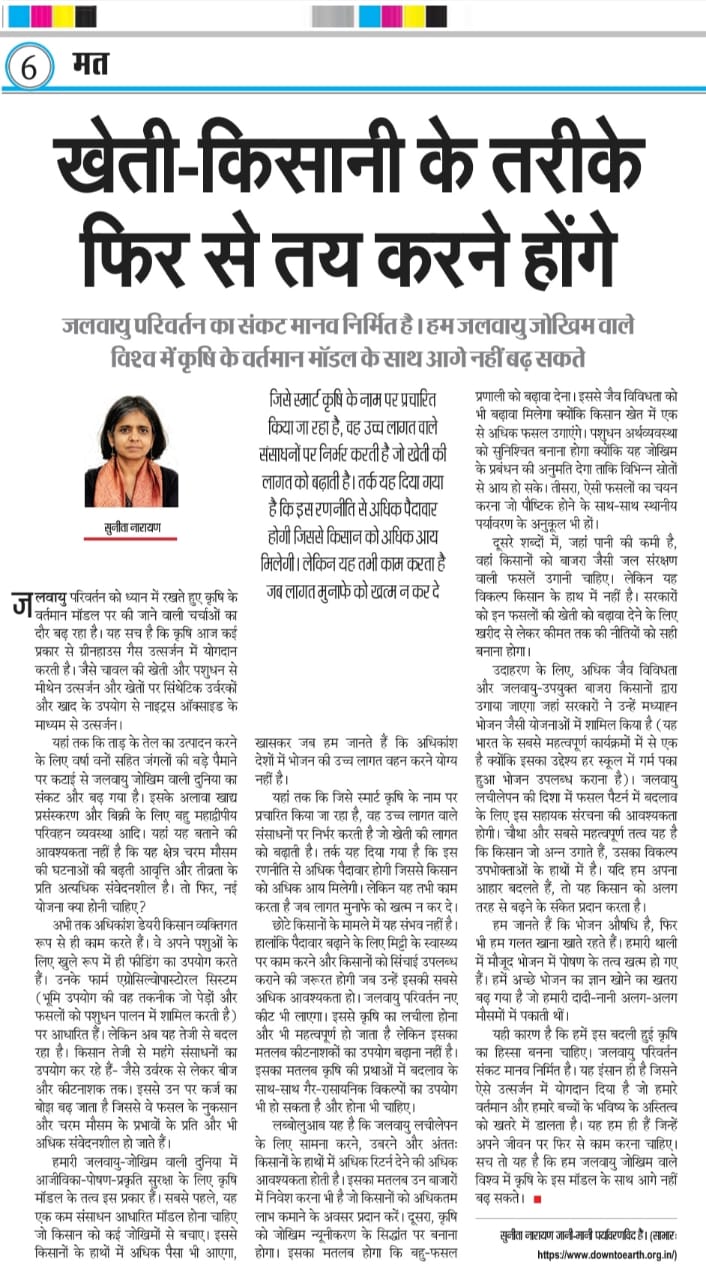
सेंटर फॉर साइंस एंड एनवायरमेंट की टेस्टिंग लैब में रिसर्च में दावा किया गया है कि इंडिया में एफएसएसएआई के मानकों की तुलना में पैकेज्ड फूड आइटम में फैट, तेल और नमक की मात्रा बहुत अधिक है। Junk Food: हमारी शरीर को एक हेल्दी और पौष्टिक डाइट की आवश्यकता होती है। लेकिन आज कल हम लोग दैनिक जीवन में इतना बिजी होते है कि हम अपनी दैनिक जीवन में अपने ऊपर बिल्कुल ध्यान नही दे पाते है। जिसके चक्कर में हमारे शरीर में विभिन्न तरीके की बीमारीयां पनपने लगती है,और साथ ही आज कल लोग जंक फूड का सेवन अधिक करते है। अक्सर इस तरीके के खाने में चीन और नमक की मात्रा ज्यादा पाई जाती है। जिससे लोगो में आज कल डायबीटज और ब्लैड प्रेशर की समस्याओं का सामना करना पड़ता है। नेशनल फूड एंड टेस्टिंग एजेंसी के अनुसार 2019 में फास्टफूड का सेवन करने वालों का आकड़ा जहां 25 प्रतिशत था, वही सन् 2022 में बढ़कर 40 प्रतिशत पहुंच गया है। भारतीय चिकित्सा अनुंसधान परिषद यानि आईसीएमआर के अनुसार जंक फूड हमारी सेहत को बहुत अधिक नुकसान करता है। जंक फूड में चीनी, नमक और फैट अधिक होता है। हाई कैलोरी वाले ये सभी फूड पोषण के स्तर पर शून्य हैं। जो दिखने में लुभावने लगते हैं, जिनको देखते ही कुछ खाने का मन करता है। यही वजह है कि इनकी मांग अधिक हो रही है। इसका सेवन हमारी लाइफस्टाइल को बिगाड़ रहा है। फास्ट फूड से बढ़ रही है बीमारिया सेंटर फॉर साइंस एंड एनवायरमेंट की टेस्टिंग लैब में रिसर्च में दावा किया गया है कि इंडिया में एफएसएसएआई के मानकों की तुलना में पैकेज्ड फूड आइटम में फैट, तेल और नमक की मात्रा बहुत अधिक है। रिसर्च में नमकीन बर्गर, स्पिंग रोल, पिज्जा, समेत 33 फास्ट फूड को शामिल किया गया जिसका सेवन करना लोग पंसद करते है। फास्ट फूड को खाने से हर साल 8 प्रतिशत लोगों में बीमारी बढ़ रही हैं, वही रोज जंक फूड करने के कारण आप हाई ब्लड प्रेशर, कब्ज जैसी समस्या बैठने और लेटने में घबराहट महसूस होने लगती हैं। इन बातो का ऱखे ध्यान रिर्सच में दावा हुआ है कि जंक फूड न केवल आपको बीमार करता है, वही आपकी स्किन, हेयर और उम्र को भी प्रभावित कर रहे हैं। इसलिए बहुत जरूरी है कि इनको आप अपनी डेली लाइफ से बाहर करे। वही ऑफिस में काम करने के दौरान या घर से बाहर आपको जंक की क्रेविंग होती है, तो बेहतर है कि आप एक कप काफी का सेवन करे इसमें मौजूद कैफीन भूख को कम करता है। इसके साथ डार्क चॉकलेट खानी चाहिए, इसमें कैलोरी कम होती है और इम्युनिटी बढ़ती है। हल्की भूख के लिए सब्जियों का सलाद और फलों को अपनी डाइट में शामिल करें।बता दे कि अधिक नमक का सेवन करने से दिल कमोजर होना, हार्ट अटैक, त्वचा , खुजली, किडनी, ब्लड प्रेशर जैसी अनेक समस्या हो सकती है। बता दे कि अधिक नमक का सेवन करने से दिल कमोजर होना, हार्ट अटैक, त्वचा , खुजली, किडनी, ब्लड प्रेशर जैसी अनेक समस्या हो सकती है।

COP28 focuses on fossil fuel role in climate change but disregards equity, says CSE

Inclusion of fossil fuels in Global Stocktake important starting point, rest a mixed bag The 28th Conference of Parties (COP28) to the United Nations Framework Convention on Climate Change in Dubai, United Arab Emirates (UAE) wrapped up on December 13, 2023. The reactions to the conference’s accomplishments have been, at best, mixed, according to Delhi-based think tank Centre for Science and Environment (CSE). COP28 had opened with the operationalisation of the Loss and Damage Fund, which was widely applauded. “We welcome the $655.9 million of pledges towards the Fund from various high- and middle-income countries, but it is crucial that the Fund gets replenished periodically with new and additional grant-based finance from developed countries in line with their needs and without conditionalities,” CSE said in a statement. ON GLOBAL STOCKTAKE The climate summit concluded with the adoption of the outcome on the first Global Stocktake (GST), an assessment of progress on the goals of the Paris Agreement. The GST recognised the need for deep, rapid, and sustained reductions in greenhouse gas emissions in line with 1.5 degrees Celsius pathways as part of a package of accepted decisions titled “the UAE Consensus”. The GST urges countries to triple their global renewable energy capacity, phase out unabated coal power, and transition away from fossil fuels in their energy systems. This acknowledgement of the role of fossil fuels is historic, occurring for the first time in over 30 years of climate negotiations. Sunita Narain, director general of CSE, said: The inclusion of fossil fuels in the GST is an important starting point for the world to now discuss the road ahead, which must be based on funding and fairness. However, the document falls short of laying out a differentiated timeline for fossil fuel phase out, in which developed countries take the lead and do so on an urgent schedule, while developing countries are given more carbon space to grow, CSE researchers pointed out. It also failed to emphasise the critical need for developed countries to provide immediate financial assistance to developing countries in order to facilitate the transition away from fossil fuels. As a result, the document weakens the principle of equity by imposing an equal mitigation burden on all countries, CSE said. The GST compromises on ambition by leaving open the role of “transitional fuels” for energy security, which is a reference to natural gas — a loophole that oil and gas-producing nations can easily exploit to expand production and use. In fact, the GST singles out coal as a fuel and makes no mention of oil and gas at all. This singling out is taking place at a time when countries like the United States have been ramping up liquefied natural gas (LNG) exports to record levels and the European Union is building new LNG import terminals, despite the International Energy Agency’s warning of peaking of fossil fuel demand. These investments risk carbon lock-in till mid-century and beyond, said CSE researchers. “In the days leading up to the final decision, the narrative was built that developed countries are eager to achieve the 1.5°C target and want to phase out fossil fuels, and large, emerging economies are blockers. This is a misrepresentation since the demand from developing countries was for differentiated timelines and finance for the energy transition. In overlooking this, developed countries look like climate heroes while disregarding equity and also continuing to be major oil and gas producers and consumers,” said Avantika Goswami, programme manager, climate change at CSE. The rest of the GST decision is a mixed bag. “It acknowledged the gap in adaptation finance and the growing needs of developing countries; however, all references to finance in adaptation have been moved from the adaptation section to the finance section — an ask from developed countries,” said Tamanna Sengupta, programme officer, climate change at CSE. “The text, however, is also diluted on equity as it fails to hold developed countries accountable for their historical emissions and has removed language specifying the obligation of developed countries to help bridge the finance gap for developing groups to achieve mitigation and adaptation actions,” Sengupta added. ON GLOBAL GOAL ON ADAPTATION Another key text adopted was on the Global Goal on Adaptation (GGA), a key demand of the African Group. “The final decision text on GGA has some hits and some misses overall. The major miss is the absence of the principle of common but differentiated responsibilities and respective capabilities and a lack of strong language around means of implementation, especially a financial target tied to the other dimensional and thematic targets under the GGA framework. One hit is a timeframe of 2030 to achieve the various thematic targets,” says Akshit Sangomla, who covered COP28 for Down To Earth. OTHER ITEMS There was limited progress on negotiation tracks such as the Mitigation Work Programme and the New Collective Quantified Goal on climate finance, which focused mainly on procedural discussions on modalities for the way forward in 2024. Progress was expected on Article 6 of the Paris Agreement, which focused on flexible mechanisms for climate cooperation, but more work remains to fully operationalise the trade between countries under Article 6.2 and the international carbon market under Article 6.4. “As Parties failed to reach an agreement on the market mechanisms under Article 6.2 and 6.4, the vacuum is likely to be filled for another year by dubious voluntary carbon markets,” said Trishant Dev, programme officer, climate change at CSE. As for non-market mechanisms under Article 6.8, although a decision was adopted, they continue to be given less consideration under the Paris Agreement-based flexible mechanisms, Dev added. We are a voice to you; you have been a support to us. Together we build journalism that is independent, credible and fearless. You can further help us by making a donation. This will mean a lot for our ability to bring you news, perspectives and analysis from the ground so that we can make change together.

Weathering the storm: India grapples with climate change

India suffered an economic loss of $ 4.2 billion in 2022 due to extreme weather events and climatic disasters, most of which were caused by floods, as per the WMO. An analysis by the Centre for Science and Environment shows that India has witnessed a... November 17 was no ordinary day. On this day, the Earth’s average surface temperature was two-degree Celsius higher than the pre-industrial average for the first time, providing more evidence of a fast build-up of greenhouse gases in the atmosphere. Abdul Rehman Bhat, an apple grower in Kashmir’s Shopian district, was not aware of the significance of Nov 17. Neither was he particularly invested in the deliberations that would take place later at the UN Climate Summit (COP28) in Dubai But, thank...

A ‘green protectionism’ wave

A year ago, the Group of Seven (G7) leaders from the US, UK, Canada, France, Germany, Italy, and Japan came together to form the ‘G7 Climate Club’. The stated objective is “to encourage nations with bold climate goals to join forces as a way to speed... Avantika Goswami, programme manager of climate change projects at the Centre for Science and Environment, New Delhi, said that in Dubai, developing countries have expressed concerns about how unilateral trade measures go against the principles of coo...

Delhi: The good and the bad, according to CPCB

NEW DELHI: The city has recorded only three good air quality days - defined conventionally as days with AQI of 50 or below - in 2022 against only one such day in 2021 and five in 2020, according to Central Pollution Control Board (CPCB) data. The city, going by this data, saw a total of 163 good, moderate and satisfactory days in 2022. "By good air days, the minister meant a combination of days with good, satisfactory and moderate air quality. It's consolidated data coming from the network of monitoring stations, both from CPCB as well as Delhi Pollution Control Committee. Some of the older data is attributed to CPCB alone due to unavailability of DPCC monitoring stations before 2018. Over time, more stations were added to the list," explained a Delhi government official. Track the pollution level in your city According to a report by Commission for Air Quality Management (CAQM), too, the average AQI of Delhi was very good. "The average daily AQI for Delhi during the entire 2022 has been the best so far since 2015, barring 2020 which saw an exceptional AQI owing to continued spells of lockdown and low anthropogenic activities round the year," a CAQM report published in January this year had stated. "It is true that in the long-term trend, the air quality of the city has indeed improved. All the assessments so far have shown that year on year, air quality has improved. However, the pollution levels are still very high and more than 60% higher than the national standards. So, there is a need to take drastic steps to control pollution," said Anumita Roychowdhury, Centre for Science and Environment's executive director (research and advocacy). According to an assessment by CSE, based on CPCB's real-time data, as of 2022, the annual average PM2.5 - major source of pollution - was 101 micrograms per cubic metre against 108 micrograms per cubic metre in 2021; 96 in 2020 and 109 in 2019. The national annual standard is 40 while the international standard set by WHO is 5.