Cse In News

The silent migration from India’s cyclone capital

Pakhiralay, Sunderbans: Kaushala Mondal and her husband once nursed a dream—that some day, they would build a pakka house in their village, Pakhiralay, in the Sundarbans, the world’s largest mangroves that span the twin districts of North and South 24 Parganas in West Bengal. The couple just wanted a house with a patch of green that can survive the storms that periodically batter the region and would not collapse every time floodwaters invade it. That was in the first few years of their marriage and after the devastation left by super cyclone Aila in 2009. Nine years ago, the dream ended when Kaushala’s husband, a fisherman, was killed in a tiger attack when he was in his boat. “We had so many dreams. But my fate is such that I have lost everything. My son was four months old, and my daughter four years when he was killed," recalls Kaushala. As cyclones Bulbul (2019), Amphan (2020) and Yaas (2021) raged through the Sundarbans, local livelihoods suffered more, Kaushala grew more fretful of her children’s future. “For how long can one survive chewing on muri and gur (puffed rice and jaggery)?" They were barely surviving on the meagre income of her father-in-law Naren Mondal. She knew there was only one alternative: she would have to leave her children behind and leave for Kolkata to find work. When Kaushala would hear of a job in the city, and prepare to leave, her son would be inconsolable. In 2021, amid the second wave of the pandemic, Kaushala moved to Kolkata to work as a domestic worker for a salary of ₹10,000 a month. She cares for the three-year-old son and an 11-year-old daughter of a working couple. Occasionally, she goes back to the village. “When I leave my children to return to work, they are in tears," says Kaushala. Disaster displacements Interviews with families in Gosaba, one of the blocks in the Sundarbans most vulnerable to climate change because of high poverty and lack of livelihood options, showed how rife is the crisis caused by climate change-triggered migration. Sundarbans has been called the cyclone capital of India because of the increasing frequency of cyclonic storms in a region where people survive on fishing and collecting honey. Forest-dependent people are often forced to venture into ‘core area’—where human activities are not allowed—to earn their livelihood. As Europe’s climate monitor described 2023 as the hottest year on record on earth, India faced extreme weather events almost every day between January to September, according to a recent report by the Delhi-based think tank Centre for Science and Environment. With 86% extreme event days, at least 3,000 deaths were reported due to this. During the recently concluded COP-28 summit in Dubai, a United Nations official slammed climate inaction. While climate change remains one of the most difficult challenges of our times, India remains extremely vulnerable to the looming climate crisis, the Intergovernmental Panel on Climate Change (IPCC) pointed out. Recently, Chennai saw unprecedented levels of floods killing at least a dozen people as cyclone Michaung raged through the states of Tamil Nadu and Andhra Pradesh. In the past 50 years, Chennai has witnessed floods every 10 years, the last severe one being in 2015. However, other densely populated cities like Mumbai and Kolkata also remain vulnerable to increased risks of flooding. Kolkata—roughly 100km away from the Sundarbans—is home to around 4.5 million people. The city’s vulnerability to climate change was recently highlighted at an event at the COP-28, according to a Down To Earth report. Experts reiterate that Sundarbans is the lifeline for Kolkata. The mangrove vegetation acts as a buffer from climatic disasters; preserving the mangrove means mitigating the city’s vulnerability to weather events. The migration crisis is deepening in the aftermath of the pandemic, says Sugata Hazra, former professor at the Kolkata-based Jadavpur University’s School of Oceanographic Studies. In a 2002 paper, Hazra had estimated that climate change could permanently displace 70,000 people from the Sundarbans by 2020. A later study observed that by 2018, more than 60,000 people had already moved out because of land loss, cyclones and inundation. “Several people are migrating from the islands which are eroding fast in the Sundarbans. The other migration patterns are induced by the slow onset of events like an irregular monsoon, salinity intrusion and climatic disasters where livelihood options are becoming increasingly unsustainable," says Hazra. Research on migration and its impact on the socio-economic and demographic structure of Sundarbans shows four types of migration in the region—full-family migration, one-member migration, temporary and seasonal migration. The IPCC Sixth Assessment Report had pointed out that increased climate variability and extreme events were driving up migration. In 2019, India, Bangladesh, China and the Philippines each had recorded more than 4 million disaster displacements, it added. “It is a difficult task to capture this data–some people are choosing to migrate and are not directly forced. But the circumstances under which they are compelled to take this decision to migrate, even if seasonally, need to be investigated. Migration is a direct consequence of the vulnerability induced by the climate crisis," Hazra adds. ‘How will we eat?’ Next to Kaushala’s household, three children are growing up in the absence of their mother in abject poverty. Their mother, Panchami Mondal, works in Barasat—over 100 km from Pakhiralay. Working as a domestic worker in five households, she manages to earn ₹4,300 a month. After paying for rent and food, she sends back ₹1,500 back home for her children. “Tell me, is there any work in the Sundarbans? How will we eat? We have to leave our kids behind, and go to the city for work," says Panchami. Her husband died of cancer around five years back when she was pregnant with the youngest of her three children. She found work intermittently in the Sundarbans—working in other people’s agricultural lands. But the work was not steady, and the money paltry. Eventually, she was forced to migrate. Upasona Ghosh, social anthropologist at the Bhubaneswar-based Indian Institute of Public Health, explains: “You are a child growing up in a situation where you parents have migrated to the city, and you are responsible for looking after your siblings. They have no idea about their future. What kind of lives will these children have?" Unfit for agriculture Chanakya Mondal realized early on in his life that he has to migrate out for a few months every year to eke out a living. Since the age of 16, he has travelled across Andaman and Nicobar Islands, Maharashtra, Gujarat and Tamil Nadu for work. In the last decade, he has made frequent trips to Andhra Pradesh—for five months every year to work in paddy fields. Now 44, Chanakya manages to earn ₹1,000 per day for about 26 days a month. Back in the village, he primarily relies on his savings to run his family. “We have land which is not very fertile since Aila," he says. Repeated climatic disasters translates into increasing salinity levels in the region. “Salinity intrusion makes the land unfit for agriculture and jeopardizes rural existence. With climate change, the cyclones are getting more frequent and intense. Recall the devastation caused by Amphan and Yaas," says Santanu Chacraverti, president of the Society for Direct Initiative for Social and Health Action (DISHA), a non-profit that works across several blocks in the state, including the Sundarbans. “The local people realize their increasing vulnerability and tend to migrate to other states to engage in low-paying manual jobs," he adds. Chacraverti observes that historically, for human settlements, floods have not only been a curse but also a blessing—the silt brought in by flood waters makes the land more fertile. In the Sundarbans, the situation is the reverse—flooding by the brackish river water make the Sundarbans rivers infertile. While the Sundarbans habitations have grown up behind embankments that keep the flood water away, the land remains deprived of silt and loses fertility. The silt in the rivers settles on the riverbeds which reduces the carrying capacity of the rivers and makes them more prone to flooding, explains Chacraverti. “Any storm tends to breach and overflow embankments, causing devastation. This is the foundation of the poverty and vulnerability of the Sundarbans," he adds. Snakebites and accidents Chanakya Mondal explains the perils of migrating and working in exploitative conditions. “Despite snakebites, accidents at workplaces, and train accidents, we are still compelled to leave our villages and go to other states to work. We are scared seeing the loss of lives but we have no option," he says. In June 2023, almost 300 people died when three trains collided in Balasore district in Odisha. The Coromandel Express entered the passing loop instead of the main line near Bahanaga Bazar railway station at full speed and collided with a goods train. Due to the high speed of the Coromandel Express, its 21 coaches derailed and three of those collided with the oncoming SMVT Bengaluru–Howrah Superfast Express on the adjacent track. Anup Badhiya works in Andhra Pradesh—his day starting at 4am, and ending at 7 pm. He is entitled to a quick lunch break after standing for hours in knee-deep water in the paddy fields. “Working in the paddy fields is extremely labour-intensive. But one has to go (out to work) with repeated cyclones hitting our village. My house has been damaged so many times that I have to invest money rebuilding it. After Aila, we were without a home for three months," says Badhiya. When her house was flooded by Aila in 2009, and later by Yaas in 2021, and the roof of her house was blown away by Amphan in 2020, Shankari Halder held on. But she and her children would always miss her husband when he went to find work in the cities. “My children would tell me to ask their father to come back home. We can make do with eating only rice," says Halder. Over seven years back, her husband suffered a deep cut on his foot as a stone sliced through it while he was working in Andhra Pradesh’s paddy fields. For over a month, he remained bed-ridden. Their neighbour in the Sundarbans who had also migrated for work, helped him to the loo when he returned from work, and fed him. When he was fit enough to travel, he returned home. “We have not let him return since. What will we eat if, god forbid, something happens to him? There is no security when you go to places like this to work. Nobody is accountable for your safety," says Halder. As the family struggled through the pandemic, Shankari completed work days under the Mahatma Gandhi National Rural Employment Guarantee scheme, which guarantees 100 days of work during a financial year. She took a loan of ₹50,000 in phases to buy an engine van for her husband, and stationery they sold in stalls in country fairs. “The interest for this comes at a high rate. But there is no other option, no work in villages," she says. When male members leave villages, and remain stuck in transit or in cities, it falls on the womenfolk to bail out the family, says Sugata Hazra. “Most of these women do not have any land rights. They sell off jewellery and other belongings. Then they migrate out to cities with their families," he says. As for Kaushala and Panchami, the dream is to stay with their children while also managing to secure their future. But both agree it would be impossible if they return to their village. “The first time I went to work, I was wailing through the night…I kept thinking is this what my fate is? Gradually, I consoled myself. I look at the two kids I am bringing up in the city and try to find solace…But where do I keep this grief?" asks Kashala rhetorically. Ritwika Mitra is an independent journalist.
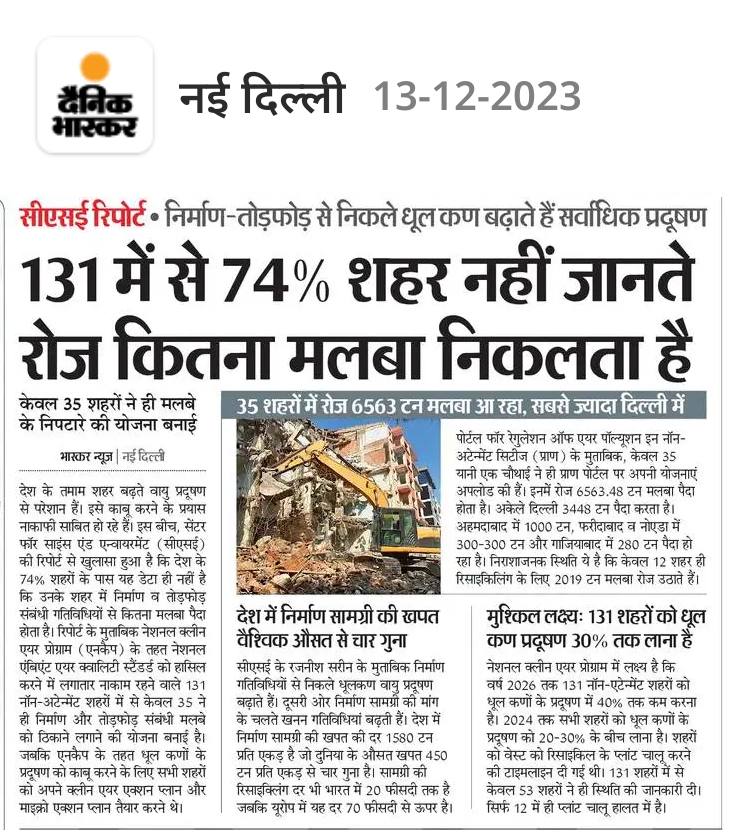
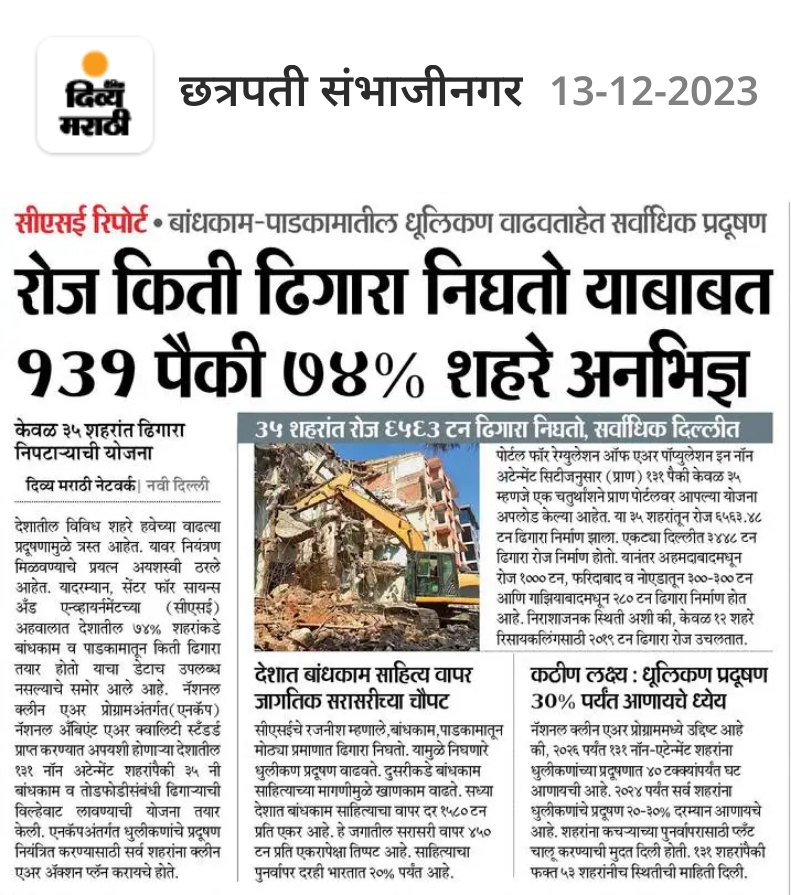
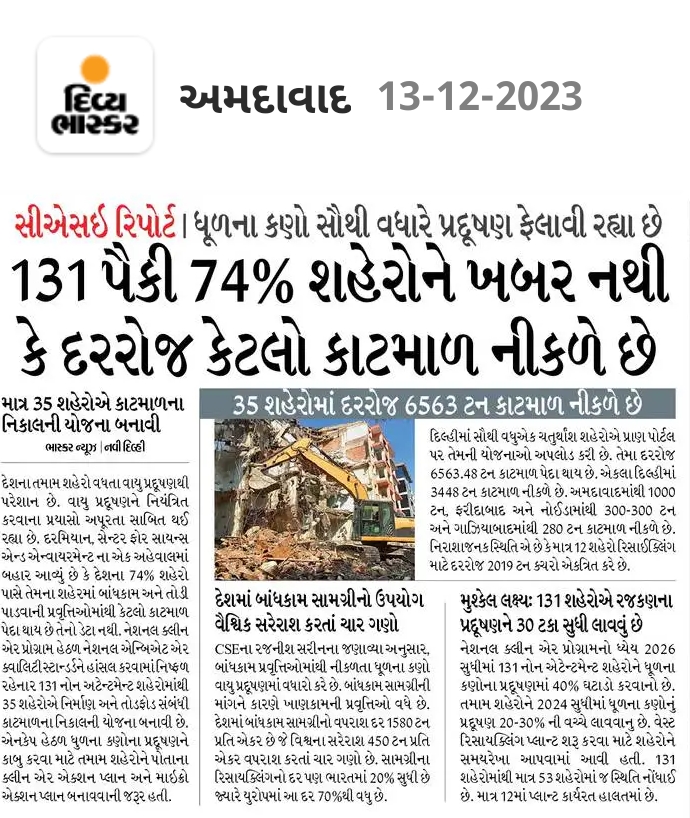
Indian cities need to do lot more to manage their construction and demolition (C&D) waste, says new CSE report

At a time when Indian cities are struggling to control their air pollution levels, a new report by Centre for Science and Environment (CSE) has found that most of them lack institutional preparedness to carry out systematic and scientific management of construction and demolition (C&D) waste, one of the key sources of pollution in urban areas. Titled Construction and Demolition Waste: Closing the loop for sustainability, the report was released here today by CSE at a national conference. Releasing the report, CSE director general Sunita Narain said: “C&D waste management is a potential game changer. A decade back, the concern with C&D waste was not about air pollution, but about saving waterbodies from the dumping of this waste in them. By 2018-19, the issue of C&D waste became hot and this time, it was about dust in the air which was contributing to pollution. The realisation struck that there lies a huge opportunity in changing things for the better in this sector.” Quoting data from the National Investment Promotion and Facilitation Agency, the CSE report says India’s construction industry is expected to reach US $1.4 trillion by 2025, and contribute about 13 per cent to the national economy. India will be adding billions of square meters of space to create affordable housing units, commercial spaces, cold storage, industrial corridors, smart cities, roads and highways, among other things. Says Rajneesh Sareen, director, sustainable buildings and habitat programme, CSE: “This will not only generate enormous amounts of waste, but also increase the demand for natural and virgin building materials that require mining.” He points to the report, which says that as per the draft National Resource Efficiency Policy of 2019, India has already increased its material consumption six times from 1.18 billion tonne in 1970 to seven billion tonne in 2015. India’s resource extraction rate stands at 1,580 tonne per acre as compared to the world average of 450 tonne per acre; its material productivity is low. While India imports many critical raw materials such as sand, it has a much lower recycling rate at 20-25 per cent compared to developed countries of Europe (70 per cent). Adds Mitashi Singh, programme manager, sustainable buildings and habitat programme, CSE: “Besides the impacts that mining and resource extraction already exert, mismanagement of C&D waste — often dumped unscientifically in ecologically sensitive areas such as wetlands or low-lying areas — causes serious environmental damage. To add to this, the construction process in itself is a major dust and particles generator that leads to local pollution and exposure. This is a major concern as air pollution has emerged as a key public health issue in Indian cities. Some of the more disturbing serious health effects include lung cancer, silicosis, chronic obstructive pulmonary disease and asthma.” The CSE report, says Sareen, “comprises a performance matrix assessment of 14 cities from seven states based on six parametres and 26 sub-parametres. It also includes construction dust control guidelines”. The report lays down a clear set of recommendations: Adopt an ecosystem approach (instead of the fragmented approach that is currently being practiced). Expedite the framing and notification of bye-laws – many cities have notified only penalties and fines, which is not enough. Ensure generation of credible data on the quantity of C&D waste being produced. Ensure effective and accessible collection and treatment infrastructure. Promote efficient construction management practices to minimise waste and dust generation. Streamline the financials – adapt dynamic user charges, create a funding stream for legacy waste and link budgets to air pollution mitigation measures. Speaking at the Conference, Anumita Roychowdhury, executive director, research and advocacy, CSE said: “C&D waste management and construction dust mitigation are integral to all clean air action plans of the 134 non-attainment cities (NACs) under the environment ministry’s National Clean Air Programme (NCAP). Various other government programmes such as Swachh Bharat Mission 2.0, as well as multi-sector plans currently being implemented in cities, have also incorporated urban solid waste management – including C&D waste management – as a key focus area. CSE’s report has come at an opportune moment. It helps assess the adequacy of current action, identifies the gaps, captures the learning from different cities, and works out the solutions needed.”

Kolkata, 100 km from the Sundarbans, demands loss and damage fund support in Dubai

Kolkata’s climate vulnerability came into focus alongside the demand for loss and damage funding for its climate-impacted urban poor during a meeting of south Asian cities held at the ongoing 28th Conference of Parties (COP28) to the United Nations Framework Convention on Climate Change in Dubai, United Arab Emirates. Experts present at the meeting said the demand was a first-of-sorts for a city on an international platform. It may be a precursor to similar demands from several other global cities, particularly those in Africa and south Asia. This may include those that have not only been impacted by continuing climate extremes but are also witnessing migration from nearby coastal areas themselves facing climatic impacts. Kolkata, a city of nearly 4.5 million residents, has at least one-third of its populace living in slums or equivalent habitations, a significant proportion of whom have come from the Sundarbans and other nearby coastal cities that are extremely vulnerable to increasing climatic impacts. Moreover, many houses are quite old and can be severely affected in case of a major extreme weather event. The event, Adaptation, loss and damage finance frameworks ensuring transformation of south Asian cities towards net zero, was convened by Climate Action Network South Asia (CANSA). It is a platform of more than 250 green organisations across south Asia, along with few other organisations. ‘Development deterrent’ “Climate change impact is not only a physical threat or a major disaster issue. It is also a development deterrent. Already, our people are suffering. I am happy that the loss and damage fund has been operationalised in this COP and request you to see how the same can be facilitated for the cause of climate-impacted urban poor and other vulnerable populations in Kolkata,” said the metropolis’ mayor-in-council Debasish Kumar, who participated in the discussion at Dubai. The loss and damage finance facility, a mechanism to support climate-affected populations, has been operationalised at COP28. It allows communities to seek fund support for damage inflicted on them due to climate change. Vulnerable countries, including India, can also seek such fund support. The World Bank will coordinate the funding for the first four years, which is expected to be functional by next year. Several climate experts from Europe and Asia also joined the panel. This reporter spoke to a few experts on the sidelines. They pointed out that similar demands are likely to emanate from various cities in the Global South, especially south Asia. “It is necessary to assess how climate risk to urban infrastructure and the massive losses associated with it can be addressed under these funds. Urban centres also have the agenda of migration of climate-displaced people,” observed Anumita Roychowdhury, an expert from Delhi-based Centre for Science and Environment and a panellist at the session. “Today, Kolkata is demanding. Tomorrow Dhaka, Karachi and Colombo may ask. That is because all these cities are affected by the dual problems of being impacted by high intensity extreme weather events and also by migrants coming to them, most of them poor,” said another expert. “Countering climate change impacts on the city, particularly on its poor population living in slums and elsewhere, is a priority for me. We already have the component in our climate plan, the details of which are presently being worked out by an expert committee having domain experts from across India. We will also try to find out how finances can be generated to implement these plans, including loss and damage fund support,” said city mayor Firhad Hakim from Kolkata, who could not make it to the summit despite being invited. Kumar added: A UN report has mentioned that substantial green cover in Kolkata was lost in cyclones. It also notes that the city is most vulnerable to disaster-related mortality among eight global megacities. Kolkata is third among the 20 largest coastal flood-prone global cities. It is close to the Bay of Bengal which is steadily rising. It is also one of the fastest warming global cities … the list of examples is long. “These are not mere statistics, but hard realities, which we have been regularly facing,” added the official. Experts support Kolkata’s demand “We are already working with the Kolkata Municipal Corporation on the agenda of cutting fossil fuels as well as the preparation of the Kolkata Climate Action Plan. We will be very happy to explore opportunities for accessing funds for the city from all possible sources,” said Sanjay Vashist, director of CANSA. “Money is only one part of the story. The vulnerable community in Kolkata should be supported by appropriate case studies and technology to counter their climate-inflicted loss and damage,” said Harjeet Singh, a member of the UN transitional committee on climate change. Nilanjan Ghosh, an economist and member of the committee preparing the Kolkata Climate Action Plan, reminded that “losses in the Sundarbans, hardly 100 km away from Kolkata, result in permanent losses in various supporting and provisioning services for the urban centre, and hence it should be a claimant for loss and damage finances”. We are a voice to you; you have been a support to us. Together we build journalism that is independent, credible and fearless. You can further help us by making a donation. This will mean a lot for our ability to bring you news, perspectives and analysis from the ground so that we can make change together.

Why didn’t China and India sign Cop28 tripling renewables pledge?

Three months ago in Delhi, leaders of G20 major economies backed a tripling of global renewable energy capacity by 2030. Then last Saturday in Dubai, a much bigger group of nations signed a similar pledge. Over 120 countries gave the document their signature but G20 nations like China, India and Indonesia were not among them. That’s despite China dominating the renewables supply chain and the International Energy Agency forecasting that both China and India are already going to double their renewables by 2027, putting them on course to triple capacity by 2030 without any extra effort. So why the reluctance? Well, the Cop28 pledge came in a package with anti-coal language and a more challenging target to double energy efficiency, with no quantified finance target to match. Experts told Climate Home major emerging economies were concerned about costs and reluctant to make commitments outside the formal UN climate process. Coal and costs Unlike the G20 agreement, the Cop28 pledge calls on signatories to “end the continued investment in unabated new coal-fired power plants, which is incompatible with efforts to limit warming to 1.5°C”. Between them, the four G20 nations that didn’t sign the Cop28 pledge are building over four-fifths of the world’s new unabated coal-fired power plants, according to Global Energy Monitor. “That could be why large emerging economies are concerned about the renewable energy declaration because it is tied to coal-based power generation,” said Centre for Science and Environment researcher Avantika Goswami.

Indian farmers rack up carbon credits with climate-conscious ways

Indian farmer Jitendra Singh proudly holds up a rice stem on his farm of lush green paddy. “Look at the height and health of this plant - the number of florets on it is amazing,” he said. Located in the northern state of Haryana, one of India’s main rice and wheat-growing regions, Singh’s 80-acre (32.4-hectare) farm is part of a gradual shift in how Indians cultivate their staple crops, from a model that is fertiliser and water-intensive to more natural, climate-friendly ways. What convinced middle-aged traditional farmer Singh to change how he grows rice was the prospect of benefiting from another fledgling movement: generating carbon credits through sustainable agriculture to sell for additional income. “The new method of rice cultivation is not only helping my land regain its fertility - it is also helping fight global warming,” Singh said. He expects to be among the first tranche of Indian farmers to receive payments from the carbon market. A score of private firms have emerged in the past few years in India, tying up with farmers like Singh to generate carbon credits, even as the role of voluntary carbon offsetting in reducing global climate-heating emissions comes under scrutiny. Across the country, these startups are enrolling farmers who cultivate resource-intensive crops like rice, cotton and sugarcane and are nudging them to use practices that emit less planet-warming gases - and in return generating credits for the avoided carbon and methane emissions from their farms. I have never personally seen such a shroud of secrecy as I found in this market. The entire purpose of these markets seems to serve the interests of project developers, buyers and intermediaries and not the mitigation of emissions. Sunita Narain, director general, Centre for Science and Environment. Emissions from agriculture and land use accounted for 17 per cent of global greenhouse gas emissions in 2018, according to UN data. Higher yields, lower emissions Singh first heard about the carbon credit programme in 2019 from a representative of Grow Indigo, one of the new backers of agriculture-based carbon offset projects in India. Grow Indigo is a joint venture of India-based seed firm Mahyco Grow and US-based agriculture technology company Indigo Ag which produces and sells farm-linked carbon credits. With technical support from Grow Indigo, Singh tested a new way of cultivating rice on 20 acres of his farm. Instead of transplanting seedlings from a nursery into flooded fields, he used a drill machine to directly sow seed into the soil. The new method - called direct seeded rice (DSR) - cuts the overall cost of cultivation by using 12-35 per cent less irrigation water and reducing labour, sowing time and use of chemical herbicides and fertilisers. “My rice yields have increased without having to flood my fields again and again - which also stops methane generation,” said Singh. Produced by bacteria in flooded fields, among other sources, methane is a short-lived greenhouse gas that has more potent capacity to heat up the Earth’s climate than carbon dioxide (CO2). The cultivation of rice - a staple food for more than 3 billion people worldwide - is responsible for 12 per cent of global methane emissions and 1.5 per cent of total greenhouse gas emissions. Singh also changed his traditional method of cultivating wheat, a winter crop that follows the monsoon crop of rice. After harvesting rice, Singh no longer sets the stubble on fire - a major seasonal source of air pollution. Instead, he mulches and spreads the stubble across the field, into which he plants wheat seeds directly without tilling - a practice that disturbs the soil and releases carbon. The new “zero-till” method helps trap soil carbon, while mulching increases the fertility of the soil. Fair share for farmers Typically, avoiding or reducing greenhouse gas emissions equivalent to one tonne of CO2 generates one carbon credit. For instance, when Singh avoids methane emissions from his rice cultivation or sequesters carbon in the soil by not tilling it, he can generate one carbon credit per acre. Grow Indigo measures this carbon storage over a period using a combination of sampling methods and satellite monitoring, and then has it checked by a third-party auditor. Once verified and entered on a recognised registry, the credits are available for purchase by buyers who want to offset their own carbon emissions, such as corporations or individuals. For example, a multinational company could buy the credits to compensate for the emissions of its employees’ air travel. Generally, the price of one credit - depending on its quality - ranges between US$2 and US$50 on the voluntary carbon market, said Umang Agarwal, head of carbon and sustainable produce at Grow Indigo. Agarwal said he hoped Indigo Agriculture’s strict methodology would allow the Indian credits to fetch a high price, with farmers set to receive 75 per cent of the revenue compared to the 35-45 per cent share offered by some companies in India. “If the money for carbon credits comes, good - otherwise I am happy with the yield gains through new methods,” said Gurucharan Singh Bhuttar, another farmer cultivating wheat and rice on 60 acres in Karnal district. Bhuttar, who signed up with Grow Indigo about four years ago, said his wheat yield has increased after switching to the zero-till method, bringing in additional income of about 500,000 rupees (US$6,000) per year as well as lower cultivation costs. Carbon credits from agriculture are still a nascent market globally, according to Ecosystem Marketplace, an international repository of information on payments for ecosystem services. Its figures show that in 2021, 500 million carbon credits were traded globally, valued at US$2 billion. Of those, agriculture credits accounted for only 1 million, or about 0.2 per cent. Indian developers have yet to sell any farm offsets on the international carbon market, but Grow Indigo predicts they could grow into a US$5 billion-US$7 billion market in India in a decade. Doubts over climate benefits Globally, the voluntary carbon market has come under fire over the integrity of its contribution to the fight against warming. Failings identified by researchers include emissions reduction claims that are temporary or were already happening, displacement of the emissions to other sites, exaggerated climate benefits and projects that would take place even without finance from the carbon market. In the case of India, a recent analysis from the Centre for Science and Environment (CSE), a Delhi-based think-tank, noted that the sale price of credits is “at times inflated and at times it is so low that the project becomes unviable”. In some cases, the CSE found that a project had issued too many credits or had not resulted in the changes claimed on the ground. People who provided land and labour were not fairly compensated and project-related information was not transparent, it said in a report. “I have never personally seen such a shroud of secrecy as I found in this market,” CSE’s director general Sunita Narain told the report’s launch. “The entire purpose of these markets seems to serve the interests of project developers, buyers and intermediaries and not the mitigation of emissions,” she added, calling for a floor price of US$30 per credit. Governments should consider these lessons when they meet at the COP28 UN climate conference in December to discuss the rules for global carbon markets, Narain added. Back in Karnal district, meanwhile, Singh is enthusiastically awaiting the first reward for his new eco-friendly approach. “If one farmer receives these carbon credit payments, others will not need much convincing to join,” he said.

C&D waste in Delhi highest in 35 cities: Report

According to the report, the C&D waste the Capital generates was more than four times the estimated quantity Delhi generates around 3,711 tonne per day (TPD) of construction and demolition (C&D) waste — the highest among the 35 non-attainment cities that have disclosed their data on the Central Pollution Control Board’s Portal for Regulation of Air-pollution in Non-Attainment cities (PRANA) — a new report released by the Centre for Science and Environment (CSE) said on Monday. According to the report, the C&D waste the Capital generates was more than four times the estimated quantity of 817.49 TPD. The report, titled “Construction and demolition waste – closing the waste loop for sustainability” said the remaining 96 cities have not shared the data, which is part of the National Clean Air Programme (NCAP) to improve local air quality. Stay tuned with breaking news on HT Channel on Facebook. Join Now The Capital’s number was followed by Ahmedabad at 1,000 TPD, and Faridabad and Noida at 300 TPD each. The report also pointed to flaws in calculating C&D waste under the Swachh Bharat Mission (SBM) 2.0. “It is quite possible that the SBM thumb rule is resulting in underestimation of C&D waste. This requires further evaluation. The top generators — according to the SBM 2.0 estimations – are Mumbai (919.75 TPD), Delhi (817.49 TPD), Kolkata (702 TPD) and Bengaluru (426.02 TPD). This is a gross underestimation compared to what has been reported by the cities,” the report said. “The data from micro-action plans in PRANA shows that only 35 cities (26% of the 131 non-attainment cities that have uploaded their plans) have provided statistics on C&D waste generation. Together, these cities have generated 6,563.48 TPD. Delhi has reported the highest generation in the country, with 3,448 TPD,” it added. The study said that cities under it are expected to apply a thumb rule of 50 grams per capita per day to estimate their C&D waste generation as part of the city solid waste action plan. This means the 35 cities’ estimated waste production was 3,052 TPD — less than half of the actual 6,663 TPD it produced. Experts said that the goal should be that all C&D waste ends up at processing plants. “We have found that based on the SBM 2.0 estimates, cities are not planning for the actual waste being generated, but much lower, which can defeat the purpose of managing C&D waste effectively,” said Mitashi Singh, programme manager, Sustainable Habitat Programme at CSE.

COP28: No fossil fuel phase-out in new global stocktake text

The text, however, goes on to strengthen the language on coal by now adding “rapidly phasing down unabated coal” and “limitations on permitting new and unabated coal power generation” A new draft of the global stocktake (GST) text landed on Monday evening, suggesting a range of options for mitigation, but had no references to phasing out fossil fuels, an omission experts said could severely hamper attempts to arrest global warming to 1.5°C under the Paris Agreement. The draft will set the stage for a final round of contentious negotiations, to begin after the final text drops early on Tuesday morning, in the two-week summit in Dubai, which has exposed deep fissures over fossil fuels, climate finance, and adaptation and mitigation measures. Following the release of the new draft, COP28 President Sultan Al-Jaber called on the attending countries to deliver “the highest ambition on all items, including on fossil fuel language”. The new draft of the COP28 agreement, published by the United Arab Emirates’ presidency of the summit, proposed various options but did not refer to a “phase out” of all fossil fuels, which was included in a previous draft. Instead, it listed eight options that countries “could” use to cut emissions, including: “reducing both consumption and production of fossil fuels, in a just, orderly and equitable manner so as to achieve net zero” by or around mid-century. Other actions listed included tripling renewable energy capacity by 2030; “rapidly phasing down unabated coal”; accelerating zero and low emissions technologies, including, inter alia, renewables, nuclear, abatement and removal technologies, including such as carbon capture and utilisation and storage, and low carbon hydrogen production, so as to enhance efforts towards substitution of unabated fossil fuels in energy systems. These so-called mitigation options were listed under serial number 39 of the text which states: “Also recognises the need for deep, rapid and sustained reductions in GHG emissions and calls upon Parties to take actions that could include, inter alia…” In a cause for alarm, the text has deleted all options on phasing out fossil fuels. “The fourth draft of the GST text is a collation of multiple divergent viewpoints but ambition is watered down by eliminating the call to phase out all fossil fuels. Coal is mentioned twice but oil and gas is missing in the document showing low ambition on tackling 55% of global emissions that come from oil and gas. This is a huge missed opportunity,” said Avantika Goswami, programme manager & researcher climate change at Centre for Science and Environment.

The Secret Behind Pepsi’s Name Will Surprise You, Trust Us

While Pepsi and Coca-Cola both marketed themselves as medicinal drinks, today they get much flak for their high sugar content and dismal nutritional value. In 2004, the Centre for Science and Environment, a Delhi-based environment advocacy group, claimed that Coca-Cola and PepsiCo products contained toxins far above the norms permitted in the developed world. Pepsi is unarguably one of the most popular sodas in the world. This 125-year-old beverage was invented in 1898 by pharmacist Caleb D. Bradham in New Bern, North Carolina, USA. Initially, the drink was named “Brad’s Drink” after its inventor. According to PepsiCo’s website, Bradham bought the name “Pepsi Kola” from a local competitor and changed it to Pepsi-Cola. The drink’s name was shortened to Pepsi in 1961. According to an article in the Los Angeles Times, the name Pepsi comes from “dyspepsia”, the Greek name for indigestion or upset stomach. Initially, Pepsi was promoted as a medical drink that cures indigestion. Explaining this renaming of the drink, Jenny Danzi, the senior director at Pepsi, told Food & Wine, “Bradham renamed ‘Brad’s Drink,’ his popular non-alcoholic digestive crafted with a mix of kola nuts, sugar, water, caramel, lemon oil, nutmeg, and other additives, to ‘Pepsi-Cola.’ He believed the drink was more than refreshment, aiding in digestion, getting its roots from the word dyspepsia, meaning indigestion.” One theory suggests that the name “Pepsi” may have been a reference to the digestive enzyme called pepsin. However, pepsin was never used as an ingredient in Pepsi-Cola. Today Pepsi is mostly marketed as a refreshment soft drink, to be taken as accompaniment to meals and snacks. As of 2023, Pepsi is believed to be the second most valuable soft drink product globally. It stands behind Coca-Cola in sales numbers. It is interesting to note that Pepsi was invented 12 years after Coca-Cola. Coca-Cola, also known as Coke, was launched in the market in 1886 in Atlanta by a pharmacist named Dr John S. Pemberton. According to Southern Living, the name Coca-Cola comes from the carbonated drinks two main ingredients: the coca leaf and the kola nut. Advertiser Frank Mason Robinson, who worked as a bookkeeper for Dr John S. Pemberton, is credited with suggesting the name “Coca‑Cola” alongside designing the drink’s logo, which is still in use. According to the book, “For God, Country, and Coca-Cola”, Coca-Cola was marketed as a medicinal energy drink that can cure indigestion and headaches. Ever since their inception, Coca-Cola and Pepsi have competed for the same target audience. Their rivalry is dubbed “Cola Wars”. While Pepsi and Coca-Cola both marketed themselves as medicinal drinks, today they get much flak for their high sugar content and dismal nutritional value. In 2004, the Centre for Science and Environment, a Delhi-based environment advocacy group, claimed that Coca-Cola and PepsiCo products contained toxins far above the norms permitted in the developed world.

Delhi generates maximum C&D waste in country, says CSE report

New Delhi: Delhi generates 3,711 tonnes per day (TPD) of construction and demolition waste, the highest among the 35 non-attainment cities, stated a report released by the Centre for Science and Environment (CSE) on Monday. The report, ‘Construction and demolition waste – closing the waste loop for sustainability’, stated that the data was disclosed by the 35 non-attainment cities on the Central Pollution Control Board’s portal for regulation of air pollution in non-attainment cities, while the remaining 96 had not shared any data. PRANA is part of the National Clean Air Programme (NCAP) designed to improve local air quality. “Of the 131 non-attainment cities that have shared their city action plans on it, only 35 (26%) have data on C&D waste generation. Together, these cities have generated 6,563.5TPD C&D waste. Only eight cities have reported how much C&D waste they collect daily,” the report stated. Delhi is followed by Ahmedabad at 1,000TPD, and Faridabad and Noida at 300TPD each. It stated that Delhi’s capacity to treat 5,150TPD through five plants was more than adequate, and the goal should be to send all C&D waste to processing plants. The report pointed out flaws in calculating C&D waste under the Swachh Bharat Mission 2.0, under which cities are expected to apply a thumbrule of 50 gram per capita per day as part of the city solid waste action plan. “The top generators — according to the SBM 2.0 estimations — are Mumbai (919.8TPD), Delhi (817.5TPD), Kolkata (702TPD) and Bengaluru (426TPD). This is a gross underestimation.” Additional assessments carried out by CSE in the 35 cities revealed that the actual generation was expected to be much higher given the status of live construction sites. For instance, Delhi generates 3,711TPD, more than four times the estimated quantity. Mitashi Singh, programme manager of sustainable habitat at CSE, said, the data, needed to plan NCAP, had not been updated beyond 2021. We also published the following articles recently Bhatanwali waste plant: HP board submits plan to NGTThe Himachal Pradesh State Pollution Control Board (HPSPCB) has submitted a green action plan to the National Green Tribunal (NGT) for Bhatanwali village panchayat in Sirmaur district. The plan proposes to create a miniature forest environment in the area using the Miyawaki method, a technique for growing dense forests with native plants. The estimated cost of the Miyawaki forest in Bhatanwali is approximately Rs 25 lakh. The action plan aims to restore the environment in the area, which has been affected by the solid waste management plant.105871986 This Indian city is the safest as per the latest reportKolkata has emerged as the safest city in India for the third consecutive year, with the lowest number of cognisable offenses per lakh population. Pune and Hyderabad secured the second and third positions. Kolkata witnessed a 16% decline in crime rates compared to the previous year. The city's success is attributed to the efforts of law enforcement agencies, including additional police stations. However, the report highlights a rise in crimes against women in Kolkata. Despite this, Kolkata has shown improvement in violent crimes, with a reduction in murder cases.105746806

Delhi Leads In Construction And Demolition Waste Generation: CSE Report Reveals Alarming Figures

The Centre for Science and Environment (CSE) released a new report on Monday, revealing that Delhi produces approximately 3,711 tonnes per day (TPD) of construction and demolition (C&D) waste. This figure is the highest among the 35 non-attainment cities that have disclosed their data on the Central Pollution Control Board’s Portal for Regulation of Air-pollution in Non-Attainment cities (PRANA). The report, titled "Construction and Demolition Waste – Closing the Waste Loop for Sustainability," highlighted that Delhi's C&D waste generation is more than four times the estimated quantity of 817.49 TPD. Notably, 96 other cities have not shared their data as part of the National Clean Air Programme (NCAP) to improve local air quality. The study indicated that only 35 cities, constituting 26% of the 131 non-attainment cities with uploaded plans, provided statistics on C&D waste generation, totaling 6,563.48 TPD. Delhi reported the highest generation in the country, with 3,448 TPD. The report highlighted that cities, applying a thumb rule of 50 grams per capita per day, estimated their C&D waste generation as part of the city solid waste action plan. However, the estimated waste production of these 35 cities (3,052 TPD) was less than half of the actual 6,663 TPD they produced. Experts emphasized the need for all C&D waste to be directed to processing plants, expressing concern that cities were not adequately planning for the actual waste generated, potentially undermining effective C&D waste management efforts. Mitashi Singh, programme manager at CSE, urged a reevaluation of the SBM 2.0 estimates to ensure accurate waste management planning.

Indian cities falling short in construction waste control: CSE study

As Indian cities grapple with escalating air pollution, a fresh report from the Centre for Science and Environment (CSE) reveals a widespread lack of readiness among these cities to effectively manage construction and demolition (C&D) waste, which significantly contributes to urban pollution. The country’s resource extraction rate is a staggering 1,580 tonnes per acre, dwarfing the global average of 450 tonnes per acre. In response to this growing concern, the National Clean Air Programme has set a target for the 131 non-attainment cities in India to reduce their particulate pollution by 40% by 2026. Indian construction sector set to boom The report, entitled “Construction and Demolition Waste: Closing the Loop for Sustainability,” was unveiled by CSE during a national conference held today, highlighting the urgent need for a systematic and scientific approach to C&D waste management for a cleaner, more sustainable urban environment. Upon the release of the report, Sunita Narain, the Director General of the Centre for Science and Environment, remarked: “Management of construction and demolition waste could be a transformative factor. A decade ago, the primary concern was the impact of this waste on water bodies, as indiscriminate dumping was polluting them. However, by 2018-19, the focus shifted to the dust this waste generated, as it was discovered to significantly contribute to air pollution. It became clear that there is a substantial opportunity to improve the situation in this sector.” According to the Centre for Science and Environment (CSE), India’s construction sector is poised for significant growth, projected to reach a value of US $1.4 trillion by 2025 and contribute approximately 13% to the national GDP. This expansion will include the addition of billions of square meters for various infrastructural developments, including affordable housing, commercial spaces, and transportation networks. Rajneesh Sareen, Director of CSE’s Sustainable Buildings and Habitat Programme, emphasizes that this growth will not only lead to a substantial increase in waste but also escalate the demand for raw building materials, necessitating extensive mining. The draft National Resource Efficiency Policy of 2019 indicates that India’s material consumption has sextupled from 1.18 billion tonnes in 1970 to seven billion tonnes in 2015, with a resource extraction rate significantly higher than the global average and a relatively low recycling rate. According to estimates from the Swachh Bharat Mission (SBM) 2.0, the cities producing the most construction and demolition (C&D) waste are Mumbai, Delhi, Kolkata, and Bengaluru. However, these numbers are much lower than what the cities themselves have reported. For example, Delhi actually produces more than four times the estimated amount, and Kolkata produces over twice as much. This shows that the current methods used to guess how much C&D waste is made need to be improved. When it comes to collecting this waste, only a few cities have shared how much they pick up every day. For instance, Delhi collects about 1,770 tonnes, while smaller cities like Lucknow, Varanasi, Meerut, Agra, Bareilly, Chittoor, and Gajraula collect much less. The total amount collected by these cities is around 2,020 tonnes per day. Some cities charge for collecting the waste based on its weight or the cost of transportation. A few cities also fine people who don’t manage their waste properly, and some have vehicles to pick up the waste. The data shows that most cities collect less than 10% of their C&D waste. However, some smaller cities claim they collect all of it. In contrast, big cities like Delhi, Kolkata, and Mumbai don’t collect as much. This suggests that smaller cities might have a better chance of improving how much waste they collect. Out of all the cities, 54 have specific places where people can drop off their C&D waste. Twenty-nine of these cities have shared where these drop-off points are located. Meanwhile, nine cities have said they don’t have any collection points at all. Mismanagement of construction and demolition waste Mitashi Singh, Programme Manager at CSE, adds that the mismanagement of construction and demolition waste, often disposed of in ecologically sensitive areas, inflicts severe environmental harm. Furthermore, the construction process itself is a major source of dust and particulate matter, contributing to the air pollution crisis in Indian cities and associated health risks such as lung cancer and respiratory diseases. Also Read: 97% of waterbodies in Odisha concentrated in villages The CSE report includes a performance matrix assessment of 14 cities across seven states, evaluating them on six parameters and 26 sub-parameters, along with guidelines for controlling construction dust. The report recommends a holistic ecosystem approach to waste management, the prompt establishment of relevant bye-laws, accurate data collection on waste quantities, robust waste collection and treatment infrastructure, efficient construction practices to reduce waste and dust, and financial reforms to support waste management and air pollution control efforts. Incomplete data on city waste Out of the 131 non-attainment cities that have submitted their action plans on PRANA, a mere 35 (26%) possess data on construction and demolition (C&D) waste generation. Collectively, these cities produce 6,563.48 tonnes of C&D waste per day, with Delhi leading in waste generation. However, only eight cities have disclosed their daily C&D waste collection figures. The current estimation guidelines for C&D waste generation need revision due to significant variability in the data. The Centre for Science and Environment’s analysis suggests that the actual amount of waste generated could be considerably higher, especially when considering active construction sites. The C&D Waste Management Rules of 2016 provided a schedule for cities to establish and start C&D waste recycling plants. Among the 131 non-attainment cities, 53 have reported on the status of their plants, with only 12 cities having at least one operational plant. The remaining cities are in various stages of planning or construction. Furthermore, the C&D Rules require cities to enact municipal bylaws, which 17 cities have reported doing. To enhance monitoring and waste collection, cities are also implementing dedicated helpline numbers and developing mobile applications.

COP28: Fighting climate change can create jobs in India

The 28th UN Climate Change Conference (COP28) in Dubai brought together heads of states and representatives from over 190 countries to discuss and negotiate the global response to the climate crisis. With temperatures exceeding 1.2°C above pre-industrial levels (1850-1900 average) and on track to surpass the critical 1.5°C threshold by 2030 and 2°C by 2050, the stakes are high. According to a report from the UN Environment Programme, about a quarter of the year 2023 recorded temperatures exceeding 1.5°C above the pre-industrial levels, while November 17 witnessed for the first time the temperatures exceeding 2°C. It is time for drastic measures. Don’t Count On Global Climate Aid Despite the Paris Agreement's goal of limiting warming to well below 2°C, the lack of binding commitments and inadequate global climate finance, hinders progress. Developing countries like India bear the brunt of extreme weather events on a daily basis, while contributing the least to emissions. A report from the Centre for Science and Environment indicates that in 2023, India experienced extreme weather almost on a daily basis.