
Cse In News

India's ethanol push makes a strong case amid rising oil prices, but with careful steps

The Indian government has moved to formally include the higher ethanol blends in motor fuel, such as E85 and E100, under the Central Motor Vehicles Rule, through a draft amendment that is open to public comments till May 28. This move signals a renewed push for ethanol blending in motor fuel, months after consumer concerns over E20's impact on vehicles' performance across the country. Ethanol is basically ethyl alcohol that is made from molasses, grains and farm waste. Ethanol is basically ethyl alcohol that is made from molasses, grains and farm waste. The Ministry of Road Transport and Highways (MoRTH) issued draft rules on April 27 to formally incorporate E85 and E100 into the Central Motor Vehicles Rules. This regulatory step allows for the testing, certification, and eventual mass production of vehicles designed to run entirely on ethanol. This push follows the nationwide rollout of E20, comprising 20% ethanol-blended petrol, which became the default petrol grade in India on April 1, 2026. While this created quite some consumer concerns around the country, the government remained adamant on its track to increased ethanol use in motor fuel. The latest draft rule comes as the next step towards that direction. Interestingly, India's push for this further increase of the ethanol amount in petrol comes at a time when the crude oil prices have been witnessing a significant surge in the international market due to the Middle East conflict. Ethanol has a lot of drawbacks against petrol as a motor fuel, but the recent developments in the international oil market are making the case in favour of this greener energy solution stronger. What's ethanol, and how it's making headlines Ethanol is made from crops such as sugarcane, rice and maize. It is a biofuel considered less polluting than pure petrol. The less polluting nature has made ethanol central to India's plan to cut costly ‌oil imports ‌and reduce planet-heating emissions from the transport sector. Under the government programme, state-run oil companies currently mix 20% ethanol with each litre of petrol before it reaches the fuel pumps. The 20% ethanol-blended petrol, known as E20, started being widely sold across the country last year, five years ahead of the schedule set by the government, despite a backlash from vehicle owners complaining of reduced fuel efficiency and increased engine wear. Now, the government is aiming to take the bar up and increase the blend to 85% and eventually to 100%. Risks are real for ethanol Ethanol has some key disadvantages compared to petrol as a motor fuel. These include lower energy density leading to reduced fuel economy, a hygroscopic nature that can lead to engine damage through water absorption, corrosive nature on certain key metal parts of the powertrain. Ethanol contains approximately 30–35% less energy per litre than pure petrol. This typically results in a 3–4% drop in fuel economy for standard E10 blends and up to 6–8% for E20 blends. Ethanol naturally attracts and bonds with moisture from the air, which can cause phase separation, where a water-ethanol mixture settles at the bottom of the fuel tank, potentially leading to issues like engine stalling, misfires, or even hydrolock in extreme cases. Ethanol's solvent properties can degrade, swell, or crack rubber hoses, seals, and gaskets, especially in older vehicles. It can also corrode certain metals like aluminium and steel. Ethanol has a higher heat of vaporisation than petrol, which can make engines harder to start in very cold climates, especially when the ethanol blend is high. Fuel stability is another issue, as ethanol-blended fuel degrades faster than pure petrol, making it less suitable for long-term storage in vehicles that are not used frequently. Researchers looking at India's transport sector have warned that the benefits of higher ethanol blending in motor fuel are more constrained as the blending level rises. Reuters has quoted Shyamasis Das, a fellow at the Centre for Social and Economic Progress, a public policy think tank, saying that higher blending can cut oil imports, but not as much as often claimed. As he explained, ethanol has roughly a third less energy per litre than pure petrol, requiring vehicles to burn more fuel to generate the same power, which limits the extent to which blended fuels can reduce the demand for oil. Besides the technical challenges, there are other major concerns as well. Ethanol production is a highly energy-intensive process, often requiring significant fertiliser, pesticides, and fossil fuel energy for farming and processing the biofuel. Ethanol production can lead to increased water pollution and scarcity, as well as high water usage for cultivating crops like sugarcane. The food vs fuel debate has been a key aspect of the government's ethanol program. The demand for land to produce ethanol reduces the land available for food crops, which can impact food security. Another key issue is the higher emissions in specific conditions. While often cleaner, ethanol blends can increase the evaporation of Volatile Organic Compounds (VOCs) in warmer temperatures, which can contribute to smog, a key element of environmental pollution. The way forward The key reason behind the government being adamant to remain firm on the push for the ethanol track is its benefits on the crude oil import bill. India is the world's third-largest crude oil importer. Around 85% of its fuel needs are met through imports. The government's drive to raise blending levels stems from a desire to cut its crude import bill and boost energy security. Keeping pace with that goal, India currently also has a surplus ethanol production capacity. Prime Minister Narendra Modi said in March 2026 that ethanol blending had helped reduce the country's crude import dependence during the Middle East conflict that impacted the global fuel supply chain significantly. In just over 11 years, India has raised the percentage of ethanol blending in petrol more than 13 times, from 1.5% in 2014 to 20% in 2025, a far faster rate of increase than many other major ethanol-producing countries. The government says the shift to biofuel saved ₹1.06 trillion ($12 billion) in crude oil imports and avoided 54.4 million tonnes of carbon emissions in a decade, equivalent to emissions from 12 million petrol cars a year. It also claims the reduction in fuel efficiency due to ethanol-blended petrol is marginal. Now it is being claimed that the heavy reliance on imported crude oil could be further increased with even higher blends. But the steps ahead need to be cautious and judiciously taken, since ethanol may bring down the import bill, but doesn't offer a pollution-free fuel solution, as many claim. Experts warn that a clear, long-term strategy for decarbonising transport is lacking and could bring trade-offs on efficiency, water use and the climate. Anumita Roychowdhury, Executive Director at the Centre for Science and Environment, a Delhi-based think tank, reportedly said that ethanol blending is not the most effective way to reduce emissions or improve fuel efficiency in the transport sector. While the biofuel reduces greenhouse gas emissions, it coughs out other pollutants, she explained.
Oil price rises bolster India’s ethanol push despite drawbacks

India is seeing a push to further increase the amount of ethanol in petrol as oil prices surge due to the conflict in the Middle East, even as the ambitious national biofuel programme may hold back efforts to cut pollutants. Ethanol, made from crops such as sugarcane, rice and maize, is central to India’s plan to cut costly ‌oil imports ‌and reduce planet-heating emissions from transport. Under the government programme, state-run oil companies mix 20% ethanol with each litre of petrol before it reaches the fuel pumps. India reached its target of 20% ethanol fuel, known as E20, last year, five years ahead of schedule, despite a backlash from drivers complaining of reduced fuel efficiency and ⁠increased engine wear. Prime Minister Narendra Modi said in March that ethanol blending had helped reduce crude import dependence during the U.S. and Israeli war with Iran. Transport Minister Nitin Gadkari has called for even higher blends, such as 85% ethanol, and for vehicles to eventually run entirely on the fuel. India is the world’s third largest crude importer with some 85% of its oil needs met through imports. The government’s drive to raise blending levels stems from a desire to cut its crude import bill and boost energy security. India currently also has a surplus ethanol production capacity. But experts warn a clear, long-term strategy for decarbonising transport is lacking and could bring trade-offs on efficiency, water use and the climate. RISKS OF ETHANOL After rolling out E20 petrol nationwide, the government has set up an inter-ministerial panel to explore ways to use surplus ethanol production capacity, including raising blending levels. Ethanol producers are pushing for higher targets and wider adoption of flex-fuel vehicles, capable of running on high levels of ethanol. Researchers looking at India’s transport sector warn the benefits are more constrained as blending levels rise. “Higher blending can cut oil imports, but not as much as often claimed,” said Shyamasis Das, a fellow at the Centre for Social and Economic Progress, a public policy think tank. Ethanol has roughly a third less energy per litre than pure gasoline, requiring vehicles to burn more fuel to generate the same power, according to the U.S. Energy Information Administration. This limits the extent to which blended fuels can reduce the demand for oil, Das said. “Ethanol blending is not the most effective way to reduce emissions or improve fuel efficiency in transport,” said Anumita Roychowdhury, executive director at the Centre for Science and Environment, a Delhi-based think tank. The biofuel reduces greenhouse gas emissions, but coughs out other pollutants, said Roychowdhury. “While some pollutants may fall, others like nitrogen oxides can increase, and burning ethanol also produces toxic emissions such as carbonyl compounds,” Roychowdhury said. She said that India would need to introduce regulations, like those in Brazil, which also uses high levels of ethanol to power vehicles, but regulates emissions of toxic compounds such as acetaldehyde and formaldehyde. FAST-RISING FUEL In just over 11 years, India has raised the percentage of ethanol in gasoline more than 13 times, from 1.5% in 2014 to 20% in 2025, a far faster rate of increase than many other major ethanol-producing countries. The government says the shift to biofuel saved 1.06 trillion rupees ($12 billion) in crude oil imports and avoided 54.4 million tonnes of carbon emissions in a decade, equivalent to emissions from 12 million petrol cars a year. It also describes the reduction in fuel efficiency as marginal. The transport and petroleum ministries did not respond to requests for comment. “The climate impact depends on how the ethanol is produced, not just how it is used,” Das said. In India, most ethanol used for blending is derived from food crops, rather than agricultural waste, raising concerns about both emissions and resource use. “Using crops like sugarcane and maize for ethanol will put more pressure on water and land,” Das said, warning that this could deepen stress in already water-scarce regions that could in turn trigger social tensions. In several states, farmers have protested against new ethanol distilleries, citing water strain and pollution, and the diversion of crops like maize to produce fuel has made it more expensive to feed poultry and other livestock. The ethanol push is also shifting farmers away from growing oilseeds, undermining India’s efforts to cut cooking oil imports, to instead raise crops for the ethanol industry. During the current supply year, oil companies sought about 10.5 billion litres of ethanol, but received offers for roughly 17.8 billion litres, according to industry data. Das said India was pursuing competing fuel options simultaneously, from biofuels to electric vehicles and hybrids, “which risks spreading resources thin and confusing industry.” Ethanol could be better suited for industry, where systems can be adapted to handle lower-energy fuels more efficiently, rather than pushing it into transport and risk slowing the transition to cleaner technologies, Roychowdhury said. “If too much pressure is put on transport to absorb ethanol, it could derail the transition to zero-emission mobility,” she said.

Oil price spike boosts India's ethanol drive amid Middle East conflict; experts warn of impact on fuel efficiency

India is seeing a push to further increase the amount of ethanol in petrol as oil prices surge due to the conflict in the Middle East, even as the ambitious national biofuel programme may hold back efforts to cut pollutants. Ethanol, made from crops such as sugarcane, rice and maize, is central to India's plan to cut costly ‌oil imports ‌and reduce planet-heating emissions from transport. Under the government programme, state-run oil companies mix 20% ethanol with each litre of petrol before it reaches the fuel pumps. India reached its target of 20% ethanol fuel, known as E20, last year, five years ahead of schedule, despite a backlash from drivers complaining of reduced fuel efficiency and ⁠increased engine wear. Prime Minister Narendra Modi said in March that ethanol blending had helped reduce crude import dependence during the U.S. and Israeli war with Iran. Transport Minister Nitin Gadkari has called for even higher blends, such as 85% ethanol, and for vehicles to eventually run entirely on the fuel. India is the world's third largest crude importer with some 85% of its oil needs met through imports. The government's drive to raise blending levels stems from a desire to cut its crude import bill and boost energy security. India currently also has a surplus ethanol production capacity. But experts warn a clear, long-term strategy for decarbonising transport is lacking and could bring trade-offs on efficiency, water use and the climate. Risks of ethanol After rolling out E20 petrol nationwide, the government has set up an inter-ministerial panel to explore ways to use surplus ethanol production capacity, including raising blending levels. Ethanol producers are pushing for higher targets and wider adoption of flex-fuel vehicles, capable of running on high levels of ethanol. Researchers looking at India's transport sector warn the benefits are more constrained as blending levels rise. "Higher blending can cut oil imports, but not as much as often claimed," said Shyamasis Das, a fellow at the Centre for Social and Economic Progress, a public policy think tank. Ethanol has roughly a third less energy per litre than pure gasoline, requiring vehicles to burn more fuel to generate the same power, according to the U.S. Energy Information Administration. This limits the extent to which blended fuels can reduce the demand for oil, Das said. "Ethanol blending is not the most effective way to reduce emissions or improve fuel efficiency in transport," said Anumita Roychowdhury, executive director at the Centre for Science and Environment, a Delhi-based think tank. The biofuel reduces greenhouse gas emissions, but coughs out other pollutants, said Roychowdhury. "While some pollutants may fall, others like nitrogen oxides can increase, and burning ethanol also produces toxic emissions such as carbonyl compounds," Roychowdhury said. She said that India would need to introduce regulations, like those in Brazil, which also uses high levels of ethanol to power vehicles, but regulates emissions of toxic compounds such as acetaldehyde and formaldehyde.

Delhi hosts ‘Beat Plastic Pollution’ workshop

The Delhi Environment Department on Monday organised a one-day “Beat Plastic Pollution” workshop, bringing together policymakers, experts, educators, and over 150 students to discuss sustainable solutions to plastic waste. The initiative aligns with Chief Minister Rekha Gupta’s vision of building a cleaner and more sustainable capital. Environment Minister Manjinder Singh Sirsa praised the department’s efforts and commended students for their creativity and active participation. “Removing single-use plastics is essential for Delhi’s clean future. Your creativity today inspires lasting change,” he said. The event began with a ceremonial lamp-lighting and a welcome song by students of Bal Bhavan Public School, Mayur Vihar Phase-II. It featured a mix of educational and cultural activities, including expert sessions, exhibitions, quizzes, poems, and a street play highlighting the harmful impact of single-use plastics. Experts shared key insights on waste management and sustainability. Tushita Rawat from the Centre for Science and Environment spoke on circular economy approaches, while IPCA Director Ashish Jain emphasised source segregation. Ekta Gupta from the MCD discussed urban waste management practices. Students performed a nukkad natak and participated in interactive sessions such as quizzes and poster-making competitions focused on World Environment Day themes. Prizes were also distributed to encourage engagement. The workshop concluded with a collective pledge to adopt environmentally responsible practices, with the minister stressing the crucial role of youth in driving long-term change and eliminating plastic pollution from the city.

Sirsa lauds ‘Beat Plastic Pollution’ workshop, calls for youth-led action

New Delhi, Delhi Environment Minister Manjinder Singh Sirsa on Monday lauded a one-day workshop on "Beat Plastic Pollution", organised by the Environment Department, stressing the need for collective action and youth participation to tackle plastic waste. The workshop brought together policymakers, experts, educators and over 150 students to deliberate on sustainable plastic waste solutions, and featured exhibitions, street plays, and expert sessions, officials said. Congratulating the Department and the students, Sirsa said, "Removing single-use plastics is essential for Delhi's clean future. Your creativity today inspires lasting change." The programme commenced with a ceremonial lamp-lighting and a welcome song by students of Bal Bhavan Public School, Mayur Vihar Phase-II. It was attended by students, teachers, environment experts, along with senior officers of the Environment department, Government of NCT Delhi, officials added. Students presented exhibitions and staged a street play highlighting the harmful impact of plastic waste, while experts led sessions on waste management and sustainability. Tushita Rawat from the Centre for Science and Environment spoke on circular economy approaches, Ashish Jain, Director at IPCA, discussed source segregation, and Ekta Gupta from the Municipal Corporation of Delhi highlighted urban waste practices.

What Development Costs Adivasi Women In Jharkhand’s Coal Belt

Coal-based power plants create fly ash, which, according to the Centre for Science and Environment, is the second-largest waste stream in India. These plants produce hundreds of millions of tonnes annually. Ash ponds overflow, and ash slurry pollutes rivers. Residents near thermal plants in Jharkhand and surrounding states report food coated in ash, sick livestock, and blackened water sources. These accounts are substantiated by years of reports from groups working in these areas. The communities closest to the ash ponds are mostly Adivasi.

“Drowning Fields, Failing Policies: The Northeast’s Silent Agrarian Crisis”

Every monsoon season, an uninviting ritual plays out across Northeast India. Rivers breach their banks. Paddy fields disappear under brown water. Hillsides give way. And somewhere in Manipur, Nagaland, or Assam, a farmer who spent months tending to a crop watches it vanish in hours, receiving, if lucky, two kilograms of rice from the government in relief. This is not a story about nature's fury. It is a story about policy failure dressed up as a natural disaster. The Numbers Behind the Silence: The data is damning, if anyone cares to look at it. More than 60 per cent of cultivated land in Northeast India depends on rain-fed agriculture, making it uniquely exposed to every shift in rainfall patterns. Several studies indicate that rice and maize yields decline by 5–10 per cent and 3–8 per cent respectively for every single degree Celsius rise in temperature. Nationally, rainfed rice yields are projected to fall by 20 per cent by 2050 in the absence of adaptation measures and the Northeast, with its fragile hill terrain and subsistence-farming communities, will absorb the worst of that blow. The recent record is sobering. In June 2025, floods in Manipur affected over 1.6 lakh people, damaged 35,000 houses across 643 localities, triggered 169 landslides, and wiped out 162 hectares of crops in a matter of days. One resident of Thambalkhong, flooded for the third time in as many years in 2024, June 2025, and again in September 2025 described receiving just two kilograms of rice across three catastrophic floods. In Nagaland's Phek district, flash floods in Zhavame village destroyed hundreds of hectares of paddy fields, devastating the food security of over 40 households in a single stroke. In Tuensang, landslides in 2024 damaged or destroyed 378 homes and displaced over 750 people. These are not anomalies. They are the new annual average. Why This Matters Now: Northeast India sits at a dangerous climatic crossroads. The region is significantly influenced by the southwest monsoon, and despite relatively stable long-term precipitation trends, it is experiencing increasingly intense extreme weather events heavier downpours concentrated in shorter windows, followed by dry spells that crack the same soil that was flooded weeks before. The Himalayas are warming faster than the global average, disrupting crop cycles and increasing erosion and pest pressure. Extreme weather events in India now occur on roughly 90 per cent of days between January and September, according to the Centre for Science and Environment. For the hill farmers of Nagaland, Manipur, Mizoram, and Meghalaya, this is not a future projection. It is already here. And unlike farmers in the plains who may have irrigation buffers, credit access, or crop insurance, the small and marginal farmers of the Northeast the overwhelming majority farm on steep slopes, without irrigation, without formal market access, and without meaningful safety nets. The economic consequences ripple outward. Smallholder income losses drive debt. Debt drives distress migration. Blocked national highways like the NH-2 cut off by a 25-metre landslide near Phesama in June 2025 isolate communities, drive up the cost of food and fuel, and compound every other vulnerability. Climate change is now also a documented driver of food price inflation, with researchers from the Potsdam Institute and the RBI both flagging it as a macroeconomic concern. And yet, the political response remains stubbornly reactive: relief camps after flooding, temporary embankment repairs after breaches, promises of committees and studies that rarely survive the return of dry weather. The Policy Gap: The central government's National Mission for Sustainable Agriculture (NMSA) exists on paper. Farmer Producer Organisations (FPOs) are being set up 10,000 across India by early 2025. But these initiatives are designed largely around the agricultural realities of the Gangetic plains, not the rain-fed, shifting-cultivation, terrace-farming realities of Northeast India. Manipur did not even qualify for the central flood assistance package announced in the 2024 budget, despite suffering what residents described as one of the worst floods in living memory. The High Court of Manipur has had to take suo-motu cognisance of recurring floods and file a PIL against the state and 40 respondents a judicial intervention prompted by the failure of executive governance. Meanwhile, deforestation in upper river basins continues, reducing natural water retention. Urbanisation encroaches on floodplains. Drainage infrastructure in Imphal and other valley towns is decades old, built for a smaller population. Natural streams are blocked or built over. When rain falls heavily and it falls more heavily now there is simply nowhere for the water to go except into paddy fields and living rooms. What Needs to Happen: The path forward requires structural commitment, not seasonal sympathy. First, the central and state governments must establish a Northeast-specific Climate-Resilient Agriculture Fund, ring-fenced from general NMSA allocations, tailored to the unique challenges of hill and rain-fed farming in the region. This fund should prioritise community seed banks with climate-adapted crop varieties, slope-stabilisation and terracing support, and farmer-level weather advisory systems linked to the India Meteorological Department. Second, flood management must shift from emergency response to watershed governance. This means legally binding deforestation limits in upper catchment areas, mandatory environmental impact assessments for all hill road construction, and real investment in early-warning systems and flood-plain zoning not just relief camps. Third, crop insurance must be made genuinely accessible in the Northeast. The Pradhan Mantri Fasal Bima Yojana has low uptake in the region because its design assumes land records, bank accounts, and administrative infrastructure that many hill communities lack. Simplified, community-based insurance models need to be piloted urgently. Finally, disaster relief criteria at the centre must be reformed to reflect the Northeast's unique vulnerability. A state can be simultaneously underdeveloped, geographically isolated, and climate-exposed and still fall through the cracks of assistance formulae designed for more legible catastrophes. The Farmer Who Cannot Wait: The farmer standing in his flooded paddy field in Phek or Thambalkhong is not asking for a climate summit. He is asking whether the embankment will hold next year. Whether the road will open before his harvest rots or whether the government will remember him when the water recedes. For too long, Northeast India has been treated as a peripheral concern in national climate and agricultural policy its farmers too small, its states too remote, its disasters too routine to demand sustained attention. But the region is on the sharpest edge of a crisis that will only deepen. The rain is not going to become more predictable. The question is whether the policy will.

A river, a memory, a warning: Inside Mahanadi Utsav in New Delhi

The Mahanadi is often described as the lifeline of Odisha, a river that has carried not just water, but memory, livelihood, and culture across centuries. Flowing through fertile plains and historic towns, it has shaped identities as much as landscapes. For many, it is not merely a river but a living presence, sometimes even called the Ganges of Odisha for its cultural and emotional significance. It was this layered legacy that came into focus at Mahanadi Utsav 2026, held at the India International Centre in New Delhi. Organised as an evening of reflection, art, and dialogue, the event brought together voices from culture, governance, and environmental discourse — all centred on one urgent theme: the story of rivers, and what they are becoming. The evening opened not with speeches, but with performance, a deliberate choice that set the tone. A classical dance invocation unfolded first, measured and graceful, drawing from traditions that have long found inspiration in nature and flowing water. This was followed by a musical interlude featuring flute, tabla, and sitar, where the notes seemed to echo the rhythm of a river itself, sometimes gentle, sometimes insistent. Another dance performance followed, closing the cultural segment with a sense of continuity between art and ecology. The discussions that followed were grounded, reflective, and at times quietly urgent. Justice Harishankar, one of the panelists, began by appreciating the richness of classical traditions before moving into a more personal reflection. He spoke of travelling through Kerala by train, recalling how the landscape stayed with him. “Green is the most beautiful colour,” he observed, adding that a greener earth would mean a better future for all. He also noted that this was the first time he had encountered an event dedicated entirely to rivers — an idea he described as both rare and necessary, especially in a time when their importance is often overlooked. Cmmentator Satya Narayan Sabu expanded on this thought, suggesting that rivers must be understood not just literally but also symbolically, as a roopak, or metaphor, for continuity and life itself. He pointed out how even modern cities have historically grown around rivers, underlining their role in shaping civilisation. Rivers, he noted, are also vital for the transport of goods, quietly sustaining economies in ways that often go unnoticed. Recalling Sambalpur, he mentioned a temple with a slight tilt,!drawing a comparison to the Leaning Tower and urged people to visit the region to better understand its heritage and connection to the Mahanadi. Adding an environmental perspective, Richard Mahapatra, editor of Down To Earth, brought the conversation to a sobering reality. He remarked that rivers have existed for millions of years, far older than human civilisation, yet in recent decades, their condition has changed drastically. “Nothing in the last 45 years has been normal,” he noted, reflecting on how human activity has altered the natural balance of the planet. He posed a stark question: what happens when a river stops flowing? It no longer remains a river, he said, but becomes a drain, losing its ability to sustain life. Referring to the Mahanadi and several other major rivers, he warned that many are now facing the threat of drying due to climate change and environmental degradation. The purpose of gatherings like this, he suggested, is to confront what humanity has done to its own natural systems. The sentiment was echoed across the panel, including by other speakers who emphasised the urgency of awareness and collective responsibility. If the performances celebrated the spirit of the Mahanadi, the conversations served as a reminder of its fragility. The evening, in that sense, was not just a cultural tribute but a call to attention, urging those present to see rivers not as distant entities but as living systems deeply intertwined with human survival.

A river, a memory, a warning: Inside Mahanadi Utsav in New Delhi

The Mahanadi is often described as the lifeline of Odisha, a river that has carried not just water, but memory, livelihood, and culture across centuries. Flowing through fertile plains and historic towns, it has shaped identities as much as landscapes. For many, it is not merely a river but a living presence, sometimes even called the Ganges of Odisha for its cultural and emotional significance. It was this layered legacy that came into focus at Mahanadi Utsav 2026, held at the India International Centre in New Delhi. Organised as an evening of reflection, art, and dialogue, the event brought together voices from culture, governance, and environmental discourse — all centred on one urgent theme: the story of rivers, and what they are becoming. The evening opened not with speeches, but with performance, a deliberate choice that set the tone. A classical dance invocation unfolded first, measured and graceful, drawing from traditions that have long found inspiration in nature and flowing water. This was followed by a musical interlude featuring flute, tabla, and sitar, where the notes seemed to echo the rhythm of a river itself, sometimes gentle, sometimes insistent. Another dance performance followed, closing the cultural segment with a sense of continuity between art and ecology. The discussions that followed were grounded, reflective, and at times quietly urgent. Justice Harishankar, one of the panelists, began by appreciating the richness of classical traditions before moving into a more personal reflection. He spoke of travelling through Kerala by train, recalling how the landscape stayed with him. “Green is the most beautiful colour,” he observed, adding that a greener earth would mean a better future for all. He also noted that this was the first time he had encountered an event dedicated entirely to rivers — an idea he described as both rare and necessary, especially in a time when their importance is often overlooked. Cmmentator Satya Narayan Sabu expanded on this thought, suggesting that rivers must be understood not just literally but also symbolically, as a roopak, or metaphor, for continuity and life itself. He pointed out how even modern cities have historically grown around rivers, underlining their role in shaping civilisation. Rivers, he noted, are also vital for the transport of goods, quietly sustaining economies in ways that often go unnoticed. Recalling Sambalpur, he mentioned a temple with a slight tilt,!drawing a comparison to the Leaning Tower and urged people to visit the region to better understand its heritage and connection to the Mahanadi. Adding an environmental perspective, Richard Mahapatra, editor of Down To Earth, brought the conversation to a sobering reality. He remarked that rivers have existed for millions of years, far older than human civilisation, yet in recent decades, their condition has changed drastically. “Nothing in the last 45 years has been normal,” he noted, reflecting on how human activity has altered the natural balance of the planet.

Envu India Supports National Conclave Uniting India's Public Health Leadership to Advance Urban Vector-Borne Disease Control

Envu India's support for this conclave is grounded in a conviction the company holds about the significant opportunity to advance mosquito control in Indian cities. Research by the Centre for Science and Environment (CSE), India, found that the standard municipal thermal fogging mixture is 95 per cent diesel and 5 per cent insecticide, with Delhi alone estimated to consume 4.5 lakh litres of diesel in a single fogging season, comparable to the daily fuel use of over 2,000 cars. A national technical conclave on advances in urban pest management and vector control concluded in Ahmedabad on 28 April 2026, bringing together senior public health leaders, government officials, armed forces medical specialists, and scientific institutions for two days of focused scientific exchange. The conclave addressed the growing burden of dengue, malaria, and chikungunya in India's rapidly expanding cities, and the need for systematic, evidence-based, integrated strategies to manage them effectively. Organised by the Indian Society for Malaria and Other Communicable Diseases (ISMOCD) in collaboration with Ahmedabad Municipal Corporation (AMC) and supported by Envu India, the conclave drew participants from national and state public health programmes, the Armed Forces Medical College (AFMC), Pune, academic institutions, and international scientific contributors. Sessions covered the epidemiology of dengue, malaria, and chikungunya in Ahmedabad's urban setting; advances in surveillance, including ovitrap-based monitoring with AI-assisted analysis; the WHO-aligned Integrated Vector Management framework; the Urban Malaria Scheme and National Urban Health Mission; preparedness for vector-borne disease control during mass-gathering events; and some innovations in public health insecticides. Envu contributed an international perspective on integrated urban vector management, drawing on experience from the iDEM (Integrated Dengue Epidemiology and Management) programme in Malaysia. Envu India's support for this conclave is grounded in a conviction the company holds about the significant opportunity to advance mosquito control in Indian cities. Research by the Centre for Science and Environment (CSE), India, found that the standard municipal thermal fogging mixture is 95 per cent diesel and 5 per cent insecticide, with Delhi alone estimated to consume 4.5 lakh litres of diesel in a single fogging season, comparable to the daily fuel use of over 2,000 cars. The WHO's guidance on Integrated Vector Management recommends going further: addressing larvae and interrupting the breeding cycle for sustained, measurable impact, rather than relying on adult mosquito knockdown alone. Envu believes Indian cities are ready for that more complete approach, and offers water-based, WHO Pre-Qualified vector control formulation combined with safer larvicidal solutions that make it possible. Envu welcomes engagement from public health authorities, urban local bodies, and state vector control programmes on what that transition could mean in practice for their city or district.

Urban Vector Risks Under Focus

Rapid urbanisation, climate variability and population density are intensifying the spread of vector-borne diseases such as dengue, malaria and chikungunya across Indian cities. Public health experts have increasingly emphasised the need for integrated, evidence-based approaches that move beyond reactive measures and instead focus on long-term prevention, surveillance and capacity building. At the core of this shift lies a growing recognition of the role of research, training and cross-sector collaboration. Academic institutions, public health bodies and scientific organisations are expected to play a more active role in generating data, strengthening field-level expertise and supporting policy implementation. The intersection of education, research and public health practice is therefore becoming critical in shaping more resilient urban health systems. Against this backdrop, a national technical conclave on advances in urban pest management and vector control concluded in Ahmedabad on 28 April 2026. The two-day event brought together public health leaders, government officials, armed forces medical specialists and scientific institutions for discussions on managing the rising burden of vector-borne diseases in urban settings. Organised by the Indian Society for Malaria and Other Communicable Diseases (ISMOCD) in collaboration with Ahmedabad Municipal Corporation and supported by Envu India, the conclave saw participation from national and state health programmes, the Armed Forces Medical College, Pune, academic institutions and international scientific contributors. The sessions covered a wide range of topics, including the epidemiology of dengue, malaria and chikungunya in Ahmedabad; advances in surveillance systems such as ovitrap-based monitoring supported by AI-assisted analysis; and the World Health Organisation-aligned Integrated Vector Management framework. Discussions also examined existing public health initiatives such as the Urban Malaria Scheme and the National Urban Health Mission, along with preparedness strategies for vector control during mass gatherings. From an education and research perspective, the conclave highlighted the need to strengthen interdisciplinary training and knowledge exchange. Experts noted that integrating emerging technologies like artificial intelligence into public health curricula, as well as expanding field-based learning through partnerships with municipal bodies, could enhance the effectiveness of future interventions. Data presented during the discussions pointed to inefficiencies in conventional approaches. Research by the Centre for Science and Environment indicated that municipal thermal fogging typically uses a mixture of 95 per cent diesel and 5 per cent insecticide, with Delhi alone estimated to consume around 4.5 lakh litres of diesel in a single fogging season. This has prompted calls to shift towards more sustainable and preventive methods, particularly those targeting mosquito breeding cycles rather than relying solely on adult mosquito control. Global perspectives were also shared, including insights from the Integrated Dengue Epidemiology and Management programme in Malaysia, offering comparative learning opportunities for Indian stakeholders. Such international exposure was seen as important for both policy development and academic research in vector control. Padma Shri Prof (Dr) Aditya Prasad Dash, former Vice Chancellor, Central University of Tamil Nadu and former WHO Adviser, highlighted India’s progress in disease control. He noted that malaria deaths have declined significantly since independence, while cases of kala-azar and lymphatic filariasis have also reduced sharply. However, he stressed that achieving the country’s target of eliminating malaria, lymphatic filariasis and kala-azar by 2030 would require stronger collaboration between academic institutions, government bodies and research organisations. He underscored that partnerships in innovation, technology transfer and policy would be essential, particularly in urban areas where disease transmission dynamics are more complex. Dr Bhavin Solanki, Medical Officer - Health, Ahmedabad Municipal Corporation, pointed to the importance of aligning scientific research with on-ground implementation. He noted that institutional collaboration, combined with training and adoption of evidence-based approaches, can improve public health outcomes. The discussions also reflected a broader consensus that public health education must evolve to address contemporary challenges. This includes incorporating practical exposure, strengthening research ecosystems and fostering collaboration between academia, industry and governance structures. As India continues to urbanise, the convergence of education, research and policy is likely to play a decisive role in shaping effective responses to vector-borne diseases, particularly in rapidly growing cities where the risks remain high.

The Disappearing Public Space in Indian Cities: Malls Over Parks, Gates Over Access

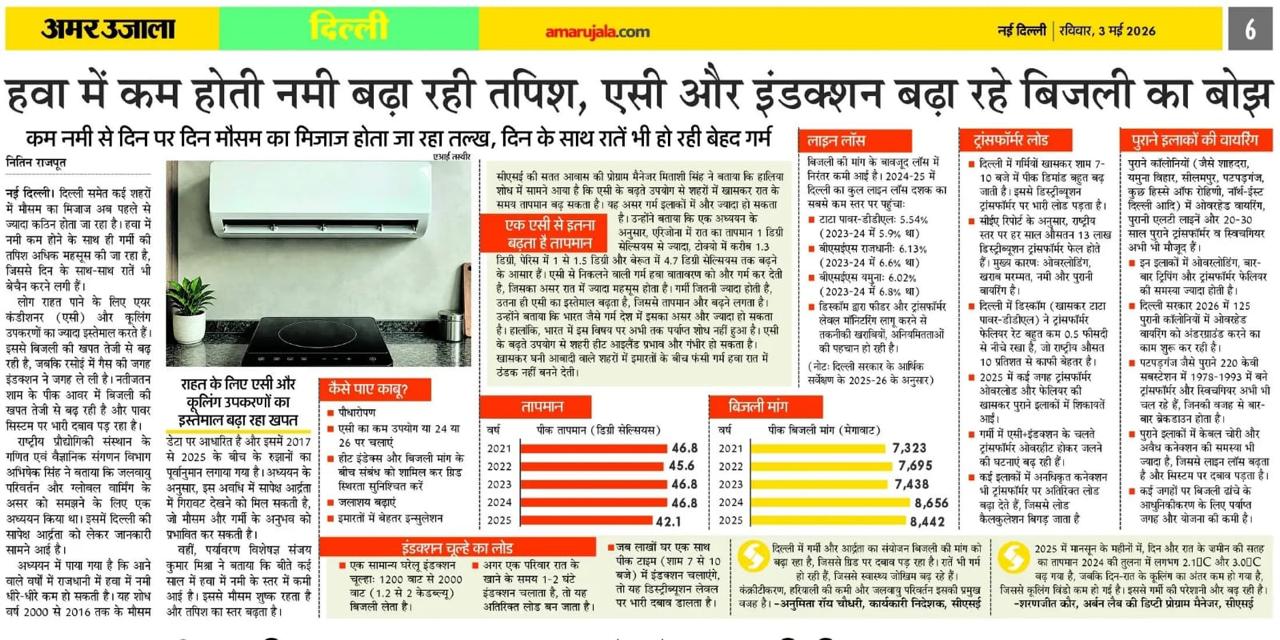
There used to be a maidan near the old bus stand in the city where I grew up. Children played there in the mornings, vegetable vendors set up in the evenings, and once a year, a small mela took place for three days, drawing the whole neighbourhood out. Now, the maidan has turned into a parking lot. The mela has moved elsewhere. This isn’t just nostalgia; it’s a well-documented trend that is growing in Indian cities. The privatisation of public spaces is not just a byproduct of urbanisation; in many cities, it’s part of the plan. The Green Space Number Nobody Talks About Most Indian cities offer less than 3 square meters of public green space per person, compared to the World Health Organisation’s suggestion of 9 square meters. The Centre for Science and Environment place the national urban average below 1.5 square meters. This gap between what cities supply and what a decent urban life needs is not evenly distributed. It closely follows class lines. Data from Pune in May 2024 showed that densely populated, low-income neighbourhoods reached surface temperatures of 69°C. In contrast, affluent areas with trees remained significantly cooler. This difference is not accidental. Wealthy neighbourhoods keep their trees and parks, while low-income areas are denser, greener in name only, and hotter as a result. The Air Conditioning Trap Air conditioner use has surged, which is understandable. Cities are getting hotter, outdoor spaces are disappearing, and for those who can afford it, staying indoors seems like the only choice. However, this solution comes with consequences. Air conditioners make rooms cooler by pushing heat outside. As more people depend on them, the streets heat up more, leading to an even greater need for indoor cooling. This creates a cycle of comfort for some while conditions worsen for others. In many low-income neighbourhoods, families live in cramped spaces with little ventilation, stuck between suffocating indoors and burning heat outside. The cooling experienced in other areas merely shifts to these regions. The heat is not reduced; it changes location from those who can escape it to those who cannot. Who Public Space Is Built For The master plan reveals who a city believes it is serving. In most Indian cities, this belief is clear. Roads and parking take up land that should have parks. Development projects get approved on green spaces. The URDPFI guidelines recommend 12-18% green cover in urban areas, yet almost no Indian city meets this. The Smart Cities Mission prioritises green and blue infrastructure on paper, but the gap between this goal and actual green cover in participating cities is vast. What gets developed, malls, gated communities, and commercial parks with restricted access, shares one common trait: it is space that can be monetised. The underlying belief of Indian urban planning is that public space is what remains after productive uses are accounted for. Parks are built in planned cities like Chandigarh and Gandhinagar because such developments are part of their initial designs. In cities where most of India’s urban poor live, parks are just what hasn’t been converted yet. Gated communities extend this idea into living spaces. The street in front of a gated complex is technically public, but it feels unwelcoming to anyone who isn’t a resident or guest. Informal businesses, the tea stall, the vegetable cart, the bicycle repair shop, are pushed out of these areas not by law but by design: speed bumps, security guards, no stopping signs, CCTV. Street vendors and kite flyers don’t appear in the design plans. What the Absence of Public Space Costs Lack of public space affects health. Urban heat islands lead to more deaths in dense areas with insufficient greenery. People in these regions also have less access to cooled indoor spaces to survive extreme heat. Heat-related hospitalisations and deaths are concentrated among the urban poor—those who are already far away from the little green public space that exists. It costs livelihoods, too. Street vendors, construction workers, gig delivery workers, and domestic workers rely on outdoor spaces for their work. When those spaces become hotter, more uncomfortable, and less accessible, their income and safety decline. The NDMA’s advisory in June 2025 recognised the need for shaded rest areas and water access for outdoor workers. This addressed the loss caused by insufficient public infrastructure, but it still isn’t legally binding for anyone. It also costs community life. The maidan and the park are places where people gather outside of private or commercial dealings. They are spots for protests and where communities connect across class lines. As these spaces shrink or become unreachable, the ability for public life that is not controlled by money diminishes alongside them. What Would Change This To address declining green space, make the URDPFI minimum green cover requirements mandatory through building permit processes and development approvals. Use AMRUT 2.0 funding to require measurable green space targets per ward, exposing differences between slum and suburban environments seen in satellite data. The FSI clawback mechanism, which some cities are beginning to test for affordable housing, could also apply to green spaces. Developers who exceed limits on green-zone conversions could be required to help fund the development of public parks in proportion to what they have taken away. Singapore has implemented this successfully through planning laws. Indian cities have the legal structures; what they lack is the political will to enforce them. A city’s true vitality lies in its public spaces, accessible to all. Change requires not only policies but a shift in who urban life is designed for. It is possible for maidans and melas to return, for streets to belong to everyone again. Until then, the struggle for inclusive cities continues, shaped by who has the right to gather, play, and connect, and who does not.

New Ganga Waters Treaty Cannot Reflect Geopolitics, It's About Climate Change

The Ganga is under stress, and the waters treaty needs more than renewal, ran the headline in Down To Earth magazine. Authored by Mahesh Ganguly, a teaching assistant and research fellow at IIT Bombay, it makes the simple argument that as India and Bangladesh prepare to begin negotiations on renewing the treaty, it cannot just be about geopolitics. The question is whether 'the Ganga can remain sustainable at all … given a rapidly shifting hydrological regime driven by climate change … intensified lean-season scarcity in some years and sudden high-flow episodes in others, driven by changing rainfall patterns and accelerating Himalayan glacier retreat … studies warn that by the 2050s the basin could witness substantial changes in river flow patterns.' Add to that pollutants along the Indian stretch of the Ganga. Rapid industrialisation has increased pollutant load due to the discharge of heavy metals such as cadmium, lead, chromium, nitrates and more, disrupting microbial processes that are essential for river health. Nearly 0.12 million tons of micropollutants are also being released annually. These weaken the mangrove ecosystem's ability to sequester CO2 — thereby deepening climate vulnerability in the delta. Ganguly suggests adopting the principles of the Helsinki Rules on the Uses of the Waters of International Rivers. This approach emphasises not only equitable and reasonable utilisation, but also cooperative governance, information sharing, and integrated river basin management. While India has often been reluctant to commit to broader multilateral water conventions, the author cites this as a position that deserves reconsideration. He also urges that the existing framework of measuring total water availability and integrated climate projections be included in the renewed agreement. This would include contingency measures such as drought protocols, flood coordination mechanisms, and joint basin-level cooperation on sedimentation and embankment planning. In order to tackle pollution, the Ganga Waters treaty must incorporate groundwater into joint assessments, coordinated monitoring, enforceable water-quality standards, shared telemetry stations, and investment in river restoration. Lastly, a mandatory periodic river clause is important to recalibrate allocations and governance mechanisms based on updated field data and statistical analysis on future water flow, along with the river's ecological stress indicators. Water must be treated as a shared security challenge and not a zero-sum national resource, for the benefit of both nations.

Envu India Backs National Conclave Uniting India's Public Health Leaders To Advance Urban Vector-Borne Disease Control

Envu India's support for this conclave is grounded in a conviction the company holds about the significant opportunity to advance mosquito control in Indian cities. Research by the Centre for Science and Environment (CSE), India, found that the standard municipal thermal fogging mixture is 95 per cent diesel and 5 per cent insecticide, with Delhi alone estimated to consume 4.5 lakh litres of diesel in a single fogging season, comparable to the daily fuel use of over 2,000 cars. The WHO's guidance on Integrated Vector Management recommends going further: addressing larvae and interrupting the breeding cycle for sustained, measurable impact, rather than relying on adult mosquito knockdown alone. Envu believes Indian cities are ready for that more complete approach, and offers water-based, WHO Pre-Qualified vector control formulation combined with safer larvicidal solutions that make it possible. Envu welcomes engagement from public health authorities, urban local bodies, and state vector control programmes on what that transition could mean in practice for their city or district.