Cse In News

गोरा रंग दो दिन में ढल जाएगा

मेरठ (ब्यूरो)। आपकी त्वचा से आपकी उम्र का पता नहीं चलता, दरअसल, इस तरह के विज्ञापन आपको टीवी और सोशल मीडिया पर दिखाई पड़ते हैं। ब्यूटी और कास्मेटिक प्रोडक्ट बनाने वाली कंपनियां स्किन को मुलायम और खूबसूरत के कई दावे करती हैं, लेकिन अब सीएसई यानि सेंटर साइंस एंड एनवायरमेंट्स पाल्यूशन मॉनिटरिंग लैब की एक रिसर्च में चौकाने वाली रिपोर्ट सामने आई है। इसके मुताबिक कई ब्यूटी प्रोडक्ट में इतने खतरनाक मैटेरियल पाए गए हैं, जिनसे कैंसर और स्किन से जुड़ी गंभीर बीमारियां तक हो सकती हैं। हालत यह है कि शहर के स्किन स्पेशलिस्ट के पास ऐसी बीमारियों से जुड़े कई केस सामने आ रहे हैं। सीएसई की रिपोर्ट में खुलासा गौरतलब है कि बीते नवंबर में सीएसई यानि सेंटर साइंस एंड एनवायरमेंट्स पाल्यूशन मॉनिटरिंग लैब में 133 ब्यूटी प्रोडक्ट की जांच की गई थी। इसमें चौंकाने वाले तथ्य सामने आए हैं। इस सीएसई संस्था में मेरठ के भी कई नामचीन डॉक्टर जुड़े हैं। सीएसई की प्रमुख सुनीता नारायण ने बताया कि जांच के दौरान कॉस्मेटिक प्रोडक्ट में हैवी मेटल जैसे आर्सेनिक, कैडमियम, लेड, मरकरी, निकेल आदि मिले हैं। अगर ये मेटल शरीर से लंबे समय तक टच में रहें, तो कैंसर और त्वचा संबंधी कई बीमारियां भी हो सकती हैं। हानिकारक तत्व पाए गए इस बाबत कॉस्मेटिकोलॉजिस्ट डॉ। रचना पंडित ने बताया कि जांच में पाया गया है कि कई ब्यूटी प्रोडक्ट में हानिकारक तत्व मिले हैं। ऐसे ब्यूटी प्रोडक्ट को यूज करने से बचना चाहिए। वहीं, स्किन स्पेशलिस्ट डॉ। अर्चना जैन ने बताया कि इन दिनों 28 से 35 आयुवर्ग के सबसे ज्यादा मरीज आ रहे हैं। उन्हें स्किन से जुड़ी गंभीर समस्याएं हैं। बीते छह माह में करीब 200 से अधिक केस सामने आए हैं, जिन्हें स्किन से जुड़ी समस्याएं हैं। ऐसे में हम उन्हें हर्बल प्रोडक्ट यूज करने की सलाह देते हैं। मॉइस्चराइजर भी हानिकारक ज्यादातर कंपनियों के मॉइस्चराइजर में मौजूद हानिकारक केमिकल त्वचा से नमी छीन लेते हैं। वैसे तो त्वचा को नमी देने और सूर्य की हानिकारक किरणों से सुरक्षा देने के लिए मॉइस्चराइजर का यूज करते हैं। लेकिन ये ही स्किन पर गलत प्रभाव डाल रहे हैं। रेटिनॉल से नुकसान रेटिनॉल जैसे रसायन एंटी एजिंग क्रीम में यूज होते हैं। रेटिनॉल से त्वचा सूर्य प्रकाश के प्रति ज्यादा संवेदनशील हो जाती है। इससे त्वचा की परतें हट भी सकती हैं। प्रेग्नेंट महिलाओं को रेटिनॉल से बने प्रोडक्ट्स से बचना चाहिए। ब्यूटी प्रोडक्ट लेने से पहले उस पर लिखे निर्देश को पढ़ें। शैंपू से हो सकता है सिरदर्द हाइड्रोक्विनॉन रसायन कैंसर कारक होता है। शैंपू में यूज सोडियम लॉरिल सल्फेट त्वचा में खुजली कर सकता है। इससे सिरदर्द हो सकता है। ट्राइइथेनोलामाइन नामक रसायन कुछ स्किन केयर प्रोडक्ट में पीएच वैल्यू को ठीक रखने के लिए मिलाया जाता है। इस केमिकल से एलर्जी, त्वचा के रूखेपन आदि की समस्या हो सकती है। हेयर कलर भी नुकसानदायक भले ही रंग-बिरंगे बाल आपकी पर्सनैलिटी को निखारते हों, लेकिन रिसर्च में पता चला है कि कुछ कंपनियां हेयर कलर में टार और लेड जैसे केमिकल मिलाती हैं। इससे बाल झडऩे, खुजली, जलन जैसी समस्याएं हो सकती हैं। वहीं लेड से मस्तिष्क की तकलीफ बढ़ती है। वैक्सिंग भी देगी नुकसान इसी तरह वैक्सिंग और ब्लीच क्रीम भी है। इसमें भारी कुछ ऐसे रसायन इस्तेमाल किए जा रहे हैं, जिनका सेहत पर बुरा असर होता है। ब्लीच क्रीम में इस्तेमाल रसायन आपकी त्वचा में रैशेस, जलन और खुश्की जैसे लक्षण पैदा कर सकते हैं। खुशबू में भी केमिकल कई तरह की फ्रग्रेंस जैसे परफ्यूम, डियो, एयर फ्रेशनर आदि में भी हानिकारक केमिकल मिलाए जाते हैं। टेलकम पाउडर में भी हानिकारक मैटेरियल यूज होते हैं। इस केमिकल से शरीर में एलर्जी और फेफड़ों में इंफेक्शन हो सकता है। काजल, सुरमा और लिपस्टिक में भी खतरनाक केमिकल मिले हैं। होंठ की नमी गायब लिपस्टिक का केमिकल भी आपके होंठ से नमी को चुरा सकता है। इसलिए लिपस्टिक लगाने से पहले लिप बाम का प्रयोग करें। ज्यादा जरूरी न हो, तो लिपस्टिक लगाने से बचें। बैन के बावजूद मरकरी मिली रिपोर्ट के अनुसार अलग-अलग कंपनियों के कॉस्मेटिक्स के नमूनों की जांच की गई। क्रीम के 14 नमूनों में 0.10 से 1.97 पीपीएम स्तर तक मरकरी मिली, जबकि किसी भी क्रीम में मरकरी के इस्तेमाल पर प्रतिबंध है। 15 बड़ी कंपनियों की लिपस्टिक में भी क्रोमियम की मात्रा अधिक मिली। वहीं हेयर कलर प्रोडक्ट में टार की अधिक मात्रा पाई गई। फेस पाउडर और ऐसे अन्य कॉस्मेटिक प्रोडक्ट्स में भी निकेल की मात्रा आवश्यकता से अधिक मिली है। कॉस्मेटिक प्रोडक्ट में यूज केमिकल का प्रभाव भले ही आपको तुरंत न दिखें, लेकिन 30-40 की उम्र के आते ही इसका असर दिखता है। इसके उलट ऑर्गेनिक ब्यूटी प्रोडक्ट आपकी त्वचा पर कोई प्रभाव नहीं डालते हैं। इसमें जरूरी विटामिन्स, मिनरल्स और तेल आदि होते हैं, जो त्वचा को पोषण देने के साथ उसे बैलेंस रखते हैं। डॉ। अर्चना जैन, स्किन स्पेशलिस्ट शहद, हल्दी, अलसी, बेसन, एलोवेरा, केसर, नीम, जैसी चीजों का इस्तेेमाल करें। शहद में ऐसी खूबी है कि यह त्वचा को सूर्य की तेज किरणों से बचाने के साथ त्वचा को ताजा रखता है। शहद एक प्राकृतिक एंटी-ऑक्सीडेंट है। इस वजह से यह त्वचा को इंफेक्शन से भी बचाता है। त्वचा को सूखेपन से बचाता है।
63% Delhi-NCR drivers clueless about this crucial document, risk Rs 10k fine: Report

In the Delhi-NCR region, where air pollution continues to be a persistent and escalating crisis every year, a recent report by Park+ Research Labs has highlighted a concerning trend. The survey, which included responses from 5,200 car owners across the region, reveals that a staggering 63 percent of respondents are unaware of the status of their Pollution Under Control (PUC) certificate - a mandatory document under the Motor Vehicles Act. Adding to this worrisome statistic, 11 percent of car owners confessed to not knowing what a PUC certificate is or where to renew it, while 27 percent admitted indifference when asked about the role of non-PUC-certified vehicles in exacerbating pollution levels. This lack of awareness is especially alarming in a region where vehicular emissions contribute to 40 percent of PM2.5 levels and an overwhelming 81 percent of nitrogen oxides (NOx), as per a study by the Centre for Science and Environment (CSE). PUC: The price of neglect For vehicle owners in Delhi, the consequences of neglecting PUC certification extend beyond environmental damage. Non-compliance can result in a hefty fine of Rs 10,000, with challans processed directly through the courts. Notifications about violations are sent via mobile phones. But the issue isn’t just about fines, it’s about accountability. With Delhi NCR’s AQI frequently crossing hazardous levels close to winters every year, the role of individual car owners in mitigating pollution has never been more critical. With Delhi NCR’s 3 crore residents grappling with winter smog and its health repercussions, it’s important that vehicle owners must shoulder their share of responsibility. Regular maintenance and compliance with PUC norms are small yet impactful steps that can collectively make a significant difference. Stay tuned to TOI Auto for latest updates on the automotive sector and do follow us on our social media handles on Facebook, Instagram and X.

दिल्ली-NCR के 63% ड्राइवरों को इस अहम दस्तावेज के बारे में पता ही नहीं, लग सकता है ₹10,000 का जुर्माना

दिल्ली-एनसीआर क्षेत्र में, जहां वायु प्रदूषण हर साल एक लगातार बढ़ती हुई समस्या बनी हुई है, एक हालिया रिपोर्ट ने एक चिंताजनक ट्रेंड को जाहिर किया है। पार्क+ रिसर्च लैब्स की सर्वेक्षण, जिसमें पूरे क्षेत्र के 5,200 कार मालिकों के जवाब शामिल थे, से पता चलता है कि 63 प्रतिशत उत्तरदाताओं को अपने प्रदूषण नियंत्रण (PUC) प्रमाणपत्र की स्थिति के बारे में पता नहीं है। जोकिमोटर वाहन अधिनियम के तहत एक अनिवार्य दस्तावेज है। इस चिंताजनक आंकड़े में यह भी जोड़ा गया कि 11 प्रतिशत कार मालिकों ने यह भी नहीं पता था कि पीयूसी प्रमाणपत्र क्या होता है या इसे कहां रिन्यू किया जाता है। जबकि 27 प्रतिशत ने प्रदूषण के स्तर को बढ़ाने में गैर-पीयूसी-प्रमाणित वाहनों की भूमिका के बारे में पूछे जाने पर उदासीनता स्वीकार की। सेंटर फॉर साइंस एंड एनवायरनमेंट (सीएसई) के एक अध्ययन के अनुसार, जागरूकता की यह कमी विशेष रूप से उस क्षेत्र में चिंताजनक है जहां वाहनों से निकलने वाले उत्सर्जन का पीएम 2.5 के स्तर में 40 प्रतिशत और नाइट्रोजन ऑक्साइड (एनओएक्स) में 81 प्रतिशत का योगदान है। पीयूसी के अनदेखी की कीमत दिल्ली में वाहन मालिकों के लिए, पीयूसी प्रमाणन की अनदेखी के नतीजे पर्यावरण को होने वाले नुकसान से भी ज्यादा गंभीर हैं। अनुपालन न करने पर 10,000 रुपये का भारी जुर्माना लग सकता है। जिसमें चालान सीधे अदालतों के जरिए संसाधित किए जा सकते हैं। उल्लंघन के बारे में सूचना मोबाइल फोन के जरिए भेजी जाती है।

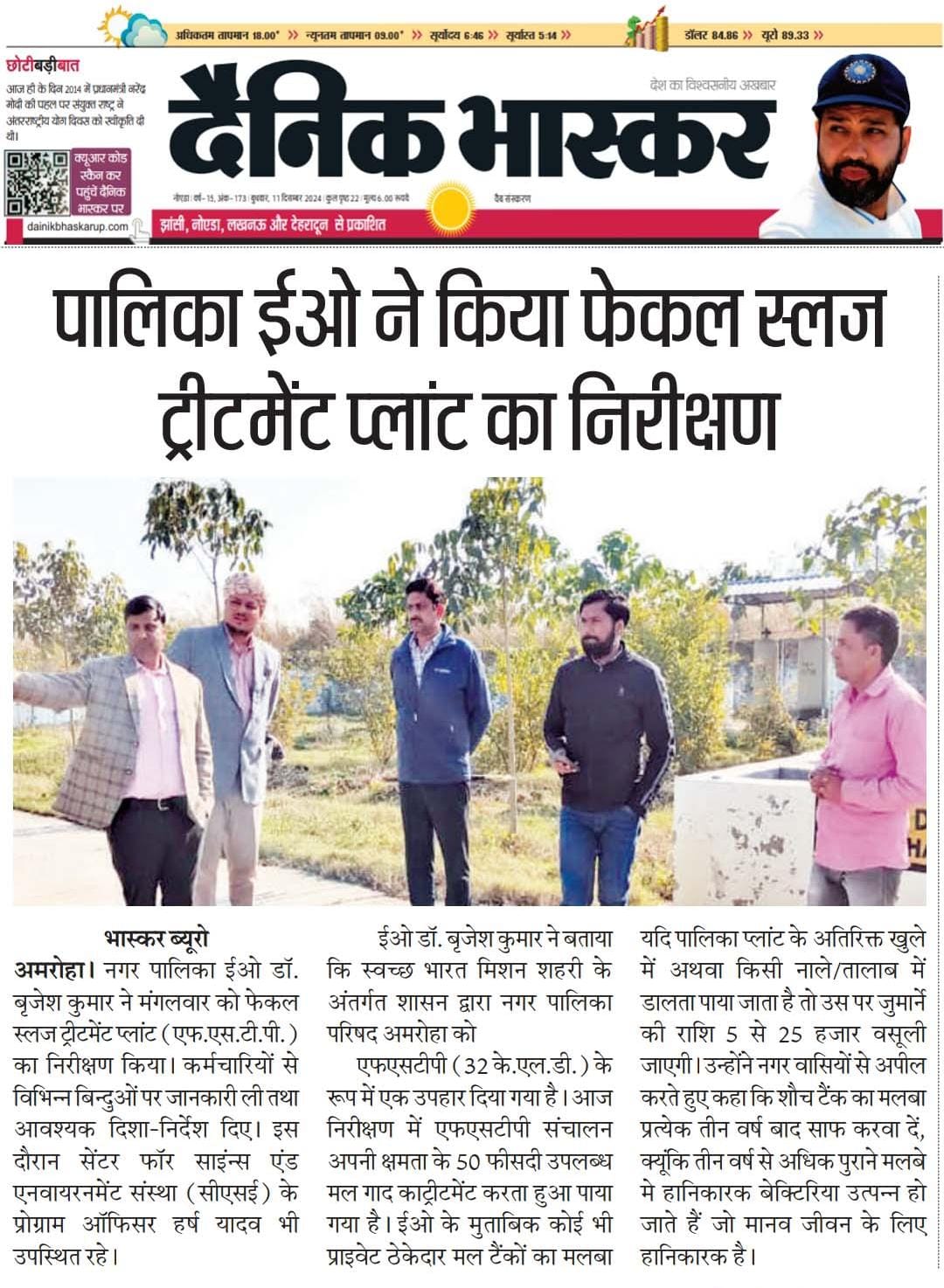
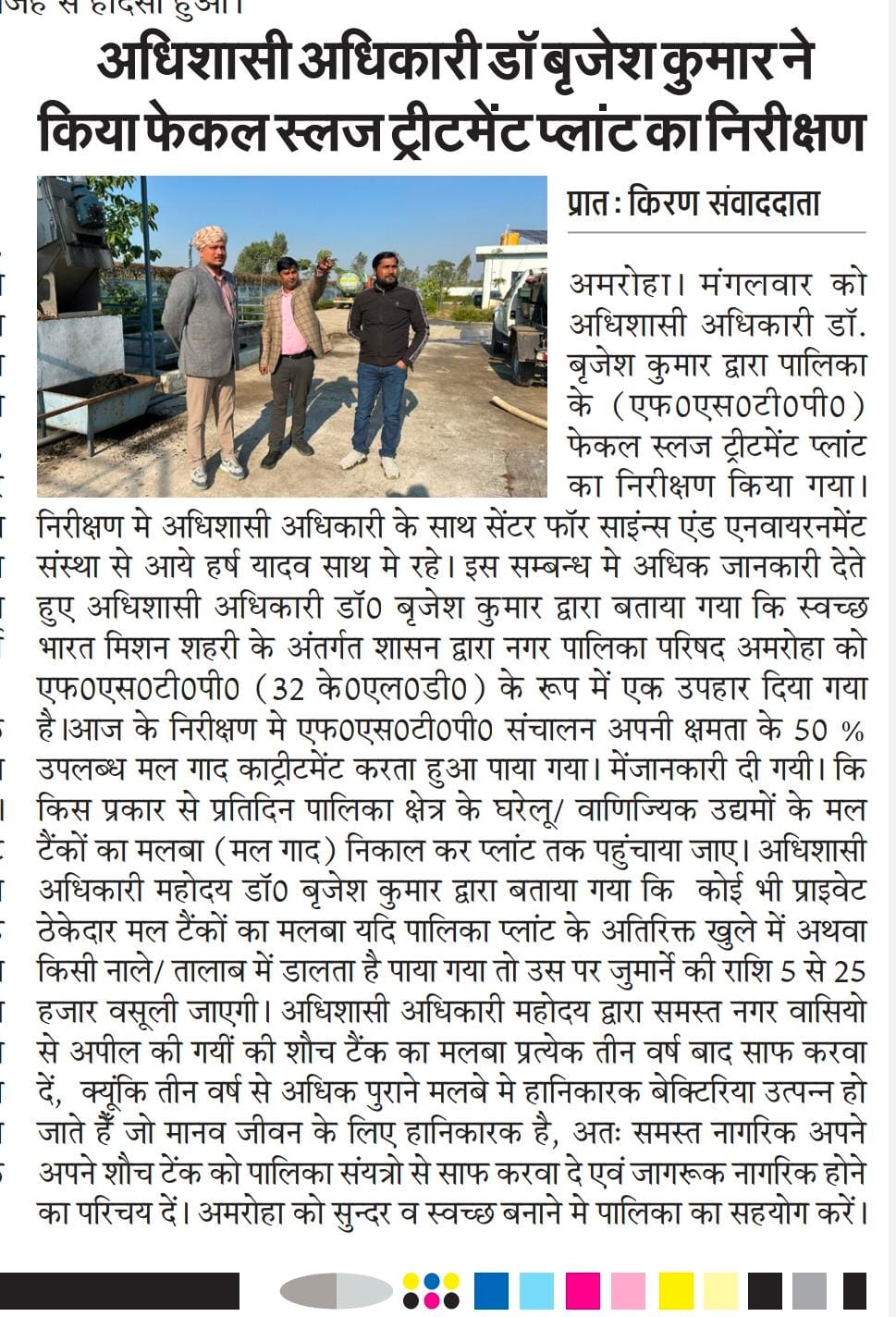
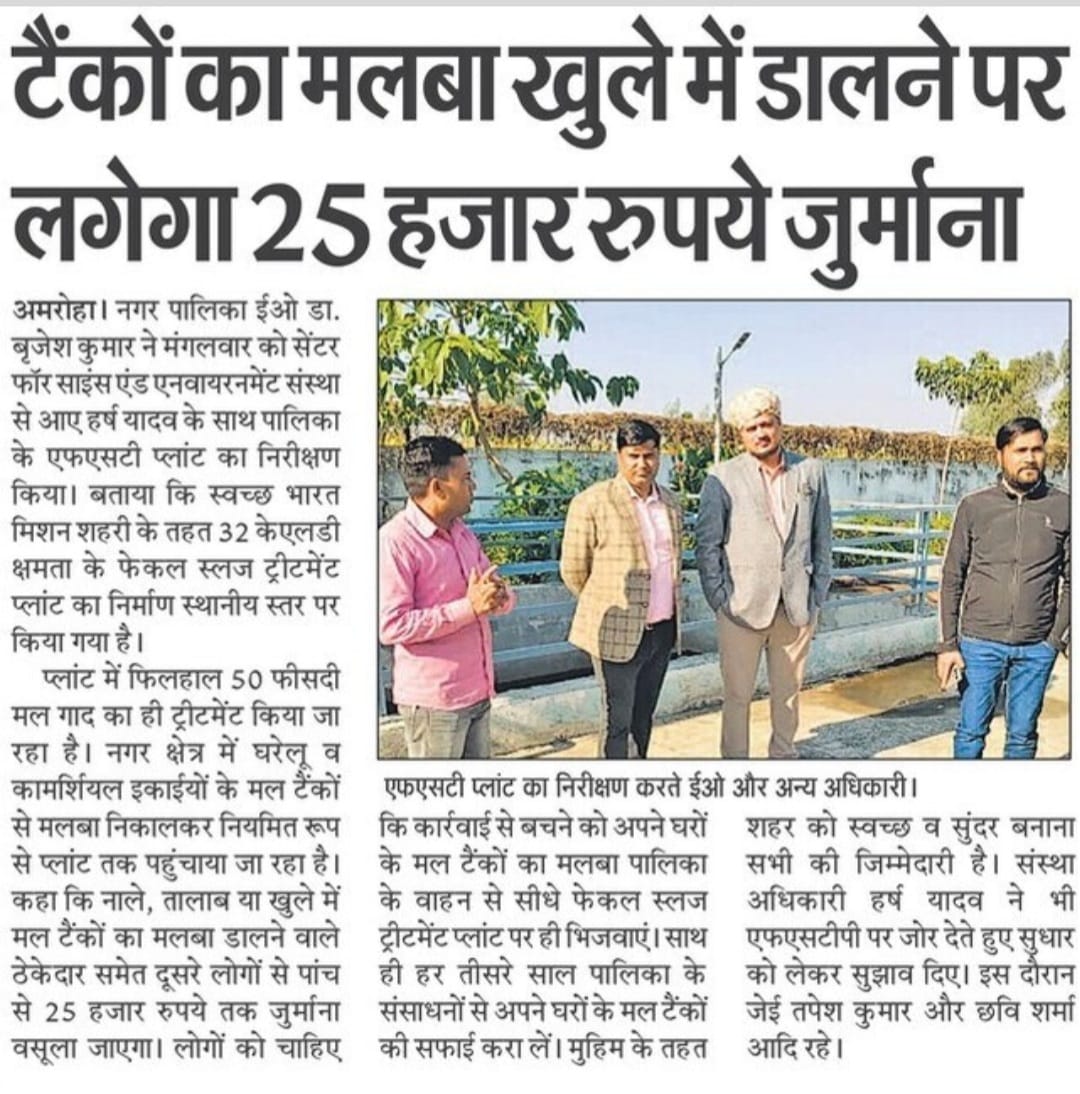
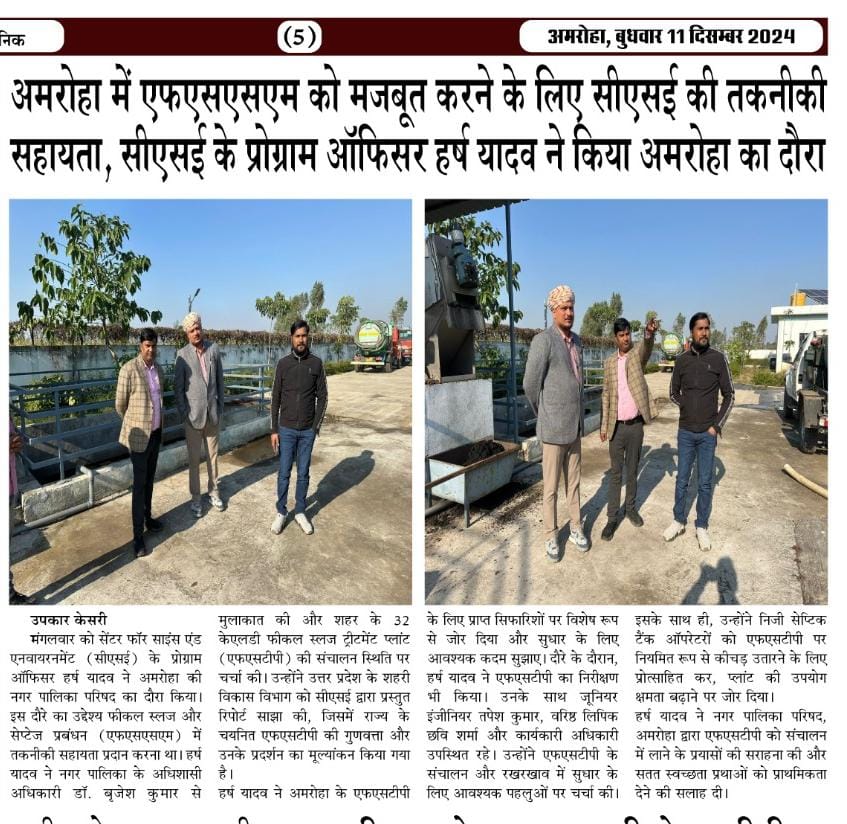
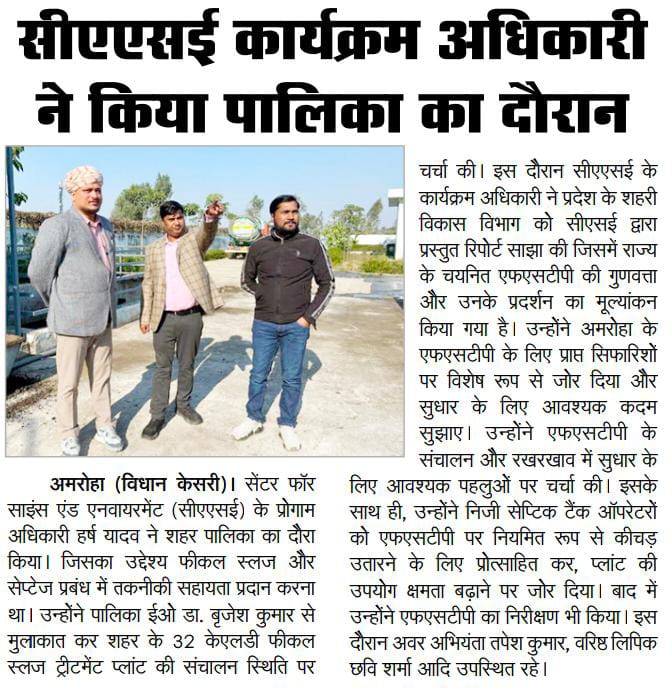
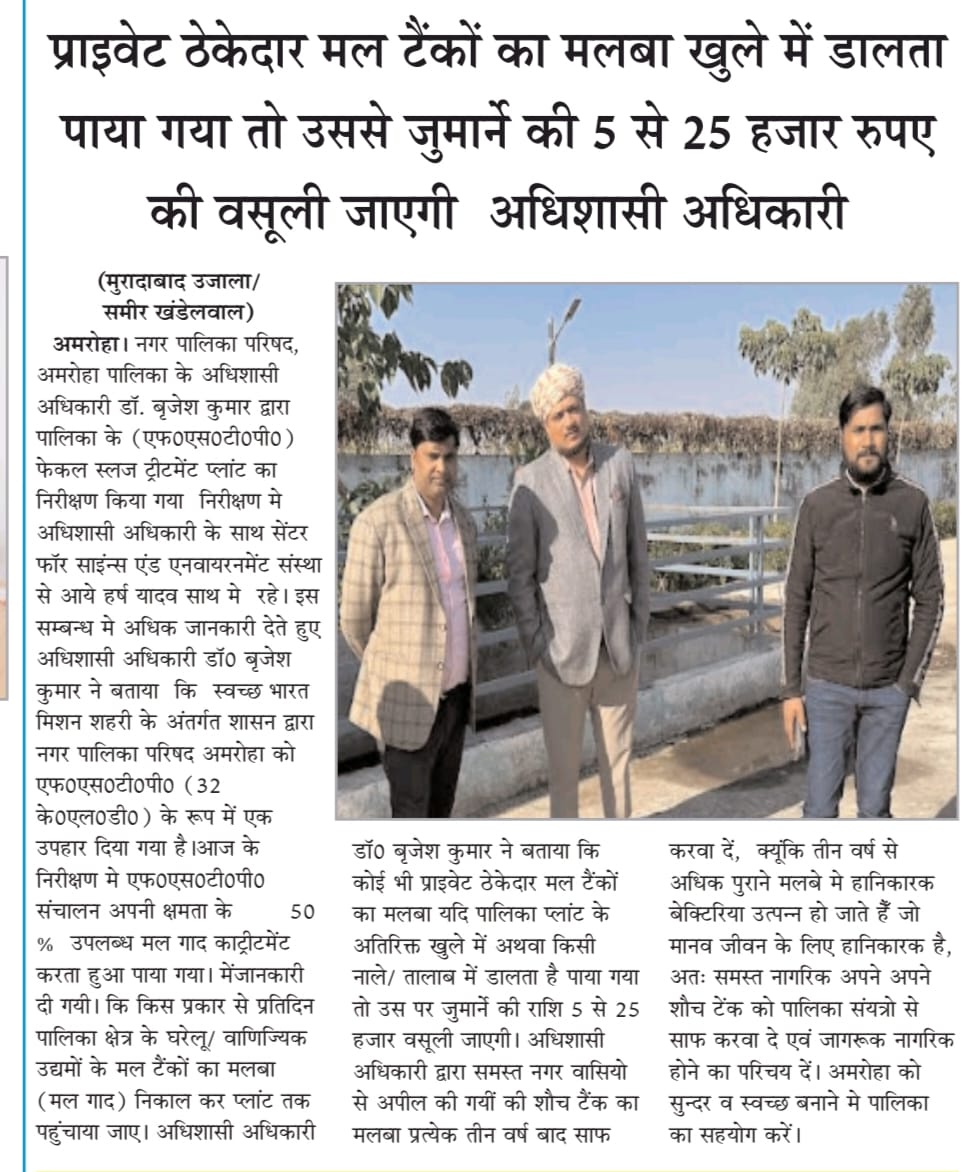
टैंकों का मलबा खुले में डालने पर लगेगा 25 हजार जुर्माना

नगर पालिका ईओ डा. बृजेश कुमार ने मंगलवार को सेंटर फॉर साइंस एंड एनवायरनमेंट संस्था से आए हर्ष यादव के साथ पालिका के एफएसटी प्लांट का निरीक्षण किया

President Murmu Dubs Climate Change As a New Threat to Human Rights

President Droupadi Murmu on Tuesday (December 10, 2024) while speaking at an event hosted by the National Human Rights Commission (NHRC) in New Delhi said cyber crimes and climate change have emerged as "new threats to human rights". Speaking on the occasion of Human Rights Day, observed on December 10 each year to commemorate the Universal Declaration of Human Rights (UDHR) adopted and proclaimed by the United Nations General Assembly in 1948, President Murmu said that climate change forces us to review the human rights situation at a global level. "As we progress into the future, we are confronted with emerging challenges. Cyber crimes and climate change are new threats to human rights," Murmu said. Human rights discourse is centered around "human agency" as the violator is assumed to be a human being who has a "range of human emotions such as compassion and guilt", Murmu said. However, with artificial intelligence (AI) entering our lives, the culprit could be "a non-human but intelligent agent", she added. Murmu also said that while being transformative, the digital era had brought with it complex issues such as cyber bullying, deepfake, privacy concerns and spread of misinformation. "These challenges underscore the importance of fostering a safe, secure and equitable digital environment that protect the rights and dignity of every individual," the President said. Talking about AI, she mentioned, "AI has now entered our day-to-day life, solving many problems, and creating several new ones too." Protection from Climate Change a Right In April 2021, the Supreme Court of India, delivered a landmark judgement recognising the right to be free against the adverse effects of climate change as a fundamental right, to be included under Article 14 and Article 21 of the Indian Constitution. 2024 has been the hottest year till now and the world is set to witness 3 degrees Celsius warming by the end of the century compared to pre-industrial levels in 1990. Heatwaves, uneven rainfalls, floods and cyclones have been the highlights of the year in India, in addition to record air quality index levels in the capital city. According to a recent report by the Centre for Science and Environment (CSE) and Down To Earth, India experienced extreme weather events on 255 out of 274 days in the first nine months of 2024, increasing from 235 days in 2023 and 241 days in 2022. The study—that analysed occurrence of seven extreme weather events including lightning and storms, heavy rains, floods and landslides, heatwaves, coldwaves and cold days, cloudbursts, cyclones and snowfall—suggested that 3,228 people lost their lives in 2024 due to such events. The tally was 2,755 in 2022. Advertisement Considering the rising threats of climate change and its related effects, the 2021 judgement by the Supreme Court was delivered amid a growing consensus among nations regarding the impacts of climate change. During the verdict, the apex court noted that that the consequences of climate change are an infringement of the fundamental rights to life and personal liberty enshrined in the Constitution. The Landmark Case that Led to a Landmark Verdict The Supreme Court's judgement, dated 29 April 2021, was regarding the protection of two indigenous avian species, the great Indian bustard and the lesser Florican. The petition was originally filed in 2019 by MK Ranjitsinh Jhala, former chairman of the Wildlife Trust of India, seeking urgent action to protect endangered species and their habitat. Advertisement "Pollution, climate change, predators and competition with invasive species are among the many threats that exacerbate the challenges faced by these vulnerable species," noted the bench of judges led by Former Chief Justice of India DY Chandrachud. According to WWF, the great Indian bustard is confined mostly to Rajasthan and Gujarat in India. However, a small population can be found in Maharashtra, Karnataka and Andhra Pradesh. Bustards generally favour flat open landscapes with minimal visual obstruction and disturbance, therefore adapt well in grasslands. The apex court also noted how expansion of human population and accompanying activities have led to the fragmentation of the great Indian bustard's habitat. "The expansion of infrastructure such as roads, mining and farming activities have cumulatively contributed to the dangers faced by the avian species," it said. Advertisement The Supreme Court also formed a committee to determine the scope and feasibility of setting up overhead and underground electric lines in priority areas, as highlighted in the reports shared by the petitioner. It also passed directions regarding the panel's role in recommending measures ensuring the long-term survival of the great Indian bustard in these priority areas, and facilitating an increase in its population. Measures aimed at replenishing the population of the indigenous bird species could include habitat restoration, anti-poaching initiatives and community engagement programs, stated the court.

Portraits of Persistence: Eklavya Prasad captures the resilience of flood-affected communities in North Bihar

The Visual Kathã series, Portraits of Persistence: Enduring Communities of North Bihar, was inaugurated on December 6at the Art Gallery, India International Centre Annexe. The exhibition was formally opened by Sunita Narain, Director General of the Centre for Science and Environment, amidst an engaging gathering of art enthusiasts, social development professionals, environmentally conscious individuals, and media personnel.

A tale of obligations diluted

“At COP 29, we lost an opportunity -- without a meaningful agreement on climate finance; both in terms of quantity and quality, large parts of the world that would have had the chance to rein-vent growth to make it low-carbon intensive, will not be able to do so. What’s worse, this comes at a time when these countries are even more vulnerable due to climate change impacts,” said Sunita Narain, director general, Centre for Science and Environment (CSE), speaking at an online debriefing on the Baku conference’s results. CSE organised the debriefing – titled ‘Did the finance COP deliver?’ – today. The 29th Conference of Parties to the United Nations Framework Convention on Climate Change ended November 24 in Baku, Azerbaijan. The headline issue of the conference was the New Collective Quanti-fied Goal (NCQG) on climate finance. The NCQG is the successor to the US $100 billion per year com-mitment made by developed countries in 2009 to support climate action in developing countries by 2020. Says Avantika Goswami, programme manager, Climate Change, CSE: “An ambitious NCQG out-come at COP 29 would have been critical for supporting the increasing climate needs of the Global South. So did the finance COP deliver? The answer has to be a most emphatic ‘no’.”

Future of Climate Change Negotiations: Key Takeaways from COP29 and the Road to COP33

A high-level roundtable discussion, “Future of Climate Change Negotiations: Lessons from COP29,” was held in New Delhi to discuss the outcomes of COP29, which took place in Baku, Azerbaijan. The event, organized by The Energy and Resources Institute (TERI), brought together policymakers, experts, and industry leaders to address the pressing climate issues faced by the Global South, with a focus on climate finance, adaptation, and the ongoing energy transition. Insights on COP29 Outcomes and the Global South’s Climate Strategy Mr. RR Rashmi, Distinguished Fellow at TERI, kicked off the session by summarizing key takeaways from COP29 and highlighting the shift in negotiation formats over the years. He noted that many countries of the Global South expressed disappointment over the low ambition of climate finance outcomes in Baku. “The developed world is unwilling to shoulder its responsibility of providing commensurate finance to support developing countries’ climate actions,” Rashmi said, stressing the importance of holding developed nations accountable and building stronger solidarity among the Global South. Dr. Manish Kumar Shrivastava, Associate Director at TERI, echoed similar concerns, emphasizing the political dynamics and principles at the core of COP negotiations. He warned that the increasing burden on developing countries was a significant worry and stressed the need for greater unity among these nations to protect their interests in future climate negotiations. Preparing India for COP33 in 2028 The discussions turned to the stark divide between developed and developing nations in addressing climate challenges. Ambassador Manjeev Puri, Distinguished Fellow at TERI, praised India’s leadership in representing the Global South’s concerns at COP29. He noted that, despite some progress on carbon markets and finance, much work remains for future COPs. “India showcased the voice of developing countries,” Puri said. Sanjay Seth, Senior Director at TERI, highlighted India’s leading role in the built environment, particularly in sectors like cement and concrete, where cleaner processes have gained traction. He emphasized that building resilience must remain an ongoing effort for achieving long-term success. The Role of Adaptation and Philanthropy in the Global Climate Agenda Ms. Suruchi Bhadwal, Director at TERI, discussed the challenges surrounding adaptation, stating that the focus on developing country processes risks duplicating efforts. She called for a global approach to adaptation that connects institutions and tracks progress through standardized indicators. Ms. Manavi Bhardwaj, representing the India Climate Collaborative, pointed out that philanthropy could play a pivotal role in fostering solidarity within the Global South and in facilitating dialogues between various stakeholders ahead of COP conferences. Ms. Avantika Goswami, Programme Manager at the Centre for Science and Environment (CSE), voiced concerns about the shifting of responsibilities from developed nations. She questioned the commitment of the private sector to contribute to climate finance and stressed the need for stronger coalitions among the Global South in a divided world. India’s Preparations for COP28 and Beyond Dr. Ritu Mathur, Director at TERI, urged India to avoid getting bogged down in debates on infrastructure and fossil fuels and instead focus on a careful assessment of sectors for achieving a net-zero pathway. She called for a clear distinction between economic and social impacts. Dr. Prabhat Upadhyaya, representing the African Climate Foundation, reminded participants of the urgency to refocus efforts on what must be done in the coming years, particularly with the GST coinciding with US elections. “India must build a narrative and partnerships to push the developing country agenda at COP33,” he said.