Cse In News

Public Transport vs. Private Vehicles: A Cost and Accessibility Analysis

कोलकाता में सार्वजनिक परिवहन का औसतन 1.47 रुपये प्रति किमी किराया है और अपनी गाड़ी से हर किमी पर औसतन तीन रुपये का ईंधन खर्च होता है। लेकिन, पब्लिक ट्रांसपोर्ट पर आप रोजाना अपनी आमदनी का 5.6% हिस्सा खर्च करते हैं, जबकि अपनी गाड़ी से सिर्फ 3.5%।राष्ट्रीय सांख्यिकी कार्यालय ( NSO ) ने पिछले दिनों पहले राष्ट्रीय घरेलू यात्रा सर्वेक्षण (NHTS) के आंकड़े जारी किए। पिछले साल जुलाई से इस साल जून के बीच करीब 4.9 लाख परिवारों पर किए गए सर्वे में पाया गया कि रात की यात्रा के लिए तीन चौथाई लोग बस या ट्रेन का सहारा लेते हैं। वहीं, 42.6% लोग रोजाना दोपहिया से काम पर जाते हैं। शहरों में यह औसत 52.3 है। वहीं, हर रोज 9.2% लोग बस से दफ्तर जाते हैं और तकरीबन 5%, मेट्रो, लोकल ट्रेन या ट्राम का उपयोग करते हैं।सर्वे में काम पर जाने वाले महिला और पुरुषों के बीच बड़ा अंतर देखा गया। 61.9% पुरुष एक किमी से ज्यादा दूर काम करने जाते हैं, जबकि 41.9% महिलाएं ही ऐसा करती हैं। शहरों में 21.7% महिलाएं दफ्तर जाने के लिए बसों पर निर्भर हैं, जबकि 57% पुरुष बाइक स्कूटी से सफर करते हैं। आंकड़े सेंटर फॉर साइंस एंड एनवायरनमेंट (CSE) के भारतीय शहरों के आकलन के अनुरूप हैं। CSE के मुताबिक, शहरों में पब्लिक ट्रांसपोर्ट की 25% हिस्सेदारी है, जबकि निजी वाहनों का हिस्सा है 35-45% 1 स्थानीय स्तर पर अध्ययन से इन्हें बेहतर तरीके से समझा जा सकता है।कोलकाता और दिल्ली में एक स्टडी हुई। इसमें यात्रा के साधन, किराया, इंतजार और इंटरचेंज में लगने वाला वक्त शामिल था। पता चला कि पब्लिक ट्रांसपोर्ट सिर्फ किराये के लिहाज से सस्ता है। कोलकाता में सार्वजनिक परिवहन का औसतन 1.47 रुपये प्रति किमी किराया है और अपनी गाड़ी से हर किमी पर औसतन तीन रुपये का ईंधन खर्च होता है। लेकिन, पब्लिक ट्रांसपोर्ट पर आप रोजाना अपनी आमदनी का 5.6% हिस्सा खर्च करते हैं, जबकि अपनी गाड़ी से सिर्फ 3.5%।CSE के सर्वे में दिल्ली के 94% बस और 63% मेट्रो यात्रियों ने बताया कि यह सस्ता है, इसलिए इससे यात्रा करते हैं। यह दर्शाता है कि कई लोग पसंद के बजाय मजबूरी में सार्वजनिक परिवहन का सहारा लेते हैं। साउथ दिल्ली के यात्रियों को पैदल चलने और गाड़ियों का इंतजार करने से समस्या होती है।भारत में हर एक लाख लोगों पर सिर्फ 10 बसें हैं। 2014 से 2019 के बीच 19 बड़े राज्य परिवहन उपक्रमों के बेड़े में सिर्फ 4.6% बसें बढ़ीं और यात्रियों की संख्या 5.8% कम हो गई। बसें कम होने से लोगों को लंबा इंतजार करना पड़ता है। दिल्ली में सुबह के वक्त बसों की रफ्तार 41% तक घट जाती है। नतीजतन, लोग निजी गाड़ियों या शेयरिंग ऑटो का सहारा लेते हैं, जिससे भीड़ और बढ़ जाती है।रेलवे भी पहुंच की समस्या से दो-चार हो रहा है। दिल्ली की सिर्फ 9.85% आबादी मेट्रो स्टेशन से 400 मीटर की दूरी पर रहती है। जमीन से जुड़ी समस्याएं भी हैं। पूर्वी किदवई नगर में नए गेटेड रीडिवेलपमेंट के बाद मेट्रो स्टेशन तक 1.5 किमी का绕ने वाला रास्ता बना, जबकि पहले सिर्फ 400 मीटर का पैदल रास्ता था।
India Carbon Credit Market 2026-2034 - USD 33.69 Billion to USD 405.47 Billion Outlook

Down To Earth and the Centre for Science and Environment (DTE-CSE) revealed that by June 2023, India had 860 registered projects, with a total of 1,451 projects under different stages of evaluation across the two leading carbon crediting programs, Verra and Gold Standard. Verra's VM0042, VM0044, and VM0047 methodologies, paired with the Indian Council of Agricultural Research's pilot programmes, are channelling smallholder participation into agroforestry, improved land management, and biochar projects. Through collaboration with NDDB and Sustain Plus Energy Foundation's Manure Management Program, over 1,000 dairy farmers across nine locations in seven states are benefiting financially from sustainable practices, receiving payments that enhance their incomes while supporting India's transition to net zero.

First Principles First: Need to Calibrate Data Access for Disaster Resilience

Every year on October 13, the United Nations marks the International Day for Disaster Risk Reduction, a date the General Assembly fixed in 2009 after first setting aside a day for natural disaster reduction in 1989. The aim remains the same: to communicate the urgency of disaster resilience at all levels, from farmers and fisherman to first-responders, to policymakers. Since the Sendai Framework 2015, the day has also stressed local capacity development, community participation, and the developing climate and disaster resilience. That second concern puts infrastructure at the center of the conversation, because roads, power lines, water systems and homes are what disasters damage first and what communities spend years rebuilding. As per the latest UNDDR (United Nations Office for Disaster Risk Reduction) report, direct asset damage by disasters costs $202 billion annually, while cascading damages including ecosphere destruction, supply chain breakdowns, and insurance surpass $2 trillion each year. Over a 50-year period (1970–2021), weather, climate, and water hazards generated a staggering $4.3 trillion in economic losses globally. The toll in India has been colossal too. Cyclone Amphan, which struck West Bengal and Odisha in 2020, killed 98 people and caused $13.5 billion in damage. Satellites tracked the storm across the Bay of Bengal, yet the damage was decided on land, where its winds tore roofs off houses. Geospatial is a non-negotiable for disaster-resilient infra anywhere across the globe. This year’s UN theme, “Resilience Starts at Home,” carries the same argument down to the household, and UNDRR puts it plainly by saying that no one should have to choose between an affordable home and a safe one. It was also the question before the National Colloquium on Disaster Risk Reduction, held on 13 October at Suhora Technologies and organised by the IEEE Local Group – Data Science for Climate Risk Management, which Geospatial World attended. One speaker was direct about where plans succeed or fail. “No DRR&R plan, policy, guideline, strategy or framework can be fully successful if it does not involve communities and households for grassroot level acceptance, adaptation, action and practice into regular life style and lives, livelihood in living places of people,” said Prof. Surya Parkash Gupta, Founder Chairperson, Community Based Disaster Risk Management Society, India. Where the Risk Is Mapped Prof. Gupta’s presentation went on to show why households matter so much in India, noting that 85% of the country’s land area is vulnerable to natural hazards, that 65% is prone to earthquakes, 12% to floods and 8% to cyclones, and that 70% of cultivable land is prone to drought. He reiterated that the first 24 to 72 hours after a major disaster depend almost entirely on the people nearby, since formal responders have not yet arrived. Figures like these rest on maps of hazard and exposure, and satellites keep those maps current by showing where land is steep, where rivers spread and where homes are crowding into both. ISRO’s Landslide Atlas of India, published in 2023, shows how this works, using remote sensing data to map and monitor landslides. The same view matters for housing, because the Midterm Review of the Sendai Framework, cited in the presentation, found that many countries still struggle to enforce land-use and building rules in hazard-prone areas and to bring households into decisions about risk. Informal settlements are often left out of planning altogether, and the effects of a disaster fall hardest on women, children, older people, people with disabilities and low-income families. Fine-scale imagery that shows where such neighbourhoods have grown gives planners a way to bring them back into view. A Collective Duty The presentation described the responsibility as shared, with governments enforcing planning rules and building codes, developers and insurers telling buyers about known hazards, and households learning their local risks and keeping a plan and 72 hours of water and food. Early warning is where these duties meet. The UN’s Early Warnings for All initiative, launched in 2022, aims to protect everyone on Earth from hazardous weather, water or climate events by the end of 2027, and two of its four pillars, risk knowledge led by UNDRR and observation and forecasting led by the World Meteorological Organization, draw directly on satellite and ground observations. The pressure on all of this is rising. The Centre for Science and Environment recorded extreme weather events in India on 331 of the first 334 days of 2025, up from 295 days in 2024, with at least 4,419 deaths, 181,459 houses destroyed and 17.4 million hectares of cropped area affected, and it noted that gaps in reporting mean the true figures are higher. Against numbers like these, one speaker at the colloquium argued that the answer has to start with habit. “With climate change impact, frequency of disasters will increase manifold in coming years. To mitigate the impact of any disaster, culture of preparedness should be ‘Mantra’ at national, state, district, family and individual level. Culture starts from home. Resilience is not only safe building but individual actions. Let us work together with national and state government to meet the goals of Sendai Framework,” emphasised Prof. VK Sharma, Vice Chairman, Sikkim State Disaster Management Authority. The Water Risk Water adds another layer, and it begins with the events everyone can see. River floods, flash floods and dam-related emergencies threaten lives, infrastructure, farms and ecosystems, and Dr. Dipankar Saha, Chair Professor, MRIIRS, and Board President, Water For People India, noted that human choices are making such events more frequent. Unplanned building and widening of roads in fragile hills such as the Himalayas, he said, triggers landslides, and he stressed that every disaster other than earthquakes and volcanic activity is linked, directly or indirectly, to human-induced climate change. The quieter danger sits underground, where depletion, contamination and the movement of seawater into coastal aquifers unfold slowly and with no single event to mark them. Satellites have already shown the scale in the north of India, where NASA’s GRACE mission found that more than 109 cubic kilometres of groundwater disappeared from aquifers between 2002 and 2008. Dr. Saha stated that the country’s dependence on groundwater turns any damage to it into a problem for millions, and he put that dependence in numbers. “People are less aware of groundwater-related disasters as they invade in a slow process and silently, like depletion of resources, contamination of sources, seawater intrusion invading freshwater coastal aquifers, and land subsidence”, noted Dr. Saha. “Any impact on groundwater puts millions in trouble, as 85% of rural drinking water needs and 62% of irrigation requirements in India are catered to by groundwater, besides supplying more than 50% of urban water needs,” he added. What Space and Geospatial Adds The clearest contribution comes during a disaster, when the first need is to see what has happened across a large area while cloud, rain and damaged roads block the view from the ground. Radar satellites solve part of this, since they see through cloud and work day or night. During the 2022 monsoon, ISRO’s National Remote Sensing Centre(NRSC) combined radar data from Sentinel-1A, RISAT-1A, Radarsat-2 and ALOS-2 PALSAR with optical imagery to follow floods in Uttar Pradesh, producing 36 flood inundation maps between 9 August and 26 October that together showed 639,061 hectares under water, and it published the results on the National Database for Emergency Management and the Bhuvan geoportal. The same logic works across borders through the International Charter Space and Major Disasters, in which 17 space agencies share imagery with emergency responders at no charge. By January 2025 the Charter had imaged 943 disasters in 136 countries, and in 90% of its 2023 activations the first image of the affected area arrived within two hours. The larger gain comes before the event, because risk is cheaper to reduce than to repair. Elevation models, land-use layers and building footprints let planners see which slopes, riverbanks and coastal strips are unsafe to build on, and images taken year after year show where construction has crept into those zones in spite of the rules. That gives the land-use and building regulations that the Sendai review found so hard to enforce something to be checked against, and it gives insurers and buyers a factual basis for the risk disclosure the presentation asked of developers. The same layers feed the risk knowledge and forecasting that early warning depends on, and they make it possible to send a warning to a particular valley or village or city. None of this builds resilience until it is used by the people who live with the risk. A flood layer on a public portal protects a family only when someone turns it into an alert in the local language, a marked evacuation route or a repair plan that the household can follow. That is why capacity building matters as much as the technology, and why the presentation counted GIS exercises and training delivered through satellite communication among the efforts needed to prepare officials and communities. Where local knowledge and satellite data inform each other, a society can plan its housing, protect its water and respond faster, which is the practical meaning of resilience starting at home.

स्वच्छ ऊर्जा भविष्य को लेकर हुआ मंथन: नवीकरणीय ऊर्जा, बैटरी भंडारण और कार्बन क्रेडिट ट्रेडिंग योजना पर विशेषज्ञों ने दी सलाह

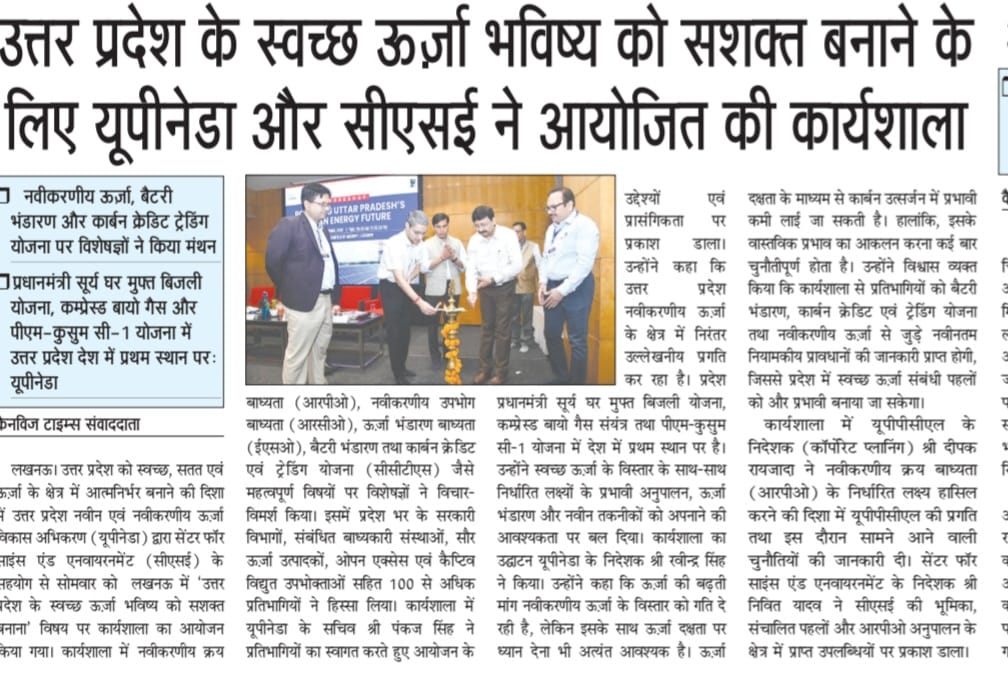
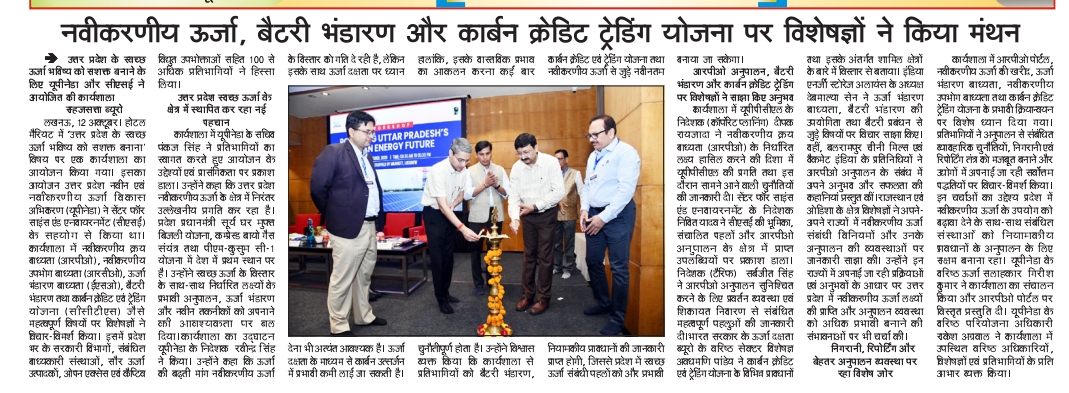
उत्तर प्रदेश नवीन एवं नवीकरणीय ऊर्जा विकास अभिकरण (यूपीनेडा) ने सेंटर फॉर साइंस एंड एनवायरनमेंट (सीएसई) के सहयोग से सोमवार को लखनऊ में ‘उत्तर प्रदेश के स्वच्छ ऊर्जा भविष्य को सशक्त बनाना’ विषय पर कार्यशाला का आयोजन किया. कार्यशाला में ऊर्जा भंडारण बाध्यता (ईएसओ), बैटरी भंडारण और कार्बन क्रेडिट व ट्रेडिंग योजना (सीसीटीएस) जैसे महत्वपूर्ण विषयों पर विशेषज्ञों ने विचार-विमर्श किया. प्रदेश भर के सरकारी विभागों, संबंधित बाध्यकारी संस्थाओं, सौर ऊर्जा उत्पादकों, ओपन एक्सेस और कैप्टिव विद्युत उपभोक्ताओं सहित 100 से अधिक प्रतिभागियों ने हिस्सा लिया. यूपीनेडा के सचिव पंकज सिंह ने कहा कि उत्तर प्रदेश नवीकरणीय ऊर्जा के क्षेत्र में लगातार प्रगति कर रहा है. प्रदेश प्रधानमंत्री सूर्य घर मुफ्त बिजली योजना, कम्प्रेस्ड बायो गैस संयंत्र और पीएम-कुसुम सी-1 योजना में देश में पहले स्थान पर है. उन्होंने स्वच्छ ऊर्जा के विस्तार के साथ-साथ निर्धारित लक्ष्यों के प्रभावी अनुपालन, ऊर्जा भंडारण और नवीन तकनीकों को अपनाने की आवश्यकता पर बल दिया. यूपीनेडा के निदेशक रवीन्द्र सिंह ने कहा कि ऊर्जा की बढ़ती मांग नवीकरणीय ऊर्जा के विस्तार को गति दे रही है, लेकिन इसके साथ ऊर्जा दक्षता पर ध्यान देना भी अत्यंत आवश्यक है. ऊर्जा दक्षता के माध्यम से कार्बन उत्सर्जन में प्रभावी कमी लाई जा सकती है. हालांकि इसके वास्तविक प्रभाव का आकलन करना कई बार चुनौतीपूर्ण होता है. उन्होंने उम्मीद की है कि कार्यशाला से प्रतिभागियों को बैटरी भंडारण, कार्बन क्रेडिट एवं ट्रेडिंग योजना और नवीकरणीय ऊर्जा से जुड़े नए नियामकीय प्रावधानों की जानकारी मिलेगी, जिससे प्रदेश में स्वच्छ ऊर्जा संबंधी पहलों को और प्रभावी बनाया जा सकेगा. यूपीपीसीएल के निदेशक (कॉर्पोरेट प्लानिंग) दीपक रायजादा ने नवीकरणीय क्रय बाध्यता (आरपीओ) के निर्धारित लक्ष्य हासिल करने की दिशा में यूपीपीसीएल की प्रगति और इस दौरान सामने आने वाली चुनौतियों की जानकारी दी. सेंटर फॉर साइंस एंड एनवायरनमेंट के निदेशक निवित यादव ने सीएसई की भूमिका, संचालित पहलों और आरपीओ अनुपालन के क्षेत्र में प्राप्त उपलब्धियों पर प्रकाश डाला. निदेशक (टैरिफ) सर्बजीत सिंह ने आरपीओ अनुपालन सुनिश्चित करने के लिए प्रवर्तन व्यवस्था और शिकायत निवारण से संबंधित महत्वपूर्ण पहलुओं की जानकारी दी. भारत सरकार के ऊर्जा दक्षता ब्यूरो के वरिष्ठ सेक्टर विशेषज्ञ अवधमणि पांडेय ने कार्बन क्रेडिट एवं ट्रेडिंग योजना के विभिन्न प्रावधानों और इसके अंतर्गत शामिल क्षेत्रों के बारे में विस्तार से बताया. इंडिया एनर्जी स्टोरेज अलायंस के अध्यक्ष देबमाल्या सेन ने ऊर्जा भंडारण बाध्यता, बैटरी भंडारण की उपयोगिता और बैटरी प्रबंधन से जुड़े विषयों पर विचार साझा किए. राजस्थान और ओडिशा के क्षेत्र विशेषज्ञों ने अपने-अपने राज्यों में नवीकरणीय ऊर्जा संबंधी विनियमों और उनके अनुपालन की व्यवस्थाओं पर जानकारी साझा की. उन्होंने इन राज्यों में अपनाई जा रही प्रक्रियाओं और अनुभवों के आधार पर उत्तर प्रदेश में नवीकरणीय ऊर्जा लक्ष्यों की प्राप्ति और अनुपालन व्यवस्था को अधिक प्रभावी बनाने की संभावनाओं पर भी चर्चा की. यूपीनेडा के वरिष्ठ ऊर्जा सलाहकार गिरीश कुमार ने कार्यशाला का संचालन किया और आरपीओ पोर्टल पर प्रेजेंटेशन दिया.

नवीकरणीय ऊर्जा बढ़ाने पर जोर:कार्यशाला में विशेषज्ञों ने रखे विचार, बैटरी भंडारण और कार्बन क्रेडिट पर हुई चर्चा

लखनऊ के पेपर मिल कॉलोनी स्थित यूपीनेडा और सेंटर फॉर साइंस एंड एनवायरनमेंट (सीएसई) की ओर से सोमवार को स्वच्छ ऊर्जा को बढ़ावा देने के लिए कार्यशाला आयोजित की गई। होटल मैरियट में हुई इस कार्यशाला का उद्देश्य उत्तर प्रदेश को स्वच्छ ऊर्जा के क्षेत्र में आत्मनिर्भर बनाना और नवीकरणीय ऊर्जा का विस्तार करना था। इसमें बैटरी भंडारण, कार्बन क्रेडिट ट्रेडिंग और ऊर्जा दक्षता जैसे विषयों पर चर्चा हुई। यूपीनेडा के सचिव पंकज सिंह ने कहा कि उत्तर प्रदेश नवीकरणीय ऊर्जा के क्षेत्र में आगे बढ़ रहा है। प्रदेश प्रधानमंत्री सूर्य घर मुफ्त बिजली योजना और पीएम-कुसुम सी-1 योजना में देश में पहले स्थान पर है। उन्होंने आधुनिक तकनीक अपनाने और निर्धारित लक्ष्यों को पूरा करने पर जोर दिया। यूपीनेडा के निदेशक रवीन्द्र सिंह ने कहा कि ऊर्जा की बढ़ती मांग को पूरा करने के लिए नवीकरणीय ऊर्जा का विस्तार जरूरी है। कार्बन उत्सर्जन घटाने के लिए ऊर्जा दक्षता पर भी ध्यान देना होगा।

UP Clean Energy Workshop: उत्तर प्रदेश स्वच्छ ऊर्जा और सौर योजनाओं में देश में अव्वल, लखनऊ में हुई विशेष कार्यशाला

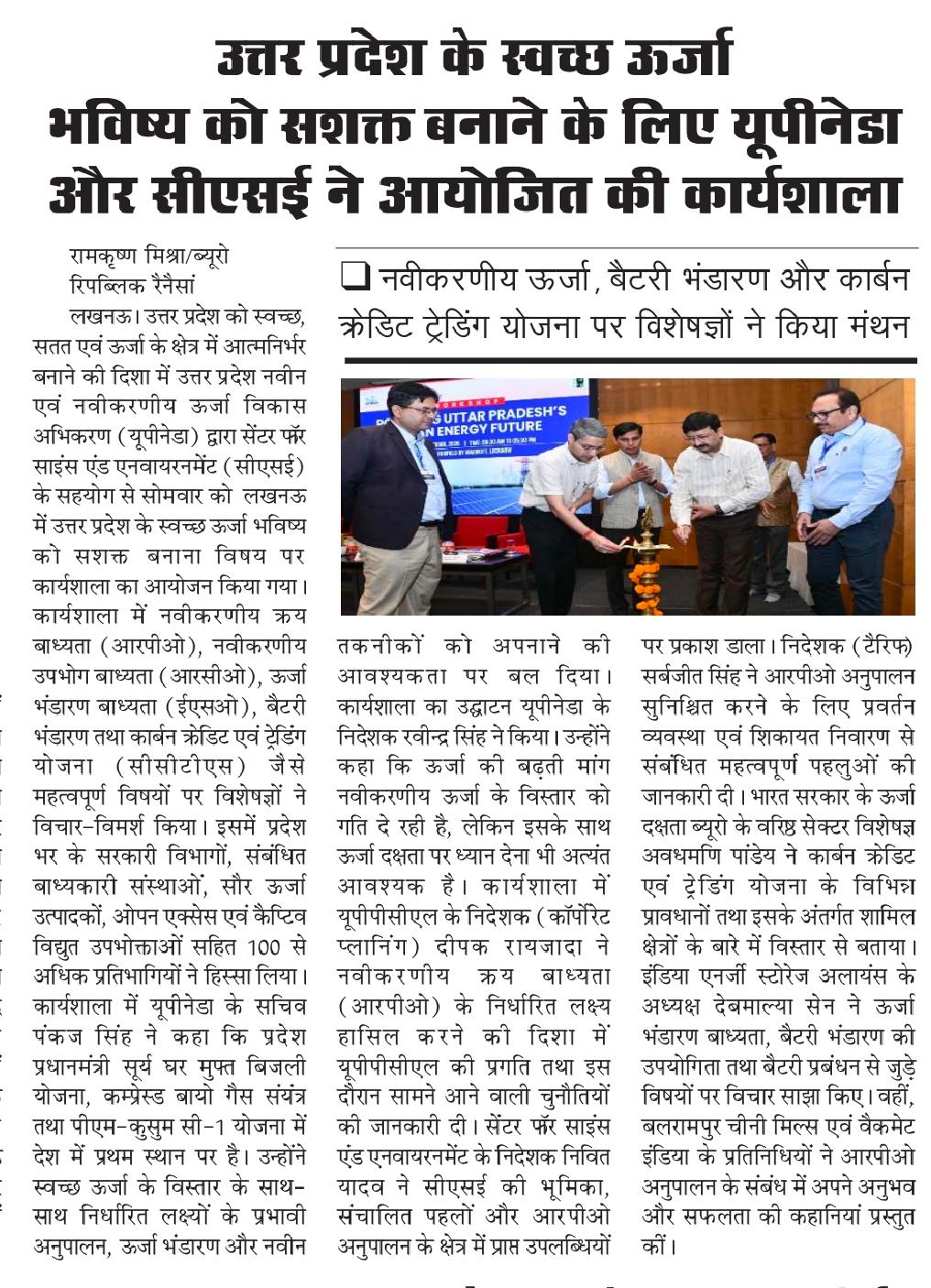
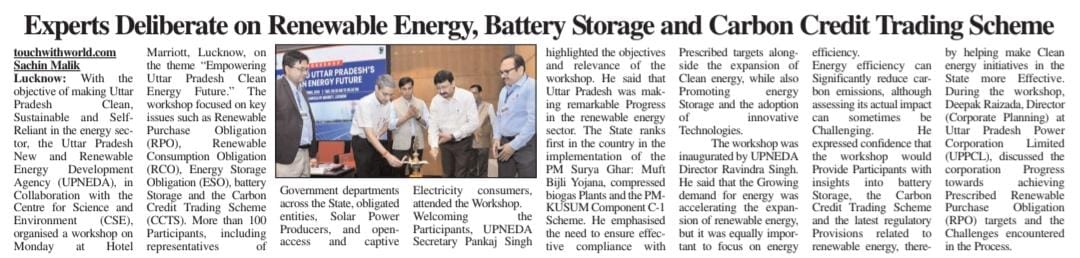
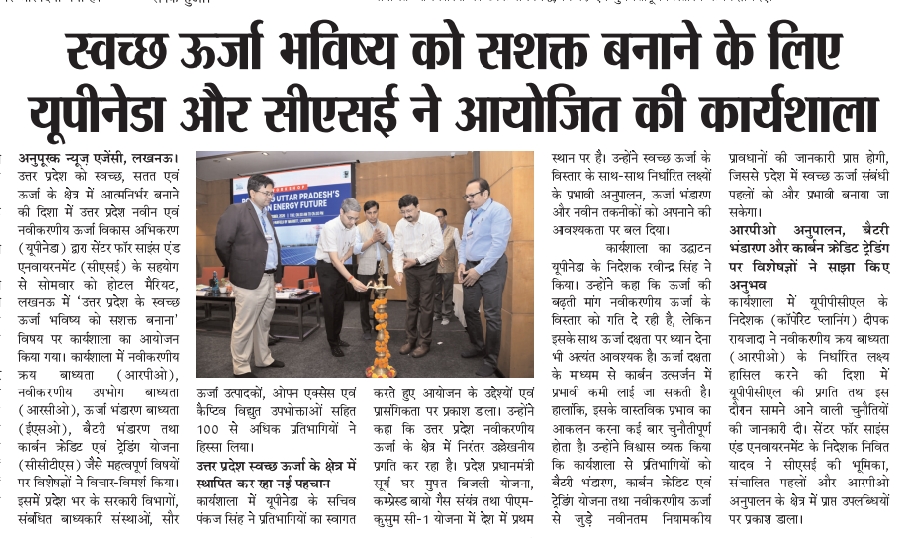
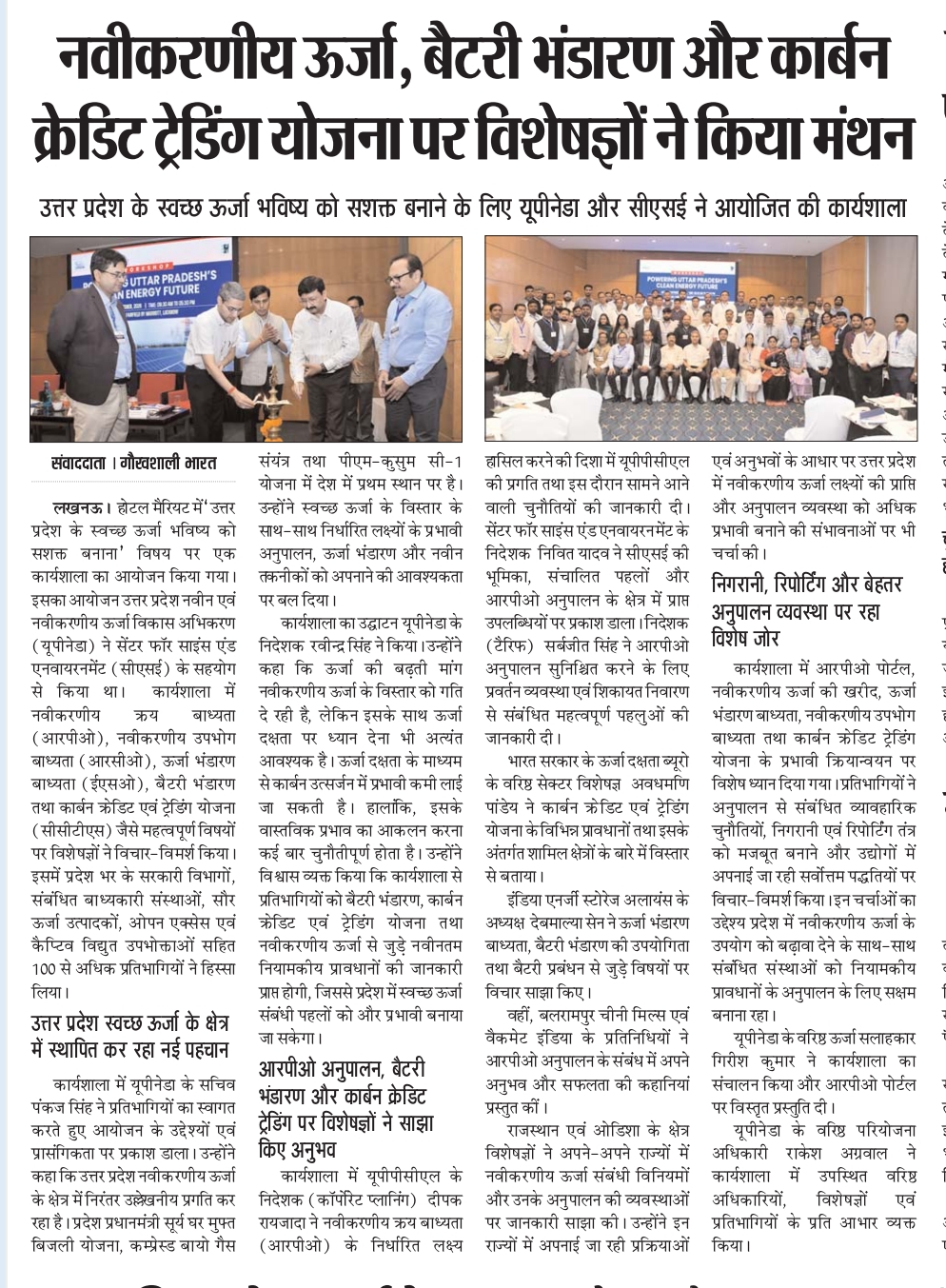
उत्तर प्रदेश को स्वच्छ, सतत एवं ऊर्जा के क्षेत्र में आत्मनिर्भर बनाने की दिशा में उत्तर प्रदेश नवीन एवं नवीकरणीय ऊर्जा विकास अभिकरण (यूपीनेडा) द्वारा सेंटर फॉर साइंस एंड एनवायरनमेंट (सीएसई) के सहयोग से सोमवार को होटल मैरियट, लखनऊ में ‘उत्तर प्रदेश के स्वच्छ ऊर्जा भविष्य को सशक्त बनाना’ विषय पर कार्यशाला का आयोजन किया गया। कार्यशाला में नवीकरणीय क्रय बाध्यता (आरपीओ), नवीकरणीय उपभोग बाध्यता (आरसीओ), ऊर्जा भंडारण बाध्यता (ईएसओ), बैटरी भंडारण तथा कार्बन क्रेडिट एवं ट्रेडिंग योजना (सीसीटीएस) जैसे महत्वपूर्ण विषयों पर विशेषज्ञों ने विचार-विमर्श किया। इसमें प्रदेश भर के सरकारी विभागों, संबंधित बाध्यकारी संस्थाओं, सौर ऊर्जा उत्पादकों, ओपन एक्सेस एवं कैप्टिव विद्युत उपभोक्ताओं सहित 100 से अधिक प्रतिभागियों ने हिस्सा लिया। उत्तर प्रदेश स्वच्छ ऊर्जा के क्षेत्र में स्थापित कर रहा नई पहचान कार्यशाला में यूपीनेडा के सचिव पंकज सिंह ने प्रतिभागियों का स्वागत करते हुए आयोजन के उद्देश्यों एवं प्रासंगिकता पर प्रकाश डाला। उन्होंने कहा कि उत्तर प्रदेश नवीकरणीय ऊर्जा के क्षेत्र में निरंतर उल्लेखनीय प्रगति कर रहा है। प्रदेश प्रधानमंत्री सूर्य घर मुफ्त बिजली योजना, कम्प्रेस्ड बायो गैस संयंत्र तथा पीएम-कुसुम सी-1 योजना में देश में प्रथम स्थान पर है। उन्होंने स्वच्छ ऊर्जा के विस्तार के साथ-साथ निर्धारित लक्ष्यों के प्रभावी अनुपालन, ऊर्जा भंडारण और नवीन तकनीकों को अपनाने की आवश्यकता पर बल दिया। कार्यशाला का उद्घाटन यूपीनेडा के निदेशक रवीन्द्र सिंह ने किया। उन्होंने कहा कि ऊर्जा की बढ़ती मांग नवीकरणीय ऊर्जा के विस्तार को गति दे रही है, लेकिन इसके साथ ऊर्जा दक्षता पर ध्यान देना भी अत्यंत आवश्यक है। ऊर्जा दक्षता के माध्यम से कार्बन उत्सर्जन में प्रभावी कमी लाई जा सकती है। हालांकि, इसके वास्तविक प्रभाव का आकलन करना कई बार चुनौतीपूर्ण होता है। उन्होंने विश्वास व्यक्त किया कि कार्यशाला से प्रतिभागियों को बैटरी भंडारण, कार्बन क्रेडिट एवं ट्रेडिंग योजना तथा नवीकरणीय ऊर्जा से जुड़े नवीनतम नियामकीय प्रावधानों की जानकारी प्राप्त होगी, जिससे प्रदेश में स्वच्छ ऊर्जा संबंधी पहलों को और प्रभावी बनाया जा सकेगा। आरपीओ अनुपालन, बैटरी भंडारण और कार्बन क्रेडिट ट्रेडिंग पर विशेषज्ञों ने साझा किए अनुभव कार्यशाला में यूपीपीसीएल के निदेशक (कॉर्पोरेट प्लानिंग) दीपक रायजादा ने नवीकरणीय क्रय बाध्यता (आरपीओ) के निर्धारित लक्ष्य हासिल करने की दिशा में यूपीपीसीएल की प्रगति तथा इस दौरान सामने आने वाली चुनौतियों की जानकारी दी। सेंटर फॉर साइंस एंड एनवायरनमेंट के निदेशक निवित यादव ने सीएसई की भूमिका, संचालित पहलों और आरपीओ अनुपालन के क्षेत्र में प्राप्त उपलब्धियों पर प्रकाश डाला। निदेशक (टैरिफ) सर्बजीत सिंह ने आरपीओ अनुपालन सुनिश्चित करने के लिए प्रवर्तन व्यवस्था एवं शिकायत निवारण से संबंधित महत्वपूर्ण पहलुओं की जानकारी दी। भारत सरकार के ऊर्जा दक्षता ब्यूरो के वरिष्ठ सेक्टर विशेषज्ञ अवधमणि पांडेय ने कार्बन क्रेडिट एवं ट्रेडिंग योजना के विभिन्न प्रावधानों तथा इसके अंतर्गत शामिल क्षेत्रों के बारे में विस्तार से बताया। इंडिया एनर्जी स्टोरेज अलायंस के अध्यक्ष देबमाल्या सेन ने ऊर्जा भंडारण बाध्यता, बैटरी भंडारण की उपयोगिता तथा बैटरी प्रबंधन से जुड़े विषयों पर विचार साझा किए। वहीं, बलरामपुर चीनी मिल्स एवं वैकमेट इंडिया के प्रतिनिधियों ने आरपीओ अनुपालन के संबंध में अपने अनुभव और सफलता की कहानियां प्रस्तुत कीं। राजस्थान एवं ओडिशा के क्षेत्र विशेषज्ञों ने अपने-अपने राज्यों में नवीकरणीय ऊर्जा संबंधी विनियमों और उनके अनुपालन की व्यवस्थाओं पर जानकारी साझा की। उन्होंने इन राज्यों में अपनाई जा रही प्रक्रियाओं एवं अनुभवों के आधार पर उत्तर प्रदेश में नवीकरणीय ऊर्जा लक्ष्यों की प्राप्ति और अनुपालन व्यवस्था को अधिक प्रभावी बनाने की संभावनाओं पर भी चर्चा की। निगरानी, रिपोर्टिंग और बेहतर अनुपालन व्यवस्था पर रहा विशेष जोर कार्यशाला में आरपीओ पोर्टल, नवीकरणीय ऊर्जा की खरीद, ऊर्जा भंडारण बाध्यता, नवीकरणीय उपभोग बाध्यता तथा कार्बन क्रेडिट ट्रेडिंग योजना के प्रभावी क्रियान्वयन पर विशेष ध्यान दिया गया। प्रतिभागियों ने अनुपालन से संबंधित व्यावहारिक चुनौतियों, निगरानी एवं रिपोर्टिंग तंत्र को मजबूत बनाने और उद्योगों में अपनाई जा रही सर्वोत्तम पद्धतियों पर विचार-विमर्श किया। इन चर्चाओं का उद्देश्य प्रदेश में नवीकरणीय ऊर्जा के उपयोग को बढ़ावा देने के साथ-साथ संबंधित संस्थाओं को नियामकीय प्रावधानों के अनुपालन के लिए सक्षम बनाना रहा। यूपीनेडा के वरिष्ठ ऊर्जा सलाहकार गिरीश कुमार ने कार्यशाला का संचालन किया और आरपीओ पोर्टल पर विस्तृत प्रस्तुति दी। यूपीनेडा के वरिष्ठ परियोजना अधिकारी राकेश अग्रवाल ने कार्यशाला में उपस्थित वरिष्ठ अधिकारियों, विशेषज्ञों एवं प्रतिभागियों के प्रति आभार व्यक्त किया।

Himalayan blunders and beyond

As I write this, over 1,410 lives have been confirmed lost and many thousands are still missing in the floods in Nepal, as the mighty Himalayas came down as rubble. This is an enormous and painful human tragedy, but it is also about wilful actions and inactions of humans. This tragedy is really about our mindset, the belief that we, as humans, can re-engineer everything; that we are in control of the universe and all things in it. We are the supreme beings who can weather climate change, because, after all, it is only about a small and insignificant matter of weather. This is on us. Let me break this down. First comes the question of what happened in Nepal on August 26. The images that all of us would have seen are of the mountain coming down — just collapsing — as the flash flood and massive quantity of debris buried everything in its path, taking with it the huge building of the Chinese immigration office. It is a frightening visual, straight out of a science-fiction movie. We know now that this flash flood was not caused by an extreme cloudburst. It was triggered by the collapse of a high-altitude glacier near the Langtang Lirung peak. An estimated 142 million cubic metres of ice and rocks were dislodged, creating a 5.2 magnitude seismic event. This then led to the formation of natural dams, behind which water and moraine accumulated, and when the dams broke, they unleashed even more devastating floods downstream. The second question is: Why? There is no single headline reason, but two events have greatly contributed to this and other such tragedies in this region. One is the well-documented warming caused by climate change. It is literally weakening the Himalayas — the temperature rise melts glaciers; this, in turn, corrodes the moraine slopes. It is a ticking bomb, which implodes as it did in Nepal. In addition, climate change is leading to an increased frequency and intensity of extreme weather events, which, in turn, bring flood and landslide catastrophes, like those seen in Himachal Pradesh in 2025, in Sikkim in 2024, and in Chamoli in 2021. We are complicit in this; all of us, but particularly the countries that have contributed the most to the stock of greenhouse emission in the atmosphere, which, in turn, is driving up temperatures and causing runaway devastations. This is about the past, the present and the future. There is no getting away from the historical responsibility of the richest and most developed countries for this loss of lives. And even as the death toll was rising in Nepal, we got the news that the world was no longer even on an illusionary track to stay below the guardrail of 1.5° Celsius temperature rise since the industrial period of 1870. The United Nations Environment Programme estimates that the world will overshoot this threshold within a few years. Scientists know that beyond 1.5° Celsius, the impacts would be cascading and even more devastating — from the collapse of ice sheets to disruption in ocean currents like the Atlantic Meridional Overtaking Circulation (AMOC), and much more. The intense heat, fires and other weather abnormalities we saw this summer were only a preview of what awaits us. Yet, we seem to be sanguine about this breakdown in our Earth’s system. Today, we are so distracted by economic and livelihood concerns brought on by deliberate human misdeeds like senseless wars that this enormous and existential crisis seems distant and insignificant. We are merely tinkering with emission, not transforming it to live within nature’s bounds. Let’s get back to the Himalayas. We know that the climate-change ticking bomb has been exacerbated by the “nature” of development in these ecological hotspots. We talk ad nauseam about adaptation and about how we must take the changing climate into account, but we never do. We really believe that we can continue to do what we do, without consequences. Take, for example, the hydroelectric projects being constructed by damming narrow rivers. As I have said in the past, and will repeat it, this is not about dam development but about the recklessness with which they are being developed. In the Indian Himalayas, project after project is coming up — literally back-to-back — so that the Ganga is re-engineered. It will cease to flow naturally because these projects will regulate its water, taking it to generate electricity and then releasing it back. Then we are tunnelling into the mountains and building roads, often without provision for slope management.I can go on. But the fact is we are not hearing the message that nature is giving us, loud and clear: Change your mindset; your thinking that you can dominate me and bring me to my knees will not work. “Change or perish” is the message. The question is if we can hear it amid the cacophony of our distractions. The writer is at the Centre for Science and Environment. sunita@cseindia.org. X: @sunitanar

UP Clean Energy Workshop: स्वच्छ ऊर्जा में यूपी की छलांग, यूपीनेडा और सीएसई ने लखनऊ में आयोजित की कार्यशाला

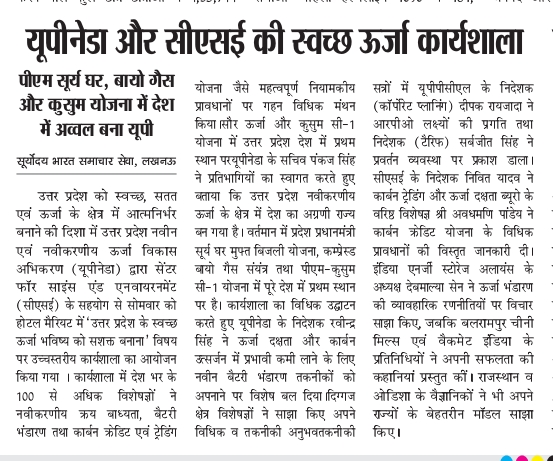
उत्तर प्रदेश को स्वच्छ, सतत और ऊर्जा क्षेत्र में आत्मनिर्भर बनाने के संकल्प के तहत उत्तर प्रदेश नवीन एवं नवीकरणीय ऊर्जा विकास अभिकरण यूपीनेडा ने सेंटर फॉर साइंस एंड एनवायरनमेंट सीएसई के सहयोग से सोमवार को लखनऊ के होटल मैरियट में उत्तर प्रदेश के स्वच्छ ऊर्जा भविष्य को सशक्त बनाना विषय पर एक दिवसीय कार्यशाला का आयोजन किया। इसमें सरकारी विभागों, सौर ऊर्जा उत्पादकों, ओपन एक्सेस उपभोक्ताओं और ऊर्जा विशेषज्ञों सहित 100 से अधिक प्रतिभागियों ने हिस्सा लिया। पीएम सूर्य घर और कम्प्रेस्ड बायो गैस में यूपी नंबर-1 ​कार्यशाला में यूपीनेडा के सचिव पंकज सिंह ने बताया कि उत्तर प्रदेश नवीकरणीय ऊर्जा के क्षेत्र में नए कीर्तिमान स्थापित कर रहा है। राज्य प्रधानमंत्री सूर्य घर मुफ्त बिजली योजना, कम्प्रेस्ड बायो गैस सीबीजी संयंत्रों की स्थापना और ‘पीएम-कुसुम सी-1 योजना’ के क्रियान्वयन में पूरे देश में शीर्ष स्थान पर पहुंच चुका है। उन्होंने स्वच्छ ऊर्जा के विस्तार के साथ-साथ बैटरी स्टोरेज और आधुनिक तकनीकों को तेजी से अपनाने पर जोर दिया। ​ऊर्जा दक्षता और कार्बन उत्सर्जन में कमी पर जोर ​कार्यशाला का शुभारंभ करते हुए यूपीनेडा के निदेशक रवीन्द्र सिंह ने कहा कि ऊर्जा की तेजी से बढ़ती मांग के बीच नवीकरणीय ऊर्जा के साथ-साथ ऊर्जा दक्षता पर ध्यान देना आवश्यक है, ताकि कार्बन उत्सर्जन में ठोस कमी लाई जा सके। उन्होंने विश्वास जताया कि कार्यशाला से प्रतिभागियों को बैटरी भंडारण, कार्बन क्रेडिट एवं ट्रेडिंग योजना सीसीटीएस और नए नियामकीय प्रावधानों की स्पष्ट जानकारी मिलेगी। ​आरपीओ अनुपालन और अंतर-राज्यीय अनुभवों पर मंथन ​कार्यक्रम में यूपीपीसीएल के निदेशक कॉर्पोरेट प्लानिंग दीपक रायजादा ने नवीकरणीय क्रय बाध्यता आरपीओ के लक्ष्यों और चुनौतियों को साझा किया। ब्यूरो ऑफ एनर्जी एफिशिएंसी के वरिष्ठ विशेषज्ञ अवधमणि पांडेय ने कार्बन क्रेडिट ट्रेडिंग और इंडिया एनर्जी स्टोरेज अलायंस के अध्यक्ष देबमाल्या सेन ने बैटरी प्रबंधन पर विचार रखे। इसके अलावा ओडिशा और राजस्थान के विशेषज्ञों ने भी अपने राज्यों के सफल मॉडल प्रस्तुत किए। यूपीनेडा के वरिष्ठ सलाहकार गिरीश कुमार ने आरपीओ पोर्टल पर प्रस्तुति दी और वरिष्ठ परियोजना अधिकारी राकेश अग्रवाल ने धन्यवाद ज्ञापित किया।