Cse In News

CSE Organises Workshop on Sustainable Dairy Farming in India

The Centre for Science and Environment’s programme is intended for dairy-sector stakeholders and other interested participants. It will assess the current use of preventive and sustainable practices, consider obstacles to wider adoption and provide a setting for participants to exchange experience across regions. A central theme is the management of disease risks before they affect herds. The workshop will cover vaccination, veterinary oversight, routine health checks and farm hygiene. Measures such as controlling animal movement, separating sick animals when required and maintaining sanitation can help limit the introduction and spread of infections. The programme will also examine methods for raising output while managing production costs. Better feed and fodder management can support animal condition, milk yields and reproductive performance. Greater access to suitable, goodquality feed may also enable farmers to use local resources more effectively. Breed selection will be considered alongside these measures. Breeding choices can take account of local climate, available feed, farm-management capacity and the objectives of individual producers. The programme’s stated approach includes animal health and resilience, as well as milk production, with attention to the circumstances of small-scale farmers. Implementation requires more than technical recommendations. The source identifies practical training, veterinary services, appropriate inputs and knowledge-sharing as necessary for putting the approaches into practice. Conditions differ according to farm size, climate, breeds, feed supplies and access to services, so methods will need to be adapted to local circumstances. The initiative is designed to promote cooperation among farmers, veterinary professionals, researchers, policymakers and dairy organisations. Interested individuals can obtain further information from Neeraj Kumar of CSE’s Sustainable Food Systems programme at neeraj_k@cseindia.org.
जिंदगी पर भारी पड़ता मानसिक तनाव

डाउन टू अर्थ और सेंटर फॉर साइंस एंड एनवायरनमेंट के विश्लेषण के अनुसार 2023 में मानसिक बीमारी से जुड़ी ऐसी मौतों की संख्या 13978 थी। 24 राज्यों और केंद्र शासित प्रदेशों में मानसिक बीमारी, बीमारी-संबंधी आत्महत्याओं का प्रमुख कारण रही। हिमाचल प्रदेश भी इस चिंता से अछूता नहीं है। हिमाचल पुलिस के क्राइम रिव्यू-2024 के अनुसार प्रदेश में 2024 में 813 आत्महत्याएं दर्ज हुईं।

Delhi Braces For GRAP Curbs As AQI Soars Singapore Battles Wildfire Haze. How Do The Two Compare?

The scale of individual pollution episodes can be even more alarming: the Centre for Science and Environment recorded a city-wide winter PM2.5 peak of 732 micrograms per cubic metre in 2024, compared with 580 in 2023 and a station-level peak of 806 in winter 2018. Singapore's air quality deteriorated to an Air Quality Index (AQI) of 287, classified as unhealthy on a live air-quality dashboar, as smoke from Indonesian wildfires intensified across Southeast Asia. The reading showed PM2.5 concentrations of 116 micrograms per cubic metre and PM10 levels of 164 micrograms per cubic metre. Delhi, meanwhile, recorded an AQI of 165 at 9 am on Thursday, placing it in the moderate category, according to Central Pollution Control Board (CPCB). Singapore vs Delhi AQI: How do the pollution levels compare? Singapore's reported AQI was 122 points higher than Delhi's reading on Thursday, 15 October. The air quality in India's national capital was recorded in the 'moderate' category at 9 am, with an Air Quality Index (AQI) reading of 165, the Central Pollution Control Board (CPCB) data showed. Under India's CPCB classification, an AQI between 101 and 200 is moderate, while readings between 201 and 300 are considered poor. Singapore's pollutant readings included carbon monoxide at 1,611 parts per billion (ppb), sulphur dioxide at 1 ppb, nitrogen dioxide at 2 ppb and ozone at 10 ppb. PM2.5 refers to fine particles with a diameter of 2.5 micrometres or less. Because these particles can penetrate deep into the lungs, prolonged exposure can pose health risks. PM10 includes larger airborne particles, which can also affect the respiratory system. The two cities' readings were recorded at different times and may follow different reporting systems. They therefore provide a snapshot of their respective pollution levels rather than a direct, simultaneous comparison. Indonesian wildfires intensify haze across Southeast Asia Singapore's pollution spike comes as Indonesia experiences its most intense wildfire season in 11 years. Dry weather conditions linked to El Niño have contributed to the fires, worsening air quality across the region and raising concerns about respiratory illnesses.

Opinion: लोगों को बस और मेट्रो पर भरोसा क्यों नहीं? मजबूरी में सार्वजनिक परिवहन का सहारा

राष्ट्रीय सांख्यिकी कार्यालय ( NSO ) ने पिछले दिनों पहले राष्ट्रीय घरेलू यात्रा सर्वेक्षण (NHTS) के आंकड़े जारी किए। पिछले साल जुलाई से इस साल जून के बीच करीब 4.9 लाख परिवारों पर किए गए सर्वे में पाया गया कि रात की यात्रा के लिए तीन चौथाई लोग बस या ट्रेन का सहारा लेते हैं। वहीं, 42.6% लोग रोजाना दोपहिया से काम पर जाते हैं। शहरों में यह औसत 52.3 है। वहीं, हर रोज 9.2% लोग बस से दफ्तर जाते हैं और तकरीबन 5%, मेट्रो, लोकल ट्रेन या ट्राम का उपयोग करते हैं। दूरी में अंतर सर्वे में काम पर जाने वाले महिला और पुरुषों के बीच बड़ा अंतर देखा गया। 61.9% पुरुष एक किमी से ज्यादा दूर काम करने जाते हैं, जबकि 41.9% महिलाएं ही ऐसा करती हैं। शहरों में 21.7% महिलाएं दफ्तर जाने के लिए बसों पर निर्भर हैं, जबकि 57% पुरुष बाइक स्कूटी से सफर करते हैं। आंकड़े सेंटर फॉर साइंस एंड एनवायरनमेंट (CSE) के भारतीय शहरों के आकलन के अनुरूप हैं। CSE के मुताबिक, शहरों में पब्लिक ट्रांसपोर्ट की 25% हिस्सेदारी है, जबकि निजी वाहनों का हिस्सा है 35-45% 1 स्थानीय स्तर पर अध्ययन से इन्हें बेहतर तरीके से समझा जा सकता है। सस्ता नहीं कोलकाता और दिल्ली में एक स्टडी हुई। इसमें यात्रा के साधन, किराया, इंतजार और इंटरचेंज में लगने वाला वक्त शामिल था। पता चला कि पब्लिक ट्रांसपोर्ट सिर्फ किराये के लिहाज से सस्ता है। कोलकाता में सार्वजनिक परिवहन का औसतन 1.47 रुपये प्रति किमी किराया है और अपनी गाड़ी से हर किमी पर औसतन तीन रुपये का ईंधन खर्च होता है। लेकिन, पब्लिक ट्रांसपोर्ट पर आप रोजाना अपनी आमदनी का 5.6% हिस्सा खर्च करते हैं, जबकि अपनी गाड़ी से सिर्फ 3.5%। सुरक्षा की चिंता CSE के सर्वे में दिल्ली के 94% बस और 63% मेट्रो यात्रियों ने बताया कि यह सस्ता है, इसलिए इससे यात्रा करते हैं। यह दर्शाता है कि कई लोग पसंद के बजाय मजबूरी में सार्वजनिक परिवहन का सहारा लेते हैं। साउथ दिल्ली के यात्रियों को पैदल चलने और गाड़ियों का इंतजार करने से समस्या होती है। भीड़ का कारण भारत में हर एक लाख लोगों पर सिर्फ 10 बसें हैं। 2014 से 2019 के बीच 19 बड़े राज्य परिवहन उपक्रमों के बेड़े में सिर्फ 4.6% बसें बढ़ीं और यात्रियों की संख्या 5.8% कम हो गई। बसें कम होने से लोगों को लंबा इंतजार करना पड़ता है। दिल्ली में सुबह के वक्त बसों की रफ्तार 41% तक घट जाती है। नतीजतन, लोग निजी गाड़ियों या शेयरिंग ऑटो का सहारा लेते हैं, जिससे भीड़ और बढ़ जाती है।

Public Transport vs. Private Vehicles: A Cost and Accessibility Analysis

कोलकाता में सार्वजनिक परिवहन का औसतन 1.47 रुपये प्रति किमी किराया है और अपनी गाड़ी से हर किमी पर औसतन तीन रुपये का ईंधन खर्च होता है। लेकिन, पब्लिक ट्रांसपोर्ट पर आप रोजाना अपनी आमदनी का 5.6% हिस्सा खर्च करते हैं, जबकि अपनी गाड़ी से सिर्फ 3.5%।राष्ट्रीय सांख्यिकी कार्यालय ( NSO ) ने पिछले दिनों पहले राष्ट्रीय घरेलू यात्रा सर्वेक्षण (NHTS) के आंकड़े जारी किए। पिछले साल जुलाई से इस साल जून के बीच करीब 4.9 लाख परिवारों पर किए गए सर्वे में पाया गया कि रात की यात्रा के लिए तीन चौथाई लोग बस या ट्रेन का सहारा लेते हैं। वहीं, 42.6% लोग रोजाना दोपहिया से काम पर जाते हैं। शहरों में यह औसत 52.3 है। वहीं, हर रोज 9.2% लोग बस से दफ्तर जाते हैं और तकरीबन 5%, मेट्रो, लोकल ट्रेन या ट्राम का उपयोग करते हैं।सर्वे में काम पर जाने वाले महिला और पुरुषों के बीच बड़ा अंतर देखा गया। 61.9% पुरुष एक किमी से ज्यादा दूर काम करने जाते हैं, जबकि 41.9% महिलाएं ही ऐसा करती हैं। शहरों में 21.7% महिलाएं दफ्तर जाने के लिए बसों पर निर्भर हैं, जबकि 57% पुरुष बाइक स्कूटी से सफर करते हैं। आंकड़े सेंटर फॉर साइंस एंड एनवायरनमेंट (CSE) के भारतीय शहरों के आकलन के अनुरूप हैं। CSE के मुताबिक, शहरों में पब्लिक ट्रांसपोर्ट की 25% हिस्सेदारी है, जबकि निजी वाहनों का हिस्सा है 35-45% 1 स्थानीय स्तर पर अध्ययन से इन्हें बेहतर तरीके से समझा जा सकता है।कोलकाता और दिल्ली में एक स्टडी हुई। इसमें यात्रा के साधन, किराया, इंतजार और इंटरचेंज में लगने वाला वक्त शामिल था। पता चला कि पब्लिक ट्रांसपोर्ट सिर्फ किराये के लिहाज से सस्ता है। कोलकाता में सार्वजनिक परिवहन का औसतन 1.47 रुपये प्रति किमी किराया है और अपनी गाड़ी से हर किमी पर औसतन तीन रुपये का ईंधन खर्च होता है। लेकिन, पब्लिक ट्रांसपोर्ट पर आप रोजाना अपनी आमदनी का 5.6% हिस्सा खर्च करते हैं, जबकि अपनी गाड़ी से सिर्फ 3.5%।CSE के सर्वे में दिल्ली के 94% बस और 63% मेट्रो यात्रियों ने बताया कि यह सस्ता है, इसलिए इससे यात्रा करते हैं। यह दर्शाता है कि कई लोग पसंद के बजाय मजबूरी में सार्वजनिक परिवहन का सहारा लेते हैं। साउथ दिल्ली के यात्रियों को पैदल चलने और गाड़ियों का इंतजार करने से समस्या होती है।भारत में हर एक लाख लोगों पर सिर्फ 10 बसें हैं। 2014 से 2019 के बीच 19 बड़े राज्य परिवहन उपक्रमों के बेड़े में सिर्फ 4.6% बसें बढ़ीं और यात्रियों की संख्या 5.8% कम हो गई। बसें कम होने से लोगों को लंबा इंतजार करना पड़ता है। दिल्ली में सुबह के वक्त बसों की रफ्तार 41% तक घट जाती है। नतीजतन, लोग निजी गाड़ियों या शेयरिंग ऑटो का सहारा लेते हैं, जिससे भीड़ और बढ़ जाती है।रेलवे भी पहुंच की समस्या से दो-चार हो रहा है। दिल्ली की सिर्फ 9.85% आबादी मेट्रो स्टेशन से 400 मीटर की दूरी पर रहती है। जमीन से जुड़ी समस्याएं भी हैं। पूर्वी किदवई नगर में नए गेटेड रीडिवेलपमेंट के बाद मेट्रो स्टेशन तक 1.5 किमी का绕ने वाला रास्ता बना, जबकि पहले सिर्फ 400 मीटर का पैदल रास्ता था।

India Carbon Credit Market 2026-2034 - USD 33.69 Billion to USD 405.47 Billion Outlook

Down To Earth and the Centre for Science and Environment (DTE-CSE) revealed that by June 2023, India had 860 registered projects, with a total of 1,451 projects under different stages of evaluation across the two leading carbon crediting programs, Verra and Gold Standard. Verra's VM0042, VM0044, and VM0047 methodologies, paired with the Indian Council of Agricultural Research's pilot programmes, are channelling smallholder participation into agroforestry, improved land management, and biochar projects. Through collaboration with NDDB and Sustain Plus Energy Foundation's Manure Management Program, over 1,000 dairy farmers across nine locations in seven states are benefiting financially from sustainable practices, receiving payments that enhance their incomes while supporting India's transition to net zero.

First Principles First: Need to Calibrate Data Access for Disaster Resilience

Every year on October 13, the United Nations marks the International Day for Disaster Risk Reduction, a date the General Assembly fixed in 2009 after first setting aside a day for natural disaster reduction in 1989. The aim remains the same: to communicate the urgency of disaster resilience at all levels, from farmers and fisherman to first-responders, to policymakers. Since the Sendai Framework 2015, the day has also stressed local capacity development, community participation, and the developing climate and disaster resilience. That second concern puts infrastructure at the center of the conversation, because roads, power lines, water systems and homes are what disasters damage first and what communities spend years rebuilding. As per the latest UNDDR (United Nations Office for Disaster Risk Reduction) report, direct asset damage by disasters costs $202 billion annually, while cascading damages including ecosphere destruction, supply chain breakdowns, and insurance surpass $2 trillion each year. Over a 50-year period (1970–2021), weather, climate, and water hazards generated a staggering $4.3 trillion in economic losses globally. The toll in India has been colossal too. Cyclone Amphan, which struck West Bengal and Odisha in 2020, killed 98 people and caused $13.5 billion in damage. Satellites tracked the storm across the Bay of Bengal, yet the damage was decided on land, where its winds tore roofs off houses. Geospatial is a non-negotiable for disaster-resilient infra anywhere across the globe. This year’s UN theme, “Resilience Starts at Home,” carries the same argument down to the household, and UNDRR puts it plainly by saying that no one should have to choose between an affordable home and a safe one. It was also the question before the National Colloquium on Disaster Risk Reduction, held on 13 October at Suhora Technologies and organised by the IEEE Local Group – Data Science for Climate Risk Management, which Geospatial World attended. One speaker was direct about where plans succeed or fail. “No DRR&R plan, policy, guideline, strategy or framework can be fully successful if it does not involve communities and households for grassroot level acceptance, adaptation, action and practice into regular life style and lives, livelihood in living places of people,” said Prof. Surya Parkash Gupta, Founder Chairperson, Community Based Disaster Risk Management Society, India. Where the Risk Is Mapped Prof. Gupta’s presentation went on to show why households matter so much in India, noting that 85% of the country’s land area is vulnerable to natural hazards, that 65% is prone to earthquakes, 12% to floods and 8% to cyclones, and that 70% of cultivable land is prone to drought. He reiterated that the first 24 to 72 hours after a major disaster depend almost entirely on the people nearby, since formal responders have not yet arrived. Figures like these rest on maps of hazard and exposure, and satellites keep those maps current by showing where land is steep, where rivers spread and where homes are crowding into both. ISRO’s Landslide Atlas of India, published in 2023, shows how this works, using remote sensing data to map and monitor landslides. The same view matters for housing, because the Midterm Review of the Sendai Framework, cited in the presentation, found that many countries still struggle to enforce land-use and building rules in hazard-prone areas and to bring households into decisions about risk. Informal settlements are often left out of planning altogether, and the effects of a disaster fall hardest on women, children, older people, people with disabilities and low-income families. Fine-scale imagery that shows where such neighbourhoods have grown gives planners a way to bring them back into view. A Collective Duty The presentation described the responsibility as shared, with governments enforcing planning rules and building codes, developers and insurers telling buyers about known hazards, and households learning their local risks and keeping a plan and 72 hours of water and food. Early warning is where these duties meet. The UN’s Early Warnings for All initiative, launched in 2022, aims to protect everyone on Earth from hazardous weather, water or climate events by the end of 2027, and two of its four pillars, risk knowledge led by UNDRR and observation and forecasting led by the World Meteorological Organization, draw directly on satellite and ground observations. The pressure on all of this is rising. The Centre for Science and Environment recorded extreme weather events in India on 331 of the first 334 days of 2025, up from 295 days in 2024, with at least 4,419 deaths, 181,459 houses destroyed and 17.4 million hectares of cropped area affected, and it noted that gaps in reporting mean the true figures are higher. Against numbers like these, one speaker at the colloquium argued that the answer has to start with habit. “With climate change impact, frequency of disasters will increase manifold in coming years. To mitigate the impact of any disaster, culture of preparedness should be ‘Mantra’ at national, state, district, family and individual level. Culture starts from home. Resilience is not only safe building but individual actions. Let us work together with national and state government to meet the goals of Sendai Framework,” emphasised Prof. VK Sharma, Vice Chairman, Sikkim State Disaster Management Authority. The Water Risk Water adds another layer, and it begins with the events everyone can see. River floods, flash floods and dam-related emergencies threaten lives, infrastructure, farms and ecosystems, and Dr. Dipankar Saha, Chair Professor, MRIIRS, and Board President, Water For People India, noted that human choices are making such events more frequent. Unplanned building and widening of roads in fragile hills such as the Himalayas, he said, triggers landslides, and he stressed that every disaster other than earthquakes and volcanic activity is linked, directly or indirectly, to human-induced climate change. The quieter danger sits underground, where depletion, contamination and the movement of seawater into coastal aquifers unfold slowly and with no single event to mark them. Satellites have already shown the scale in the north of India, where NASA’s GRACE mission found that more than 109 cubic kilometres of groundwater disappeared from aquifers between 2002 and 2008. Dr. Saha stated that the country’s dependence on groundwater turns any damage to it into a problem for millions, and he put that dependence in numbers. “People are less aware of groundwater-related disasters as they invade in a slow process and silently, like depletion of resources, contamination of sources, seawater intrusion invading freshwater coastal aquifers, and land subsidence”, noted Dr. Saha. “Any impact on groundwater puts millions in trouble, as 85% of rural drinking water needs and 62% of irrigation requirements in India are catered to by groundwater, besides supplying more than 50% of urban water needs,” he added. What Space and Geospatial Adds The clearest contribution comes during a disaster, when the first need is to see what has happened across a large area while cloud, rain and damaged roads block the view from the ground. Radar satellites solve part of this, since they see through cloud and work day or night. During the 2022 monsoon, ISRO’s National Remote Sensing Centre(NRSC) combined radar data from Sentinel-1A, RISAT-1A, Radarsat-2 and ALOS-2 PALSAR with optical imagery to follow floods in Uttar Pradesh, producing 36 flood inundation maps between 9 August and 26 October that together showed 639,061 hectares under water, and it published the results on the National Database for Emergency Management and the Bhuvan geoportal. The same logic works across borders through the International Charter Space and Major Disasters, in which 17 space agencies share imagery with emergency responders at no charge. By January 2025 the Charter had imaged 943 disasters in 136 countries, and in 90% of its 2023 activations the first image of the affected area arrived within two hours. The larger gain comes before the event, because risk is cheaper to reduce than to repair. Elevation models, land-use layers and building footprints let planners see which slopes, riverbanks and coastal strips are unsafe to build on, and images taken year after year show where construction has crept into those zones in spite of the rules. That gives the land-use and building regulations that the Sendai review found so hard to enforce something to be checked against, and it gives insurers and buyers a factual basis for the risk disclosure the presentation asked of developers. The same layers feed the risk knowledge and forecasting that early warning depends on, and they make it possible to send a warning to a particular valley or village or city. None of this builds resilience until it is used by the people who live with the risk. A flood layer on a public portal protects a family only when someone turns it into an alert in the local language, a marked evacuation route or a repair plan that the household can follow. That is why capacity building matters as much as the technology, and why the presentation counted GIS exercises and training delivered through satellite communication among the efforts needed to prepare officials and communities. Where local knowledge and satellite data inform each other, a society can plan its housing, protect its water and respond faster, which is the practical meaning of resilience starting at home.

स्वच्छ ऊर्जा भविष्य को लेकर हुआ मंथन: नवीकरणीय ऊर्जा, बैटरी भंडारण और कार्बन क्रेडिट ट्रेडिंग योजना पर विशेषज्ञों ने दी सलाह

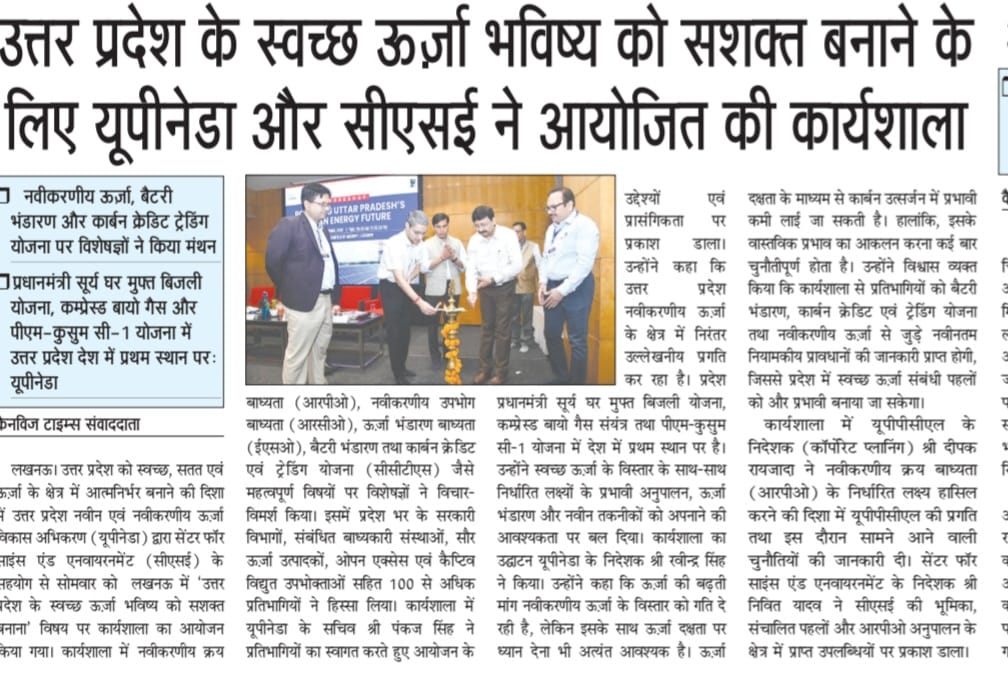
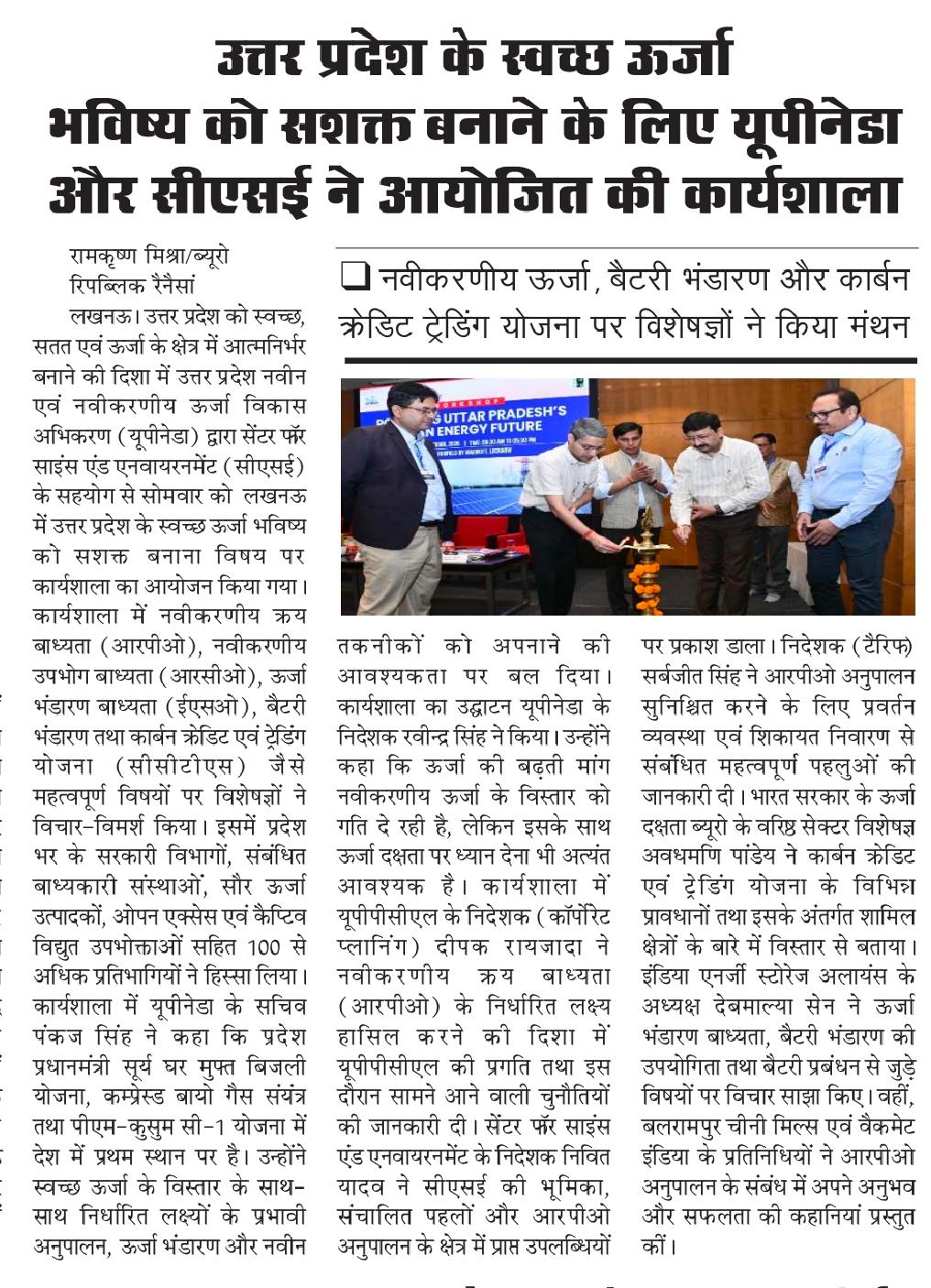
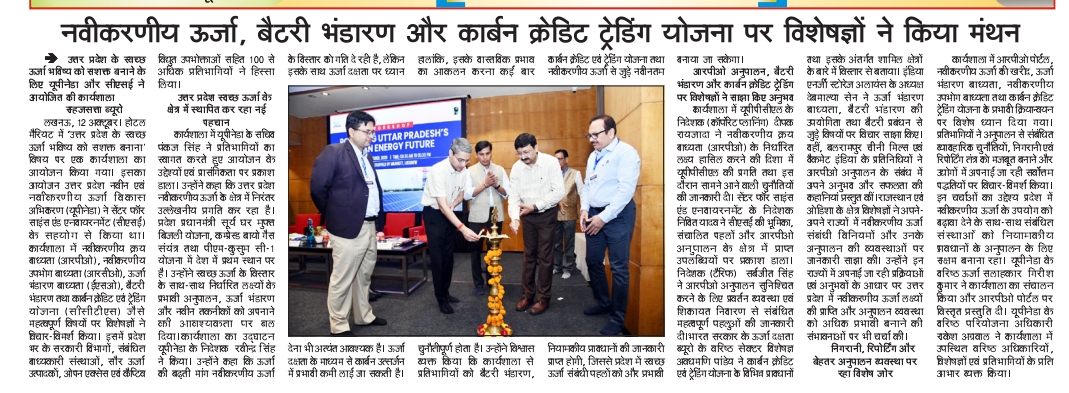
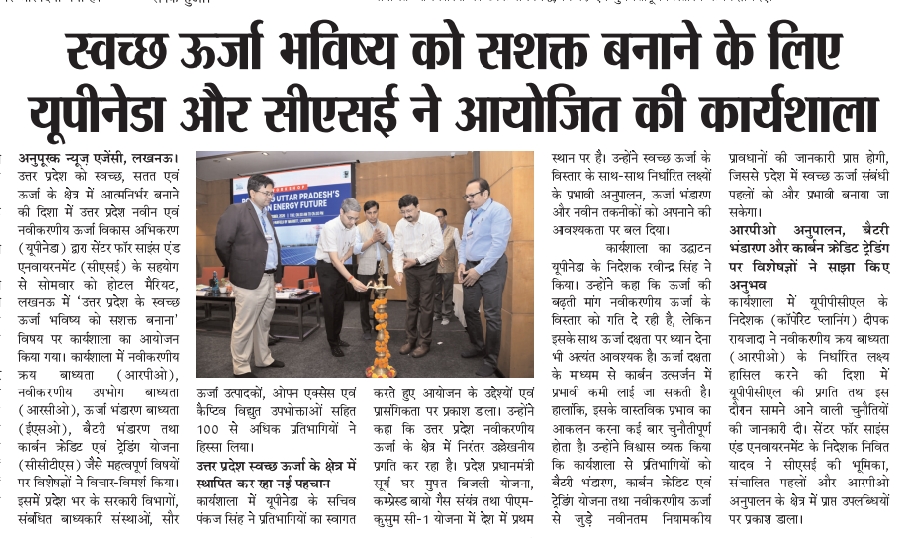
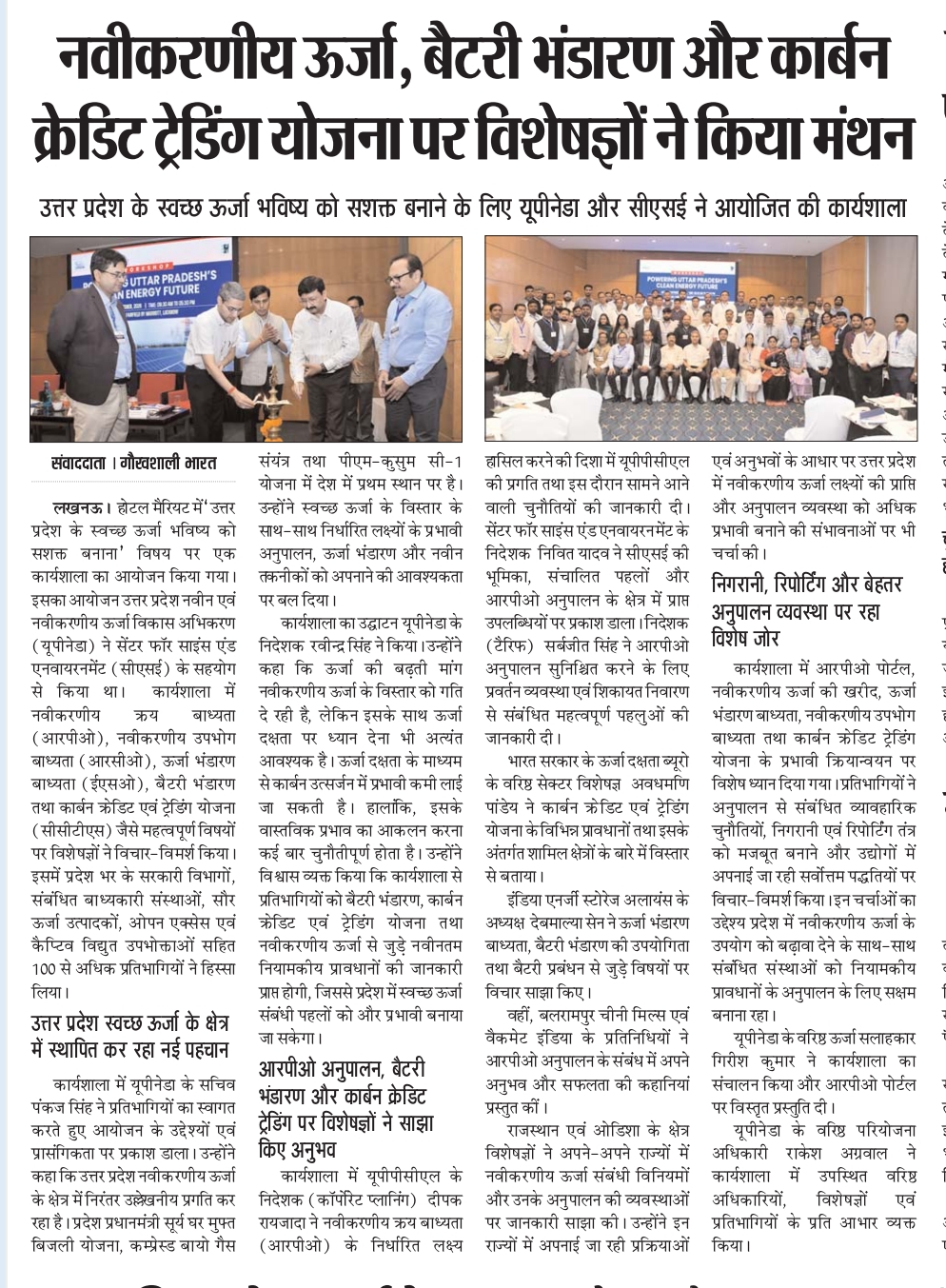
उत्तर प्रदेश नवीन एवं नवीकरणीय ऊर्जा विकास अभिकरण (यूपीनेडा) ने सेंटर फॉर साइंस एंड एनवायरनमेंट (सीएसई) के सहयोग से सोमवार को लखनऊ में ‘उत्तर प्रदेश के स्वच्छ ऊर्जा भविष्य को सशक्त बनाना’ विषय पर कार्यशाला का आयोजन किया. कार्यशाला में ऊर्जा भंडारण बाध्यता (ईएसओ), बैटरी भंडारण और कार्बन क्रेडिट व ट्रेडिंग योजना (सीसीटीएस) जैसे महत्वपूर्ण विषयों पर विशेषज्ञों ने विचार-विमर्श किया. प्रदेश भर के सरकारी विभागों, संबंधित बाध्यकारी संस्थाओं, सौर ऊर्जा उत्पादकों, ओपन एक्सेस और कैप्टिव विद्युत उपभोक्ताओं सहित 100 से अधिक प्रतिभागियों ने हिस्सा लिया. यूपीनेडा के सचिव पंकज सिंह ने कहा कि उत्तर प्रदेश नवीकरणीय ऊर्जा के क्षेत्र में लगातार प्रगति कर रहा है. प्रदेश प्रधानमंत्री सूर्य घर मुफ्त बिजली योजना, कम्प्रेस्ड बायो गैस संयंत्र और पीएम-कुसुम सी-1 योजना में देश में पहले स्थान पर है. उन्होंने स्वच्छ ऊर्जा के विस्तार के साथ-साथ निर्धारित लक्ष्यों के प्रभावी अनुपालन, ऊर्जा भंडारण और नवीन तकनीकों को अपनाने की आवश्यकता पर बल दिया. यूपीनेडा के निदेशक रवीन्द्र सिंह ने कहा कि ऊर्जा की बढ़ती मांग नवीकरणीय ऊर्जा के विस्तार को गति दे रही है, लेकिन इसके साथ ऊर्जा दक्षता पर ध्यान देना भी अत्यंत आवश्यक है. ऊर्जा दक्षता के माध्यम से कार्बन उत्सर्जन में प्रभावी कमी लाई जा सकती है. हालांकि इसके वास्तविक प्रभाव का आकलन करना कई बार चुनौतीपूर्ण होता है. उन्होंने उम्मीद की है कि कार्यशाला से प्रतिभागियों को बैटरी भंडारण, कार्बन क्रेडिट एवं ट्रेडिंग योजना और नवीकरणीय ऊर्जा से जुड़े नए नियामकीय प्रावधानों की जानकारी मिलेगी, जिससे प्रदेश में स्वच्छ ऊर्जा संबंधी पहलों को और प्रभावी बनाया जा सकेगा. यूपीपीसीएल के निदेशक (कॉर्पोरेट प्लानिंग) दीपक रायजादा ने नवीकरणीय क्रय बाध्यता (आरपीओ) के निर्धारित लक्ष्य हासिल करने की दिशा में यूपीपीसीएल की प्रगति और इस दौरान सामने आने वाली चुनौतियों की जानकारी दी. सेंटर फॉर साइंस एंड एनवायरनमेंट के निदेशक निवित यादव ने सीएसई की भूमिका, संचालित पहलों और आरपीओ अनुपालन के क्षेत्र में प्राप्त उपलब्धियों पर प्रकाश डाला. निदेशक (टैरिफ) सर्बजीत सिंह ने आरपीओ अनुपालन सुनिश्चित करने के लिए प्रवर्तन व्यवस्था और शिकायत निवारण से संबंधित महत्वपूर्ण पहलुओं की जानकारी दी. भारत सरकार के ऊर्जा दक्षता ब्यूरो के वरिष्ठ सेक्टर विशेषज्ञ अवधमणि पांडेय ने कार्बन क्रेडिट एवं ट्रेडिंग योजना के विभिन्न प्रावधानों और इसके अंतर्गत शामिल क्षेत्रों के बारे में विस्तार से बताया. इंडिया एनर्जी स्टोरेज अलायंस के अध्यक्ष देबमाल्या सेन ने ऊर्जा भंडारण बाध्यता, बैटरी भंडारण की उपयोगिता और बैटरी प्रबंधन से जुड़े विषयों पर विचार साझा किए. राजस्थान और ओडिशा के क्षेत्र विशेषज्ञों ने अपने-अपने राज्यों में नवीकरणीय ऊर्जा संबंधी विनियमों और उनके अनुपालन की व्यवस्थाओं पर जानकारी साझा की. उन्होंने इन राज्यों में अपनाई जा रही प्रक्रियाओं और अनुभवों के आधार पर उत्तर प्रदेश में नवीकरणीय ऊर्जा लक्ष्यों की प्राप्ति और अनुपालन व्यवस्था को अधिक प्रभावी बनाने की संभावनाओं पर भी चर्चा की. यूपीनेडा के वरिष्ठ ऊर्जा सलाहकार गिरीश कुमार ने कार्यशाला का संचालन किया और आरपीओ पोर्टल पर प्रेजेंटेशन दिया.

नवीकरणीय ऊर्जा बढ़ाने पर जोर:कार्यशाला में विशेषज्ञों ने रखे विचार, बैटरी भंडारण और कार्बन क्रेडिट पर हुई चर्चा

लखनऊ के पेपर मिल कॉलोनी स्थित यूपीनेडा और सेंटर फॉर साइंस एंड एनवायरनमेंट (सीएसई) की ओर से सोमवार को स्वच्छ ऊर्जा को बढ़ावा देने के लिए कार्यशाला आयोजित की गई। होटल मैरियट में हुई इस कार्यशाला का उद्देश्य उत्तर प्रदेश को स्वच्छ ऊर्जा के क्षेत्र में आत्मनिर्भर बनाना और नवीकरणीय ऊर्जा का विस्तार करना था। इसमें बैटरी भंडारण, कार्बन क्रेडिट ट्रेडिंग और ऊर्जा दक्षता जैसे विषयों पर चर्चा हुई। यूपीनेडा के सचिव पंकज सिंह ने कहा कि उत्तर प्रदेश नवीकरणीय ऊर्जा के क्षेत्र में आगे बढ़ रहा है। प्रदेश प्रधानमंत्री सूर्य घर मुफ्त बिजली योजना और पीएम-कुसुम सी-1 योजना में देश में पहले स्थान पर है। उन्होंने आधुनिक तकनीक अपनाने और निर्धारित लक्ष्यों को पूरा करने पर जोर दिया। यूपीनेडा के निदेशक रवीन्द्र सिंह ने कहा कि ऊर्जा की बढ़ती मांग को पूरा करने के लिए नवीकरणीय ऊर्जा का विस्तार जरूरी है। कार्बन उत्सर्जन घटाने के लिए ऊर्जा दक्षता पर भी ध्यान देना होगा।