Cse In News

Pacific Region Near Australia Logs Hottest Year in 2024 Amid Cyclones, Marine Heatwaves

Down To Earth also noted that locations from Malaysia and the Philippines to Vanuatu and southern Australia, experienced temperatures about 0.5 degrees Celsius to 1 degree Celsius higher than the 1991-2020 average. Brunei Darussalam, Singapore and the Philippines also reported their hottest year ever. The year 2024 was the hottest on record in the South-West Pacific region, with temperatures approximately 0.48 degrees Celsius above the 1991–2020 average, according to the State of the Climate in the South-West Pacific 2024 report released by the World Meteorological Organization (WMO) on June 5, 2025. The South-West Pacific region includes Australia, Brunei Darussalam, the Cook Islands, Fiji, French Polynesia, Indonesia, Kiribati, Malaysia, the Marshall Islands, Federated States of Micronesia, New Caledonia, New Zealand, Niue, Papua New Guinea, the Philippines, Samoa, Singapore, the Solomon Islands, Timor-Leste, Tonga, Tuvalu and Vanuatu. As reported by Down To Earth, the year was further marked by extreme heat, devastating cyclones, heavy floods and the largest marine heatwave event ever observed. Down To Earth also noted that locations from Malaysia and the Philippines to Vanuatu and southern Australia, experienced temperatures about 0.5 degrees Celsius to 1 degree Celsius higher than the 1991-2020 average. Brunei Darussalam, Singapore and the Philippines also reported their hottest year ever. The report underscored that a significant heatwave affected Western Australia in February 2024. On February 18, Carnarvon touched 49.9 degrees Celsius and Geraldton reached 49.3 degrees Celsius—both more than 2 degrees Celsius hotter than their previous century-old records. At Emu Creek, temperatures hit 48 degrees Celsius for four consecutive days—a first for any Australian location. This contributed to the hottest summer ever recorded in many parts of the region, reported Down To Earth. Extreme Rises in Ocean Temperature Another study published in the journal Nature Climate Change found that the world experienced a 240% increase in the average number of marine heatwave (MHW) days in the summers of 2023-24 relative to the instrumental record. MHW are prolonged spikes in ocean temperature, now affecting every part of the globe. Nearly 10% of the oceans experienced the highest sea surface temperatures (SST) ever — four times higher than the historical annual average, according to the study published in the journal Nature Climate Change. The global average SSTs reached record highs. This rapid warming, according to scientists, is fuelled by human-induced climate change. The other contributing factors include El Niño — warm phase of a natural climate pattern across the tropical Pacific known as the El Niño-Southern Oscillation, or “ENSO” — and record low global cloud cover.
NO2 levels in city’s air three times higher than safe limits

Gurgaon: Concentration of nitrogen dioxide (NO2) -- a pollutant emitted by burning fuel in vehicles, power plants and industries – exceeded the maximum safe limit by three times in the past two days. Data from the Gwal Pahari air quality monitoring station showed that average NO2 for eight hours was 133µg/m³ on Thursday and 123µg/m³ on Friday. In India, the safe limit for exposure to NO2 is 40µg/m³. The maximum concentration considered safe by the World Health Organization is even lower, at 25 µg/m³. Experts said emissions from vehicles, especially in congested areas, is likely to be the key reason for NO2 pollution. They said NO2 does not get as much regulatory attention as other pollutants such as particulate matter (PM2.5 and PM10), though it is associated with exacerbating respiratory ailments. Shubhansh Tiwari, a research associate at the Centre for Science and Environment (CSE), said on Friday, "Elevated NO₂ levels in the city are predominantly due to vehicular emissions. Old vehicles and traffic congestion are key sources of NO2 here." Asked about action taken to reduce NO2 emissions, an official of the Haryana State Pollution Control Board (HSPCB) said the agency has allowed a private firm to scrap old vehicles. "This aims to remove polluting vehicles from city roads," the official said. A senior HSPCB official said NO2 levels are likely to have spiked after brief relief due to pre-monsoon showers. "The recent rains had kept nitrogen dioxide levels in check by dispersing pollutants. But with clear skies and calmer weather now, NO2 from vehicular and industrial emissions is building up, especially in traffic-dense areas. Unlike particulate matter, NO2 often flies under the radar, but prolonged exposure can be equally hazardous," the official said. Currently, just one of the four air quality monitoring stations is functioning in the city. Dr Bandana Mishra, who heads the pulmonology and respiratory medicine department at Manipal Hospital in Gurgaon said everyone is at risk from high NO2 exposure, but children and the elderly suffer the most. "Nitrogen dioxide exposure can lead to increased inflammation of the airways, which results in persistent cough wheezing, reduced lung function and a higher frequency of asthma attacks," Dr Mishra said.

Ground Report: देश का पहला Zero Dumpsite बना अम्बिकापुर, सेंटर फॉर साइंस एंड एनवायरमेंट की रिपोर्ट में टॉप

सेंटर फॉर साइंस एंड एनवायरमेंट ने अम्बिकापुर को वायु प्रदूषण नियंत्रण का आदर्श माडल बताया है. यह रिपोर्ट राष्ट्रीय स्वच्छता वायु कार्यक्रम के तहत् जारी किया गया है. छत्तीसगढ़ का सरगुजा अपने हसीन वादियों के लिए देशभर में जाना जाता है, ऐसे में कुछ वर्षों पहले कि बात करें, तो संभाग मुख्यालय अम्बिकापुर से लगे मडीपुर में शहरा का कचरा डंप होता था, और जब लोग इस रास्ते से गुजरते थे तो अपने नाक बंद कर लेते थे, वज़ह दुर्गंध, लेकिन अब यह कचरा डंपिंग साइड नहीं रहा. यहां नगर निगम ने डंप साइड में स्वच्छता चेतना पार्क का निर्माण कर दिया है, जहां तमाम तरह कि प्रदर्शिनी लगाईं गई है, एफिल टॉवर हो,चाहे हरियाली हो चाहे प्लास्टिक से बना टायर व अन्य वस्तुएं लोगों के लिए आकर्षण का केंद्र बना हुआ है. ऐसे में सरगुजा जिले के अम्बिकापुर शहर के डंप साइड को देशभर में जीरो डंप साइड स्वच्छता के क्षेत्र में पहला स्थान हासिल हुआ है और इसकी मुख्य वजह स्वच्छता अभियान नगर निगम ने स्वच्छता दीदी यों कि कि सरहाना,, प्लास्टिक मुक्त शहर अम्बिकापुर. नगर निगम कि पहल से अब लोग कचरे का भरपूर फायदा उठा रहे है, जहां पहले कचरा फेका जाता था. अब उसी कचरे से तरह तरह कि प्लास्टिक कि वस्तुएं तैयार हो रही है जों अन्य राज्यों में भेजा जा रहा है, सेंटर फॉर साइंस एंड एनवायरमेंट ने अम्बिकापुर को वायु प्रदूषण नियंत्रण का आदर्श माडल बताया है. यह रिपोर्ट राष्ट्रीय स्वच्छता वायु कार्यक्रम के तहत् जारी किया गया है. दरअसल अम्बिकापुर नगर निगम कचरे के प्रबंधन में देशभर के लिए एक मिशाल कायम किया है. पहले कचरे के डंपिंग यार्ड में परिवहन और 45 लाख रुपए खर्च होते थे लेकिन अब पुरी तरह बंद हो गया है. यही नहीं निगम को डंप साइड हटाने से उसी कचरे से अब 12 लाख रुपए और युजर्स चार्ज से 16 लाख रुपए कुल 28 लाख रुपए कि आमदनी हो रही है. इस बदलाव के बाद शहर में प्रतिदिन एकत्र होने वाले प्लास्टिक कचरे को निगम तीन बड़ी सिगरेट, फैक्ट्रीयों के साथ अनुबंध कर सप्लाई कर रहा है जिससे यहां काम करने वाले लोगों कि कमाई का साधन बन चुका है.

Scooters Starting at ₹44,999, Aims for Mass Market Adoption

As Indian author and environmentalist Sunita Narain once noted, “If we are serious about fighting climate change, we must begin with making clean energy affordable and accessible.” Warivo’s product philosophy reflects exactly that. With low prices starting at just ₹44,999, Warivo Motors India has introduced six new electric scooters under its Nova and Edge series in a dynamic push towards inclusive and accessible green mobility. The launch is a strong statement about the future of transit in India: electric, inexpensive, and accessible to all. It is designed to address the changing demands of contemporary Indian commuters, from urban professionals to everyday riders in rural areas. The new models, boasting a range of up to 120 kilometres per charge, are now available across Warivo’s nationwide dealership network. With integrated smart connectivity and a three-year comprehensive warranty, the scooters combine technology with reliability, redefining expectations in the entry-level electric vehicle segment. Bridging Urban Style and Rural Utility | Warivo Motors Warivo’s twin-series strategy is both ambitious and inclusive. With its sophisticated design, enhanced comfort, and app-driven, cutting-edge features that enhance the riding experience, the Nova series is designed for riders who want more than just functionality. Imagine intelligent dashboards, easy-to-use controls, and a streamlined appearance that will draw attention in urban traffic. On the other hand, the Edge series is Warivo’s answer to India’s massive demand for robust, reliable, and no-nonsense vehicles. Built for endurance and simplicity, these models are ideal for daily commuting, last-mile deliveries, and rural navigation. All six scooters feature lightweight, ergonomic frames that are suitable for various terrains and rider profiles. Warivo has factored in age, gender, geography, and economic diversity, ensuring that the electric revolution doesn’t leave anyone behind. Electric Scooters in India: The Time Is Now India’s two-wheeler market, long dominated by petrol-driven models, is undergoing a fundamental shift. With rising fuel prices and growing environmental concerns, electric scooters in India are no longer fringe alternatives; they’re becoming mainstream choices. “Electric mobility should not be a luxury and should be a choice available to everyone,” said Yuvraj Garg, Co-founder of Warivo Motors India. “With this new lineup, we have addressed various price points and use-cases, creating a scooter for everyone, whether they live in metro cities or smaller towns.” The ambitious EV policy framework of the Indian government, which promotes sustainable urban mobility and domestic innovation, aligns with this vision. Warivo’s launch comes at an opportune moment, riding the wave of policy momentum and growing consumer interest. Retail Expansion to Match the Ambition Warivo isn’t stopping at product innovation. By the end of this fiscal year, the company plans to open 200 new retail locations throughout India, demonstrating a robust growth strategy that extends beyond urban areas. A dedicated customer support network, improved spare part availability, and enhanced after-sales infrastructure will all contribute to the retail push, ensuring a seamless ownership experience. It is a vital differentiator in a market where concerns around EV servicing and support still linger. With a dual focus on urban density and rural reach, Warivo is positioning itself as a pan-India EV brand — one that not only sells products but also builds ecosystems. Sustainability Meets Affordability What sets Warivo apart is its unyielding focus on affordable electric mobility. While several players in the EV space are pursuing premium segments, Warivo’s sub-₹50,000 starting price is a compelling proposition. It's a democratised approach to sustainability, ensuring that green choices aren’t just for the rich, but for the everyday Indian. And make no mistake, Warivo isn’t compromising on features. With mobile app connectivity, intelligent diagnostics, range analytics, and a rider-friendly UI, these scooters bring smart mobility to budget-conscious consumers without compromising quality. As Indian author and environmentalist Sunita Narain once noted, “If we are serious about fighting climate change, we must begin with making clean energy affordable and accessible.” Warivo’s product philosophy reflects exactly that. Riding Toward the Future | Warivo Motors Warivo’s six new electric scooters aren’t just new models; they’re milestones in India’s journey toward sustainable transport. With strategic segmentation, thoughtful design, and competitive pricing, the company is carving out a distinct niche in the rapidly growing EV market. And in a country where two-wheelers are more than just vehicles, they're lifelines, business tools, and symbols of aspiration. Warivo’s timing couldn’t be better. As the buzz grows and dealerships begin to register interest from all quarters, one thing is clear: India’s electric future isn’t coming. It’s already here, and it’s riding on two wheels.

Rajasthan CM calls for public participation in water conservation initiatives

A memorandum of understanding was signed between the State Pollution Control Board and the Centre for Science and Environment, New Delhi, to prepare the Climate Change Adaptation Plan 2030. MoUs were also signed for an emission trading scheme and an early warning system for Alwar and Bhiwadi. A fortnight-long water conservation campaign was launched in Rajasthan on Thursday with an emphasis on restoration of traditional water sources, construction of water harvesting structures, ground water recharge, and repair of dams and canals. The campaign’s inauguration coincided with World Environment Day. Chief Minister Bhajan Lal Sharma inaugurated the campaign at the Rajasthan International Centre here while calling for greater public participation in water conservation initiatives. “The traditions of water conservation have been an integral part of our cultural heritage. It is our moral responsibility to prevent the adverse impact of climate change,” Mr. Sharma said. Mr. Sharma said people in Rajasthan had adopted unique methods to conserve water in the past. “Structures like stepwells, johads, ponds, and wells are living examples of the water conservation traditions of our State,” he said, while pointing out that his government was constructing at least 125 water conservation structures in each district. Conservation projects Foundation stones for projects worth ₹345 crore will be laid during the campaign until June 20, while water sources will be cleaned and shramdaan (voluntary labour) camps will be organised, besides tree plantation activities, and people will take a pledge to reduce plastic use. The Chief Minister appealed to people to adopt an “eco-friendly lifestyle” and plant at least one tree in their vicinity in the upcoming monsoon season and take regular care of it. “We will be able to gift clean air, water, and earth to the coming generations with this initiative and help make a green Rajasthan,” he said. A memorandum of understanding was signed between the State Pollution Control Board and the Centre for Science and Environment, New Delhi, to prepare the Climate Change Adaptation Plan 2030. MoUs were also signed for an emission trading scheme and an early warning system for Alwar and Bhiwadi. Mr. Sharma also addressed a shramdaan programme at the historic Ramgarh dam, near Jaipur, aimed at its restoration, and later visited the banks of the Chambal river at Keshoraipatan in Bundi district to perform rituals and inaugurate development projects related to water conservation.

गार्बेज कैफे जैसी योजनाओं की सफलता: CSE रिपोर्ट ने वायु प्रदूषण नियंत्रण का देश में सबसे आदर्श मॉडल अंबिकापुर को बताया - CSE REPORT DECLARED

सेंटर फॉर साइंस एंड एनवायरनमेंट: हाल ही में राष्ट्रीय स्वच्छ वायु कार्यक्रम (NCAP) के तहत सेंटर फॉर साइंस एंड एनवायरनमेंट (CSE) द्वारा की गई ताजा समीक्षा रिपोर्ट में अंबिकापुर शहर को एक बेहतरीन उदाहरण के रूप में प्रस्तुत किया गया है, जिसने ठोस अपशिष्ट प्रबंधन के जरिए न केवल पर्यावरणीय बल्कि सामाजिक और आर्थिक सुधार भी हासिल किए हैं. अम्बिकापुर में देश का पहला गार्बेज कैफे अंबिकापुर में खोला गया. पर्यावरण के लिए यह गार्बेज कैफे कितना सहायक सिद्ध हुआ. इसके लिए हमने आंकड़े जुटाए. साल 2019 में गार्बेज कैफे खोला गया तब से अब तक के प्लास्टिक वेस्ट के आंकड़े कहते हैं कि अंबिकापुर के लोग प्लास्टिक का उपयोग कम कर रहे हैं. ये आंकड़ा मिलता है उन स्वच्छता दीदियों के काम से जो रोज शहर के घर-घर से कचरा कलेक्ट करती हैं और हर कचरे को अलग करके उसका रीयुज किया जाता है. CSE रिपोर्ट: स्वच्छता दीदियों के द्वारा कलेक्ट किये गये प्लास्टिक वेस्ट में 2020 में 292 टन, 2021 में 270 टन, 2022 में 269 टन, 2023 में 254 टन और 2024 में मात्र 226 टन प्लास्टिक वेस्ट ही शहर में जमा हुआ है. हर साल प्लास्टिक वेस्ट की घटती संख्या बताती है कि लोग प्लास्टिक के उपयोग के प्रति जागरूक हो रहे हैं. वेस्ट के आंकड़ों में भी गिरावट: गार्बेज कैफे में आने वाले प्लास्टिक वेस्ट के आंकड़ो में भी गिरावट आई है. 2019 में करीब 5400 किलो प्लास्टिक कैफे में आई. कोरोना काल में 2020-21 में कैफे बंद रहा, 2022 में 2500 किलो और 2024 में 2000 किलो प्लास्टिक वेट गार्बेज कैफे के माध्यम से पहुंचा. इसका सीधा मतलब है कि सड़क किनारे एकत्र होने वाली प्लास्टिक में भी कमी आई है. सेंटर फॉर साइंस एंड एनवायरनमेंट: हाल ही में राष्ट्रीय स्वच्छ वायु कार्यक्रम (NCAP) के तहत सेंटर फॉर साइंस एंड एनवायरनमेंट (CSE) द्वारा की गई ताजा समीक्षा रिपोर्ट में अंबिकापुर शहर को एक बेहतरीन उदाहरण के रूप में प्रस्तुत किया गया है, जिसने ठोस अपशिष्ट प्रबंधन के जरिए न केवल पर्यावरणीय बल्कि सामाजिक और आर्थिक सुधार भी हासिल किए हैं. जीरो डंपसाइट शहर: सीएसई की रिपोर्ट में बताया गया है कि अंबिकापुर आज देश का पहला जीरो डंपसाइट शहर बन गया है. कभी कचरे के ढेर जलते डंपसाइट और खुले में कचरा फेंकने की समस्याओं से जूझने वाला यह शहर अब अपने सुदृढ़ और समुदाय आधारित अपशिष्ट प्रबंधन मॉडल के लिए पूरे देश में जाना जाता है. कचरे के खुले में जलने और फेंके जाने की प्रवृत्ति पर भी प्रभावी नियंत्रण पाया गया, जिससे पीएम 2.5 और पीएम 10 जैसे हानिकारक कणों में भारी कमी आई है. रिसाइक्लिंग प्लांट: स्वच्छ भारत मिशन शहरी के नोडल ऑफिसर रितेश सैनी ने कहा कि "इस कैफे को चलाने का मुख्य उद्देश्य प्लास्टिक कचरे को सड़कों और नालियों में जाने से रोकना, सही तरीके से रिसाइक्लिंग करने के साथ साथ प्लास्टिक के बदले भोजन उपलब्ध कराना है. अंबिकापुर मॉडल: साल 2019 में लगभग 5400 किलो प्लास्टिक प्राप्त हुआ. इसके बाद कोरोना काल में कैफे बंद थे. वर्ष 2022 में लगभग 2500 किलो प्लास्टिक प्राप्त हुआ है, इस वर्ष लगभग 2000 किलो प्लास्टिक प्राप्त हुआ है, देखा जा रहा है कि प्लास्टिक कचरे में कमी आ रही है. प्लास्टिक का घटना वजन बता रहा है कि शहर में इसका उपयोग कम हो रहा है. इतना ही नहीं अब तो सेंटर फॉर साइंस एंड एनवायरनमेंट विभाग ने भी अपनी रिपोर्ट में ये बताया है कि अंबिकापुर मॉडल वायु प्रदूषण नियंत्रण के लिए सबसे प्रभावी है. प्लास्टिक वेस्ट: पर्यावरण के जानकर मौसम विज्ञानी ए एम भट्ट कहते हैं कि "प्लास्टिक वेस्ट समेत अन्य ऐसे कचरे जो रासायनिक असर डालते हैं, उन सबको नगर निगम प्रशासन ने प्रकृति में मिलने से रोका है. अगर ये कचरा शहर में जाता तो मिट्टी, पानी और जलवायु को नुकसान पहुंचाता, लेकिन लगातार इस प्रयास से इसमें कमी आई है. इसके साथ ही प्लास्टिक के निदान से मिट्टी और पानी के साथ साथ पशुओं को होने वाले नुकसान को भी कम किया गया है. क्योंकि गाय या अन्य पशुओं के पालीथिन खा लेने से वो बीमार होकर मौत तक की स्थिति में आ जाते थे. लेकिन इसमें कमी आई है और उम्मीद है कि आगे इसमें और बेहतर काम किये जायेंगे. वायु प्रदूषण नियंत्रण: पूर्व एनसीसी कैडेट राकेश तिवारी कहते हैं, जब भी कोई बड़ा या नया काम शुरू किया जाता है तो उसकी आलोचना होती है, कई लोग होते हैं जो अभियान में कमियों को खोजते हैं, जाहिर है कि मानव स्वभाव है कि उससे गलतियां होंगी, योजनाओं को भी मानव ही संचालित करते हैं, लेकिन अभियान के पीछे की मंशा और फिर उसका प्रतिसाद क्या निकला ये देखना चाहिए. अम्बिकापुर का स्वच्छता मॉडल बेस्ट है. ये हर मौके पर देश और प्रदेश की एजेंसियों ने स्वीकार किया है. शहर में अगर प्लास्टिक की आमद कम हुई है तो जाहिर सी बात है की वो पर्यावरण के हित में है. केन्द्रीय विभाग अगर ये कहता है कि वायु प्रदूषण को नियंत्रित करने का आदर्श मॉडल है तो ये गर्व की बात है. डंपिंग यार्ड खत्म: पर्यावरण संरक्षण के लिए काम करने वाले राजीव पाठक कहते हैं कि एक तरफ हमारे जैसे लोग पेड़ लगाते हैं, हम लोग करीब 12 साल से वृक्षा रोपण करते हैं, ताकि पर्यावरण संतुलन बना रहे, लेकिन पर्यावरण में प्लास्टिक का मिलना एक गंभीर समस्या है. अंबिकापुर नगर निगम ने जिस तरह प्लास्टिक के उपयोग पर नियंत्रण किया, इनके स्वच्छता मॉडल के करण शहर में डंपिंग यार्ड खत्म हो गये, हानिकारक वेस्ट को इनसीनेटर में नष्ट किया जाता है, इससे निश्चित ही हमारा वातावरण स्वच्छ हुआ है" कचरे का प्रबंधन: नगर निगम आयुक्त डी एन कश्यप ने बताया कि " सबको पता है कि अंबिकापुर शहर में पहले से ही कचरे का प्रबंधन किया जाता है. यहां कचरा डंपिंग यार्ड में नहीं जाता है. हर कचरे का सेग्रीगेशन कर लिया जाता है, प्लास्टिक वेस्ट का दाना बना लिया जाता है, कुछ प्लास्टिक को सीमेंट फैक्ट्री को भेज दिया जाता है. स्वछता के क्षेत्र में अम्बिकापुर में काफी बेहतर काम हो रहा है, आगे हम इसको और बेहतर करने की दिशा में काम कर रहे हैं."

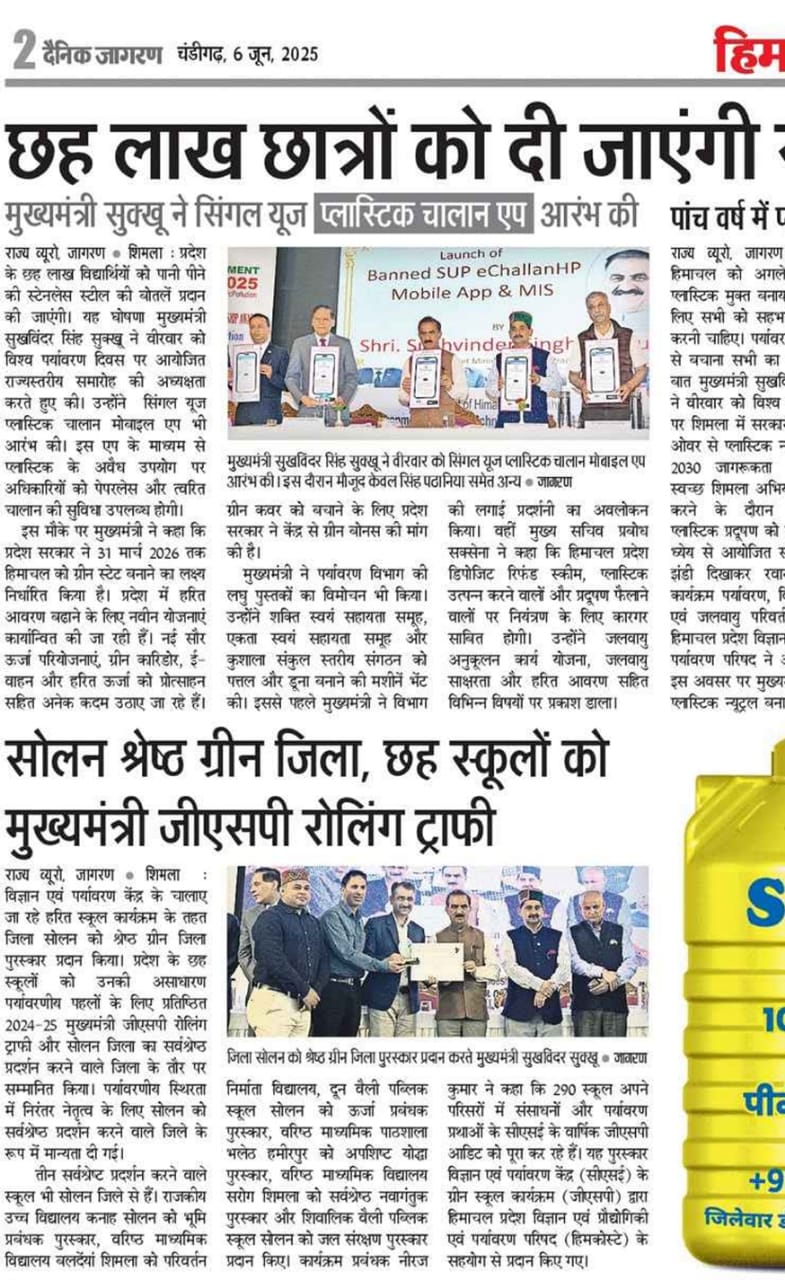
विश्व पर्यावरण दिवस, CM Sukhu ने हरित पथप्रदर्शकों को किया सम्मानित

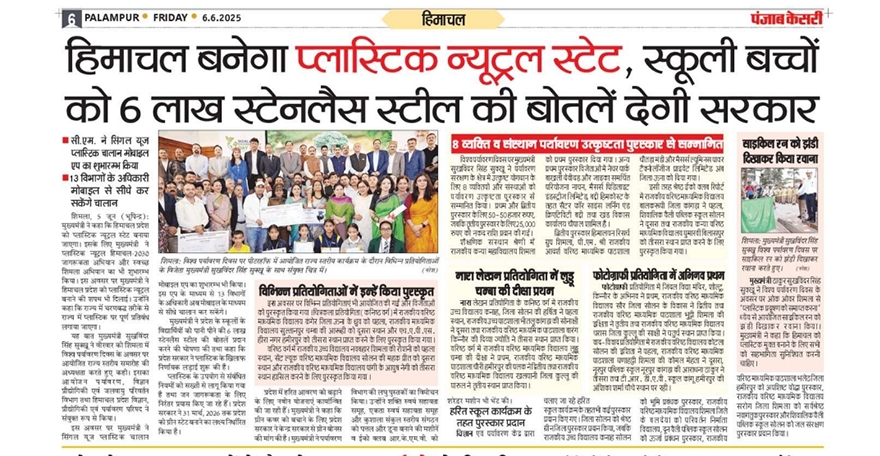
हिमाचल प्रदेश: विश्व पर्यावरण दिवस पर मुख्यमंत्री सुखविंदर सिंह सुक्खू ने पर्यावरण संरक्षण में उल्लेखनीय योगदान के लिए आठ व्यक्तियों और संस्थाओं को पर्यावरण नेतृत्व पुरस्कार से सम्मानित किया। प्रथम और द्वितीय पुरस्कार में 50-50 हजार रुपये की नकद राशि दी गई, जबकि तीसरे पुरस्कार में 25 हजार रुपये की राशि दी गई। मुख्यमंत्री ने "प्लास्टिक चैलेंजिंग मोबाइल ऐप" भी लॉन्च किया और इसे पर्यावरण कानूनों के डिजिटलीकरण की दिशा में एक बड़ा कदम बताया। उन्होंने सतत जीवन के बारे में जागरूकता फैलाने के लिए छात्रों, शिक्षकों और संस्थानों की सराहना की। राजकीय कन्या महाविद्यालय (आरकेएमवी), शिमला ने शैक्षणिक संस्थान श्रेणी में प्रथम पुरस्कार प्राप्त किया। अन्य शीर्ष विजेताओं में नेचर पार्क बाखली, नाचन में जेआईसीए समर्थित परियोजना, मेसर्स पिडिलाइट इंडस्ट्रीज लिमिटेड, बद्दी, हिमकोस्ट के तहत विज्ञान शिक्षण और रचनात्मकता केंद्र और खंड विकास कार्यालय, चौपाल शामिल थे। द्वितीय पुरस्कार विजेताओं में हिमालयन रिसर्च ग्रुप, शिमला, पीएम श्री गवर्नमेंट मॉडल सीनियर सेकेंडरी स्कूल, चौंतड़ा (मंडी) और मेसर्स ल्यूमिनस पावर टेक्नोलॉजीज प्राइवेट लिमिटेड शामिल थे। लिमिटेड। इस कार्यक्रम में कई प्रतियोगिताएं भी आयोजित की गईं। सेंटर फॉर साइंस एंड एनवायरनमेंट द्वारा ग्रीन स्कूल प्रोग्राम के तहत सोलन ने सर्वश्रेष्ठ ग्रीन डिस्ट्रिक्ट अवार्ड जीता, जीएचएस कनाह (सोलन) को भूमि प्रबंधन अवार्ड मिला और जीएसएसएस बल्देयान (शिमला) ने परिवर्तन निर्माण विद्यालय अवार्ड जीता। बेस्ट इको-क्लब रिपोर्ट श्रेणी में, जीएसएसएस बालकरूपी (कांगड़ा) ने पहला पुरस्कार जीता, उसके बाद शिवालिक वैली पब्लिक स्कूल (सोलन) और जीएसएसएस (गर्ल्स) घुमारवीं (बिलासपुर) रहे। भाषण प्रतियोगिता में इशिता (जीएसएसएस कोटला, सोलन) ने शीर्ष स्थान हासिल किया, जबकि कोमल मेहता और आराधना ठाकुर ने तीसरा स्थान हासिल किया।

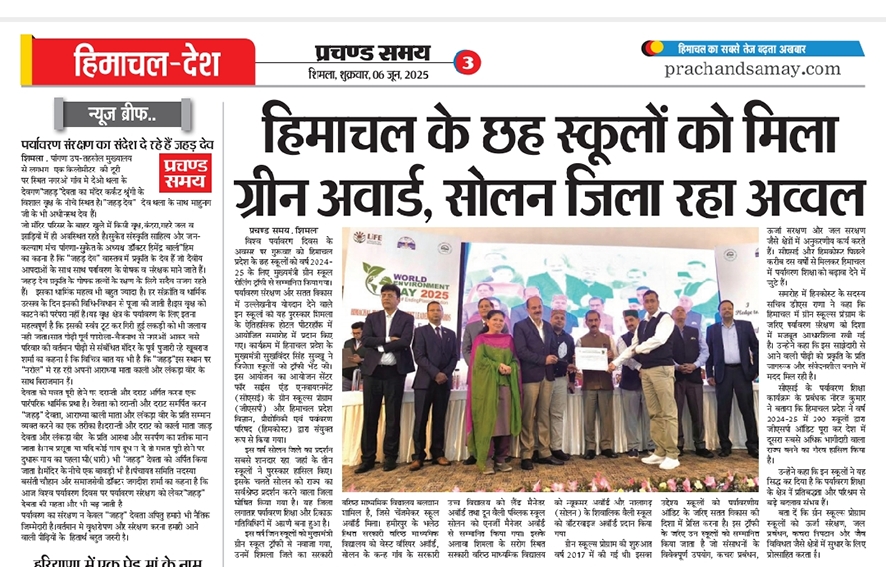
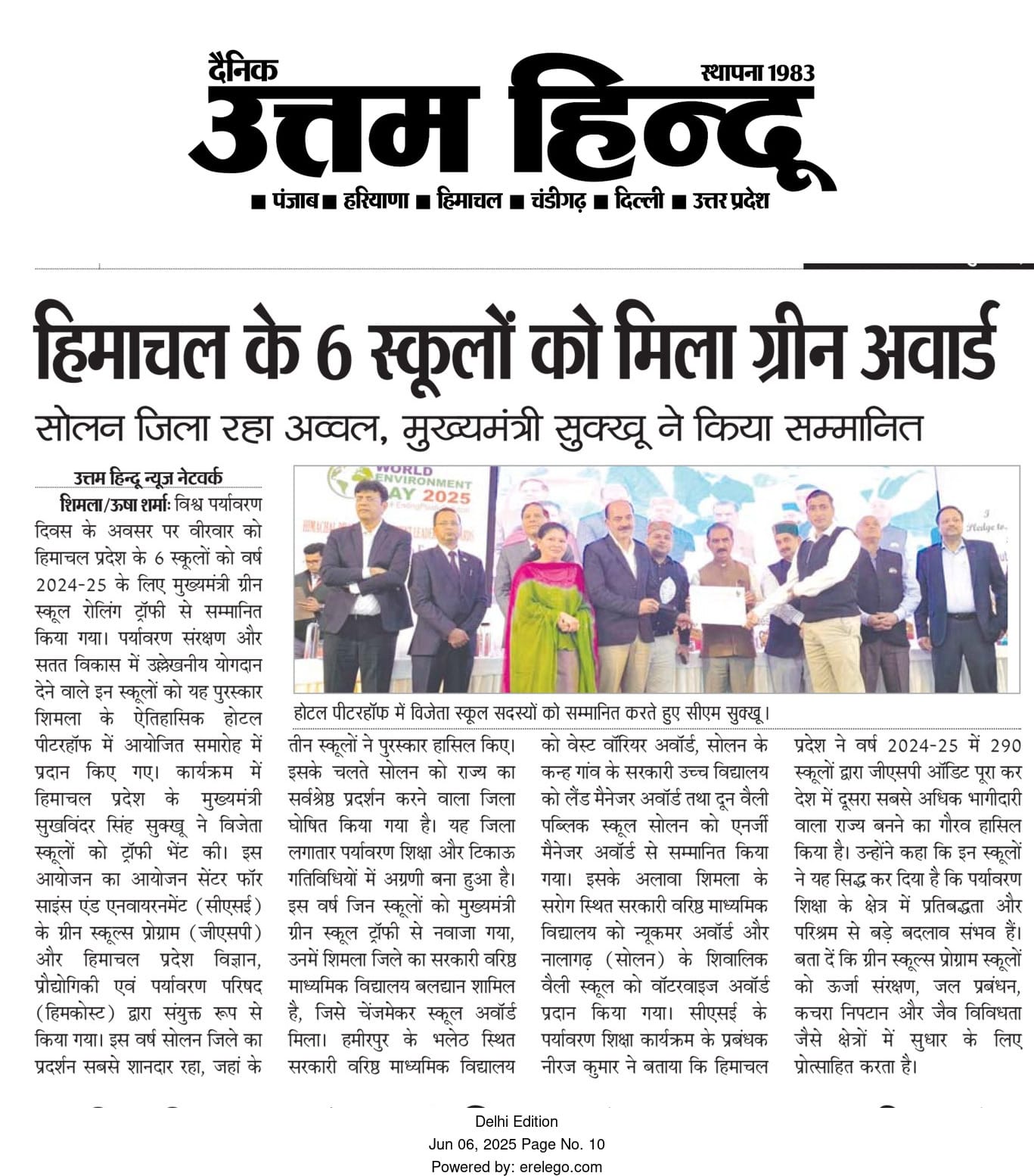
हिमाचल प्रदेश के पांच स्कूलों को मिला ‘ग्रीन स्कूल अवार्ड’, सोलन जिला फिर अव्वल

अपने परिसर को पर्यावरण के अनुकूल बनाने के लिए हिमाचल प्रदेश के पांच स्कूलों को ‘ग्रीन स्कूल अवार्ड’ से सम्मानित किया गया है। इनमें 4 सरकारी स्कूल शामिल हैं। पर्यावरण के क्षेत्र में कार्य करने वाली संस्था सेंटर फॉर साइंस एंड एनवायरमेंट (सीएसई) के ग्रीन स्कूल प्रोग्राम (जीएसपी) के तहत स्कूलों की पर्यावरण व्यवस्था के आधार पर अलग-अलग वर्ग में सम्मानित किया गया। ऐसे में पर्यावरण के अनुकूल माहौल बनाए रखने के लिए सोलन को इस बार भी राज्य का सर्वश्रेष्ठ जिला घोषित किया गया। आपको बता दें कि पिछले चार वर्षों से सोलन जिला पूरे प्रदेश में अव्वल आ रहा है। विश्व पर्यावरण दिवस पर सोमवार को शिमला स्थित राज्य अतिथि गृह पीटरहॉफ में मुख्यमंत्री सुखविंदर सिंह सुक्खू ने ग्रीन स्कूल अवार्ड प्रदान किए। पर्यावरण के तय मानकों पर सोलन और हमीरपुर जिला के स्कूलों ने सर्वश्रेष्ठ प्रदर्शन किया है। सोलन जिला के जीएमबी स्कूल नालागढ़ और कसौली इंटरनेशनल स्कूल को चेंजमेकर स्कूल अवार्ड प्रदान किया गया है। वहीं, चंबा की राजकीय वरिष्ठ माध्यमिक पाठशाला हिमगिरी को लैंड मैनेजर अवार्ड मिला है। इसके अलावा हमीरपुर जिला के राजकीय वरिष्ठ माध्यमिक पाठशाला गुलेला को वेस्ट वैरियर अवार्ड और राजकीय वरिष्ठ माध्यमिक पाठशाला कुल्हेड़ा को एनर्जी मैनेजर अवार्ड से नवाजा गया। बता दें कि प्रत्येक वर्ष ये पुरस्कार सीएसई और हिमाचल प्रदेश विज्ञान प्रौद्योगिकी और पर्यावरण परिषद के सहयोग से दिए जाते है। दरअसल, सीएसई का ग्रीन स्कूल प्रोग्राम एक पहल है, जो स्कूलों के छात्रों और शिक्षकों को उनके परिसरों पर्यावरण के अनुकूल बनाने के लिए प्रोत्साहित करता है।

At 156.87%, groundwater extraction highest in Punjab: Report

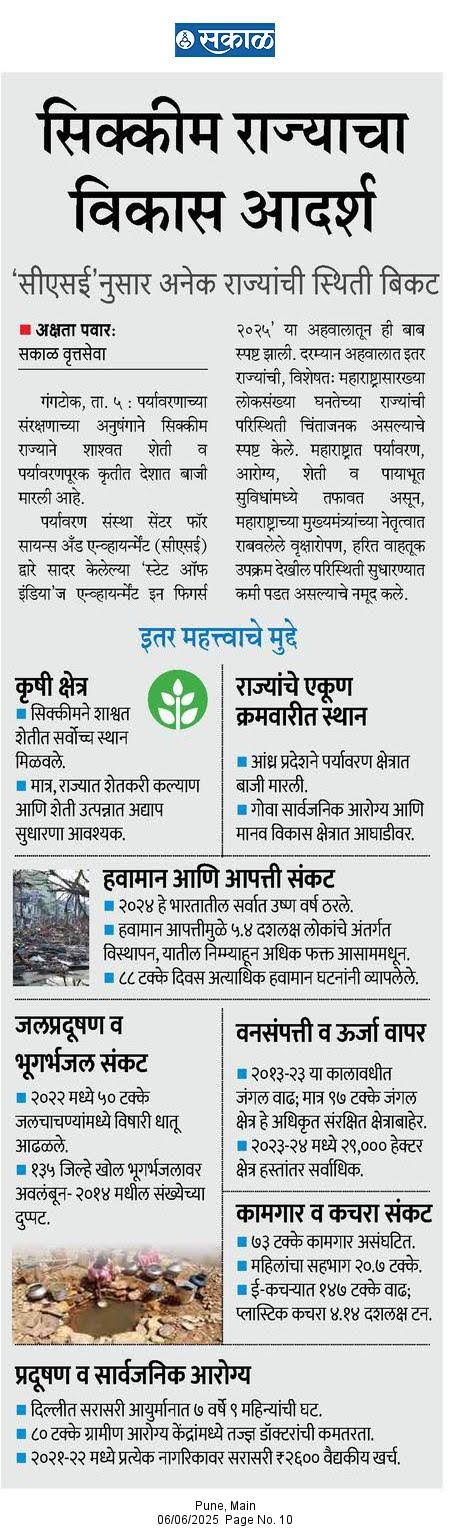
Punjab is grappling with an alarming groundwater crisis, according to the latest State of India's Environment 2025 report by an environmental NGO. The report, released ahead of World Environment Day on June 5 by the Centre for Science and Environment (CSE) and Down to Earth, highlights that over 75% of Punjab's blocks are classified as overexploited, with groundwater extraction soaring to 156.87%—the highest in the country. Punjab also faces widespread contamination of its groundwater with toxic elements such as uranium, arsenic, and nitrate, affecting nearly all its districts, according to the report. The number of districts with groundwater levels deeper than 40 metres rose from three in 2014 to 11 in 2024 in Punjab, while those with shallower water tables have declined. Punjab also suffers from severe contamination issues. Nine of its 23 districts show abnormal salinity levels; 17 report fluoride anomalies; uranium contamination affects 20 districts; nitrate and iron pollutants appear in 20 and 18 districts, respectively; and arsenic contamination is present in 12 districts, according to the report. The report further said that Punjab, alongside Ladakh, ranks lowest in the country for tree and forest cover. At the national level, India, according to the report, has witnessed a decline in agricultural land from 62.33% in 1952-53 to 58.69% in 2022-23, driven by population growth, rapid urbanisation, and industrialisation. Irrigation has increasingly shifted towards tubewell dependence, rising from 0.55% in 1960-61 to 43.34% in 2022-23, with Punjab among 10 states relying almost entirely on tubewells for irrigating farmland.