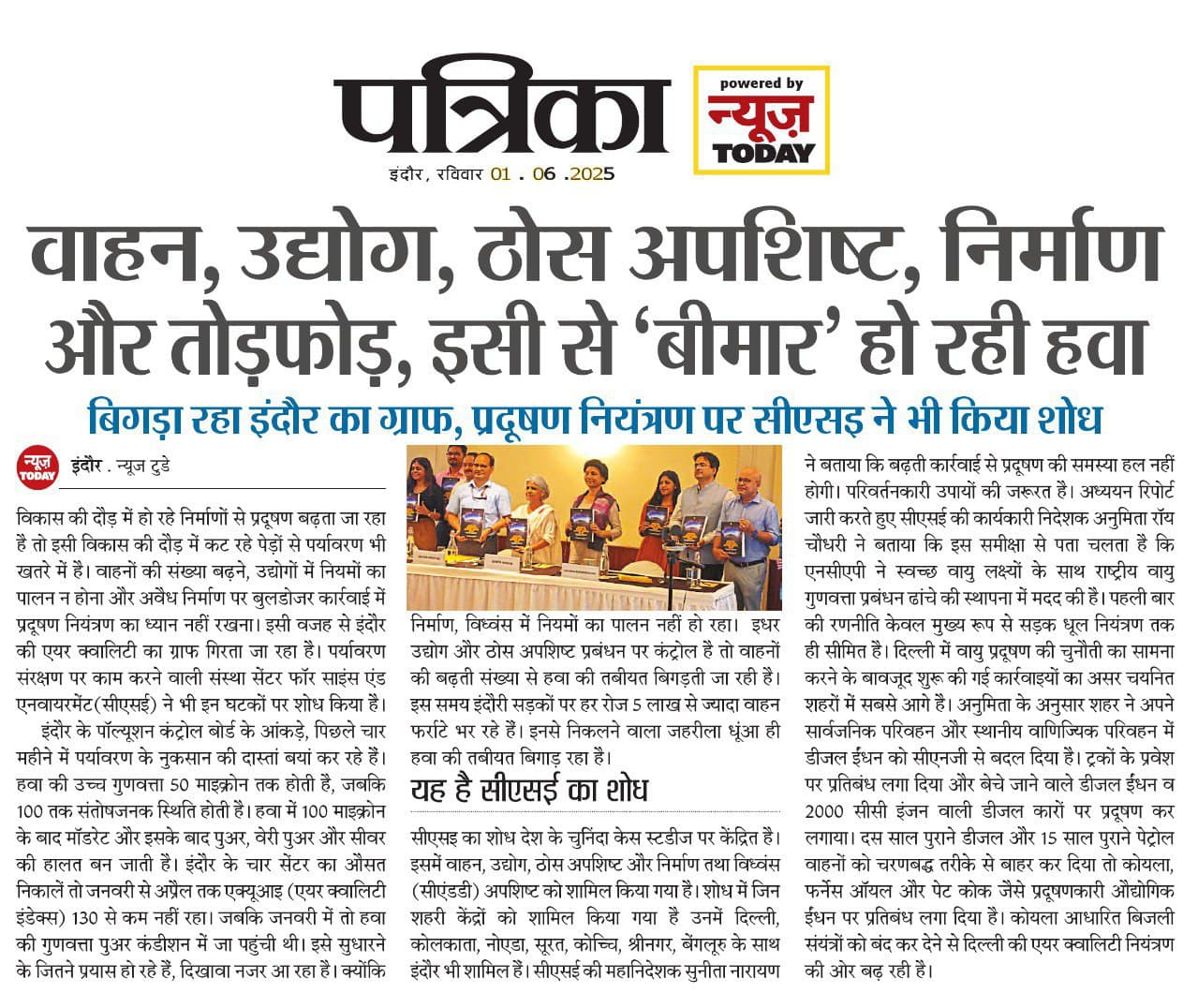
Delhi made worthy leaps but why clean air is still a long work in progress
Delhi is not the city that comes to mind with the words ‘Clean Air’ but rather the abject absence of it. A recent nationwide review of the National Clean Air Programme (NCAP), by the Centre for Science and Environment (CSE), has shown that the Delhi administration’s multi-pronged actions to crack down on sources of air pollution has covered much ground, yet more remains to be done. Delhi’s clean air action precedes the NCAP programme. Its early moves were driven by interventions from the Supreme Court and its monitoring body, the Environment Pollution (Prevention and Control) Authority, established by the top court in 1998. Road dust due to transport is the source of close to 40 per cent of PM (particulate matter) 2.5 pollution. To begin with, Delhi substituted diesel fuel with compressed natural gas (CNG) in its public transport and local commercial transport. Then it put restrictions on entry of trucks; imposed a pollution tax on daily truck entries, diesel fuel sold and diesel cars sold with 2000 cc engines; phased out 10-year-old diesel and 15-year-old petrol vehicles; banned polluting industrial fuels like coal, furnace oil and pet coke; and also closed all coal-based power plants. After 2020, the Commission for Air Quality Management (CAQM) has restricted the entry of pre-Bharat Stage IV inter-state buses; banned diesel generator sets; and initiated hotspot action on dispersed sources. The Delhi government’s electric vehicle policy has attained fleet electrification level of 12 per cent. The long-term action on coal and diesel has cumulatively led to major reductions in their consumption and led to reduction of emissions.