
Cse In News

Heatwave: A Geographer’s Insight into Kashmir’s Rising Thermal Extremes

Research by the Centre for Science and Environment (CSE) indicates that black carbon loading on snowfields has sped up glacier melting and caused local warming in Kashmir. This contributes to warming’s feedback loop: increased melt results in increased heat absorption, which results in additional melting. The Kashmir Valley, which has historically experienced mild summers and snowy winters, is presently seeing an unexpected shift in its climate, with heat waves returning and getting stronger. With meteorological data indicating a worrying rise in the greatest temperatures from important locations in the area, such as Srinagar, Gulmarg, Pahalgam, Qazigund and Kokernag, this has been increasingly noticeable since 2020. Breaking the all time record Temperature in valley hit new heights on 22 May, setting new records and taking the region to its limits of heat. Srinagar saw a sizzling 34.4°C, a new high, while Qazigund recorded 33.4°C, Kokernag 33.2°C, and even the cooler Pahalgam reaching 27.8°C. These were record highs for some of these places during the month of May. The scorching temperature forced individuals to stay indoors, particularly in cities where concrete infrastructure made the heat more unbearable by trapping it. Outdoor events were significantly curtailed as the suffocating conditions lasted. In turn, the administration made official announcements of heat wave warnings and public health alerts, calling on citizens to drink plenty of fluids, stay away from direct sunlight, and keep a special eye on vulnerable populations like children and the elderly. In the interest of health and students’ safety, the Directorate of School Education changed school hours for both government and private schools. The classes would start earlier in the morning to escape the hottest part of the day. Hospitals are gearing up to handle patient flow with cases of increase in dehydration, heat stress, and sunstroke, especially among children and elderly. This is not the first time but the frequency of heatwaves have been observed in valley from past few years when in August 2020, Srinagar had 35.7°C, the highest August temperature in almost four decades. This was again followed by an abnormal peak in July 2021 when Srinagar reached 35.0°C, which was the highest July temperature in eight years. This further intensified in June 2023, when the same city reached 35.0°C, tying for the highest June temperature in the last ten years. In September 2023, Srinagar reported an abnormal high of 34.2°C, the second highest-ever temperature for September since 1891, according to the India Meteorological Department (IMD). Early 2024 saw January’s unprecedented average maximum of 11.7°C tie the highest January ever in 1902 and 2001.The situation took a turn for the worse in May 2024, when several records were broken across the valley. On May 23, Srinagar reported 32.2°C, the highest May temperature in more than a decade. Qazigund recorded an all-time high of 34.0°C on May 27, breaking the previous record of 33.6°C set in 1981. Pahalgam, a popular hill resort, recorded 28.6°C in the same month, its second-highest in 23 years, after 30.8°C recorded in 2000. Kokernag reported 31.6°C in May 2024, the second-highest in 22 years. Once again in July 2024, Srinagar reached 36.2°C, the highest July day in the past 25 years. This dramatic upward trend in summer temperatures is typical of a larger pattern associated with regional climate change. A number of scientific studies blame this trend for being caused by global warming due to greenhouse gas emissions. The Sixth Assessment Report of the Intergovernmental Panel on Climate Change (IPCC) states that Himalayan places such as Kashmir are heating up at almost twice the global average. This is exacerbated by domestic factors like widespread deforestation, hasty urbanization, and growing infrastructure. The construction of highways, railways, transmission lines, housing colonies, and industry units has decreased natural cover and enhanced land heat absorption. Glacier and snowpack melting in the higher Himalayas has added to this warming via decreased albedo—less snow results in more solar radiation being absorbed instead of reflected. Satellite imagery from ISRO and studies by the Snow and Avalanche Study Establishment (SASE) indicate that key glaciers feeding the Jhelum and Lidder rivers have shrunk by over 15% in the last two decades. This not only contributes to local warming but also reduces water availability during peak summer months. Land use changes are playing a significant role as well. Wider urban habitations and lesser forest cover have formed urban heat islands, particularly in lower-altitude towns such as Anantnag, Pulwama Baramulla, and Budgam. Heatwaves are no longer limited to Srinagar; rural and hill districts, earlier regarded as cool belts, are witnessing excessive heat. Statistics provided by the Jammu and Kashmir State Disaster Management Authority (SDMA) indicate that the number of heat stress calls and hospitalizations for heat exhaustion grew more than 200% between 2020 and 2025. Another underappreciated culprit is the build-up of black carbon—fine aerosol particles from fossil fuel combustion, biomass burning, and diesel emissions. Research by the Centre for Science and Environment (CSE) indicates that black carbon loading on snowfields has sped up glacier melting and caused local warming in Kashmir. This contributes to warming’s feedback loop: increased melt results in increased heat absorption, which results in additional melting. The consequences of increasing heatwaves are threatening. Agriculture, the backbone of Kashmir’s economy, is under serious threat. Apple orchards in Sopore and Shopian, saffron fields in Pampore, and rice paddies in Anantnag are suffering from heat stress. Premature ripening, flower drop, and decreased yields have been observed by field experts at SKUAST-Kashmir. Water supplies are being stressed by premature snowmelt, which disturbs the magnitude and timing of river flow. This has impacts on irrigation, hydroelectric power generation, and domestic supply.
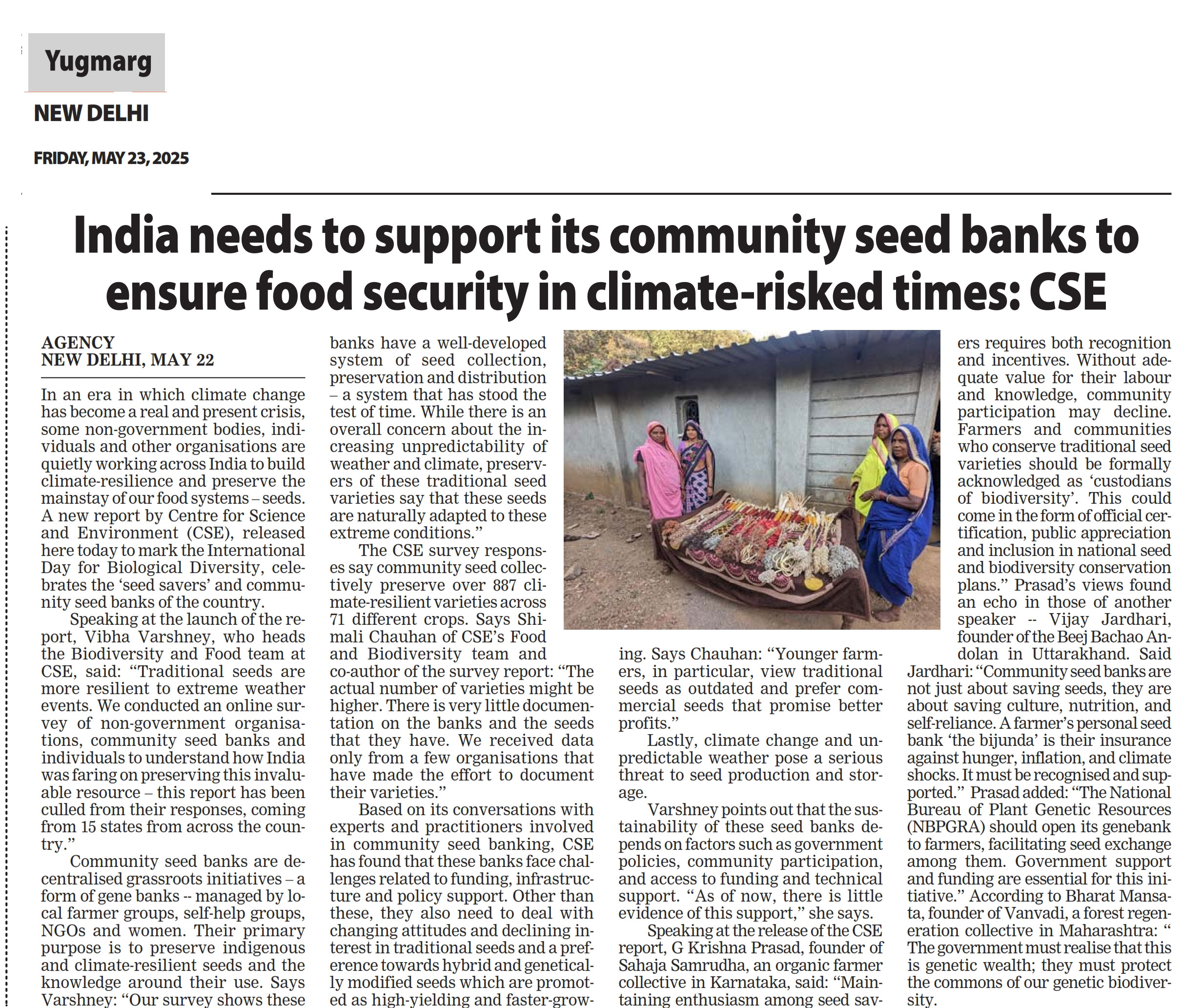
CSE Study on Seed Banks Highlights Role in Climate-Resilient Farming

CSE Study on Seed Banks: In an era in which climate change has become a real and present crisis, some non-government bodies, individuals and other organisations are quietly working across India to build climate-resilience and preserve the mainstay of our food systems – seeds. A new report by Centre for Science and Environment (CSE), released here today to mark the International Day for Biological Diversity, celebrates the ‘seed savers’ and community seed banks of the country. Speaking at the launch of the report, Vibha Varshney, who heads the Biodiversity and Food team at CSE, said: “Traditional seeds are more resilient to extreme weather events. We conducted an online survey of non-government organisations, community seed banks and individuals to understand how India was faring on preserving this invaluable resource – this report has been culled from their responses, coming from 15 states from across the country.” Community seed banks are decentralised grassroots initiatives – a form of gene banks — managed by local farmer groups, self-help groups, NGOs and women. Their primary purpose is to preserve indigenous and climate-resilient seeds and the knowledge around their use. Says Varshney: “Our survey shows these banks have a well-developed system of seed collection, preservation and distribution – a system that has stood the test of time. While there is an overall concern about the increasing unpredictability of weather and climate, preservers of these traditional seed varieties say that these seeds are naturally adapted to these extreme conditions.” The CSE survey responses say community seed collectively preserve over 887 climate-resilient varieties across 71 different crops. Says Shimali Chauhan of CSE’s Food and Biodiversity team and co-author of the survey report: “The actual number of varieties might be higher. There is very little documentation on the banks and the seeds that they have. We received data only from a few organisations that have made the effort to document their varieties.” Based on its conversations with experts and practitioners involved in community seed banking, CSE has found that these banks face challenges related to funding, infrastructure and policy support. Other than these, they also need to deal with changing attitudes and declining interest in traditional seeds and a preference towards hybrid and genetically modified seeds which are promoted as high-yielding and faster-growing. Says Chauhan: “Younger farmers, in particular, view traditional seeds as outdated and prefer commercial seeds that promise better profits.” Lastly, climate change and unpredictable weather pose a serious threat to seed production and storage. Varshney points out that the sustainability of these seed banks depends on factors such as government policies, community participation, and access to funding and technical support. “As of now, there is little evidence of this support,” she says. Speaking at the release of the CSE report, G Krishna Prasad, founder of Sahaja Samrudha, an organic farmer collective in Karnataka, said: “Maintaining enthusiasm among seed savers requires both recognition and incentives. Without adequate value for their labour and knowledge, community participation may decline. Farmers and communities who conserve traditional seed varieties should be formally acknowledged as ‘custodians of biodiversity’. This could come in the form of official certification, public appreciation and inclusion in national seed and biodiversity conservation plans.” Prasad’s views found an echo in those of another speaker — Vijay Jardhari, founder of the Beej Bachao Andolan in Uttarakhand. Said Jardhari: “Community seed banks are not just about saving seeds, they are about saving culture, nutrition, and self-reliance. A farmer’s personal seed bank ‘the bijunda’ is their insurance against hunger, inflation, and climate shocks. It must be recognised and supported.” Prasad added: “The National Bureau of Plant Genetic Resources (NBPGRA) should open its genebank to farmers, facilitating seed exchange among them. Government support and funding are essential for this initiative.” According to Bharat Mansata, founder of Vanvadi, a forest regeneration collective in Maharashtra: “ The government must realise that this is genetic wealth; they must protect the commons of our genetic biodiversity. Tragically, our stuff is readily available for big buyers, but not for the common farmers.” “The world is celebrating the International Day for Biological Diversity today. While there is biodiversity all around us, what nourishes us is the biodiversity available on our plates,” says Varshney. With their stash of local crop varieties and related knowledge, these community seed banks can support diversified farming systems and ensure food security, she adds.

Community buy-in, economic gains drive voluntary carbon market success

Trishant Dev, programme officer, Climate Change, Centre for Science and Environment, says that on-ground analysis of VCM projects is vital in ensuring these markets work for the people who safeguard the carbon sinks. “It is crucial to ask if the economics of the current system work in their favour. In our studies, we have seen that communities rarely reap the benefits of what has been promised to them when it comes to projects under forestry and agriculture. Long-term carbon benefits can be obtained from tree-planting projects in the voluntary carbon market (VCM) when these initiatives bolster the economic well-being of local stakeholders and establish lasting relationships with them, finds a new study. Published in April 2025 in the Environmental Research Letters journal, the study looked at the changes in tree cover, project longevity, and the changes in income and assets for participating households in select tree-planting projects, that received carbon credits till 2022. The voluntary carbon market mechanism allows corporations to meet their carbon neutrality goals by investing in initiatives that offset or reduce carbon emissions. According to a report by the non-profit organisation Citizen Consumer and Civic Action Group, India’s VCM market has seen phenomenal growth in recent times and is worth more than $1 billion as of 2021. These projects are certified by programmes such as the Verified Carbon Standard (VCS) by Verra and the Gold Standard. VCM projects broadly focus on energy efficiency, carbon sequestration, methane capture, forest conservation, and renewable energy. Tree planting projects fall under the ‘afforestation and reforestation’ category. Based on five tree-planting projects across 21,767 farmer plots, the study found that tree cover increased by 48% in participating plots compared to a 26% increase in non-participating plots. For two of the above projects, the researchers also conducted household surveys to understand the impacts on household incomes and asset acquisition (such as concrete houses, gas connections, mobile phones, cycles, motorbikes, etc). The results show almost a 95.6% increase in income for participating households (households of farmers who are a part of the project) in one project and a significant improvement in assets for another. The study’s most crucial finding was that along with economic benefits, long-term community engagements are vital in ensuring project longevity and scalable impacts. The researchers, therefore, emphasise the need for careful examination of ground-level implications of VCM projects for successful management and outcomes. On-ground monitoring is crucial Despite the increase in demand for VCM projects, these initiatives have also received criticism for overstating their impacts or encouraging greenwashing claims by corporations where on-ground efforts and activities do not match carbon capture or offset declarations. Due to their voluntary nature, such projects are not subject to the regulations of the compliance market, which has caps on greenhouse gas emissions. In 2024, researchers from the Goldman School of Public Policy, University of California, Berkeley, assessed the impacts of energy-efficient cookstoves that reduced the dependence on greenhouse gas-intensive fuels. Efficient cookstoves are the fastest-growing project type in the global VCM, and the researchers found that across 51 cookstove projects from 25 countries, the reduction in emissions was overstated by 9.2 times. “During my research on VCMs, I realised that most studies were based on secondary data analysis and remote sensing, but not much focus was given to the on-ground analysis of these projects,” says Shivani Agarwal, lead author of the May 2025 study and former associate research scientist at the Department of Ecology, Evolution, and Environmental Biology, Columbia University, New York. Agarwal adds that while the current study looks at a small number of afforestation and reforestation VCM projects in India, it paves the way for systematic analysis across categories. She further explains that such analysis, while aiding in understanding factors that enable project longevity, also provides insights into why projects cease operations despite positive outcomes. For example, one of the projects in Agarwal’s study involved planting eucalyptus plants for a company’s timber factory. “As obtaining raw materials for the timber factory was the primary motive, the VCM project served as the secondary objective for the company. The investment in the validation process was expensive, as there were fewer buyers for eucalyptus plantation projects. Therefore, the company decided not to participate in the VCM,” the project developer told Agarwal. The project was initiated in 2001 and was on the verge of closing in 2022. Of the six projects that researchers analysed for longevity, only three were ongoing and scaling, and they were implemented by local non-governmental organisations (NGOs) that have long-term associations with the local farming communities. Private corporations, on the other hand, established projects in new areas by approaching the village heads first. The NGOs also provided saplings and training for the community members, with one NGO sharing all of the carbon credit benefits with the farmers. The authors explain that while NGOs focus on the community’s development, private corporations focus on profitability, so they close projects when sufficient returns are not obtained. The study also revealed that access to extra income is the main reason for farmer participation, and 85% of the non-participant farmers were willing to join future VCM projects if given the opportunity. Ensuring VCM projects benefit the environment and the people Researchers note that while the recent study does conclusively provide evidence of an increase in tree cover through satellite analysis, resulting changes in carbon stock can only be measured when there is data on the nature of this increase — tree species, structure, etc. Another limitation of the current study is that ecological parameters such as biodiversity conservation were not assessed, the authors state. “The main focus of the projects in this study was participation and not biodiversity conservation. However, it is important to understand how participants can be incentivised for non-fruit trees that are native to the landscape and add to their biodiversity. While sharing carbon credit revenue is one way to do so, it is not popular among project developers as the initial investment in the carbon market is higher,” explains Agarwal. Co-author of the study Ruth DeFries, professor of ecology and sustainable development and co-founding dean of Columbia Climate School, Columbia University, adds that while the focus on biodiversity is slowly gaining attention, it requires further analysis. “The carbon market was not designed to be biodiversity-friendly, so it’s possible for monoculture, non-native tree-planting projects to receive credit for sequestering carbon without providing a biodiversity benefit. There is a lot of discussion about biodiversity markets that would reward projects that enhance diversity. It is unclear at this point what the market demand is for such projects and how they could be monitored,” she says. Trishant Dev, programme officer, Climate Change, Centre for Science and Environment, says that on-ground analysis of VCM projects is vital in ensuring these markets work for the people who safeguard the carbon sinks. “It is crucial to ask if the economics of the current system work in their favour. In our studies, we have seen that communities rarely reap the benefits of what has been promised to them when it comes to projects under forestry and agriculture. This is also a question that governments must address when designing or setting policies for offset mechanisms. Without adequate returns, we risk asking communities in the Global South to subsidise the emissions of wealthier nations,” shares Dev, who is not associated with the study.

Why India Needs To Urgently Rehaul Sewage Treatment Plans

Sewage in India is a growing problem. According to the Center for Science and Environment (CSE), wastewater generation will increase by about 75–80% (54-58,000 MLD) by 2050. That would result in a figure that is approximately 3.5 times the country's existing installed treatment capacity, highlighting an urgent need to significantly scale up wastewater treatment infrastructure, the CSE report says. Indian cities and towns produce about 72,368 million litres of sewage per day (MLD)--enough to fill 30,000 Olympic-size swimming pools--but has the operational capacity to treat only 37% of it, and actually treats only 28%. Even the sewage treatment plants India has are often unable to cope during monsoons, are impacted by frequent power cuts, and unable to treat heavy metals and most pharmaceutical contaminants, reports show and experts say. The result? More than half of the rivers in India are highly polluted, and many others are at levels considered unsafe by modern standards. In a study in 2018, the Central Pollution Control Board (CPCB) found that about 13% of 351 river stretches on 323 rivers were severely polluted and 17% were moderately polluted. And it is the disposal of domestic sewage from cities and towns that is the biggest source of pollution of water bodies in India, the CBCB has found. According to the World Bank, 21% of communicable diseases are linked to unsafe water with contaminated water a major contributor to diarrhoea, opportunistic infections, and malnutrition, globally leading to around 1.7 million deaths each year. Over 90% of these fatalities occur in developing nations, with nearly half being children. Sewage in India is a growing problem. According to the Center for Science and Environment (CSE), wastewater generation will increase by about 75–80% (54-58,000 MLD) by 2050. That would result in a figure that is approximately 3.5 times the country's existing installed treatment capacity, highlighting an urgent need to significantly scale up wastewater treatment infrastructure, the CSE report says. Experts say India needs a better system of sewage treatment that is decentralised, nature-based, and more suited for filtering pollutants that are common in India. Water Pollution in India The 2018 CPCB study monitored river water quality using Biochemical Oxygen Demand (BOD) as an indicator of pollution. Apart from high BOD, they found high levels of Chemical Oxygen Demand (COD), heavy metals, arsenic, fluorides and hazardous chemicals in many places, especially in the groundwater in these regions. Even the Ganga, considered holy in India--and where many take a dip--is in a dire state, with mounds of rubbish strewn along the riverbanks and in the water. According to the CPCB, in the first week (January 12-20) of the 2025 Kumbh Mela--a religious gathering--at Prayagraj, the level of faecal coliform varied between under 1.8 and 49,000 MPN, the most probable number, per 100 ml for the Ganga; and between 2,000 MPN and 33,000 MPN, per 100 ml for the Yamuna. According to the norms of the Ministry of Environment, Forest and Climate Change (MoEFCC), this often exceeded the maximum permissible limit for bathing water of 2,500 MPN per 100 ml and the desirable level of 500 MPN per 100 ml. As per third party inspection in 2019, 71% of towns along the Ganga were directly disposing their waste into the river, because they lacked proper municipal waste plants. South Asia produces just about 7% of global wastewater despite a population share of 24%, whereas the 5% of people living in North America account for 20% of global wastewater production, as per these 2021 estimates of wastewater produced globally. Yet, India accounts for 17% of the world’s scattered municipal waste, while “70% of potential leakage of municipal solid waste into aquatic environments occurs in China, South Asia, Africa, and India”, Adriana Gomez Sanabria and Florian Lindl of the Pollution Management Research Group in Austria estimated in a 2024 study published in the journal Nature. Access to safe water can improve with better wastewater management India has 1,486 cubic metres (m3) of annual per capita freshwater availability, making it ‘water stressed’, a Ministry of Jal Shakti press release in 2024 said. A country is classified as ‘water stressed’ when its annual per-capita water availability is below 1,700 m3 per capita per year, and as ‘water scarce’ when the availability is below 1,000 m3 per capita per year. However, the water availability in many regions of the country may vary due to high temporal and spatial variation of precipitation, another government press release from 2020 noted. There are 163 million Indians who lack access to safe drinking water, especially in urban areas where water resources are under significant pressure due to increasing demand. The average water supply in urban local bodies in India is 69.25 litres per capita per day (LPCD) against the benchmark of 135 LPCD, as per Central Public Health and Environmental Engineering Organisation. Water pollution worsens India’s water crisis by contaminating available sources, making them unsafe for consumption. India’s rivers receive about 100 times more sewage per capita from urban than rural populations. Treating this wastewater could help India mitigate water stress, IndiaSpend had reported in April 2025. But southern Asia has the lowest rates of used water collection, treatment and reuse globally. For instance, even as 24 out of 34 districts experience water shortage in Maharashtra, only 4% of wastewater in Maharashtra is reused. This is contrary to the State Water Policy (2019) which says that “a minimum of 30% of recycled water should be reused to reduce freshwater demand within five years.” And this is not limited to Maharashtra, According to NITI Aayog, less than 1,000 MLD of treated wastewater is currently being reused in India. This accounts for just 3% of the total treated wastewater and only about 1% of the total wastewater generated in the country. India’s efforts at sewage treatment According to Swachh Bharat Mission (SBM) 2.0 guidelines from 2021, Indian cities with less than 100,000 population require 13,000 MLD of STP capacity for which SBM budgeted Rs 79,983 crore ($9.3 billion) between October 2021 and October 2026. This includes construction of STPs, interceptor and diversion drains and procurement of desludging vehicles.

"Visited Talcher yesterday. The air was so toxic, I could taste the pollution": Odisha's Industrial Growth vs Breathing Crisis

Environmental activist Sunita Narain posted on Instagram: "Visited Talcher yesterday. The air was so toxic, I could taste the pollution. How are people living in these conditions? Immediate action needed!" The eastern Indian state of Odisha faces an escalating environmental crisis as air pollution levels continue to surge across major cities, posing severe health risks to its 45 million residents. Recent data from the Odisha State Pollution Control Board reveals alarming increases in particulate matter concentrations, particularly in industrial hubs like Bhubaneswar, Cuttack, and Rourkela. The Growing Threat Air quality monitoring stations across the state have recorded PM2.5 levels consistently exceeding the World Health Organization's recommended limits. The industrial corridor stretching from Jharsuguda to Angul has emerged as a particular hotspot, where coal-fired power plants, steel mills, and aluminum smelters contribute significantly to atmospheric contamination. Dr. Pradeep Kumar Jena, an environmental scientist at the Indian Institute of Technology Bhubaneswar, explains the severity of the situation. "The rapid industrialization without adequate pollution control measures has created a perfect storm for air quality deterioration. We're seeing a 40% increase in respiratory ailments in children over the past three years." Citizens Voice Their Concerns Social media platforms have become battlegrounds for concerned residents sharing their experiences with deteriorating air quality. Rajesh Mohanty, a Bhubaneswar resident, tweeted: "Morning jogs have become impossible. The smog is so thick you can barely see 50 meters ahead. When will our government take this seriously? #OdishaAirPollution" Priya Dash, a school teacher from Cuttack, shared on Facebook: "My students are constantly coughing during classes. Parents are reporting increased asthma cases. This is not the future we want for our children." Environmental activist Sunita Narain posted on Instagram: "Visited Talcher yesterday. The air was so toxic, I could taste the pollution. How are people living in these conditions? Immediate action needed!" Health Impact Escalates Medical professionals across Odisha report a significant uptick in pollution-related health issues. Hospitals in major cities have witnessed a 35% increase in respiratory disease cases, with children and elderly populations being most vulnerable. "We're treating patients as young as five years old for chronic bronchitis and asthma, conditions traditionally seen in much older populations," states Dr. Mamata Sahoo, a pulmonologist at AIIMS Bhubaneswar. "The correlation with air pollution is undeniable." Industrial Contribution The state's heavy reliance on coal-based industries has created multiple pollution sources. The Mahanadi Coalfields Limited operations, coupled with thermal power stations, contribute approximately 60% of the region's air pollution load. Vehicle emissions in urban areas add another 25%, while construction dust and agricultural burning account for the remainder. Government Response and Challenges The Odisha government has initiated several measures, including the installation of continuous ambient air quality monitoring systems and the introduction of BS-VI fuel standards. However, enforcement remains inconsistent, and industrial lobbying often dilutes regulatory effectiveness. An official from the Ministry of Environment recently announced a comprehensive air quality management plan, stating, "We're committed to reducing pollution levels by 30% over the next five years through stricter industrial emission norms and enhanced monitoring." The Path Forward Environmental experts emphasize the need for immediate, coordinated action involving stricter emission standards, promotion of renewable energy sources, and public transportation improvements. Citizens continue to advocate for their right to breathe clean air, while the state grapples with balancing economic growth and environmental protection. As netizen Amit Patra summarized on Twitter: "Development without environmental consideration isn't progress—it's suicide. Odisha needs sustainable solutions now, not later." The battle for cleaner air in Odisha represents a critical juncture where public health, economic interests, and environmental sustainability must find common ground before the crisis becomes irreversible.

A paramount need of the hour

VVater is one of the essential and basic necessities for all the living organisms existing on the earth. lt is an important component for all the natural pfOCeSSeS. Total water on the earth is constant and is balanced through continuous hydrological …

India Wastewater Treatment Gaps Raise Alarm

Wastewater generation is expected to increase by 75–80% by 2050, according to the Centre for Science and Environment. With current treatment capacity already overwhelmed, future demand may exceed India’s infrastructure threefold, highlighting a growing national crisis. India generates over 72,000 million litres of sewage daily—yet treats only 28% of it. Despite having installed capacity for 37% treatment, operational gaps, underutilised plants, power shortages, and lack of pollutant-specific filtering make current systems dangerously inadequate, experts say. This untreated sewage, combined with industrial effluents and poor infrastructure, has turned more than half of India’s rivers into highly polluted or unsafe water bodies, according to the Central Pollution Control Board (CPCB). The 2018 CPCB report flagged that 30% of monitored river stretches showed severe to moderate pollution. The health consequences are severe. Contaminated water is linked to 21% of communicable diseases globally, says the World Bank, contributing to 1.7 million deaths annually—disproportionately impacting children in developing countries like India. Wastewater generation is expected to increase by 75–80% by 2050, according to the Centre for Science and Environment. With current treatment capacity already overwhelmed, future demand may exceed India’s infrastructure threefold, highlighting a growing national crisis. Experts warn that centralised treatment models are failing. Many plants lack the ability to filter heavy metals or pharmaceutical contaminants, and often underperform. During the 2025 Kumbh Mela, for instance, faecal coliform levels in the Ganga and Yamuna rivers exceeded permissible limits for bathing by over 10 times. Government missions such as AMRUT 2.0 and Namami Gange have pumped billions into sewage management. However, progress has been slow. As of 2024, only 41 of Maharashtra’s 414 urban local bodies had functional STPs, despite rising sewage volumes. Mumbai’s rivers remain choked with effluents, even as the city pursues ecologically harmful water supply projects like the Gargai dam. Nationwide, less than 1% of total wastewater generated is reused, despite policy targets advocating 30% reuse. South Asia has the world’s lowest reuse rate of treated water. Maharashtra, for instance, reuses only 4% of its wastewater. Even where STPs are operational, flaws persist. Plants discharge effluents with BOD levels within legal limits (10–20 mg/L), but far above the Ministry of Jal Shakti’s bathing water safety threshold of 3 mg/L. During low river flows, this worsens pollution and public health risks. In Ganga basin towns, nearly 55% of sewage remains untreated, according to CPCB. Disinfection systems are outdated, and many STPs fail to meet even minimum compliance for fecal coliform. Energy recovery from sewage remains impractical in cities like Kanpur and Lucknow, due to unsuitable technologies and highly diluted sewage. Worse, flawed wastewater estimates have led to overdesigned and underutilised plants. According to a 2016 CPCB estimate, actual discharge into the Ganga exceeded projections by over 120%. Some plants are built merely to shift loads from older ones temporarily—rendering existing infrastructure obsolete and misused. Finally, STPs fall short in removing antimicrobial-resistant bacteria. Traces of antibiotics and AMR genes have been found in rivers across India. With over 160 million Indians lacking access to safe drinking water, experts warn that surface water contamination from ineffective sewage treatment threatens national health and water security. Without urgent investment in decentralised, nature-based, and pollutant-targeted solutions, India’s water future remains critically at risk.

Delhi air pollution cuts lives and health short

Delhi remains one of the most polluted cities in the world, with 2021 data from the Centre for Science and Environment (CSE) showing average PM2.5 levels at 109 µg/m³, over 10 times the WHO’s safe limit. Air pollution in the Greater Delhi Region has escalated into a full-blown public health crisis, with millions exposed daily to hazardous levels of toxic air. The smog that blankets the city during winters, combined with fine particulate matter from vehicle emissions, industrial activity, and construction dust, is severely impacting the health and lives of residents—especially children, pregnant women, the elderly, and essential service workers. According to an August 2024 report by the Energy Policy Institute at the University of Chicago (EPIC), residents of Delhi are losing an average of nearly eight years of life expectancy due to high PM2.5 concentrations. These microscopic particles, less than 2.5 microns in diameter, penetrate deep into the lungs and bloodstream, increasing risks of heart disease, asthma, hypertension, and stroke. In the congested Khayala village in West Delhi, Sunita (name changed), a mother of four, wakes up every morning to dust or smog. “My children cough constantly, especially in winter,” she says. Her youngest, a two-year-old, has already been hospitalised twice for respiratory illness. The danger is widespread. Ram Kumar (name changed), a middle-aged government employee, developed nasal polyps and aggravated asthma from decades of exposure to diesel fumes and construction dust. He continues to live in the capital for his children’s future but says he finds real relief only when visiting his ancestral village or coastal towns far from Delhi’s industrial haze. Studies by the World Health Organization (WHO) estimate that air pollution causes around 7 million deaths globally every year, with India among the worst affected. Outdoor and household air pollution together contributed to approximately 1.8 million deaths in India in 2016, primarily from heart and lung diseases. Delhi remains one of the most polluted cities in the world, with 2021 data from the Centre for Science and Environment (CSE) showing average PM2.5 levels at 109 µg/m³, over 10 times the WHO’s safe limit. Cities across the National Capital Region—Ghaziabad, Faridabad, and NOIDA—reported similarly alarming figures. Pollution sources include traffic emissions, industrial output, dust from construction and demolition, and seasonal crop burning in Punjab, Haryana, and Uttar Pradesh. Informal settlements suffer the most, where poor housing and sanitation make residents more vulnerable to toxic exposure. Children, with underdeveloped lungs and immune systems, are especially at risk. Air pollution is also known to cross the placental barrier, causing developmental harm to unborn babies. A study by The Lancet links poor air quality to premature births and lifelong respiratory and cardiovascular issues. Essential services workers—such as sanitation staff, traffic police, and firefighters—face prolonged exposure without adequate protection. Research by the Indian Institute of Public Health has found higher rates of respiratory disease in this group than the general population. In response, authorities have rolled out the National Clean Air Program (NCAP), the Pradhan Mantri Ujjwala Yojana, and the Delhi government’s Graded Response Action Plan (GRAP). Initiatives such as the Odd-Even Scheme, expansion of public transport, and increased electric vehicle use aim to reduce tailpipe emissions. Cleaner transport, rooftop solar power, improved industrial practices, and responsible waste management are gradually gaining ground, but experts warn these steps are not enough. Stricter enforcement, mass awareness, and health monitoring systems are urgently needed. Without decisive, sustained action, Delhi’s air will continue to cut lives short—silently, but devastatingly.

Heat in the Hills: How Kashmir’s Climate Is Slowly Turning

For most people, Kashmir conjures up images of cool summers, pine-covered slopes, and snow-laced winters. But lately, something has changed. May 2025 brought a scorching surprise. Srinagar touched 34.4°C, the highest temperature for the month in years. Even the cooler corners like Pahalgam weren’t spared. It hit 27.8°C—hot enough to send tourists scrambling for shade. The heat didn’t just show up once. It stayed. Qazigund recorded 33.4°C, Kokernag 33.2°C, and all across the Valley, people stayed indoors, especially in the towns where concrete traps heat like a closed oven. Schools are starting early to avoid the hottest hours. Hospitals are reporting a sharp rise in cases of dehydration and heatstroke, mostly among children and the elderly. For a region used to mild weather, this kind of heat isn’t just uncomfortable. It’s dangerous. But here’s the bigger concern. This isn’t a one-off event. Heatwaves have crept in over the past few years, growing stronger each time. Back in August 2020, Srinagar reached 35.7°C, the highest for that month in nearly four decades. In July 2021, it was 35°C again. In June 2023, same story. That September, 34.2°C was recorded—nearly the hottest September day in over a century. By May 2024, records were falling everywhere. Qazigund broke its all-time high with 34°C. Pahalgam touched 28.6°C, the second-highest in two decades. In July 2024, Srinagar sweltered at 36.2°C. For a city nearly 1,600 metres above sea level, that number felt unreal. What’s going on? Climate scientists say it’s part of a much bigger pattern. The Sixth Assessment Report by the Intergovernmental Panel on Climate Change (IPCC) makes it clear that mountainous regions like Kashmir are heating up nearly twice as fast as the global average. That’s due to global warming, driven by greenhouse gas emissions. But local factors are making things worse. Over the past two decades, Kashmir has seen a wave of construction. Roads, railways, power lines, housing colonies—all eating into forests and wetlands. Less green cover means more heat absorbed by land. On the hills, glacier melting is speeding up. Satellite images from ISRO and studies by the Snow and Avalanche Study Establishment show glaciers feeding rivers like the Jhelum and Lidder have shrunk by more than 15%. With less snow cover, sunlight isn’t reflected. It’s absorbed, which makes the land heat up even more. And the signs are already visible everywhere. From the Apple orchards of Sopore and Shopian, to Anantnag’s paddy fields. Field experts from SKUAST-Kashmir have already reported lower crop yields and signs of heat stress in plants. The early snowmelt also messes with water supplies, causing rivers to swell too soon and run too dry later in summer, affecting irrigation and hydroelectric projects. Cities and towns are turning into heat islands. Places like Baramulla, Anantnag, and Pulwama—once seen as cooler belts—are now recording extreme temperatures. The Jammu and Kashmir State Disaster Management Authority says hospital calls related to heat stress have jumped by over 200% between 2020 and 2025. There’s another invisible culprit: black carbon. These are fine particles released from diesel engines, biomass burning, and fossil fuels. They settle on snow, darken it, and make it melt faster. Research from the Centre for Science and Environment (CSE) shows that black carbon is speeding up warming in the region and setting off a dangerous loop—more melting, more heat, more melting. Tourism is feeling the pinch too. Visitors once came to escape the summer heat. But now, even high-altitude places like Gulmarg and Pahalgam are heating up. Local guides talk of guests cutting their trips short, disappointed by the unusual warmth. The public health impact is another growing worry. A report from the Directorate of Health Services shows a rise in heat-related heart problems and sunstroke, especially during May and July. Those working outdoors—labourers, farmers, vendors—are the worst hit. So are older people and children. It’s clear now: Kashmir’s climate is changing fast. And it’s hitting where it hurts: food, water, health, and livelihoods. This isn’t just about hotter summers. It’s about a fragile ecosystem trying to keep up with a pace it didn’t ask for. And unless something changes, unless policy makers focus on sustainable planning and local communities adapt to what’s coming, Kashmir could lose not just its climate charm but the very balance that has kept its people and nature in sync for centuries. Because when snow turns to sweat in the Valley, it’s not just the seasons that are shifting. It’s the story of survival.

Will Delhi’s Rs 30,000 Rooftop Solar Subsidy Accelerate Clean Energy Transition?

Binit Das, Program Manager at the Delhi-based think tank Centre for Science and Environment, told Down To Earth (DTE), “The enhanced subsidy of Rs 30,000 from the state government along with Rs 78,000 from the central government for installing 3 kW solar panels at the household level is a bold step towards faster adoption of rooftop solar. However, there are some serious shortcomings.” The Delhi Cabinet approved providing Rs 30,000 subsidy on the installation of 3 kW rooftop solar panels (Rs 10,000 per kW) under the PM Surya Ghar scheme on May 20. This scheme is reportedly the world’s largest domestic rooftop solar initiative. This raises the available subsidy to Rs 1.08 lakh, reported The Indian Express. The Delhi government introduced ‘PM Surya Ghar: Muft Bijli Yojana State Top-Up’ scheme to increase the effectiveness and reach of the initiative. The Centre provides Rs 78,000 subsidy for installing rooftop solar panels under the PM Surya Ghar scheme. According to reports, the BJP government has allocated Rs 50 crore to install rooftop solar systems on 2.3 lakh residential units over the next three years. Chief Minister Rekha Gupta told The Indian Express that the new subsidy will help consumers to access solar power solutions at zero initial cost while saving Rs 4,200 on their monthly electricity bills on average. She also mentioned that the government is working with financial institutions to provide easy loan options for the remaining installation cost of around Rs 90,000. Challenges in Ground Implementation However, experts caution that the scheme may encounter challenges during implementation. Binit Das, Program Manager at the Delhi-based think tank Centre for Science and Environment, told Down To Earth (DTE), “The enhanced subsidy of Rs 30,000 from the state government along with Rs 78,000 from the central government for installing 3 kW solar panels at the household level is a bold step towards faster adoption of rooftop solar. However, there are some serious shortcomings.” However, according to Das, the allocated budget of Rs 50 crore for 2,30,000 installations is quite low. "It means only Rs 2,174 per unit would be available, which is far less than the promised Rs 30,000 subsidy per household, raising concerns of a financial shortfall," Das stated. “The claim of saving Rs 4,200 per month is not backed by solid data, suggesting the benefits might be overstated. Achieving the goal of 2.3 lakh installations in three years will also require a robust supply chain and trained workforce — without which the target will be hard to meet," he added.

Why Agra has no place for Taj of sweets

But problems persisted. According to a 2021 study by the Centre for Science and Environment (CSE), the city’s petha industry generates about 17,800 kg of solid waste per day, mostly petha peels, sugar syrup and lime water. The smell of syrup in the air, the hot petha rolling out of factories on both sides of the road, their candied memories travelling up and down the country in tiny coloured boxes by road, rail and now air—this is the identity of Agra’s Noori Gate area. About seven kilometres from the Taj Mahal, these desi ptisseries also churn out tiny, delicate monuments to the sweetness of composite culture. If the Taj was born in Shah Jahan’s mind, legend has it that the petha was born in his royal kitchen—upon a royal firman to create a sweet delicacy as pure and white as the Taj! Marble was traded for white pumpkin, Agra’s magic spell was spoken, and voilathe world was suddenly sweeter. That magic spell is being broken. The Noori Gate petha manufactories, running unbroken since the Mughal period, have been ordered to shift out of the city. That also breaks other ties with history. In 1929, the revolutionary Bhagat Singh, after shooting down British police officer John Saunders (the Lahore Conspiracy Case that led to his hanging), spent a few days hiding in a two-storey house right here in Noori Gate area. Girish Singhal, 63, lives next to this house, beginning his petha-making career in his two-room abode in 1980. Over 40 years on, he’s worried. “I do not have the resources to go 30 km away and set up business afresh. If there’s too much pressure, I’ll stop making petha and open a grocery shop but not move.” Anoop Mittal, 50, another Noori Gate native, conjures up the Gilauri Patta, a special sweet made from petha. “I make petha on the ground floor of my two-storey house,” he says. “It’s a cottage industry for my family. If I shift out, I won’t be able to bear the costs. I’ll have to stop.” Noori Gate has over 500 small and big units related to petha production. Over 5,000 people work here, churning out some 1,000 quintals of petha daily. For about three decades, the locality has attracted the attention of disapproving government planners due to an ironic inversion of the petha’s relation to the Taj: the fear that pollution caused by this sweet-making industry could be damaging the heritage monument. On April 3, the Supreme Court ordered the evacuation of petha units from the city. It was hearing cases related to the Taj Trapezium Zone (TTZ), a designated 10,400 sq. km area around the Taj, established to protect it from pollution. After this, the Agra administration and the Uttar Pradesh Pollution Control Board (UPPCB) have started surveying these petha units. Pollution is indeed an issue. After the TTZ was set up in 1983, the use of coal in kilns was banned and petha units adopted gas-based technology. In 2013, the UPPCB imposed a complete ban on the entry of coal-laden trucks into Agra. But problems persisted. According to a 2021 study by the Centre for Science and Environment (CSE), the city’s petha industry generates about 17,800 kg of solid waste per day, mostly petha peels, sugar syrup and lime water. District officials say a campaign was launched in 2018 to educate petha producers about the importance of proper waste disposal, also granting aid to the big players to procure equipment for it. A large part of the industry, though, falls under the unorganised sector, beyond the pale of government benefits.

Hot nights are worsening India’s heat crisis. But low-tech solutions show some promise.

Across Indian cities, nighttime temperatures are higher than they were 15 years ago, according to a 2024 analysis by the Centre for Science and Environment in Delhi, of which Somvanshi was a contributor. (https://www.cseindia.org/decoding-the-urban-heat-stress-among-indian-cities-12191) For Merina Yasmin and her husband and 5-year-old daughter, who live in a one-room home in an informal settlement on the edge of Delhi, sleepless nights have become all too common in the summer. Her home is made of tin sheets that heat up under the scorching sun all day and remain warm even after sunset. The room doesn’t have windows or a refrigerator, and the only source of relief is a desert cooler — a device with a fan and a water tank that blows cool air by evaporating water. But even that is unreliable because of frequent power cuts. Yasmin said that she looks forward to going to work, because it’s her only escape from the heat. She is a domestic worker for families who have air conditioning. But after washing their dishes and mopping their floors all day, she can’t even catch some rest because of the heat in her own home. “Sometimes, I don’t feel like I am a human being,” she said. Summer is in full swing in India, and many cities are experiencing scorching heat. And in India’s bustling cities, as the sun goes down and the worst of the day’s heat is over, an insidious threat looms: high nighttime temperatures. But some low-tech solutions may help address the problem. Avikal Somvanshi, a researcher who studies heat stress in urban India, said that India has always been hot but this kind of heat is not normal. “Climate change is actually fueling the heat waves,” he said. It’s making them longer and more frequent, he said. This year, heat waves in India began occurring as early as February, and many states are experiencing temperatures above 100 degrees Fahrenheit. Last June, Delhi recorded its hottest night in over 50 years with a low of 95 degrees. Across Indian cities, nighttime temperatures are higher than they were 15 years ago, according to a 2024 analysis by the Centre for Science and Environment in Delhi, of which Somvanshi was a contributor. Cities tend to be hotter than their surrounding rural areas even in the day, because of the way they’re built. The concrete, urban environment traps and radiates heat, and there’s less green cover to offset it. But even greener parts of Delhi are seeing elevated nighttime temperatures. “Having tree cover can help you get shade during the daytime temperature, but it seems to be totally ineffective in cooling down things at night,” Somvanshi said. To make things worse, urban India’s densely packed homes offer little ventilation. “We’re really starting to reach the temperatures and humidity levels that we associate with a potential unlivable situation,” said Caroline Buckee, an epidemiologist at Harvard University who is studying the health effects of extreme heat in India. “Even if the temperature outside comes down, the housing itself absorbs the heat in the day, and then, it doesn’t cool down at night,” Buckee said. “And so, the temperature is remaining essentially constant throughout the day and night.” The situation is especially detrimental for people like Yasmin, one of the millions of women who are part of India’s informal economy. They face grueling temperatures and yet, how it affects their health isn’t fully understood, Buckee said. “Really, there are some glaring gaps when it comes to the physiological impacts of heat on women, on the reproductive health of women, and most importantly, of people who live in places most affected by climate change, where extreme heat is becoming more and more of a problem,” Buckee said. To bridge this data gap, she and her colleagues are conducting a study in the western Indian city of Ahmedabad. They have given Fitbits to hundreds of female workers there to monitor their physical stress.

Delhi Pollution: Breathless in capital, no respite from toxic air

Anumita Roychowdhury, executive director of research and advocacy at the Centre for Science and Environment (CSE), says that a distinction needs to be made between emergency measures and long-term ones. Despite years of policy interventions, technological innovations and judicial directives, Delhi’s air pollution crisis remains dire, posing severe health risks to the city residents and an enormous economic burden on them. Recent data underscores the severity of the situation. An Air Quality Life Index (AQLI) report by the University of Chicago reveals that Delhiites may lose up to 11.9 years of life expectancy because of prolonged exposure to fine particulate matter (PM2.5) levels far exceeding the World Health Organization’s recommended limits. The health ramifications are profound. A survey conducted in November last year indicated that 75% of families in Delhi-NCR have at least one member suffering from pollution-related ailments, such as persistent cough, asthma or headache. Children, the elderly and those with pre-existing conditions are particularly vulnerable. Medical professionals report a 20–25% increase in respiratory cases after Diwali, correlating with pollution peaks during the festival season. Beyond health, the economic toll is staggering. Delhi’s air pollution is estimated to cost the city approximately Rs 10,000 crore annually in healthcare expenses and lost productivity. The tourism sector suffers losses of around a staggering Rs 1,200 crore, while agricultural yields decline as a result of pollutant deposition, leading to further economic setbacks. Over the past decade, both the Central and state governments have taken a series of measures to reverse this trend. But their efforts have yielded mixed results. Anumita Roychowdhury, executive director of research and advocacy at the Centre for Science and Environment (CSE), says that a distinction needs to be made between emergency measures and long-term ones. “The purpose of emergency measures like the GRAP (Graded Response Action Plan) and tools like smog guns and towers is to ensure that dust from construction activities and emissions from vehicles do not add to the excessive smog due to climatic factors. These do not help in the long term,” she explains. However, Delhi has taken a series of long-term measures to address the sources of pollution as well. Firstly, the state government has banned overage vehicles, i.e. diesel vehicles over 10 years old and petrol ones over the age of 15. Trucks from neighbouring states are also banned from entering the Capital. In addition, all public and commercial transportation in the city has been converted to CNG (Compressed Natural Gas), a cleaner alternative to petrol and diesel. The city is also adopting more electric vehicles. As a matter of fact, as many as 12% of all registered vehicles in Delhi are electric. This is the highest in the country and double the national average of 6%. Finally, industrial units have replaced traditional fuels like coal with cleaner ones like natural gas. Coal-based power plants have also been shut down. According to Roychowdhury, no other city in the country has enacted such drastic measures. As a result of these policies, long-term pollution levels have declined in the last few years. “However, pollution levels need to decline by another 60% if we are to meet clean air standards. To address these, a series of gaps in policy and implementation needs to be addressed immediately,” she says. City authorities need to control the number of private vehicles, which has increased drastically over the years. Upgrading public transportation and improving infrastructure, such as cycling tracks and footpaths, can help reduce this. The government also needs to increase the capacity for solid waste disposal, as open-air burning of waste remains rampant. Although industrial units located in legal areas have switched to cleaner fuels, those operating illegally continue to use polluting fuels like coal. Energy poverty also remains a major concern, with the poor unable to access cleaner fuels and still relying heavily on fuels like biomass for their daily needs. Finally, the larger area around the city needs to adopt similar measures. “A city cannot remain clean on its own. Currently, 50–70% of the city’s pollution originates from outside its boundaries. The entire region needs to take collective action to address this,” Roychowdhury stresses. At the same time, activists say that the implementation of many government steps remains as patchy as ever. “Forget about complaints registered on official portals that are never even heard, much less acted upon,” expresses Bhavreen Kandhari, founder of Warrior Moms, a coalition of women fighting for their children’s right to breathe clean air. In a recent hearing, a Supreme Court bench noted the dire shortage of staff at the Delhi Pollution Control Committee (DPCC). Only 83 of the 204 sanctioned posts in the DPCC had been filled, rendering the body “virtually defunct”. “Making rules is easy. But we need more boots on the ground to implement them. We need trained people with advanced equipment,” Kandhari emphasises. Delhi’s fight to breathe clean air continues Over the past decade, both the Central and state governments have taken a series of measures to address the issue. But their efforts have yielded mixed results. Many of the long-term measures are aimed at addressing the sources of pollution. The state government has banned overage vehicles, i.e. diesel vehicles over 10 years old and petrol ones over 15. Trucks from neighbouring states are also banned.

Sống trong ô nhiễm không khí

"Ô nhiễm và rủi ro sức khỏe đã lan khắp Ấn Độ", Anumita Roychowdhury, giám đốc nghiên cứu và vận động tại Trung tâm Khoa học và Môi trường, nói. Amrit vội vã đưa con gái 4 tháng tuổi đến bệnh viện sau khi phát hiện cô bé có triệu chứng đau ngực. Nhưng đến nơi, anh nhận ra con mình không phải là trẻ sơ sinh duy nhất. Phòng bệnh ở New Delhi đầy tiếng ho, khóc của trẻ em. Chúng đang vật lộn để thở. "Ô nhiễm ở Delhi rất tệ trong khi hệ miễn dịch của trẻ rất yếu", Amrit nói. New Delhi là thành phố ô nhiễm nhất thế giới 6 năm liên tiếp, theo Báo cáo Chất lượng không khí toàn cầu của IQAir. Chỉ số ô nhiễm đã tăng vọt lên 795, gần gấp 8 lần ngưỡng thông thường. Một số khu vực ghi nhận mức ô nhiễm lên tới 1.185. Ô nhiễm không chỉ diễn ra ở Delhi. Theo IQAir, 6 trong 10 thành phố ô nhiễm nhất thế giới năm ngoái nằm ở Ấn Độ. Báo cáo của Viện Hiệu ứng sức khỏe Mỹ phối hợp với UNICEF công bố cho biết ô nhiễm không khí là thủ phạm của khoảng 2,1 triệu ca tử vong trong năm 2021 ở Ấn Độ. Khoảng 170.000 là trẻ dưới 5 tuổi, cao nhất toàn cầu. "Ô nhiễm và rủi ro sức khỏe đã lan khắp Ấn Độ", Anumita Roychowdhury, giám đốc nghiên cứu và vận động tại Trung tâm Khoa học và Môi trường, nói. New Delhi, thủ đô đông dân thứ hai thế giới, là tâm điểm ô nhiễm không khí ở Ấn Độ do nhiều nguồn như công nghiệp, bụi xây dựng, đốt rác và đặc biệt là giao thông. Năm 2023, New Delhi bán gần 656.700 xe mới, mỗi ngày có khoảng 1,1 triệu xe ra vào thành phố. Tầng lớp trung lưu phát triển khiến nhu cầu sở hữu ôtô tăng, trong khi xe cá nhân vẫn là lựa chọn phổ biến nhất ở Delhi. "Họ đang thiết kế thành phố để lái xe, không phải để đi bộ, đạp xe hay dùng giao thông công cộng", Roychowdhury nói. New Delhi đã ban hành các quy định khí thải nghiêm ngặt, yêu cầu dùng nhiên liệu sạch và khuyến khích xe điện, nhưng việc thực thi còn yếu. Phần lớn trong số 8 triệu xe đăng ký tính đến năm 2023 là xe cũ và gây ô nhiễm. Ô nhiễm không khí được ví như sát thủ thầm lặng. Năm 2021, công ty tư vấn toàn cầu Dalberg ước tính Ấn Độ thiệt hại 95 tỷ USD mỗi năm do giảm năng suất lao động, sụt lượng khách hàng và tử vong sớm, tương đương 3% GDP năm 2019. Người dân Delhi và nhiều nơi khác ở Ấn Độ đang đứng trước lựa chọn khó khăn. Cuối năm 2023, Madhu, một nhà văn, chuyển từ Chennai đến New Delhi vì công việc nhưng rời đi chỉ sau vài tháng do không khí ô nhiễm. "Tôi hầu như không thể ra ngoài mà không bị cảm, ho hay choáng váng", cô nói. "Khi sức khỏe ngày càng tệ, tôi nhận ra điều này không đáng". Madhu có điều kiện để chuyển đi, nhưng hàng triệu người khác thì không. Nhiều người nghèo ở Delhi sống gần ba bãi rác lớn của thành phố, nơi nhặt rác là nguồn sống duy nhất. Những núi rác này thường cháy, thải khói độc hại. Muskan, một người nhặt rác, nói mùa hè luôn có rất nhiều khói, làm cay cả mắt. Tuy nhiên, gia đình cô là những người mưu sinh ở bãi rác Ghazipur, lớn và lâu đời nhất Delhi, không dám rời đi. Ngay cả các nhà máy đốt rác phát điện cũng làm tăng ô nhiễm. Giữa sương mù mùa đông và cháy rác, người nghèo ở Delhi là nhóm dễ bị tổn thương nhất. Ở phòng bệnh của con gái Amrit có bé gái tên Humaira nằm trong vòng tay mẹ. Bé nhập viện vì ho, cảm lạnh và khó thở. "Chúng tôi muốn rời Delhi, nhưng không có việc làm", anh Arif, bố cô bé, nói. Thực tế này không chỉ diễn ra ở Delhi. Năm 2022, hơn 42% dân số Ấn Độ sống ở nơi không đạt chuẩn quốc gia về chất lượng không khí PM2.5, theo Viện Chính sách Năng lượng thuộc Đại học Chicago. "Ô nhiễm đáng lo, nhưng người dân còn phải lo ăn, mặc, ở", anh Harshanshu, sinh viên Đại học Delhi, nói. "Ô nhiễm sẽ được nghĩ đến sau". Arunabha Ghosh, giám đốc Hội đồng Năng lượng, Môi trường và Nước, nhận định ô nhiễm đang khiến Ấn Độ mất cơ hội thu hút đầu tư nước ngoài, dù nước này muốn mở cửa kinh tế. Ông cho rằng đầu tư vào không khí sạch là cách tốt nhất để thúc đẩy tăng trưởng. Ấn Độ đã có luật kiểm soát ô nhiễm từ năm 1981, nhưng việc thực thi còn nhiều hạn chế. Năm 2019, chính phủ khởi động Chương trình Không khí Sạch Quốc gia với ngân sách hơn 2,3 tỷ USD đến 2026 nhằm giảm ô nhiễm tại 131 thành phố. Ở Delhi, hai tháp lọc không khí chống sương mù được xây dựng năm 2021, mỗi tháp tiêu tốn khoảng 2,4 triệu USD, chưa kể chi phí vận hành hàng tháng. Nhưng dữ liệu cho thấy các tháp chỉ giảm ô nhiễm 17% trong bán kính 100 m, cần hơn 47.000 tháp để bao phủ toàn thành phố, điều mà Ủy ban Kiểm soát Ô nhiễm Delhi cho là không thực tế. Năm ngoái, khi chất lượng không khí tệ đi, Tòa án Tối cao Ấn Độ đã chỉ trích ủy ban vì không thực thi chỉ thị và không xử lý vi phạm đốt rơm rạ. "Đây là vấn đề đa ngành và cần hành trình dài", ông Arvind Nautiyal, thư ký thành viên ủy ban, nói.

Noida Water Crisis: Severe Pollution Makes Yamuna, Hindon Waters Unfit For Use; Drinking Water Woes Deepen Amid City’s Rapid Expansion

As per Sunita Narain, director general of the Centre for Science and Environment, the water of these rivers is not even suitable for irrigation or wildlife and hence there are no options to treat it for human use. She said there was an urgent need for the implementation of sewage treatment and pollution control measures. Noida is facing an acute water crisis despite its proximity to rivers like Yamuna and Hindon. Although these rivers have adequate water flow, severe pollution has left the water unfit for use, forcing residents to turn to alternative sources. Although the municipal water supply remains adequate, residential societies are increasingly turning to private tankers, bottled water and filtration systems due to concerns over water quality. According to a recent report by the TOI, the Central Pollution Control Board (CPCB) has labelled the Hindon a dead river, which cannot support even aquatic life. This is due to dangerously high pollution levels. The Yamuna fares no better, as untreated sewage continues to be discharged into the river at multiple points across Delhi, significantly degrading its water quality before it reaches Uttar Pradesh. Water quality tests paint a grim picture. The Dissolved Oxygen (DO) level, a key indicator of a river's healthis a mere 2.1 mg/litre at the Okhla Barrage in the Yamuna, while the Hindon records zero DO at Kulesra Village in Greater Noida. These figures fall far below the minimum safe standards not just for drinking, but even for sustaining aquatic life. The Yamuna River shows a faecal coliform concentration of 200,000 per 100 millilitres, whereas the Hindon River records a total coliform count of 3.9 million per 100 millilitres — both figures far exceeding the permissible limit of 50 MPN/100 ml. As per Sunita Narain, director general of the Centre for Science and Environment, the water of these rivers is not even suitable for irrigation or wildlife and hence there are no options to treat it for human use. She said there was an urgent need for the implementation of sewage treatment and pollution control measures.